One unread text. One oddly cheerful comment under your partner’s photo. One evening on a detective hat, opens seventeen imaginary case files, and announces that the relationship is probably doomed.
Relationship insecurity is the uneasy feeling that you are not lovable enough, your partner may leave, or the connection is less stable than it appears. It can show up as jealousy, overthinking, constant reassurance seeking, comparison, suspicion, clinginess, emotional withdrawal, or attempts to control what your partner does.
Occasional insecurity is normal. Most people feel vulnerable when they care deeply about someone. The problem begins when fear repeatedly overrides facts, damages communication, or turns ordinary uncertainty into an emergency. Insecurity may come from your personal history, your partner’s behavior, the current relationship dynamic, or several factors working together.
The good news is that insecurity is not a permanent personality feature. With self-awareness, honest communication, clear boundaries, consistent behavior, and professional support when needed, people can develop greater emotional security without becoming indifferent or pretending that nothing bothers them.
What Does Relationship Insecurity Feel Like?
Insecurity does not always look like dramatic jealousy. Sometimes it is quiet and polite. You may smile through dinner while internally analyzing whether your partner used one fewer heart emoji than yesterday.
Common signs include:
- Frequently wondering whether your partner still loves or desires you
- Assuming delayed replies mean rejection, cheating, or loss of interest
- Comparing yourself with your partner’s former partners, friends, or coworkers
- Needing repeated confirmation that the relationship is okay
- Checking a partner’s phone, location, social media activity, or online status
- Feeling threatened when your partner spends time independently
- Testing your partner by withdrawing, provoking jealousy, or threatening to leave
- Avoiding honest conversations because you fear seeming needy
- Becoming defensive when your partner offers ordinary feedback
- Believing that one disagreement proves the relationship is failing
Jealousy itself is an emotion, not proof that someone has done something wrong. It can signal fear, unmet needs, damaged trust, unclear boundaries, or an actual threat to the relationship. Research has repeatedly linked attachment insecurity with stronger jealousy and emotional reactivity, but the meaning of jealousy depends on the situation. hat Causes Insecurity in a Relationship?
1. An Anxious Attachment Pattern
Attachment patterns describe common ways people approach closeness, trust, independence, and emotional support. Someone with an anxious attachment pattern may strongly desire intimacy while also fearing abandonment or rejection. They might interpret temporary distance as a sign that love is disappearing.
For example, if a securely attached person receives a short text saying, “Busy day, talk tonight,” they may assume their partner is busy. An anxiously attached person may hear an imaginary soundtrack and think, “This is how every breakup documentary begins.”
Early caregiving experiences can influence attachment, but childhood is not destiny. Adult relationships, friendships, therapy, self-reflection, and reliable emotional experiences can all help people develop more secure ways of relating. . Low Self-Esteem and Harsh Self-Talk
When your sense of worth depends heavily on another person’s attention, normal changes in their mood or schedule can feel dangerous. You may believe your partner could easily find someone more attractive, interesting, successful, or socially polished.
Low self-esteem also affects interpretation. A neutral event becomes evidence against you. Your partner looks tired, and your inner critic says they are bored with the relationship. They mention an impressive coworker, and your inner critic immediately designs their wedding invitations.
Insecurity grows when you repeatedly treat negative assumptions as objective facts. The goal is not to convince yourself that you are flawless. It is to build a stable sense of worth that can survive comparison, criticism, conflict, and the occasional bad hair day.
3. Past Betrayal, Rejection, or Abandonment
Being cheated on, suddenly abandoned, lied to, manipulated, or repeatedly rejected can change how you respond to uncertainty. Your mind may become highly alert for signs that the same pain is returning.
This response is understandable. The brain learns from danger. Unfortunately, it can become so eager to protect you that it reacts to a harmless situation as though it were a repeat of the original betrayal.
Infidelity can cause anger, shame, sadness, insecurity, jealousy, and difficulty trusting. Trauma may also contribute to hypervigilance, avoidance, or intense reactions that affect close relationships. Healing usually requires more than telling yourself to “get over it.” It may involve processing the experience, identifying present-day triggers, rebuilding self-trust, and learning to separate current evidence from old fear. . Inconsistent or Untrustworthy Partner Behavior
Not every insecure feeling comes from an insecure mind. Sometimes the relationship is genuinely unstable.
A partner may frequently disappear without explanation, break promises, flirt in ways that violate agreed boundaries, hide conversations, lie about small matters, threaten to end the relationship during arguments, or offer affection only when they want something. In that environment, anxiety may be a reasonable response to inconsistent behavior.
Trust is not built through one grand speech about loyalty. It develops through repeated everyday experiences: honesty, reliability, responsiveness, accountability, and respect. When words and actions consistently disagree, the solution is not unlimited positive thinking. The behavior must be addressed. . Poor Communication and Unclear Expectations
People often assume their partner should automatically know what makes them feel safe. Unfortunately, love does not include complimentary mind-reading software.
One person may consider daily texting a basic sign of connection, while the other sees texting as a practical tool for asking whether the household needs milk. One partner may view private conversations with an ex as harmless; the other may consider them a serious boundary violation.
When expectations remain unspoken, each person follows a private rulebook and becomes confused when the other person breaks rules they never received. Open communication does not guarantee agreement, but it reveals whether the couple can create shared expectations that respect both partners.
6. Unhealthy Reassurance-Seeking Cycles
Reassurance can be comforting and healthy. The problem is compulsive reassurance seeking: repeatedly asking the same question because relief fades almost immediately.
You may ask, “Do you still love me?” Your partner says yes, and you feel better for fifteen minutes. Then your brain demands stronger evidence, a more enthusiastic tone, and perhaps a notarized statement witnessed by three neutral parties.
Repeated checking temporarily reduces anxiety, which can reinforce the urge to check again. Over time, the person may become less able to tolerate uncertainty, while the partner feels pressured to provide endless proof. Learning to experience uncertainty without immediately neutralizing it is an important part of breaking this cycle. . Social Media Comparison and Digital Ambiguity
Social media gives insecurity an unlimited snack bar. There are attractive strangers, carefully edited couples, former partners, ambiguous likes, disappearing messages, and online activity indicators that encourage people to investigate whether someone was active at 11:43 p.m.
Online content also creates unrealistic comparisons. You see another couple’s anniversary trip but not their argument about the airport parking fee. You compare your everyday relationship with someone else’s selected highlights.
Research involving young adults has linked social media jealousy with greater electronic partner surveillance and lower relationship satisfaction over time. Digital habits are therefore worth discussing openly, especially when monitoring replaces direct communication. . Stress, Anxiety, Depression, or Major Life Changes
Relationship insecurity may intensify during job loss, illness, pregnancy, relocation, financial stress, family conflict, grief, or periods of poor sleep. When your emotional resources are already depleted, ambiguous situations may feel more threatening.
Generalized anxiety can also spread into intimate relationships. A person who worries excessively in several areas of life may struggle with uncertainty about love, commitment, or the future. Persistent anxiety that affects sleep, concentration, work, or daily functioning deserves attention beyond relationship advice. s It Insecurity or Intuition?
People are often told to trust their intuition, but fear and intuition can feel remarkably similar. Both may produce tension, alertness, or a strong feeling that something is wrong.
Instead of asking only, “Do I feel anxious?” ask several practical questions:
- What specific behavior triggered this feeling?
- Is this a repeated pattern or a one-time event?
- What facts support my concern?
- What assumptions am I adding?
- Has my partner been transparent and consistent?
- Can we discuss the issue without ridicule, intimidation, or punishment?
- Would I consider this behavior acceptable if a friend described it?
Insecurity usually relies heavily on prediction and imagined meaning. A genuine relationship problem tends to involve observable patterns such as deception, disrespect, boundary violations, emotional manipulation, coercion, humiliation, threats, or controlling behavior.
Extreme jealousy and monitoring should not be romanticized as proof of love. Psychological aggression and coercive control are relationship safety concerns, not communication quirks. If a partner frightens, isolates, stalks, threatens, humiliates, or controls you, prioritize safety and seek support from trusted people or qualified services. ow to Stop Feeling Insecure in a Relationship
1. Identify the Trigger Before Reacting
Pause and describe what happened in neutral language. “My partner has not replied for three hours” is an observation. “My partner is deliberately ignoring me because they have lost interest” is an interpretation.
Naming the trigger creates enough distance to choose a response rather than automatically obeying fear.
2. Separate Facts From the Story
Create two mental columns: what you know and what you fear.
You may know that your partner is attending a work event. You may fear that they will meet someone better. The fear matters, but it is not evidence. Treating thoughts as possibilities rather than verdicts reduces emotional escalation.
3. Regulate Your Body
It is difficult to communicate wisely while your nervous system believes you are being chased by a relationship-shaped tiger. Before sending six messages, slow your breathing, walk, stretch, drink water, write down your thoughts, or wait until the emotional intensity decreases.
Regulation is not avoidance. You are preparing yourself to handle the issue more effectively.
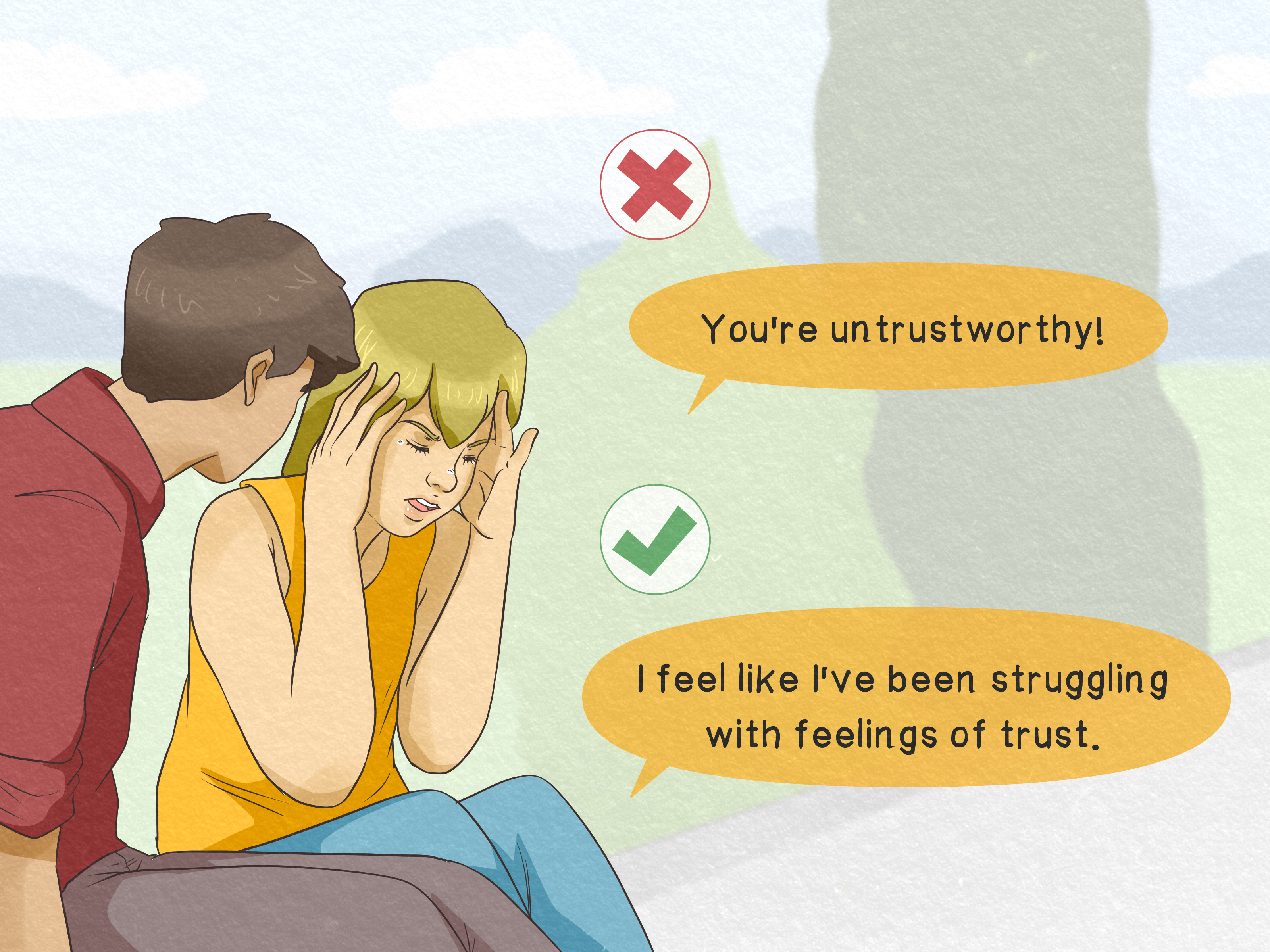
4. Communicate Vulnerably Instead of Accusing
Use specific language that describes the situation, your feeling, and your request.
Instead of saying, “You clearly do not care about me,” try:
“When our plans change and I do not hear from you, I feel unimportant and anxious. Could you send me a brief update when you know you will be late?”
This approach gives your partner something understandable and actionable. Clear emotional expression can improve empathy, while blame often produces defensiveness. . Make Requests, Not Rules Disguised as Boundaries
A boundary describes what you will do to protect your well-being. Control dictates what another adult is permitted to do.
“I will not stay in a relationship where private romantic messages are hidden from me” is a boundary. “You are not allowed to speak to anyone I find attractive” is control.
Healthy boundaries should allow both people to feel respected and heard. Couples may disagree about appropriate limits, but those disagreements should be discussed openly rather than enforced through threats or surveillance. . Reduce Compulsive Checking
Checking your partner’s status, followers, location, or messages may produce brief relief, but it rarely creates durable security. Try delaying the behavior rather than demanding immediate perfection.
Wait ten minutes before checking. Then twenty. Notice the discomfort without solving it. The goal is to teach yourself that uncertainty can be uncomfortable without being dangerous.
7. Build a Life That Is Larger Than the Relationship
Maintain friendships, interests, health routines, financial goals, skills, and personal ambitions. Independence does not weaken healthy love. It prevents your entire identity from balancing on one person’s mood.
A secure relationship consists of two connected people, not two people who have melted into one anxious emotional smoothie.
8. Strengthen Self-Trust
Self-trust means believing that you can respond appropriately even when you cannot control the outcome. You may not be able to guarantee that no partner will ever disappoint you. You can learn to trust that you will notice patterns, ask questions, set boundaries, seek support, and make decisions that protect your well-being.
This is more realistic than trying to eliminate every relationship risk.
9. Ask Your Partner to Participate in Building Security
Personal growth matters, but security is also relational. A caring partner should be willing to discuss reasonable needs, clarify expectations, honor agreements, acknowledge mistakes, and behave consistently.
You should not require constant proof. Your partner should not require you to tolerate constant confusion.
10. Consider Individual or Couples Therapy
Professional support may help when insecurity is connected to trauma, infidelity, chronic anxiety, compulsive checking, repeated conflict, or attachment wounds. Individual therapy can help you understand triggers and develop emotional regulation. Couples therapy can help partners change destructive interaction patterns, communicate needs, and rebuild trust.
Psychotherapy is especially worth considering when worry interferes with sleep, work, social functioning, or your ability to enjoy the relationship. elationship Insecurity Experiences: What Change Looks Like in Real Life
The following composite experiences combine common relationship patterns. The names and details are fictional, but the emotional situations are realistic.
Maya: The Delayed-Text Spiral
Maya had been dating Liam for eight months. Their relationship was affectionate, stable, and mostly peaceful. However, Liam sometimes became absorbed in work and did not check his phone for several hours.
Whenever this happened, Maya’s thoughts accelerated. First she wondered whether he was upset. Then she assumed he was losing interest. Within an hour, she might check his activity status, reread old messages, and send a casual-looking text that was not casual at all: “Hope you’re having fun wherever you are.”
Liam felt accused and became defensive. His short reply then sounded cold, which Maya interpreted as proof that her fear had been correct.
Maya eventually began writing down the trigger, the story, and the evidence. The trigger was a delayed response. The story was abandonment. The evidence showed that Liam usually explained, reconnected, and followed through on plans.
She also told him directly that unexpected silence activated old fears from a previous relationship. They agreed that he would send a quick message before unusually busy afternoons. Maya agreed not to monitor his online activity. Security grew because both partners changed something: Maya practiced tolerating uncertainty, and Liam became more considerate about communication.
Alex: When Insecurity Followed a Real Betrayal
Alex discovered that Jordan had hidden an emotional relationship with a coworker. Jordan ended the outside connection, apologized, and wanted to repair the partnership. Yet Alex remained hyperalert.
A phone turned face down on the table could ruin the evening. A late meeting produced panic. Alex repeatedly asked for details, but each answer created three new questions.
At first, Jordan complained that Alex was being insecure. That description ignored an important reality: the insecurity had been intensified by Jordan’s deception. Repair required accountability, not simply asking Alex to calm down.
In counseling, they created specific agreements about transparency, workplace communication, and regular conversations about recovery. Alex worked on expressing pain without interrogating Jordan for hours. Jordan learned to respond without minimizing the betrayal or demanding instant forgiveness.
The relationship did not improve because Alex became less sensitive overnight. It improved because the couple distinguished trauma reactions from current evidence while rebuilding trust through consistent behavior. Progress was uneven, but eventually one difficult evening stopped feeling like a complete return to the original betrayal.
Priya: Comparison, Social Media, and the Missing Self
Priya loved Daniel, but she had gradually stopped doing many things that once made her feel like herself. She rarely saw friends, had abandoned a photography class, and spent evenings scrolling through polished images of couples, influencers, and Daniel’s former classmates.
She began comparing her body, career, personality, and relationship with people she barely knew. When Daniel liked a friend’s vacation photo, Priya felt replaceable. She asked whether he found the friend attractive, then searched older posts for evidence.
Priya initially thought the solution was to obtain more reassurance from Daniel. His reassurance helped briefly, but the insecurity returned because her self-worth had become dependent on his reactions.
She changed her social media habits, resumed photography, scheduled time with friends, and set weekly goals unrelated to the relationship. She also explained to Daniel that certain online interactions felt ambiguous, and they discussed digital boundaries without demanding access to each other’s accounts.
As Priya rebuilt her own life, Daniel’s independence felt less like evidence that she was being abandoned. She still experienced flashes of jealousy, but she no longer treated every feeling as an instruction. Her goal was not to become someone who never felt insecure. It was to become someone who could feel insecurity, understand it, communicate responsibly, and continue acting according to her values.
Conclusion
Relationship insecurity can grow from anxious attachment, low self-esteem, past betrayal, trauma, poor communication, compulsive reassurance seeking, social comparison, life stress, or genuinely unreliable behavior from a partner. Sometimes the fear comes mainly from within. Sometimes the relationship is creating the fear. Often, both are contributing.
Stopping insecurity does not mean ignoring your instincts, tolerating disrespect, or becoming emotionally detached. It means learning to examine evidence, regulate your reactions, communicate clearly, establish healthy boundaries, strengthen your identity, and judge the relationship by consistent patterns rather than isolated moments.
A secure relationship is not one in which nobody ever worries. It is one in which both people can discuss worry without turning it into accusation, control, ridicule, or punishment. Security develops when self-trust meets trustworthy behaviorand both partners keep showing up for the work.
Note: This article provides general educational information and is not a substitute for individualized mental health care. Persistent anxiety, compulsive checking, trauma symptoms, coercion, or fear within a relationship should be discussed with a qualified professional or an appropriate support service.