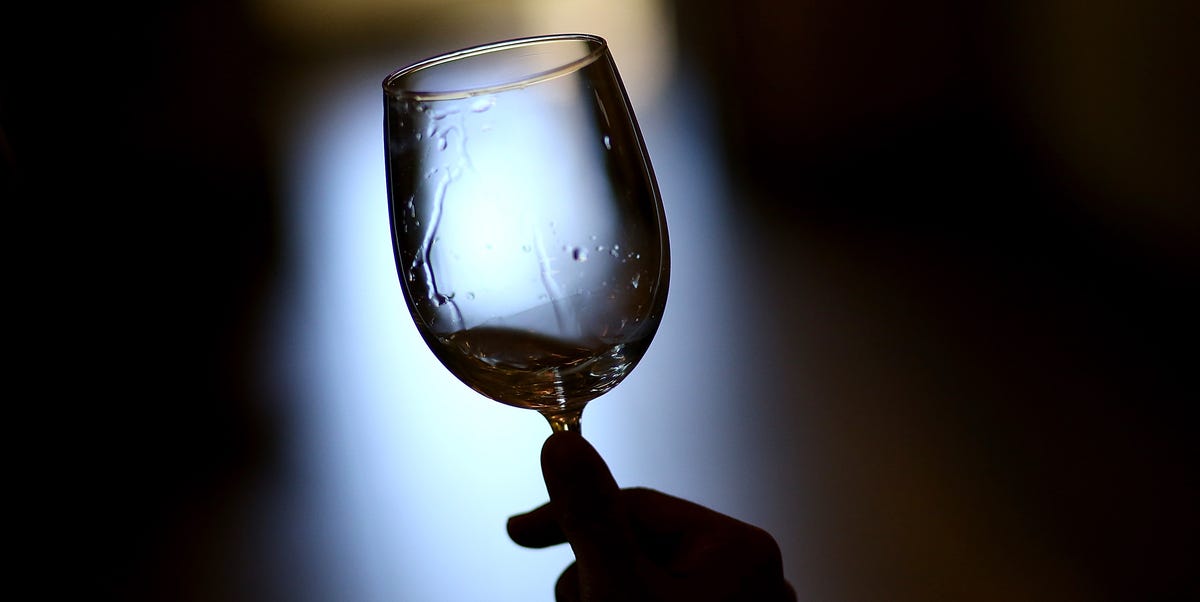
Swirl a glass of wine, set it down, and watch the inside of the bowl. A thin sheet of liquid creeps upward, gathers into beads, and then slides back toward the wine like tiny raindr, although you may also hear them described as wine legs, fingers, curtains, or church windows.
They look mysterious enough to inspire all kinds of tasting-room folklore. Heavy tears supposedly mean a luxurious wine. Slow legs are said to reveal exceptional body. Numerous droplets may even convince someone to announce that the bottle is “obviously well aged,” usually while holding the glass at an angle suitable for a Renaissance portrait.
The real explanation is more interestingand far more scientific. Wine tears form because alcohol and water evaporate differently, creating variations in surface tension that move liquid along the glass. Gravity eventually wins, pulling the accumulated liquid downward in visible drops. The process is a classic example of the Marangoni effect, with newer research helping explain how the rising liquid film becomes organized into individual tears. >
What Are Wine Tears, Exactly?
Wine tears are the droplets and streaks that appear on the inner surface of a wineglass after the wine has been swirled, tilted, or sipped. Swirling coats the glass with a thin film. As that film changes in composition, some of it travels upward before collecting into a thicker ridge. When the ridge becomes unstable or too heavy, portions of it descend as drops.
The word tears describes the droplets themselves, while legs often refers to the trails they leave behind. In practice, wine drinkers use the terms interchangeably. The French expression is commonly translated as “the tears of wine,” while other traditional names include curtains and church windows.
These patterns are easiest to see when the glass is clean, transparent, and held against a bright background. Red wine may make the trails more visible because of its color, but white, rosé, dessert, and fortified wines can all produce tears. Spirits such as whiskey, rum, and brandy display related behavior because they also contain mixtures of alcohol and water. n>
The Science Behind Wine Tears
Wine Is Mostly a Mixture of Water and Ethanol
Wine contains water, ethanol, acids, sugars, aroma compounds, pigments, tannins, and many other substances. For understanding wine tears, however, the most important partnership is water and ethanol.
Ethanol is more volatile than water, meaning it escapes into the air more readily under ordinary conditions. Ethanol also has lower surface tension than water. These differences become important after a film of wine is spread across the inside of a glass.
Alcohol Evaporates From the Thin Film
When you swirl wine, capillary and wetting forces help leave a film above the main liquid level. Because this film is thin and exposed to air, ethanol evaporates from it relatively quickly. The remaining liquid near the upper part of the film becomes slightly richer in water and lower in alcohol than the wine below.
This change may be invisible, but it alters the film’s physical behavior. The water-rich portion has higher surface tension, while the more alcohol-rich wine below has lower surface tension.
Surface Tension Pulls the Wine Upward
Surface tension can be imagined as a tendency for a liquid surface to contract. Where surface tension is stronger, the surface pulls more forcefully on nearby liquid. The water-rich region higher on the glass therefore draws liquid away from the alcohol-rich region below.
The resulting flow travels upward along the glass, apparently ignoring gravity for a moment. This movement caused by a surface-tension gradient is known as the Marangoni effect, named after Italian physicist Carlo Marangoni. The phenomenon appears in many other settings, including soap films, industrial coatings, droplets, welding processes, and evaporating mixtures. emperature Also Contributes
For years, the standard explanation focused almost entirely on differences in alcohol concentration. More detailed experiments showed that temperature gradients can also contribute. Evaporation cools parts of the film, and because surface tension changes with temperature, evaporative cooling can strengthen or modify the upward flow.
In other words, wine tears are not produced by one lonely physical force working the night shift. Concentration differences, temperature differences, wetting, surface tension, evaporation, and gravity all participate. ravity Pulls the Liquid Back Down
The climbing film eventually becomes thicker near its upper edge. Liquid gathers into a ridge, and gravity begins demanding repayment. Once part of the ridge becomes sufficiently heavy or unstable, it moves downward as a droplet.
The process then repeats. Ethanol continues evaporating, the surface-tension gradient continues drawing liquid upward, and new drops form and descend. That repeating circulation creates the impression that the glass is quietly crying over the bottle’s retail price.
Why Do Wine Tears Form as Separate Drops?
The Marangoni effect explains why wine climbs the glass, but it does not by itself fully describe why the liquid breaks into regularly spaced droplets. This detail has attracted serious research in fluid dynamics.
A modern model developed by researchers at UCLA incorporated the direction of gravity, the geometry of the glass, surface tension, and the behavior of thin liquid films. Their work suggested that dramatic tears can emerge from a type of traveling instability called a reverse undercompressive shock.
This “shock” is not an explosion, and your Cabernet is not attempting to become an action movie. In fluid mechanics, the term describes a sharp traveling transition within the liquid film. The transition helps organize the climbing wine into a ridge from which distinct drops emerge.
The research expanded the traditional explanation rather than replacing it. Alcohol evaporation still creates the essential surface-tension gradient. The newer model helps explain how that flow interacts with gravity and glass geometry to produce the recognizable pattern of tears. n>
Do Wine Tears Indicate Alcohol Content?
Alcohol content can influence wine tears because ethanol is central to the evaporation and surface-tension process. A higher-alcohol beverage may produce more noticeable or persistent movement under comparable conditions. This is why fortified wines and spirits often display dramatic legs.
However, reading exact alcohol content from the glass is unreliable. A wine with prominent tears is not automatically 15% alcohol, just as faint tears do not prove that a wine is light and delicate. The visual pattern depends on several variables besides alcohol:
- The temperature of the wine
- Room temperature and humidity
- The shape and angle of the glass
- How aggressively the wine was swirled
- The thickness of the liquid film
- Residual sugar and viscosity
- The cleanliness and surface condition of the glass
- Air movement around the glass
Wine tears may provide a broad clue when two liquids are observed under carefully controlled, identical conditions. At an ordinary dinner table, though, the alcohol-by-volume number on the label is a much better measuring instrument than a dramatic squint at the glass. n>
Do Thick Wine Legs Mean More Sugar or Body?
Residual sugar and other dissolved compounds can affect a wine’s viscosity. A sweeter or more concentrated liquid may move down the glass more slowly, creating thicker-looking trails. This is one reason dessert wines can show especially dense, leisurely tears.
Nevertheless, appearance alone cannot separate the effects of sugar, alcohol, temperature, and glass conditions. A cold sweet wine in one glass and a warm dry wine in another are not participating in a fair scientific contest.
Wine “body” is also a sensory impression rather than a single measurable ingredient. Alcohol, sugar, glycerol, tannin, acidity, extract, serving temperature, and texture can all shape whether a wine feels light, medium-bodied, or full-bodied. Thick legs may accompany a rich wine, but they do not independently prove richness.
Do Wine Tears Reveal Quality?
No. Wine tears are not a reliable indicator of quality.
A carefully made $100 bottle and an ordinary $12 bottle can both produce beautiful legs. A flawed wine can display perfect tears. A brilliant wine served in a damp, recently washed, or detergent-coated glass may display irregular ones.
Quality is better assessed through aroma, flavor, balance, acidity, tannin, texture, complexity, finish, typicity, and the absenceor intentional presenceof particular sensory characteristics. Tears mainly tell you that the wine is an evaporating mixture interacting with a glass and the surrounding air.
The myth probably survives because tears are easy to see and look impressively dramatic. They also give tasters something to discuss before smelling or drinking the wine. Unfortunately for aspiring wine magicians, fluid dynamics is not a secret 100-point scoring system. n>
Factors That Change the Appearance of Wine Tears
Alcohol Level
Alcohol affects both evaporation and surface tension. Under similar conditions, changing the proportion of ethanol can alter how quickly the film climbs and how the tears develop.
Serving Temperature
Warmer wine generally evaporates more readily than colder wine. Temperature also changes viscosity and surface tension, so the same bottle may display different legs immediately after leaving the refrigerator and later at room temperature.
Humidity and Airflow
Dry air encourages evaporation, while humid air slows it. A fan, air conditioner, or open window can change evaporation around one side of the glass, potentially making tears uneven.
Glass Shape
The curve and slope of a glass determine how gravity acts on the climbing film. A broad bowl, a narrow chimney, and a straight-sided tumbler can produce noticeably different patterns even when filled from the same bottle.
Glass Cleanliness
Oil, fingerprints, mineral deposits, rinse aid, and detergent residue alter how evenly wine wets the surface. A spotless glass encourages a more uniform film. A contaminated glass may produce patchy rivers, isolated beads, or bare spots.
Residual Sugar and Viscosity
Sugar can make wine more viscous, slowing the movement of descending droplets. Other dissolved substances may also influence flow, although alcohol evaporation remains fundamental to classic wine-tear formation.
How to Observe Wine Tears Properly
- Choose a clean, dry, transparent wineglass.
- Pour enough wine to cover the widest lower section of the bowl.
- Hold the stem or base so your hand does not warm the bowl rapidly.
- Tilt or gently swirl the glass to coat the inside with a thin film.
- Set the glass upright against a white or brightly lit background.
- Watch the ring of liquid above the wine level.
- Notice how the film rises, thickens, separates, and falls.
A gentle swirl works better than turning the glass into a countertop cyclone. Aggressive swirling creates a thick, chaotic coating that can hide the more delicate pattern. It also increases the chance of conducting a second experiment called “removing Pinot Noir from a white shirt.”
Common Myths About Wine Tears
Myth 1: More Tears Mean Better Wine
Tears measure physical behavior, not craftsmanship, vineyard quality, flavor balance, or aging potential.
Myth 2: Slow Legs Always Mean High Alcohol
Alcohol matters, but viscosity, sugar, temperature, humidity, glass shape, and surface cleanliness also affect speed.
Myth 3: Only Red Wine Has Tears
White, rosé, sparkling, dessert, and fortified wines can produce tears. Color simply makes some patterns easier to see.
Myth 4: Tears Show the Wine’s Age
The age of a bottle cannot be determined by watching droplets. Young and mature wines can display similar patterns.
Myth 5: Experienced Sommeliers Judge Wine by Its Legs
Professional tasters may observe viscosity and appearance, but they do not treat legs as a stand-alone quality score. Aroma, palate structure, balance, finish, and context provide far more useful information.
Wine Tears Versus Sediment, Bubbles, and Staining
Wine tears are sometimes confused with other visible features in a glass. Sediment consists of solid material, such as pigment deposits, tannin complexes, yeast remnants, or tartrate crystals. It settles or floats rather than repeatedly climbing and descending the glass.
Bubbles are pockets of gas. They are expected in sparkling wine and may occasionally appear in still wine because of dissolved carbon dioxide. They do not form through the same surface-tension mechanism as wine legs.
Staining is the colored film left by deeply pigmented wine. A young Syrah or Malbec may tint the glass as it moves, making its tears look darker. The stain comes from pigments; the moving droplets come from fluid flow. The two effects can appear together without being identical. n>
What Wine Tears Can Actually Teach You
Although wine tears are poor judges of quality, they are excellent teachers. They demonstrate how tiny molecular differences can create movement visible to the naked eye. A glass of wine becomes a miniature fluid-dynamics laboratory involving evaporation, concentration gradients, thermal gradients, surface tension, wetting, instability, and gravity.
The phenomenon also shows why controlled conditions matter. Change the glass, temperature, humidity, or film thickness and the result changes. This is the same reason scientific experiments require carefully defined variablesand why confident conclusions made halfway through a dinner party should occasionally be taken with a grain of salt and a slice of cheese.
Research into Marangoni flows has applications beyond beverages. Similar forces matter in coating technologies, manufacturing, heat transfer, droplet control, and the behavior of evaporating liquids. Wine tears may be decorative, but the physics behind them is genuinely useful. n>
Hands-On Experiences With Wine Tears
The best way to understand wine tears is not to memorize a definition. It is to watch the phenomenon under slightly different conditions. The following experiences turn an ordinary tasting into a practical experiment without requiring a laboratory coat, advanced calculus, or permission to say “Marangoni” with theatrical confidence.
Experience 1: Compare Warm and Cool Samples
Pour the same wine into two identical, clean glasses. Keep one sample slightly cooler and allow the other to warm for several minutes. Swirl both glasses in the same way, then observe the films against a bright background.
The warmer sample may develop movement more quickly because ethanol evaporates faster as temperature rises. Its droplets may appear sooner or travel differently. The cooler sample may show slower, more restrained activity. The result will not always be dramatic because room humidity, glass cleanliness, and small temperature differences can soften the contrast. That uncertainty is part of the lesson: wine tears reflect several interacting variables, not one simple rule.
Experience 2: Compare a Dry Table Wine and a Dessert Wine
Place a dry wine beside a sweet dessert wine in similar glasses. After swirling, the dessert wine may leave broader, slower-moving trails because its higher sugar content increases viscosity. The dry wine may produce thinner or faster tears.
Do not use this observation to declare that every slow tear proves sweetness. Alcohol content may differ between the wines, and fortified dessert wines combine both sugar and elevated alcohol. The comparison demonstrates how multiple properties can produce a similar visual result. A droplet does not arrive carrying a tiny label that says, “I am moving slowly because of exactly 82 grams of residual sugar.”
Experience 3: Test Two Different Glass Shapes
Pour the same wine into a rounded wineglass and a straight-sided glass. Apply a similar swirl and watch where the liquid film gathers. The angle of the surface changes how gravity acts on the film, while the curvature affects its thickness and movement.
The rounded bowl may encourage a distinct ring and widely spaced tears. The straighter glass may create narrower streams or a less dramatic pattern. Neither glass has improved or damaged the wine merely by producing prettier legs. However, the experiment makes it clear that judging alcohol or quality by tears without accounting for glass geometry is unreliable.
Experience 4: Compare a Perfectly Clean Glass With a Smudged One
Use two matching glasses, but touch the inside of one with a clean fingertip before pouring. The natural oils left on the surface can disrupt wetting. After swirling, the untouched glass may develop a relatively even film, while the smudged glass may show gaps, crooked streams, or droplets that avoid certain areas.
This experience explains why professional tasting glasses are carefully cleaned and polished. Surface contamination changes the behavior of the liquid before anyone has evaluated the wine itself. It also offers a useful response the next time someone interprets one oddly shaped leg as evidence of a rare vintage: the culprit may simply be a fingerprint.
Experience 5: Cover the Glass Briefly
Swirl a glass and observe its tears. Then cover the top for a short period with a clean coaster or small plate. Covering the glass reduces the escape of ethanol vapor and allows the air above the wine to become more saturated. When evaporation slows, the surface-tension gradient may weaken, and the tear pattern can become less active.
Remove the cover, allow fresh air to circulate, and watch again. The visual activity may gradually return. This is one of the clearest demonstrations that evaporation is essential. The tears are not permanent marks built into the wine. They are a dynamic response to the relationship between the liquid, glass, and surrounding atmosphere.
What These Experiences Reveal
Together, these comparisons show why wine tears should be approached with curiosity rather than superstition. A single bottle can create different patterns depending on serving temperature, humidity, glass shape, surface cleanliness, and exposure to air. The wine has not changed from magnificent to mediocre between glasses; its physical environment has changed.
Observing wine tears can still enrich a tasting. They encourage you to slow down, look closely, and notice texture and movement before smelling and sipping. Just keep the conclusion appropriately modest: you have witnessed elegant fluid mechanics, not received a secret message from the vineyard.
Conclusion: A Tiny Physics Show in Every Glass
Wine tears are droplets formed when a thin film of wine climbs the inside of a glass and then falls back under gravity. The upward movement is driven mainly by the Marangoni effect: ethanol evaporates faster than water, producing differences in alcohol concentration and surface tension. Temperature gradients, glass geometry, viscosity, wetting, and gravity influence how the final tears appear.
Prominent legs may sometimes accompany higher alcohol or greater viscosity, but they cannot reliably reveal sweetness, age, flavor, or overall quality. A beautiful set of tears proves only that a complex liquid is interacting with air and glass in a scientifically beautiful way.
So enjoy the show. Swirl gently, watch the droplets gather, and appreciate that your wine is performing an elegant physics demonstration before dinner. Then move on to the information that matters most: how the wine smells, tastes, feels, and pairs with whatever is on your plate.
SEO Information
Note: Wine tears are best appreciated as a visual demonstration of fluid dynamics. They should not be used as a stand-alone measure of wine quality, value, or aging potential.