Note: This article is for entertainment and informational purposes only. Do not crush, puncture, burn, or intentionally damage phones, batteries, or electronics. Hydraulic presses and damaged lithium-ion batteries can cause fire, flying debris, toxic fumes, and serious injury.
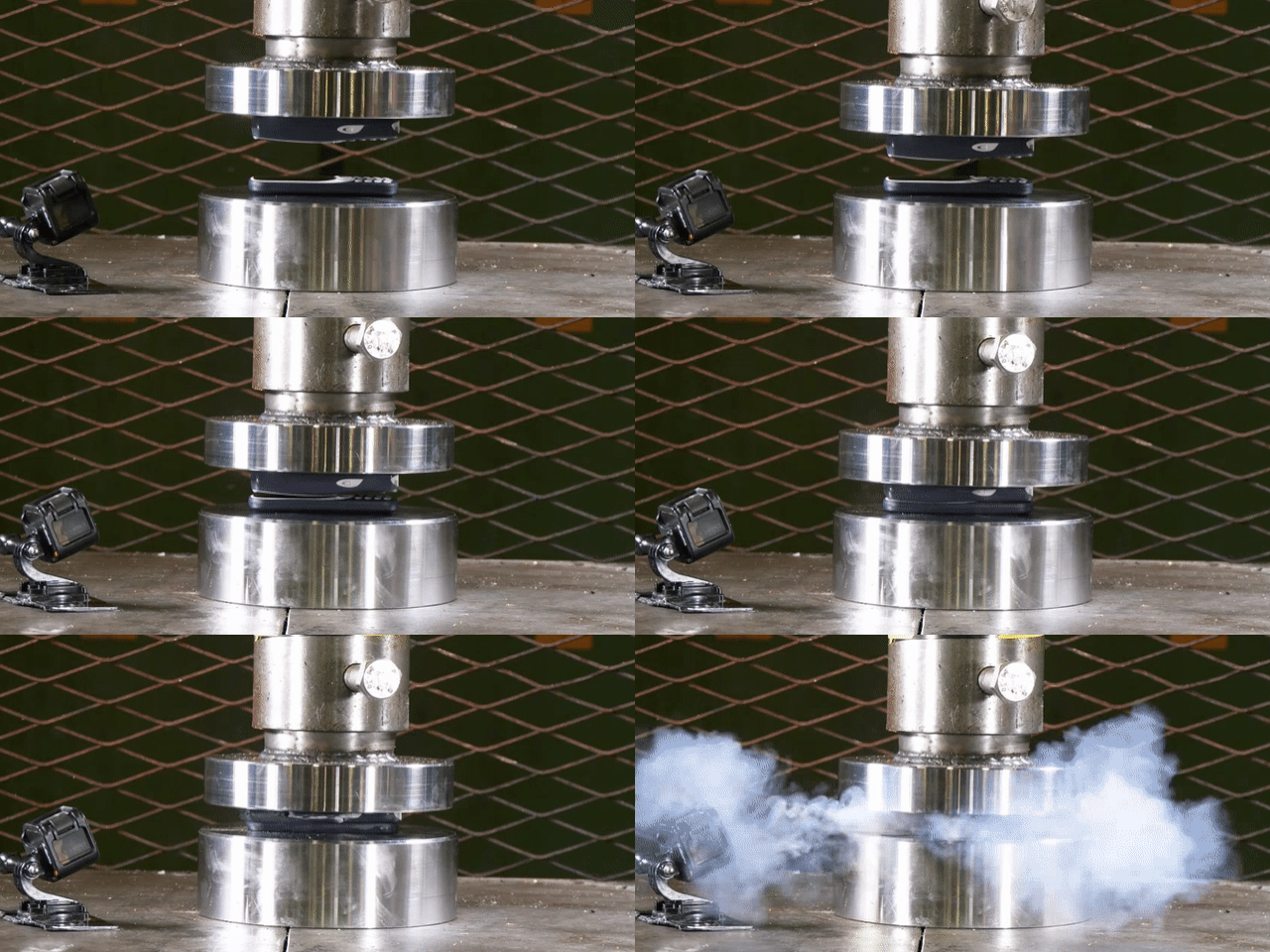
There are ordinary durability tests, and then there is the glorious internet circus known as “put it under a hydraulic press and see what happens.” Somewhere between engineering curiosity and snackable chaos sits the unforgettable spectacle: watching a new and old Nokia explode in a hydraulic press. It sounds like a science experiment designed by a bored mechanic with excellent camera equipmentand honestly, that is part of the appeal.
The Nokia 3310 has long lived rent-free in internet culture as the “indestructible phone.” People joke that if you drop one on the floor, the floor apologizes. The original Nokia 3310, launched in 2000, became famous for its compact shape, removable battery, long standby time, simple interface, and a body that seemed ready for both texting and light construction work. When HMD Global revived the Nokia 3310 in 2017, nostalgia came rushing back like a ringtone from a forgotten pocket.
So naturally, the internet had one urgent question: what happens when the old brick and the new throwback phone meet a hydraulic press? The answer is dramatic, funny, mildly heartbreaking, and surprisingly educational. Both phones eventually lose. The old Nokia simply loses with more dignity, like a retired champion who still makes the rookie sweat before going down.
Why the Nokia 3310 Became a Durability Legend
Before smartphones became fragile glass sandwiches with app stores, facial recognition, and emotional support cases, mobile phones were simpler machines. The original Nokia 3310 was a candy-bar-style feature phone built for calls, text messages, Snake II, reminders, and surviving daily life in backpacks, coat pockets, car cup holders, and occasionally on concrete sidewalks.
Part of the 3310’s legendary toughness came from its design. It had a small monochrome display, a compact internal layout, a removable battery, and a plastic shell that could absorb impact better than today’s edge-to-edge glass panels. The phone did not need to protect a giant touchscreen, multiple cameras, biometric sensors, or a thin lithium-polymer battery spread across most of the body. It was not elegant in the modern sense. It was elegant in the “could probably survive a family reunion and a toolbox” sense.
The old 3310 also benefited from expectations. People did not treat phones like delicate luxury devices in 2000. A phone was supposed to work, ring loudly, hold a charge, and tolerate being dropped. The 3310 did all of that while giving users customizable covers and one of the most beloved mobile games ever created. It was practical, affordable, and weirdly lovable. That combination turned it from a successful product into a cultural mascot.
The 2017 Nokia 3310 Revival: Nostalgia in a Shinier Shell
When the Nokia 3310 returned in 2017, it was not meant to be a one-to-one clone of the original. The revived model kept the rounded silhouette and familiar spirit, but added a color screen, a small camera, microSD support, a lighter design, and a more modern interface. It was more of a tribute act than a reincarnation. Think “classic rock band reunion tour,” but with Bluetooth.
The new Nokia 3310 arrived at a time when many people were feeling smartphone fatigue. Notifications were multiplying. Social media was becoming louder. Battery anxiety had become a daily ritual. A simple phone with long standby time and a familiar name felt refreshing. It was not trying to beat premium smartphones on performance. It was trying to remind people that a phone could simply be a phone.
But nostalgia is a dangerous thing on the internet. The moment the new 3310 appeared, comparisons with the old model were inevitable. Was it as tough? Could it survive the abuse that made the original famous? Could it stand up to the meme? The Hydraulic Press Channel decided to answer in the most direct way possible: by flattening both phones with industrial force.
What Happens in the Hydraulic Press Test?
The setup is simple and wonderfully absurd. Place an old Nokia 3310 and a new Nokia 3310 under a hydraulic press. Apply pressure. Observe. Try not to mourn your childhood.
In the test, both phones eventually erupt under pressure, with plastic fragments, internal parts, and battery-related drama turning the comparison into a tiny mechanical fireworks show. The old Nokia appears to hold out a little longer, which fits perfectly with its reputation. It resists deformation for a moment, giving viewers just enough time to think, “Wait, is it actually going to win?” Then physics, being rude and undefeated, steps in.
The new Nokia also fails, but in a way that reflects modern construction. It is lighter, slimmer, and built with different priorities. It has a larger color display, more modern electronics, and a different internal layout. Under a hydraulic press, those upgrades do not count as advantages. In everyday use, they may make the phone more pleasant. Under crushing industrial pressure, they become additional layers of things that can crack, bend, pop, and scatter.
Why Both Phones Explode Instead of Simply Flattening
When people hear “explode,” they may imagine a movie-style fireball. In reality, crushed electronics often fail in a messier, more mechanical way. Housings crack. Screens fracture. Circuit boards snap. Batteries deform. Trapped pressure finds an exit. Small components shoot out. If a lithium-ion battery is involved and gets damaged, the situation can become much more dangerous.
Modern rechargeable batteries store significant energy in a small package. That is what makes phones convenient, but it also creates risk when the battery is crushed, punctured, overheated, or short-circuited. Physical damage can trigger internal short circuits and thermal runaway, a chain reaction where the battery rapidly heats up and may vent, smoke, ignite, or burst. That is why intentionally crushing phones is not a safe home experiment.
The old Nokia 3310 used removable battery packs, and depending on the market and model, those packs could include nickel-metal hydride or lithium-ion versions. The revived Nokia 3310 used a rechargeable lithium-ion battery. Either way, compressing a battery-powered device under a press is a controlled stunt that belongs behind barriers, cameras, and proper safety planningnot on a garage workbench next to a half-finished soda.
Old Nokia vs. New Nokia: What the Test Really Shows
The hydraulic press video is funny because it turns a meme into a measurable contest. But it also reveals something important about product design. The original Nokia 3310 was durable partly because it was simple. The new Nokia 3310 was more capable, but it had to serve a different market and meet different expectations.
Modern users expect color screens, cameras, Bluetooth, expandable storage, slimmer bodies, and lighter pockets. Those features require compromises. A larger screen creates a larger fragile surface. A thinner body leaves less room for impact-absorbing structure. More components mean more potential failure points under extreme pressure. The new phone is not necessarily “badly built.” It is just built for normal life, not a steel ram descending with the patience of a villain.
The old phone’s advantage comes from its chunky simplicity. It had fewer delicate layers and more forgiving materials. Its plastic shell could flex and absorb force. Its small screen was less exposed. Its internal design did not need to accommodate modern multimedia features. In other words, the old Nokia was not magic. It was an object from a different design era, when durability and battery life mattered more than screen size and camera quality.
The Hydraulic Press Channel Effect
The Hydraulic Press Channel became famous because it turns destruction into suspense. Viewers know the object is probably going to lose, but the question is how. Will it shatter? Bend? Squirt? Pop? Catch fire? Make a noise that sounds like a robot stepping on cereal? That uncertainty is the hook.
Crushing phones is especially satisfying because phones are familiar. Most of us carry one every day. We know what they feel like, how much they cost, and how painful it is when a screen cracks from a three-foot drop. Seeing a phone face a hydraulic press is oddly cathartic. It compresses all our tiny tech frustrations into one dramatic moment. The buffering, the dead battery, the update that arrives at the worst possible timesuddenly, all of it is under the press.
With Nokia, the effect is even stronger because the brand carries emotional history. For many people, a Nokia was their first mobile phone. It was the device they used to send early text messages, play Snake, set alarms, and feel extremely advanced because they could change a ringtone. Watching one get crushed is not just gadget destruction. It is nostalgia being flattened in high definition.
Is the Old Nokia Really Tougher?
In practical terms, yes, the original Nokia 3310 earned its reputation. It was excellent at surviving the kinds of accidents that commonly happened to phones of its era: drops, bumps, scuffs, and rough handling. It was not waterproof by modern certification standards, and it was not actually indestructible, but it was far more forgiving than many modern smartphones.
However, toughness depends on the test. Drop an original 3310 and a modern smartphone onto concrete, and the Nokia may survive with less visible damage. Try to browse the modern web, take photos, use GPS, stream music, or run secure apps, and the old Nokia is suddenly less heroic. A brick is tough, but it still cannot order dinner.
The hydraulic press test exaggerates this difference for entertainment. No consumer phone is designed to survive tons of compressive force. The old Nokia lasting a little longer is impressive, but the final result is still destruction. The real lesson is not that one phone can defeat industrial machinery. The real lesson is that design priorities have changed.
What Makes Modern Phones More Fragile?
Modern phones are engineering miracles, but their strengths also create weaknesses. Large glass displays make them beautiful and easy to use, but glass is brittle. Thin metal and plastic frames keep them light, but thinness leaves less room for shock absorption. Sealed batteries improve water resistance and reduce user tampering, but they make repairs more complicated. Multi-camera systems add creative power, but also more delicate modules.
Smartphones are not weak because manufacturers forgot how to build tough devices. They are fragile because consumers demand competing features: bigger screens, lighter weight, slimmer bodies, better cameras, faster charging, wireless connectivity, water resistance, and premium materials. You can build a rugged smartphone, but it will usually be thicker, heavier, and less elegant. Most buyers say they want durability until they see the phone looks like it was designed for a moon excavation crew.
The Nokia 3310 belonged to a time when a small screen was normal, removable batteries were expected, and phones were not treated like pocket-sized cinemas. That made durability easier. The revived 3310 tried to honor that history while fitting into a more modern market. Under everyday conditions, it could serve as a simple, dependable feature phone. Under a hydraulic press, it became confetti with buttons.
Battery Safety: The Serious Side of the Spectacle
As entertaining as the video is, the safety issue deserves attention. Lithium-ion batteries are common in phones, laptops, power banks, e-bikes, tools, and countless household devices. They are generally safe when manufactured well and used properly. Problems begin when batteries are damaged, overheated, charged with incompatible equipment, or thrown into regular trash where they can be crushed.
A crushed battery can short internally. That can produce heat, gas, smoke, flame, and in some cases an explosive burst. This is why electronics should be recycled through proper e-waste programs rather than tossed into household garbage. Trash compactors and recycling equipment can damage batteries and start fires. The same principle applies to hydraulic press videos: the danger is not just the phone shell breaking; it is the battery reacting unpredictably.
Professional creators who film destructive experiments typically use barriers, distance, protective equipment, controlled environments, and fire safety measures. Viewers should not copy the stunt. A small battery fire can become intense quickly, and the fumes from burning electronics are not something anyone should inhale for fun, clicks, or scientific curiosity fueled by poor judgment.
Why People Still Love Watching Tech Get Destroyed
There is a strange pleasure in watching expensive or iconic objects fail under extreme conditions. It is not just destruction for destruction’s sake. It is curiosity. People want to see what is inside, what breaks first, and how materials behave when pushed past their limits. A hydraulic press turns everyday objects into lessons in structure, pressure, brittleness, elasticity, and stored energy.
The Nokia test works because it combines three powerful internet ingredients: nostalgia, competition, and controlled chaos. The old phone represents the past. The new phone represents the reboot. The press represents reality, arriving from above with no interest in branding. The result is a tiny drama about memory, marketing, and mechanical force.
It also lets viewers laugh at the myth while still respecting it. The Nokia 3310 may not survive a hydraulic press, but the fact that people even ask the question proves how strong the legend is. Nobody asks whether a random budget phone from 2003 can defeat industrial equipment. Nokia earned that absurd honor through years of jokes, memories, and real-world durability.
What This Test Says About the Evolution of Phones
The old-versus-new Nokia press test is more than a viral clip. It is a visual timeline of mobile technology. The original 3310 came from an era when phones were communication tools first. The revived 3310 came from an era when simplicity itself had become a novelty. Today, many people buy minimalist phones not because they lack options, but because they have too many.
In 2000, a durable phone with strong battery life was normal. In the smartphone era, long battery life and ruggedness can feel like luxury features. We gained maps, cameras, apps, mobile banking, video calls, and instant access to the world. We lost the casual confidence of tossing a phone onto a table without checking whether the screen landed face down.
The hydraulic press does not care about any of this. It reduces both generations to materials: plastic, metal, glass, circuits, battery cells. That is what makes the video so cleanly symbolic. Under enough pressure, every phone becomes parts. The old Nokia simply takes a few extra seconds to admit it.
Experiences and Reflections: Watching a New and Old Nokia Explode in a Hydraulic Press
Watching a new and old Nokia explode in a hydraulic press feels like opening a time capsule with a sledgehammer. For anyone who grew up with the original 3310 or a similar Nokia phone, the first reaction is usually disbelief. Not because the phone is actually indestructible, but because the myth is so deeply planted in our collective memory. Seeing that familiar rounded body under a press creates a tiny emotional conflict: part of you wants science, and part of you wants the Nokia to rise from the wreckage and ask for a SIM card.
The old Nokia brings back a very specific kind of memory. It reminds people of typing text messages with the number pad, pressing the same key three times to get one letter, and somehow becoming fast enough to text under a desk without looking. It reminds people of battery bars that seemed to last forever, of polyphonic ringtones, of playing Snake until the screen became a tunnel of pure concentration. That phone was not just hardware. It was a social object, a pocket companion from a time before mobile life became permanently online.
That nostalgia makes the hydraulic press test feel personal, even though it is obviously staged entertainment. When the old Nokia starts resisting pressure, viewers almost cheer. It is silly, but it feels like watching a childhood hero enter the ring one last time. The phone bends, cracks, and fights gravity’s angrier cousin. For a few seconds, the legend seems possible. Then the pressure wins, and the tiny explosion becomes both a punchline and a farewell.
The new Nokia creates a different reaction. It is familiar, but not quite the same. It looks like a memory remade for a gift shop: brighter, lighter, cleaner, and more cheerful. Under the press, it seems more vulnerable, partly because the audience already suspects it cannot carry the same mythic toughness. That does not make it a failure. It makes it honest. The revived Nokia 3310 was designed for nostalgia, simplicity, and basic communication, not for industrial combat. Expecting it to behave like the old brick is like expecting a remake of a classic movie to smell like the VHS tape.
The most interesting experience is the laughter that comes after the destruction. People laugh because the scene is ridiculous. They laugh because the phone finally meets something tougher than itself. They laugh because the internet has spent years pretending the Nokia 3310 could survive anything, and the press says, “Anything? Let’s check.” Humor works best when it punctures exaggeration without destroying affection. The video does exactly that. It proves the Nokia is not immortal while somehow making the legend even stronger.
There is also a practical takeaway hiding under the comedy. Watching the phones burst apart reminds us that electronics are physical objects with limits. They are not magic rectangles. They are assemblies of materials, batteries, screens, solder, screws, adhesives, and circuits. Treating them carelessly can create real hazards. A cracked case or swollen battery should not be ignored. Old devices should be recycled properly. Batteries should not be crushed, punctured, or thrown into general trash. The video is fun because it is controlled; real-life battery damage is not.
For content creators, the Nokia hydraulic press test is a masterclass in why simple ideas often travel far. The concept is instantly understandable. No long explanation is needed. Old Nokia versus new Nokia. Press goes down. Everyone watches. The stakes are low, the visuals are dramatic, and the cultural reference is strong. That is why this kind of video spreads: it offers curiosity, nostalgia, danger, and comedy in one compact package.
In the end, the experience of watching a new and old Nokia explode in a hydraulic press is less about destruction and more about memory. It reminds us how much personality older devices had, how quickly technology changes, and how attached people become to tools that once felt ordinary. The Nokia 3310 may not be stronger than a hydraulic press, but it is stronger than most gadgets in one important way: people still care enough to watch it lose.
Conclusion
The showdown between a new and old Nokia in a hydraulic press is funny, dramatic, and oddly meaningful. It turns a beloved internet myth into a physical experiment and shows how different generations of phones reflect different priorities. The original Nokia 3310 remains a durability icon because it was simple, compact, and built for a rougher everyday life. The revived version captures the look and spirit of the classic, but modern features and lighter construction make it a different kind of device.
Both phones eventually explode under the press, because industrial force is not impressed by nostalgia. Still, the old Nokia’s brief resistance is enough to keep the legend alive. The real winner is not the press, the old phone, or the new phone. The winner is the internet, which somehow turned crushed electronics into a surprisingly thoughtful lesson about design, safety, and why we still love a phone that made Snake feel like high art.