Nothing spikes America’s blood pressure quite like the words “shooting near the White House.” That phrase alone can send group chats into full chaos mode, trigger a thousand doom-scroll sessions, and convince at least three people that the entire capital is under siege. And in late November 2025, that was the mood in Washington, D.C., after a shocking daylight attack near Farragut West and just blocks from the White House left two West Virginia National Guard members shot, a suspect in custody, and a city already obsessed with security suddenly feeling even more fragile.
The panic was real. The headlines were loud. The politics arrived at warp speed. But beneath all the noise was a deeper story about how public fear works in modern America: one violent incident in a symbolic location can overwhelm logic, blur facts, and make a city feel unsafe even when broader crime trends say something more complicated. That tension is exactly why this Washington DC shooting story landed so hard. It was not just about the crime scene. It was about proximity to power, public trust, social media confusion, and the uncomfortable truth that even the most heavily watched parts of the nation’s capital can feel vulnerable in an instant.
The Shooting That Turned a Normal Afternoon Into a National Anxiety Attack
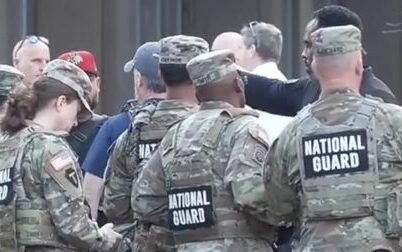
On November 26, 2025, two members of the West Virginia National Guard were shot in downtown Washington near Farragut West, close to the White House complex. Officials quickly described the incident as a targeted attack. That wording mattered. A lot. “Targeted” hits differently than “random.” It tells people there may be planning, intent, and bigger unanswered questions behind the violence. Once that message got out, panic followed like it had been waiting in the lobby.
The attack unfolded in broad daylight, which made it even more unsettling. This was not some vague overnight report from the edge of the city that most people would process with a sad shrug and a refill of coffee. This happened in one of the most recognizable, security-saturated zones in America. Office workers, commuters, federal employees, tourists, residents, and random people just trying to cross the street were suddenly dealing with road closures, sirens, police tape, and the deeply American experience of checking five apps at once for contradictory information.
In the immediate aftermath, officials and news outlets worked to sort out what had happened, who was hurt, and whether the public faced any ongoing threat. That early window was messy. Initial reports were incomplete. Conflicting statements circulated. The emotional temperature rose before the verified details could catch up. That delay between fear and clarity is where panic does its best work.
What We Know About the Washington DC Shooting
Verified reporting established the major facts fairly quickly. Two West Virginia National Guard members were shot while on duty near the White House complex. One of them, Sarah Beckstrom, later died from her injuries. The other, Andrew Wolfe, was critically injured but survived the initial attack. Authorities identified a suspect who was taken into custody, and federal officials said the motive was not immediately clear.
That uncertainty became one of the biggest drivers of public panic. People can process bad news. What they process badly is bad news with blanks in it. Was this terrorism? Was it politically motivated? Was it random? Was the White House itself threatened? Was there more than one attacker? Was this part of something larger? When a story involves gunfire, uniformed personnel, and the blocks surrounding America’s most famous address, people do not calmly wait for the evening briefing. They fill in the blanks themselves, usually with the imagination of a thriller novelist and the emotional stability of a raccoon in a fireworks store.
Federal investigators treated the shooting with extraordinary seriousness. The case was handled not merely as a local violent crime story but as a major security event with national implications. That distinction matters because it changed how the public interpreted the story. Once multiple federal agencies are visibly involved, the event no longer feels like just another crime report. It becomes a symbol of breach, instability, and vulnerability.
Why This Shooting Hit Washington Harder Than Most
Location, Location, Location
Washington, D.C., is not just any city. It is a city where geography carries emotional baggage. A shooting in a neighborhood park is frightening. A shooting near the White House is a national psychological event. The phrase “near the White House” does not merely describe a location. It activates a whole mythology of federal power, elite security, and the illusion that some parts of America are too important to be touched by chaos.
That illusion cracked the moment the news broke. People did not just hear that someone had been shot. They heard that violence had erupted in a place many Americans assume is protected by invisible layers of authority and constant surveillance. That does something to the nervous system. It makes people wonder what “secure” even means anymore.
The Victims Were Uniformed Personnel
The fact that the victims were National Guard members also intensified the reaction. Uniforms carry symbolism. They represent order, state authority, and the idea that someone is standing watch while the rest of us are busy arguing online about lunch. When those people become targets, the emotional message is not just that violence happened. It is that violence reached the people supposedly assigned to prevent it.
That reversal shook people. For some, it made the city feel exposed. For others, it turned the shooting into a political Rorschach test about law and order, troop deployment, public safety, and whether highly visible security measures actually reassure the public or simply remind everyone that something is already wrong.
Confusion Spread Faster Than Facts
As often happens after a high-profile shooting, the first wave of information was messy. Conflicting status updates about the victims circulated. Social media users posted partial videos, fragments of eyewitness chatter, and dramatic assumptions dressed up as certainty. In moments like this, panic is not only caused by the event itself. It is caused by the information environment surrounding it.
That environment rewards speed, emotion, and overstatement. A verified update can take time. A wildly confident rumor takes six seconds. And when millions of people are reading from the same digital megaphone, fear scales up fast.
The Politics Arrived Before the Shock Had Even Settled
Because this Washington DC shooting involved National Guard personnel in a highly visible federal zone, the story almost instantly became political. The attack fed into ongoing debates about security in the capital, the role of troop deployment, the state of immigration policy, and the broader meaning of public safety in a city that is both local and symbolic at the same time.
That political rush is one reason people felt even more uneasy. When a tragedy becomes a talking point before people have processed the human cost, public trust drops. Some people feel manipulated. Others feel mobilized. Nearly everyone feels more exhausted. The event stops being only about what happened and starts becoming about who gets to define what it means.
In this case, the suspect’s reported background added even more political heat. News coverage quickly widened beyond the shooting itself into questions about past affiliations, resettlement, vetting, and federal responsibility. That broadened the story from a local emergency into a national argument. And when a crime story transforms into a proxy war over policy, panic tends to linger longer because the public no longer sees closure as a matter of solving one case. It starts to feel like the event revealed a larger systemic problem.
Why People Panicked Even Though Crime Was Falling
This is where the story gets interesting. Official D.C. crime data showed violent crime dropped significantly in 2025. Statistically, that should reassure people. Emotionally, it barely moved the needle once this shooting happened. Why? Because human beings do not experience safety as a spreadsheet. They experience it as a feeling.
A high-profile shooting in a high-symbolism location can overpower months of improving data. It can make a city that is objectively safer feel suddenly unstable. That does not mean the numbers are fake. It means fear is not democratic. It does not politely distribute itself according to year-end trend reports. It reacts to images, proximity, surprise, and symbolism.
So yes, Washington may have been experiencing declining violent crime overall. But when gunfire erupts near the White House in broad daylight and the victims are National Guard members, people are not thinking, “Let’s contextualize this within annual offense categories.” They are thinking, “If it can happen there, where exactly can’t it happen?” That question is the engine of panic.
The Human Cost Behind the Headline
It is easy for a story like this to become abstract. That is one of the uglier side effects of nonstop news. We start talking about “the incident,” “the response,” and “the implications,” as if nobody involved had a name, a family, or a future that got smashed apart. But this Washington DC shooting was not only a political flashpoint or a public safety debate. It was a life-altering act of violence that devastated real people.
Sarah Beckstrom’s death transformed the story from terrifying to tragic. Andrew Wolfe’s critical injuries underscored how much one afternoon could change the trajectory of multiple families, communities, and fellow service members. In West Virginia, the attack was not some distant beltway headline. It was personal. Friends, relatives, teachers, co-workers, and neighbors were left grieving, praying, and trying to make sense of why two people serving in the capital became the center of a national crisis.
That is another reason the panic spread so widely: people recognized the victims not as anonymous figures, but as young service members doing their jobs. That recognition makes a story feel closer, even to people hundreds of miles away. It collapses distance. Suddenly it is not “something in D.C.” It is “something that could involve someone’s daughter, son, classmate, coworker, or friend.”
How People Should Process a Story Like This Without Losing Their Minds
First, verify before amplifying. In the first hour after a major shooting, the loudest claims are often the least reliable. That does not mean official sources never get things wrong, but it does mean random social posts should not become your emergency newsroom.
Second, separate the immediate event from the later political pile-on. They are related, but they are not the same thing. A shooting is a crime scene and a human emergency first. The national culture war will still be there after the facts are in. Trust me. It always clocks in on time.
Third, remember that fear is contagious. If your phone is filled with alarmist videos, breathless commentary, and people declaring that civilization has ended before dinner, your nervous system will respond accordingly. Sometimes the smartest public safety move is not another refresh. It is a pause.
Finally, leave room for complexity. It is possible for D.C. crime to be down overall and for this shooting to still feel terrifying. It is possible to demand accountability and resist opportunistic fearmongering. It is possible to care about public safety without turning every shocking headline into a permanent worldview. That balance is hard, but it is healthier than living in a constant state of manufactured emergency.
Experience on the Ground: What Panic Feels Like in Real Life
For the people closest to the shooting, panic did not arrive as a theory. It arrived in layers. First came the sound: sharp pops that did not fit the rhythm of a routine downtown afternoon. Then came the pause, the kind that lasts only a second or two but feels like a dropped floor. Then movement. Fast movement. People ducking, looking back over their shoulders, pulling out phones, trying to figure out whether to run, hide, or simply keep walking because nobody wants to be the person sprinting over a car horn.
In a place like Farragut West, the crowd itself becomes part of the experience. Office workers heading out, commuters moving toward Metro, drivers stalled by sudden police activity, pedestrians trying to make sense of blocked intersections all of it creates a strange blend of confusion and choreography. Some people hear almost nothing and only realize something is wrong when they see emergency vehicles racing in. Others hear enough to know instantly that this is not a firecracker, not a car backfiring, not some harmless urban noise you can laugh off later.
Then the phones take over. Texts start flying. “Are you safe?” “Stay inside.” “Avoid downtown.” “I heard there are multiple shooters.” “No, wait, they caught someone.” “Actually I heard the White House is locked down.” This is how modern panic moves: part eyewitness reality, part rumor relay, part algorithmic chaos. Someone three blocks away may know less than someone in another state staring at a live update page. Nobody feels fully informed, yet everybody feels fully activated.
For residents, the experience is different but no less unsettling. Many were not near the scene at all. They encountered the shooting through alerts, breaking-news banners, and messages from friends. But because the location was so symbolic, the emotional effect was immediate. A shooting near the White House does not stay neatly local. It feels like a breach in the national front door. Even people who were physically safe often described the emotional jolt of seeing familiar streets transformed into a security zone.
For families in West Virginia, the panic had another shape entirely. It was not about traffic or sirens or whether the Metro entrance was closed. It was about hospital updates, partial information, and the unbearable wait between public statements. The country saw a headline. They experienced a nightmare with timestamps.
And for everyone watching from afar, the event became one more reminder that public fear in America is often built from a terrible combination: real violence, incomplete facts, symbolic locations, and a digital ecosystem that turns every shock into a national emotional event before anyone has had time to breathe. That is what this story felt like. Not just scary. Disorienting. And that disorientation is exactly why so many people panicked.
Final Thoughts
The Washington DC shooting near the White House hit such a nerve because it exposed more than a security failure. It exposed how fragile public calm can be when violence collides with symbolism. The attack was horrifying on its own terms, but its larger impact came from what it represented: a rupture in a place Americans associate with control, order, and protection.
That is why this story spread so fast, felt so personal, and left so many people rattled. It was not merely another headline in a crowded news cycle. It was a reminder that fear travels faster than facts, that politics can outrun mourning, and that even in a city wrapped in power, panic still finds the door. Washington did not just witness a shooting. It witnessed how quickly a single act of violence can become a national emotional event.