A chainsaw is one of those tools that makes you feel wildly productive in about six seconds. One moment you are staring at a fallen branch like it personally insulted your driveway, and the next you are turning it into neat little logs. Beautiful. Powerful. Slightly terrifying.
That last part matters. Chainsaws are incredibly useful for cutting firewood, trimming storm-damaged limbs, clearing trails, maintaining rural property, and handling many outdoor cleanup jobs. But they are not casual toys with teeth. They combine a fast-moving chain, sharp cutters, engine noise, vibration, flying chips, unstable wood, and the ever-present possibility of kickback. In other words, a chainsaw deserves respect before it deserves fuel.
The good news is that safe chainsaw use is not mysterious. It comes down to preparation, the right personal protective equipment, a well-maintained saw, smart body position, awareness of the wood you are cutting, and knowing when a job is too risky for a weekend warrior. This guide explains how to use your chainsaw safely and effectively without turning your Saturday project into a story your family retells every Thanksgiving.
Why Chainsaw Safety Starts Before the First Cut
Many chainsaw accidents happen before the operator ever thinks, “Uh-oh.” That is because the danger often begins with poor planning: the wrong saw for the job, dull chain, loose chain tension, unstable footing, hidden nails, overhead branches, nearby people, or a log under tension. Safe chainsaw operation starts with slowing down long enough to look around.
Before you start the saw, ask three questions. First, what exactly am I cutting? Second, what will move when the cut is finished? Third, where will I go if the wood shifts, drops, rolls, or springs back? If you cannot answer those questions confidently, the saw should stay off. The tree is not going anywhere, unless it is already going somewhere, in which case you definitely need a better plan.
Choose the Right Chainsaw for the Job
Bigger is not automatically better. A heavy chainsaw with a long bar can tire you quickly, and fatigue is not a charming personality trait when sharp machinery is involved. Match the saw to the work you do most often.
Small Jobs
For pruning, cutting small limbs, trimming fallen branches, and light cleanup, a compact electric, battery-powered, or small gas chainsaw may be enough. These saws are easier to control and can reduce operator fatigue.
Medium Jobs
For cutting firewood and handling small to medium logs, a mid-size saw with an appropriate bar length offers a good balance of power and control. The bar should be long enough to cut the material safely but not so long that the tip constantly threatens to hit the ground, another limb, or your bad decisions.
High-Risk Jobs
Large trees, trees leaning heavily, trees with rot, storm-damaged trees, tangled branches, trees near structures, and anything near power lines should be handled by trained professionals. A professional arborist is cheaper than a hospital stay, roof repair, or explaining to your neighbor why their garage now has “extra ventilation.”
Wear the Right Personal Protective Equipment
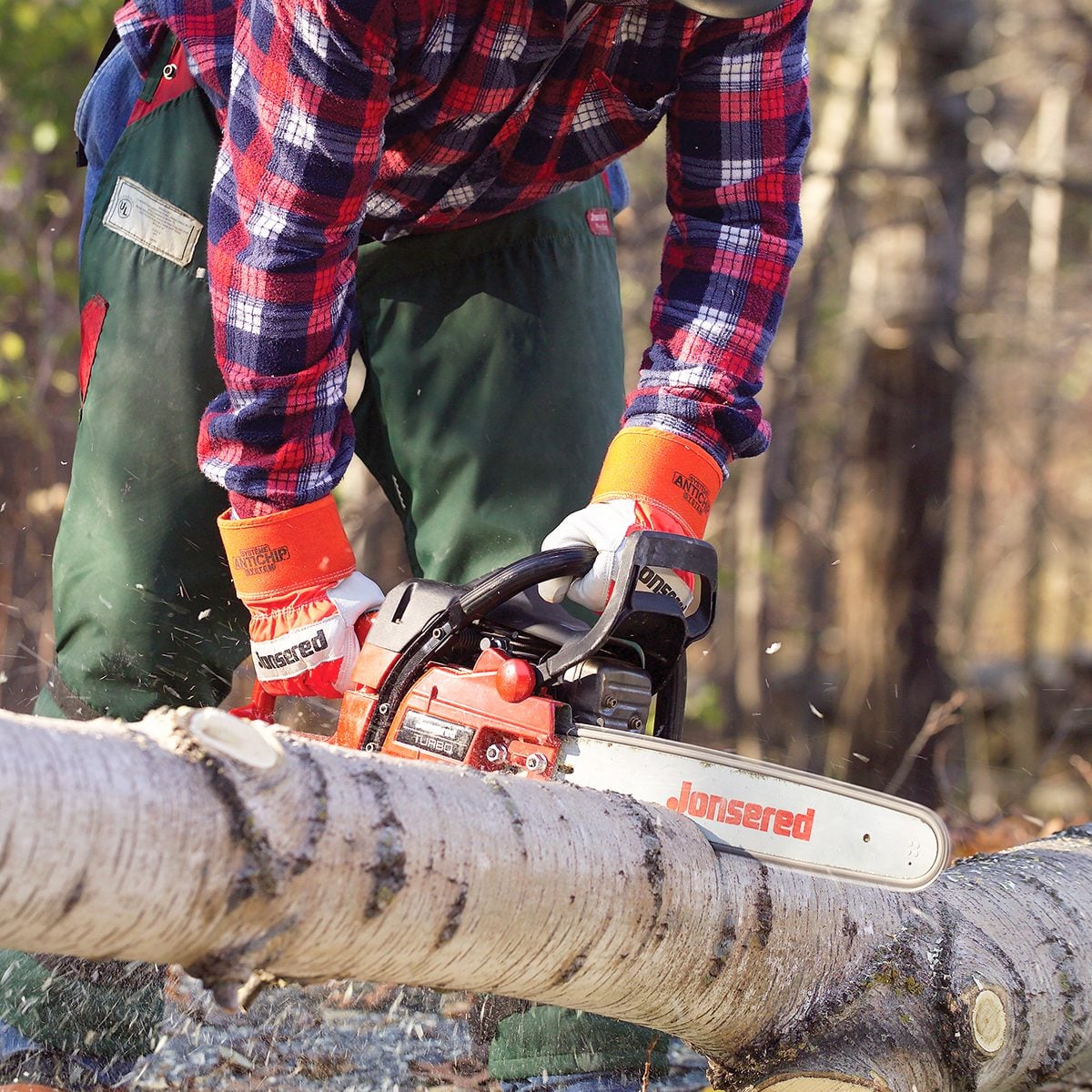
Chainsaw PPE is not optional. It is the uniform of people who prefer their legs, eyes, ears, and skull exactly where they are. At minimum, use the following protective gear every time you operate a chainsaw:
- Helmet or hard hat: Protects against falling limbs, branches, and debris.
- Eye and face protection: Safety glasses, goggles, or a face shield help protect against flying wood chips.
- Hearing protection: Gas chainsaws can be extremely loud, and hearing damage does not come with an undo button.
- Cut-resistant chainsaw chaps or pants: Designed to reduce the severity of leg injuries by clogging or slowing the chain.
- Gloves: Improve grip and protect hands from cuts, abrasions, vibration, and rough bark.
- Sturdy boots: Choose boots with ankle support, aggressive tread, and preferably steel toes.
- Close-fitting clothing: Avoid loose sleeves, dangling drawstrings, scarves, and anything that looks like it wants to be eaten by machinery.
PPE should fit properly and be in good condition. Chaps with deep cuts, cracked helmets, fogged goggles, or worn-out boots are not doing you favors. Inspect your gear before each session and replace damaged equipment.
Inspect the Chainsaw Before Use
A chainsaw that is well maintained cuts faster, cleaner, and more safely. A neglected chainsaw behaves like a raccoon in a toolbox: unpredictable, loud, and difficult to reason with.
Before starting, check the chain tension. A chain that is too loose can derail; a chain that is too tight can bind, overheat, and wear prematurely. The chain should sit snugly on the bar but still move smoothly when pulled by a gloved hand with the engine off and the brake disengaged.
Next, inspect the chain sharpness. A sharp chain pulls itself into the wood and produces chips. A dull chain produces dust, smoke, frustration, and the urge to push harder. Pushing harder is a classic sign that the saw needs sharpening, not that you need to prove anything to the maple tree.
Also check bar oil, fuel level, air filter, spark plug condition, chain brake, throttle lockout, stop switch, chain catcher, handles, nuts, bolts, and guards. If a safety device is broken, missing, or disabled, do not use the saw.
Understand Kickback Before It Understands You
Kickback is one of the most serious chainsaw hazards. It can happen when the upper tip of the guide bar touches an object or when the wood closes in and pinches the chain. The guide bar can suddenly jump back toward the operator with frightening speed. This is not a gentle suggestion from the saw; it is a violent motion that can cause severe injury.
To reduce kickback risk, keep the bar tip away from wood, branches, dirt, fences, rocks, and other objects. Always know where the nose of the bar is. Use both hands on the saw, wrap your thumb around the front handle, keep your left arm firm but not locked, and stand slightly to the side of the cutting path rather than directly behind the bar.
Use a low-kickback chain when appropriate, keep the chain sharp and properly tensioned, and make sure the chain brake works. A low-kickback chain can reduce risk, but it does not make the saw magically polite.
Start the Chainsaw the Safe Way
Never drop-start a chainsaw. Drop-starting means holding the saw in one hand while pulling the starter cord with the other. It may look fast in someone’s online video, but so do many things filmed moments before regret.
Start the saw on firm ground or another stable surface. Engage the chain brake first. Place the saw where the chain is clear of obstacles. Hold the front handle firmly, secure the rear handle with your foot or knee depending on the saw and manufacturer’s instructions, and pull the starter cord with control. Once the saw starts, keep the chain brake engaged until you are ready to cut.
For electric and battery chainsaws, follow the manufacturer’s starting procedure, keep cords clear if using a corded model, and remove the battery before adjusting the chain, cleaning the bar, or storing the tool.
Fuel and Oil With Care
Gasoline deserves respect because it is basically bottled bad news if handled carelessly. Refuel outdoors, away from sparks, flames, cigarettes, hot mufflers, and other ignition sources. Let a hot saw cool before refueling. Use an approved fuel container, wipe up spills, and move the saw at least 10 feet away from the fueling area before starting it.
Always use the correct fuel mixture for two-stroke engines if your saw requires mixed fuel. The wrong mixture can damage the engine. Also keep bar and chain oil filled. Running without enough bar oil increases friction, heat, wear, and the chance of poor cutting performance.
Clear the Work Area Before Cutting
Good chainsaw work begins with housekeeping. Clear away brush, loose limbs, rocks, vines, wire, tools, toys, and anything else that could trip you or touch the bar tip. Look for hidden metal in the wood, especially in old fence lines, landscaping timbers, storm debris, and trees near buildings. Nails and chainsaws are not friends.
Keep bystanders, pets, and enthusiastic helpers away from the cutting zone. People should stand well clear of limbing, bucking, and felling work. If you are felling a tree, the safe distance for others should be far greater than the height of the tree. For ordinary cleanup, no one should hover nearby to “watch real quick.” Real quick is how people end up real sorry.
Use Proper Body Position
Your stance matters. Stand with feet apart, knees slightly bent, and weight balanced. Keep a firm two-handed grip on the saw. Do not cut above shoulder height, do not overreach, and do not cut from a ladder. If the branch is too high to reach safely from the ground, use the right equipment or hire a professional.
Keep the saw close enough to control but not so close that your body is in the chain line. Avoid cutting with the bar directly in line with your face or torso. Let the saw do the cutting. If you must force it, stop and check the chain, the angle, or the bind in the wood.
Plan Every Cut
Wood moves. Sometimes it drops. Sometimes it rolls. Sometimes it springs back like it has been waiting all winter to settle a personal grudge. Before cutting, study the limb or log. Is it supported on one end or both? Is it under compression? Is the branch bent? Will the kerf open or close as the cut deepens?
When bucking logs, work from the uphill side when possible so cut sections do not roll toward you. Use wedges to prevent the bar from getting pinched. Avoid standing downhill from a log. Gravity has no loyalty.
When limbing, remove branches in a controlled sequence. Watch for limbs under tension. Do not cut limbs that are supporting a log if releasing them could cause the trunk to roll or collapse toward you. Keep your escape route clear as you work.
Be Extra Careful With Spring Poles
A spring pole is a bent sapling, branch, or small tree trapped under pressure. It may look harmless, but when released suddenly, it can whip back with enough force to injure or kill. Storm cleanup often creates spring poles, especially where trees have fallen into each other.
If you identify a spring pole, stop and think. Do not simply cut straight through it. The safer approach is to relieve the tension gradually from the compressed side with shallow cuts while standing out of the likely release path. If you are unsure, leave it alone and get professional help. No piece of firewood is worth being slapped by nature’s giant mousetrap.
Never Cut Near Power Lines
Chainsaw work around power lines is a hard no for homeowners. Even if a line looks dead, treat it as energized until the utility company confirms otherwise. Wet trees, metal tools, ladders, and human bodies can conduct electricity. If a tree or branch is touching a power line, call the utility company or emergency services.
After storms, downed trees may hide damaged electrical lines beneath leaves and debris. Walk the area carefully before bringing in a saw. If you see a wire, hear buzzing, smell burning, or notice arcing, back away and keep others away.
Know When Not to Use a Chainsaw
Some jobs are beyond safe DIY chainsaw use. Call a professional if the tree is large, leaning, cracked, rotten, hung up in another tree, close to a building, near power lines, on steep or unstable ground, or under heavy storm tension. Also call a pro if the cut requires climbing, working from a ladder, or operating the saw above shoulder height.
There is no shame in hiring help. The goal is not to prove you are brave. The goal is to finish the job with your property improved and your body still assembled according to the original factory settings.
Maintain the Chainsaw After Each Use
After cutting, let the saw cool and give it a simple post-work inspection. Brush away sawdust and chips. Clean the bar groove. Check the chain for damage, dull cutters, broken links, or uneven wear. Inspect the bar for burrs and wear. Refill bar oil if needed, and store fuel according to the manufacturer’s guidance.
If you used the saw in dirty, sandy, or muddy conditions, clean it carefully. Dirt dulls a chain quickly. A dull chain makes every future cut slower and more dangerous. Think of sharpening as a safety habit, not a hobby for people who alphabetize their garage shelves.
Prepare for Emergencies
Never work alone if you can avoid it. At minimum, tell someone where you are working and when you expect to finish. Keep a charged phone nearby, but not in the direct cutting zone where it can be crushed, soaked, or buried under branches.
Have a first-aid kit within reach, including supplies for heavy bleeding. Learn basic first aid before you need it. If someone is badly cut, call emergency services and apply firm direct pressure to the bleeding area while waiting for help. In remote areas, know your exact location, driveway access, road names, and any landmarks that can help responders find you quickly.
How to Use a Chainsaw More Effectively
Safety and efficiency are not enemies. In fact, the safest chainsaw operators are usually the most efficient because they do not waste energy fighting the saw. Here are practical habits that improve performance:
- Keep the chain sharp: Sharp cutters reduce vibration, heat, fuel use, and operator fatigue.
- Let the saw work: Forcing the bar into the wood increases the risk of binding and losing control.
- Cut at a comfortable height: Whenever possible, work between knee and waist height.
- Use wedges: Wedges help keep the cut open and prevent the bar from being pinched.
- Watch the kerf: If the cut begins to close, stop before the bar gets trapped.
- Take breaks: Fatigue makes your grip weaker, your footing sloppy, and your judgment suspiciously optimistic.
Common Chainsaw Mistakes to Avoid
One common mistake is cutting with a dull chain. Another is using the wrong saw for the job. A third is working too fast. Chainsaw work rewards patience. Rushing creates poor cuts, awkward posture, missed hazards, and moments that begin with “I thought I could just…”
Do not remove safety features. Do not run the saw one-handed. Do not cut with the tip of the bar. Do not operate under the influence of alcohol, drugs, or medication that affects balance or reaction time. Do not keep cutting after you feel tired, shaky, angry, cold, overheated, or distracted. A chainsaw does not care that you are almost done.
Real-World Experience: Lessons From Using a Chainsaw Around the Yard
The first lesson many homeowners learn is that the chainsaw is rarely the hardest part of the job. The real work is planning the cleanup. A fallen limb may take 10 minutes to cut and two hours to haul. Before starting, decide where the branches, logs, chips, and brush will go. Make a pile for firewood, a pile for brush, and a path for carrying material out. If the work area becomes a wooden obstacle course, stop and clean as you go.
Another experience-based tip is to start with the small stuff. When a large limb falls, the temptation is to attack the biggest section first. Usually, it is smarter to remove smaller branches that are not under tension, open up space, and improve visibility. This gives you better footing and helps you see how the larger wood is supported. The tree becomes less mysterious, which is nice because mysterious trees are terrible coworkers.
It also helps to keep tools nearby but outside the cutting zone. A plastic wedge, small axe, fuel, bar oil, scrench, file, first-aid kit, and water bottle can save repeated trips. However, do not scatter tools underfoot. Tripping over your own fuel can while holding a running saw is not the kind of multitasking anyone should practice.
Pay attention to sound and sawdust. A healthy cut produces steady chips and a consistent engine sound. Fine dust often means the chain is dull. Smoke may mean the chain is dull, the bar is pinched, or oiling is poor. A saw that starts cutting crooked may have unevenly sharpened teeth or bar wear. These little clues are the chainsaw’s way of saying, “Please maintain me before we both embarrass ourselves.”
Weather matters too. Wet grass, mud, snow, ice, poor lighting, and wind all raise the risk level. Wind can move branches overhead, shift partially cut limbs, or change the way a tree falls. If conditions feel sketchy, postpone the job. Firewood will still be firewood tomorrow.
Finally, develop a shutdown habit. When you finish a cut, release the throttle, engage the chain brake, and move with intention. If you need to walk more than a few steps, shut off the saw or keep the brake engaged according to the situation and manufacturer guidance. Many close calls happen between cuts, not during them, because the operator relaxes too soon.
The most effective chainsaw users are not the loudest, fastest, or most dramatic. They are the people who think before cutting, maintain their equipment, wear the gear, respect tension in wood, and stop when the job moves beyond their skill level. That may not look heroic on social media, but it looks fantastic at dinner when everyone still has all their fingers.
Conclusion
Using a chainsaw safely and effectively is about control. Control the tool by maintaining it. Control the work area by clearing hazards. Control the cut by understanding how the wood may move. Control your body position by keeping two hands on the saw, your footing stable, and the bar below shoulder height. Control the risk by wearing proper PPE and calling a professional when a job is too dangerous.
A chainsaw can save hours of labor and make outdoor cleanup far easier, but it demands your full attention. Treat every cut like it matters, because it does. Slow down, gear up, check the saw, plan the cut, and let the tool do the work. Your trees may not thank you, but your knees, ears, eyes, and future self probably will.
Note: This article is for general educational purposes only. Always read and follow your chainsaw manufacturer’s manual, local safety rules, and professional training guidance before operating a chainsaw.