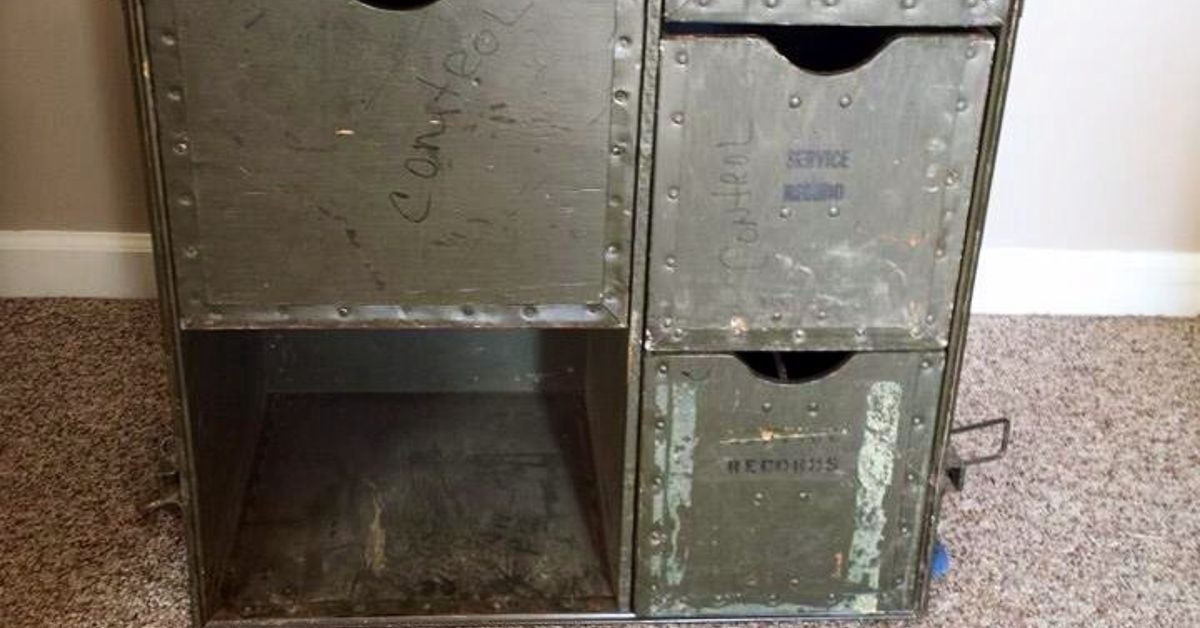
An up cycled Army field desk is not just a desk. It is a compact little command center with a backstory, a few battle scars, and the kind of personality modern flat-pack furniture can only dream about after drinking too much coffee. Originally designed for mobility, order, and practical use in demanding environments, the Army field desk has found a surprising second life in today’s homes, studios, workshops, and small-space offices.
Part vintage military furniture, part industrial home office hero, and part conversation starter, an upcycled Army field desk brings together history, sustainability, craftsmanship, and style. It can hold a laptop, organize stationery, display a lamp, store art supplies, or anchor a reading corner with the quiet confidence of something that has clearly seen more than a spreadsheet deadline.
In a world full of sleek desks that look like they were designed by a committee allergic to character, the restored field desk offers something different. It has hinges, drawers, handles, cubbies, metal corners, worn wood, old paint, and sometimes mysterious stamps that make you wonder where it has been. The goal of upcycling one is not to erase that story. The goal is to make it useful again while letting its rugged soul remain firmly intact.
What Is an Army Field Desk?
An Army field desk is a portable desk built for use away from a traditional office. Many historic examples were designed to fold, close, latch, and travel like a compact chest. Some versions opened into a writing surface with interior drawers, document slots, trays, and storage compartments. Others were larger field headquarters desks with folding legs, work surfaces, and storage sections that could be moved from place to place as needed.
The idea is closely related to campaign furniture, a category of furniture made for travel, military use, exploration, and temporary living. Campaign desks and field desks were built around one simple question: how do you create a functional workspace when the “office” might be a tent, a command post, a ship cabin, or a room that will be packed up tomorrow?
That practical design is exactly why these desks still feel fresh today. Modern homes need flexible furniture. Apartments need storage. Remote workers need compact workstations. Makers need surfaces that can handle a little abuse. An Army field desk answers all of that with a hinge, a handle, and a look that says, “Yes, I can organize your tax receipts and survive a dust storm.”
Why Upcycle an Army Field Desk?
Upcycling means taking an existing object and improving its function, appearance, or value instead of throwing it away or letting it gather dust. With an Army field desk, upcycling is especially rewarding because the original piece usually already has solid bones. These desks were not built to be delicate. They were built to move, store, protect, and work.
There are three big reasons people fall in love with upcycled military desks. First, they are practical. Drawers, cubbies, hidden compartments, and folding surfaces make them useful in small spaces. Second, they are sustainable. Giving old furniture a second life reduces demand for new materials and keeps usable pieces out of the waste stream. Third, they look fantastic. A vintage military desk can add instant depth to a room, especially when paired with modern lighting, a comfortable chair, and simple accessories.
The best upcycled Army field desk does not pretend to be brand-new. Instead, it balances restoration and restraint. The wood may be cleaned and sealed. The metal may be stabilized. The hardware may be polished just enough. The old dents remain like footnotes. The final result is a working desk with history, not a museum piece trapped under glass.
The Design Appeal: Rugged, Portable, and Surprisingly Elegant
Military field furniture often has a visual language that interior designers love: honest materials, strong proportions, visible hardware, and efficient storage. An Army field desk may include brass pulls, steel corners, leather handles, painted markings, dovetailed drawers, folding legs, or a drop-front writing surface. These details give the piece texture and authenticity.
In a modern interior, that ruggedness creates contrast. Place an upcycled field desk in a white room with clean walls and it immediately becomes the anchor. Put it beside a leather chair and a vintage task lamp, and suddenly the corner looks like the office of a novelist who knows how to change a tire. Use it in a child’s study area, and it becomes a magical box of pencils, maps, notebooks, and secret projects.
The desk also works beautifully with several decor styles. In an industrial loft, it feels natural beside exposed brick and metal shelving. In a farmhouse room, its worn wood and utilitarian form add warmth. In a minimalist apartment, it prevents the space from looking too sterile. In a collector’s office, it can display books, maps, old cameras, or travel mementos without feeling staged.
How to Choose the Right Field Desk for Upcycling
Before buying or restoring an Army field desk, inspect it carefully. Character is good. Structural collapse is less charming. Look for a desk with a stable frame, working hinges, usable drawers, and no severe rot. Surface scratches, faded paint, small chips, and worn edges are usually manageable. Major water damage, missing structural panels, or badly warped surfaces may require advanced repair.
Check the Structure
Open and close the desk several times. If it folds, make sure the folding parts move without forcing them. Check whether the legs lock into place, whether the lid sits flat, and whether the drawers slide smoothly. A desk that feels slightly stiff may simply need cleaning and lubrication. A desk that feels like it is auditioning for a haunted-house sound effect may need deeper repair.
Inspect the Hardware
Original hardware is part of the charm. Handles, latches, hinges, pulls, brackets, and corner guards can often be cleaned instead of replaced. If a piece of hardware is missing, search for a period-appropriate replacement rather than installing something too shiny and modern. The goal is harmony, not a hardware store identity crisis.
Look for Useful Interior Storage
The magic of an Army field desk often lives inside. Small drawers, document slots, cubbies, and trays make the desk more useful for daily life. These compartments can hold chargers, notebooks, letters, sketching tools, cables, stamps, fountain pens, or the mysterious collection of paper clips every household somehow develops.
Step-by-Step Ideas for Upcycling an Army Field Desk
Every field desk is different, but the upcycling process usually follows a sensible rhythm: clean, repair, sand, protect, style, and use. Think of it like a spa day for furniture, except the patient may weigh forty pounds and smell faintly of old garage.
1. Clean Before You Judge
Start with a thorough cleaning. Dust, old wax, grease, mildew, and storage grime can hide the real condition of the piece. Use a soft brush, a vacuum with a brush attachment, and a mild cleaner suitable for wood or metal. Avoid soaking old wood. For metal parts, wipe gently and dry quickly to reduce the chance of corrosion.
2. Repair Only What Needs Repair
Loose joints, missing screws, cracked drawer bottoms, and damaged handles should be addressed before cosmetic work begins. Wood glue, clamps, replacement screws, and small patches can make a huge difference. However, be careful not to over-restore. A field desk should not look like it just rolled out of a luxury showroom wearing a tuxedo. A little wear gives it authority.
3. Sand With Respect
Sanding can smooth rough spots and prepare surfaces for paint, stain, or sealer. Use a gentle approach, especially if the desk has original markings, old labels, or historic paint. Sanding with the grain helps prevent scratches. If the desk has a painted military finish you want to preserve, avoid aggressive sanding and focus on cleaning and sealing instead.
4. Choose a Finish That Matches the Story
There are several good finish options. A clear matte or satin topcoat can protect the original patina. A wood stain can revive faded surfaces while keeping the grain visible. A durable furniture paint can modernize a badly damaged piece. Olive drab, charcoal, black, deep navy, warm walnut, and weathered oak tones all work well with the military-industrial style.
If you paint the desk, choose thin coats over one heavy coat. Heavy paint can clog hinges, blur details, and make drawers stick. Thin coats give a cleaner, longer-lasting finish. For high-touch surfaces, a protective clear coat is worth the extra effort. Your future coffee mug will thank you.
5. Update the Interior for Modern Life
The inside of an Army field desk can be adapted without ruining its character. Add felt or cork liners to drawers. Install small removable organizers for pens and cables. Use adhesive-backed LED lighting if the compartments are deep. Add a slim power strip nearby rather than cutting into original wood. A thoughtful modern upgrade should feel reversible, subtle, and useful.
Best Uses for an Upcycled Army Field Desk
The beauty of this desk is its versatility. It can become a home office station, a writing desk, a craft cabinet, a bar cabinet, a hallway command center, or a compact studio workstation. Because many versions close up neatly, they are ideal for people who want a workspace that can disappear when the workday ends.
Home Office Desk
For remote work, an upcycled Army field desk offers storage without visual clutter. Keep a laptop on the main surface, store notebooks in the drawers, and tuck cables into interior compartments. Add a slim monitor arm only if the desk can support it safely. Otherwise, keep the setup light and flexible.
Writing and Journaling Station
A field desk feels almost purpose-built for letters, notebooks, fountain pens, and quiet morning writing. The drop-front or folding surface creates a focused writing area, while the drawers hold stationery and envelopes. It brings romance back to paperwork, which is impressive because paperwork has been trying very hard not to be romantic.
Craft and Art Supply Storage
Artists and makers can use the cubbies for brushes, markers, thread, carving tools, glue, scissors, and sketchbooks. The desk’s rugged nature makes it less precious than a delicate antique writing table. It invites use, which is exactly what upcycled furniture should do.
Entryway Command Center
In an entryway, a compact field desk can store keys, mail, sunglasses, dog leashes, and small everyday items. Add a tray on top, a mirror above it, and a small lamp. Suddenly the drop zone looks intentional instead of like your house sneezed accessories near the door.
Styling Tips for a Vintage Military Desk
Because an Army field desk already has strong character, styling should be simple. Let the desk be the star. Pair it with a chair that complements its age and texture. A leather chair adds warmth. A black metal chair leans industrial. A simple wooden chair keeps the look understated. Avoid overly ornate seating unless you want the room to feel like a dramatic argument between furniture eras.
Lighting matters. A vintage-style task lamp, brass desk lamp, or matte black adjustable lamp works well. Add one or two personal objects: a small framed photograph, a ceramic cup for pens, a stack of field notebooks, or a plant. Greenery softens the military edge and reminds everyone that this desk now serves peaceful missions, such as paying bills and finding the good scissors.
Wall decor can reinforce the theme without turning the room into a costume. Consider maps, black-and-white photography, architectural prints, or simple shelves. If the desk has original markings, avoid covering them. Those details are part of the visual value.
Common Mistakes to Avoid
The first mistake is over-restoration. Sanding away every mark, replacing all hardware, and applying a glossy modern finish can strip the desk of its identity. The second mistake is ignoring function. A desk that looks beautiful but has stuck drawers, wobbly legs, or sharp rusty edges will quickly become decorative clutter. The third mistake is using the wrong finish for the job. A surface used every day needs better protection than a display piece.
Another common mistake is buying a desk based only on looks. Always consider size, height, storage, and comfort. Some field desks are lower than modern office desks. Others are better as side tables, display pieces, or occasional workstations. Measure your chair, your room, and your actual work habits before committing.
How an Upcycled Army Field Desk Supports Sustainable Living
Upcycling furniture is a practical way to reduce waste while creating a home that feels personal. Instead of buying a new desk made from newly harvested materials, shipped through long supply chains, and replaced when trends change, you are extending the life of an existing object. That is sustainability with a screwdriver and a little patience.
An Army field desk is especially suited to this approach because it was designed for durability. Many pieces have already survived decades. With careful cleaning, repairs, and a protective finish, they can continue serving for many more years. This is the opposite of disposable design. It is furniture with stamina.
There is also an emotional sustainability at work. People tend to keep objects that feel meaningful. A restored field desk has a story, and stories make furniture harder to throw away. When a piece becomes part of your daily routine, it stops being just decor. It becomes a companion in the room.
Real-Life Experience: Living With an Upcycled Army Field Desk
The first thing you notice after bringing home an upcycled Army field desk is that it changes the mood of a room immediately. Not loudly, not dramatically, but with a quiet, squared-shoulder presence. It does not beg for attention. It simply sits there looking useful, seasoned, and mildly unimpressed by your plastic cable organizer.
Cleaning one for the first time can feel like archaeology. Dust collects in corners you did not know furniture could have. Old drawer runners may resist at first, then slowly loosen after careful cleaning. A faded label, a stamped number, a worn handle, or a patched corner can become the detail that makes the whole project worthwhile. You begin by thinking you are restoring a desk. Halfway through, you realize you are negotiating with history.
One practical lesson is to take photos before disassembly. Hardware that looks obvious in the moment becomes surprisingly mysterious when spread across a table. Hinges, screws, brackets, and latches should be labeled or grouped. Small containers are your friend. So is patience. Rushing a restoration is how people end up with three leftover screws and a drawer that closes like it has personal objections.
Another experience worth mentioning is the importance of smell. Vintage furniture can carry odors from storage, damp rooms, smoke, oil, or old finishes. Gentle airing, cleaning, activated charcoal, baking soda placed nearby, and fresh drawer liners can help. Avoid masking odors with heavy fragrance. A field desk should smell like clean wood and usefulness, not like a candle shop wearing combat boots.
Using the finished desk is the best part. The compartments naturally encourage order. Pens go in one drawer. Paper goes in another. Chargers stay tucked away. The writing surface feels intentional, almost ceremonial. Opening the desk to work creates a small ritual, which can make even ordinary tasks feel more focused. Closing it at the end of the day is equally satisfying. Work disappears. The room relaxes. Your laptop stops staring at you like a needy raccoon.
There are quirks, of course. Some field desks are not perfectly ergonomic by modern standards. A taller user may need a different chair or a raised work surface. Some drawers may remain a little stiff because old wood has opinions. The finish may show new scratches if used heavily. But those imperfections are part of the appeal. This is not a sterile showroom desk. It is a working piece with a past and a future.
The biggest surprise is how many conversations it starts. Guests ask what it is, where it came from, how it opens, and whether the drawers are original. Children want to explore the compartments. Adults want to touch the hardware. Even people who claim not to care about furniture suddenly become very interested in hinges. That is the power of a well-upcycled Army field desk: it makes function fascinating.
Conclusion
An up cycled Army field desk is more than a clever furniture makeover. It is a practical workspace, a storage solution, a sustainable design choice, and a piece of history reintroduced into everyday life. Whether used as a compact home office, a writing station, a craft desk, or an entryway organizer, it brings character that new furniture rarely matches.
The best approach is simple: preserve what matters, repair what fails, update what helps, and style it with restraint. Let the old wood, metal hardware, markings, and portable design tell their story. With thoughtful upcycling, an Army field desk can move from field use to home use with dignity, charm, and just enough rugged attitude to make your office chair sit up straighter.
Note: This article is written for web publishing and is based on real historical furniture context, practical restoration methods, and sustainable upcycling principles. It does not include external source links in the body copy, keeping the final HTML clean for publication.