A campfire is easy to romanticize when someone else has already built it. The flames dance, the marshmallows toast, and everybody suddenly becomes a philosopher. But when the wood is damp, the wind is rude, and your last match produces one tiny puff of smoke, fire starting becomes less of a cozy tradition and more of a practical engineering problem.
The best fire starters solve that problem by providing dependable heat long enough for tinder and kindling to catch. Some create sparks. Others produce a sustained flame. The most reliable systems combine both, because no single gadget can magically transform a pile of rain-soaked logs into a roaring blaze.
This guide examines the most useful fire starters for camping, backpacking, fireplaces, emergency kits, and backyard fire pits. It also explains how to build a fire in wet weather, choose the right ignition system, and avoid mistakes that can turn an enjoyable evening into an awkward conversation with the fire department.
What Is a Fire Starter, Exactly?
The term fire starter is often used for two different parts of the fire-building process.
An ignition tool creates the initial flame or spark. Examples include lighters, stormproof matches, ferrocerium rods, and magnesium bars. A tinder product catches that spark and burns long enough to ignite small pieces of wood. Waxed fibers, cotton tinder, fatwood, wood shavings, and solid fuel cubes fall into this category.
A ferro rod without good tinder may produce an impressive shower of sparks and absolutely no fire. A wax fire starter without a lighter or match is simply a small, oddly shaped object. Reliable fire making requires both components, followed by dry kindling and properly arranged fuel wood.
What Makes a Good Wet-Weather Fire Starter?
A fair-weather match may work perfectly beside a backyard fire pit, but outdoor conditions demand more. A dependable camping fire starter should perform well in several areas.
Water Resistance
The tool should survive humidity, rain, snow, and occasional accidental submersion. Ferro rods are naturally useful in wet conditions because they can often be wiped dry and used immediately. Matches and tinder require sealed packaging or water-resistant construction.
Useful Burn Time
A brief spark is enough for fluffy, dry tinder. Damp kindling needs sustained heat. In rainy conditions, a starter that burns for one or two minutes gives moisture time to evaporate and allows thin wood shavings to ignite.
Wind Performance
Wind can extinguish a normal lighter or match before it reaches the tinder. Stormproof matches, protected-flame lighters, and spark-producing rods are better suited to exposed campsites. Even then, shielding the ignition area with your body, pack, or another safe windbreak makes the job easier.
Simple Operation
An emergency is not the ideal moment to discover that your fire starter requires the hand strength of a blacksmith and the coordination of a concert pianist. Choose tools you can operate while wearing gloves, feeling cold, or working with stiff fingers.
Packability
Backpackers need compact, lightweight products. Car campers can carry bulkier wax starters, torches, or larger match containers. The best choice depends partly on whether every ounce matters or your equipment is traveling in a vehicle with cup holders.
The Best Types of Fire Starters
1. Stormproof Matches
Stormproof matches are among the easiest emergency fire starters to use. Their heavily coated heads and extended combustible sections are designed to continue burning in strong wind and rain. Some versions can even reignite after briefly being submerged.
Products such as UCO Stormproof Matches provide a noticeably longer burn than ordinary wooden matches. Larger Titan-style matches offer an even longer flame, making them useful when damp tinder needs additional heat.
Store stormproof matches in a waterproof case with spare striker surfaces. The striker matters just as much as the match; a box full of dry matches is surprisingly unhelpful when the only striker has become wet cardboard confetti.
Best for: Beginners, emergency kits, paddling trips, cold weather, and fast ignition in difficult conditions.
2. Ferrocerium Rods
A ferrocerium rod, commonly called a ferro rod or fire steel, produces extremely hot sparks when scraped with a hard-edged striker. It does not depend on liquid fuel, batteries, or a delicate internal mechanism.
Ferro rods are especially dependable in rain because surface moisture can be wiped away. They also work at temperatures where some fuel-powered lighters struggle. Full-size rods are generally easier to control than tiny keychain models, particularly when your hands are cold.
Examples include the Exotac fireROD and other outdoor rods with protected tinder compartments. Some models use replaceable rods, waterproof storage capsules, or oversized handles for a more secure grip.
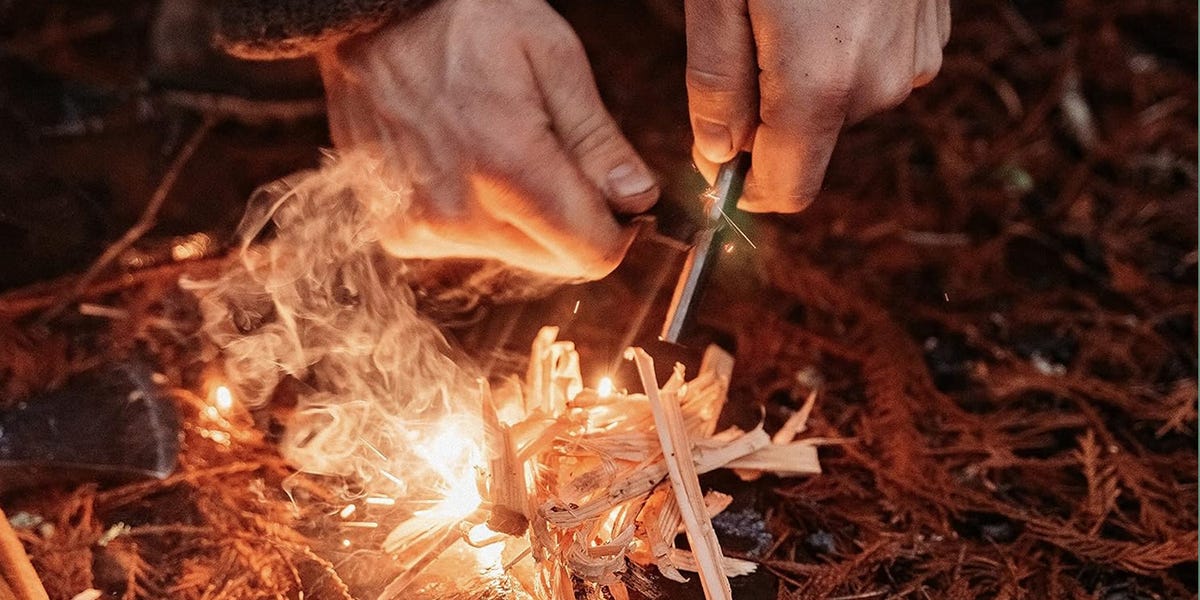
The catch is technique. A ferro rod sends sparks rather than producing a continuous flame, so it needs finely prepared tinder. Pull apart treated cotton, shave dry inner wood into curls, or scrape fatwood into a fluffy pile before striking.
Best for: Backpacking, bushcraft, long-term emergency kits, freezing weather, and reusable fire-starting systems.
3. Disposable Butane Lighters
The humble disposable lighter deserves more respect than it receives. It is inexpensive, lightweight, familiar, and capable of producing a controlled flame with one hand. For routine camping, it is often the fastest way to light dry tinder or a camp stove.
However, standard lighters are not invincible. A wet spark wheel may stop functioning until it dries, strong wind can blow out the flame, and cold temperatures can reduce fuel performance. Keep the lighter warm in an inside pocket and protect it inside a sealed bag.
A simple lighter is best treated as the primary tool, not the only tool. Carrying a ferro rod or stormproof matches as backup adds very little weight and prevents a small equipment failure from becoming the evening’s main entertainment.
Best for: General camping, fireplaces, fire pits, camp stoves, and everyday emergency kits.
4. Waterproof Tinder Tabs and Treated Cotton
Commercial tinder tabs provide the missing bridge between a spark and larger kindling. Products such as Exotac quickLIGHT and SOL Tinder Quik use treated fibers that can be pulled apart to expose a fluffy surface.
The increased surface area catches sparks more easily than a compressed tab. Once lit, the material produces a flame that can ignite pencil-thin sticks and feathered wood. Water-resistant versions can shed surface moisture, although they should still be stored in a sealed container.
These products are extremely compact, making them practical for hiking packs, survival tins, glove compartments, and kayak dry bags. Pack more than one portion. Wet-weather fires have a habit of consuming your first attempt while teaching you exactly what you should have done.
Best for: Lightweight kits, ferro rods, emergencies, and rainy or humid environments.
5. Wax-Based Fire Starters
Wax starters may contain compressed sawdust, wood fibers, cardboard, or cotton saturated with paraffin or beeswax. They usually light with a match or lighter and burn longer than untreated paper.
Long burn time makes wax starters useful for fireplaces, wood stoves, backyard fire pits, and car camping. They are forgiving when kindling is imperfect or slightly damp. Many can be broken into smaller portions, although the manufacturer’s directions should determine how much to use.
Wax products are less convenient for ultralight backpacking because they can be bulky or messy in hot weather. Keep them wrapped so they do not share their waxy personality with clothing, cookware, and granola bars.
Best for: Home fireplaces, fire pits, RV trips, cabins, and car camping.
6. Fatwood
Fatwood comes from resin-rich sections of pine, often near old stumps or branch joints. The concentrated resin allows thin pieces and shavings to burn hot, even when the outside feels damp.
Commercial fatwood sticks are inexpensive, have a long shelf life, and avoid the need for liquid accelerants. Shaving a stick into thin curls produces better tinder than trying to ignite the entire chunk. A ferro rod may light a pile of very fine resinous scrapings, while larger curls are easier to ignite with a flame.
Fatwood creates dark smoke while first catching, so it should be used outdoors or in a properly vented fireplace according to local and product guidance.
Best for: Fireplaces, bushcraft kits, camping, and damp environments.
7. Solid Fuel Cubes
Solid fuel cubes and similar packaged starters bring their own dependable fuel. They burn with a sustained flame and are useful when natural tinder is scarce, frozen, or saturated.
These cubes are especially helpful in emergency kits because each piece is portioned and individually protected. Depending on the formulation, they may have a noticeable odor or leave residue, so follow the package instructions and avoid using them in an enclosed area.
Best for: Emergency preparedness, snow camping, wet kindling, and rapid fire building.
8. Magnesium Fire Starters
A magnesium fire starter typically combines a block of magnesium with a ferrocerium striking rod. The user shaves a small pile of magnesium from the block, places the shavings beside prepared tinder, and ignites them with sparks.
Burning magnesium produces intense heat, which can help ignite stubborn material. The method works, but collecting a useful pile of shavings requires patience. Wind can scatter the lightweight pieces, and scraping them onto wet ground defeats much of the purpose.
Prepare the shavings on bark, foil, or another dry platform. Magnesium systems are durable and compact, but they require more practice than matches or a lighter.
Best for: Bushcraft practice, durable backup kits, and users comfortable with spark-based ignition.
The Most Reliable Fire-Starting Kit
The strongest setup is not one expensive gadget. It is a small collection of complementary tools. A practical wet-weather kit can include:
- One disposable butane lighter for speed
- One full-size ferro rod and dedicated striker
- Several stormproof matches in a waterproof case
- Four to six waterproof tinder tabs
- A small amount of fatwood or a wax fire starter
- A sturdy resealable bag or waterproof pouch
This system provides three independent ignition methods and more than one type of tinder. If the lighter becomes wet, the ferro rod remains available. If your hands are too cold to prepare delicate tinder, a stormproof match and wax starter can provide a longer flame.
How to Start a Fire in the Rain
Confirm That Fires Are Allowed
Rain does not automatically eliminate wildfire danger. Regional restrictions may remain in effect because surrounding vegetation, deep ground fuels, or nearby areas are still dry. Check campground rules and local land-management alerts before building a fire.
Choose a Protected Location
Use an existing fire ring whenever possible. Avoid low branches, roots, tents, vehicles, steep slopes, and dry vegetation. Do not build beneath a rock overhang that can trap heat or crack from thermal stress.
Raise the Fire Above Wet Ground
Wet soil absorbs heat and can soak tinder from below. Create a platform with split sticks or another appropriate dry base inside the fire ring. The goal is to separate the first flame from mud, standing water, and saturated organic material.
Find Dry Wood Inside Wet Wood
A branch can be wet outside and dry at its center. Split thicker dead-and-down wood to expose the inner material. Create feather sticks by shaving thin curls that remain attached to a stick. These curls catch more easily because they are thin and protected from surface moisture.
Look for small dead twigs beneath dense evergreen branches or other naturally sheltered areas. Follow local collection rules, use only permitted dead-and-down material, and never damage live trees for convenience.
Prepare Everything Before Ignition
Build separate piles of tinder, matchstick-sized kindling, pencil-sized sticks, and larger fuel. Have far more small kindling than seems necessary. In wet weather, the young fire must generate enough heat to dry each new layer.
Use a Long-Burning Starter
Place waterproof tinder, a wax starter, or fine fatwood shavings under the smallest kindling. Light it with a protected lighter or stormproof match. If using a ferro rod, bring the rod close to the tinder rather than throwing sparks from a heroic distance.
Feed the Fire Gradually
Add small pieces only after the first layer is burning strongly. Maintain air spaces between sticks. Piling on large wet logs too early smothers the flame and creates enough smoke to make everyone at camp smell like a disappointed chimney.
Common Fire-Starting Mistakes
Starting Before the Materials Are Ready
Lighting a match and then searching for kindling wastes precious burn time. Complete all preparation first. The flame should be the final step, not the opening ceremony.
Using Kindling That Is Too Large
Large sticks require more heat than a small starter can supply. Begin with thin shavings and twigs, then increase the fuel size gradually.
Blocking Airflow
Combustion needs oxygen. A tightly packed mound of damp wood traps smoke and steam while starving the flame. Loose teepee, lean-to, or log-cabin arrangements create pathways for air.
Relying on One Ignition Tool
A single lighter can break, empty, freeze, or become wet. Redundancy is not excessive when the backup weighs less than a snack.
Using Gasoline or Improvised Liquid Fuel
Gasoline vapors can ignite violently and travel back toward the container. Never use gasoline to start or restart a campfire, fireplace, or fire pit. Never pour liquid fuel onto an ignition source, glowing coals, or a fire that merely appears to be out.
Fire Safety Matters More Than Fire-Starting Skill
Keep the fire small and attended at all times. Have water and a shovel available before ignition. Children and pets should remain a safe distance away, and fires should never be built inside tents, vehicles, garages, or other enclosed or partially enclosed spaces.
When finished, drown the fire with water, stir the ashes and embers, and add more water. Continue until everything is cool. Do not assume a fire is out because flames and smoke have disappeared. If the remains are too hot to touch safely, they are too hot to leave.
Field Experience: What a Rainy Night Teaches About Fire Starters
Imagine arriving at a forest campground shortly before sunset. Rain has been falling since lunch. The fire ring contains a shallow puddle, every exposed twig feels like a refrigerated sponge, and the group has already announced plans for hot food. Naturally, everyone looks toward the person carrying the fire kit.
The first lesson appears immediately: an ignition tool cannot replace preparation. A lighter may produce a perfect flame, but holding it beneath a wet branch accomplishes little beyond heating your thumb. The successful approach begins by collecting and processing wood before attempting to light anything.
Thicker dead branches are often more useful than tiny exposed twigs. After their wet bark is removed and the wood is split, the centers may be surprisingly dry. Thin curls shaved from the inner wood become feather sticks. Pencil-thin pieces are stacked nearby, followed by larger split sections that can be warmed beside the growing fire.
A platform of dry split sticks keeps the tinder above the wet bottom of the fire ring. A treated tinder tab is pulled apart until its fibers resemble a tiny cotton cloud. Fluffing the material is important: a compact tab may resist sparks, while exposed fibers ignite quickly.
The ferro rod works after being wiped against a sleeve, but the first spark shower misses because the striker is held too far away. On the second attempt, the rod is positioned directly over the tinder while the striker is pulled back. The sparks land where intended, and a small flame appears.
This is the moment when impatience usually attacks. Someone wants to place a wrist-thick branch over the flame because it looks impressively wood-like. That branch would absorb heat, release steam, and crush the developing fire. Instead, tiny feathered pieces are added one at a time. The flame grows slowly but steadily.
Wind pushes rain beneath the tree cover, so a backpack is positioned several feet away as a temporary windbreak without crowding the fire. The kindling arrangement remains open enough for air to circulate. As the heat increases, damp pieces placed nearby begin drying before they are added.
The resulting fire is not created by a single miracle product. It succeeds because a reusable spark source, reliable tinder, split wood, a dry platform, and patient fuel management work together. The tinder tab buys time. The ferro rod provides dependable ignition. The prepared wood allows the flame to progress instead of spending all its energy boiling water.
A second lesson becomes obvious after dinner: the fire kit must remain protected even after the fire is burning. Leaving the lighter, matches, and unused tinder beside the fire ring exposes them to rain, sparks, and accidental damage. The remaining supplies go back into their waterproof pouch immediately.
The final lesson comes when it is time to leave. Rain is still falling, but weather is not an extinguishing plan. Water is poured over the fire while the coals are stirred. More water follows until no heat remains. The cold, wet ashes are less exciting than the flames, but responsible fire building always ends with complete extinguishment.
Wet-weather experience ultimately changes how people evaluate fire starters. The flashiest tool is not necessarily the most useful. A dependable kit is simple, redundant, protected from moisture, and familiar enough to operate under pressure. Practice also matters. Testing a ferro rod safely at home or in a controlled campsite is much smarter than reading its instructions for the first time during a cold downpour.
Conclusion
The best fire starters for rain, wind, and cold conditions combine reliable ignition with tinder that burns long enough to establish kindling. Stormproof matches are easy to operate, ferro rods provide durable backup, and ordinary butane lighters remain excellent primary tools when kept dry. Wax starters, treated tinder, fatwood, and solid fuel cubes supply the sustained flame that damp wood often requires.
Whichever system you choose, prepare the site and fuel before striking the first spark. Carry more than one ignition method, practice using your equipment, obey local restrictions, and extinguish every coal completely. A good fire starter can rescue a rainy camping evening, but good judgment keeps that evening from becoming local news.
SEO Information
Note: Product availability and specifications may change. Review current manufacturer instructions, campground regulations, and local fire restrictions before use.