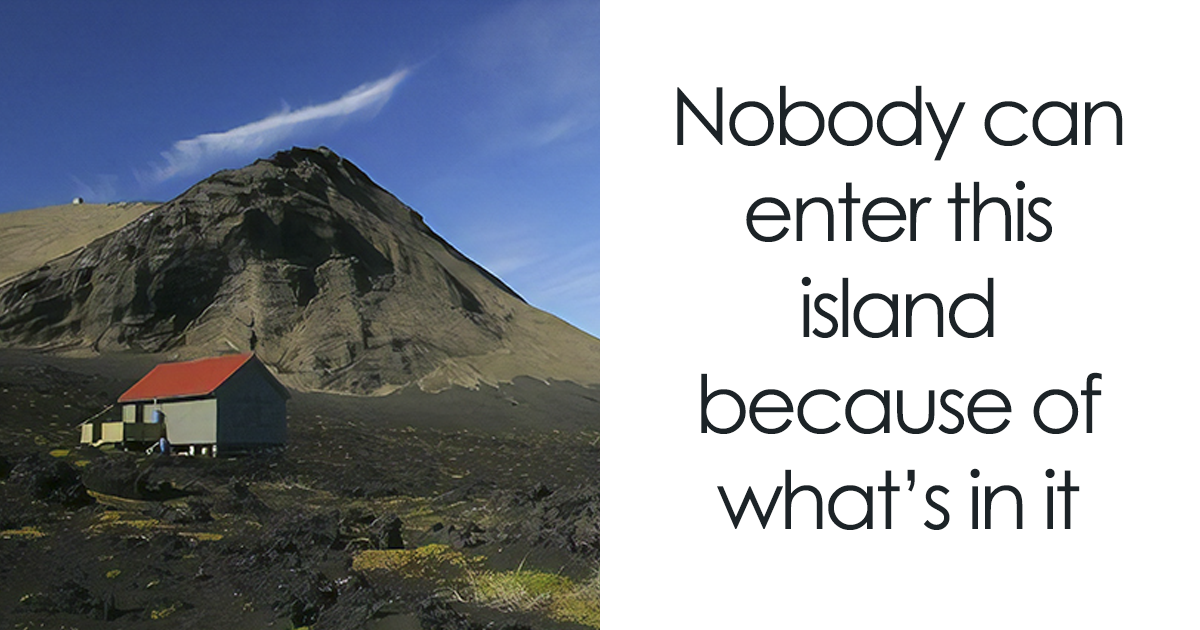
Most islands spend their lives being old, mysterious, and vaguely smug about it. Surtsey, on the other hand, is the rare island that arrived late to the planet and still managed to become legendary. It did not exist on any map before November 1963. Then the North Atlantic started boiling, ash blasted into the air, and a brand-new piece of Earth clawed its way above the ocean south of Iceland.
That alone would make Surtsey fascinating. But this island has another twist: almost nobody is allowed to set foot on it. No casual tourism. No beach towels. No “just one quick selfie.” Surtsey is protected so strictly that even scientists who do visit must follow careful rules to avoid contaminating it. In other words, the island is less “hidden paradise” and more “VIP section for volcanologists, botanists, and people with extremely clean boots.”
So why is one of the world’s youngest islands off-limits? Because Surtsey is one of the best natural experiments on Earth. It lets researchers watch what happens when brand-new land appears out of nowhere and life has to start from scratch. No landscaping crew. No imported palm trees. Just raw rock, salt spray, wind, birds, seeds, microbes, and time.
Meet Surtsey, the Island Born in Public
Surtsey emerged off Iceland’s southern coast after an undersea volcanic eruption broke the ocean’s surface on November 14, 1963. Fishermen first noticed smoke and ash where there should have been open water. Over the next several years, eruptions continued, piling up lava, ash, and tephra until a new island stood above the Atlantic. The eruption lasted until 1967, giving the world something geologists almost never get to watch in real time: the birth of an island.
The island was named after Surtr, the fire giant of Norse mythology, which is honestly excellent branding. If you are going to erupt from the sea in a cloud of steam and molten rock, you may as well sound mythic. During its early life, Surtsey grew quickly and dramatically. It became one of the clearest examples of what scientists now call a “Surtseyan” eruption, where magma and seawater collide in explosive style. That means Surtsey did not just become an island. It became a geological reference point.
And yes, the island made an immediate impression. Its appearance was so sudden and so spectacular that it drew international attention. At one point, journalists even landed there during the early days of the eruption, which sounds bold if you are feeling generous and wildly ill-advised if you are feeling honest.
Why Nobody Can Just Walk Onto It
Here is the important truth behind the headline: Surtsey is not literally inaccessible to every human being. But for ordinary people, it may as well be. The island is a protected nature reserve, and visiting it without a permit is prohibited. Access is restricted because Surtsey is far more valuable as a pristine scientific site than as a bucket-list destination.
That decision was made early, and it was brilliant. Iceland protected Surtsey in 1965 while the island was still young, then reinforced that protection over the years. The goal was simple but powerful: let nature do its thing with as little human interference as possible. That way, scientists could observe how plants, birds, insects, microbes, and marine life colonize totally new land.
Think about how unusual that is. Most ecosystems on Earth have already been altered by people in one way or another. Roads, buildings, pollution, farming, invasive species, boots, tires, snack wrappers, bad ideas. Surtsey offered something incredibly rare: a relatively untouched baseline. Researchers could study primary ecological succession, meaning the process by which life establishes itself on land that starts out barren.
That is why even approved visitors have to be careful. Seeds, insects, microbes, or bits of organic material accidentally carried in on clothing could distort the very experiment Surtsey exists to preserve. On this island, an innocent crumb is not just a crumb. It is a possible ecological plot twist.
From Black Rock to Living World
When Surtsey first appeared, it was mostly a harsh pile of volcanic material. No soil. No grass. No cozy little meadow whispering, “Come picnic here.” It looked like the kind of place you would expect a fantasy villain to rent for the summer.
But nature does not waste time. Seeds and plant fragments arrived by sea, wind, and birds. By the mid-1960s, plant life had already started to colonize parts of the island. Over time, the process accelerated. Mosses and lichens appeared. Shore plants established themselves. Sea sandwort became especially successful and spread widely across suitable areas. The island slowly transformed from raw volcanic ground into a place with recognizable ecological zones.
Birds played an outsized role in that transformation. Some visited early. Nesting followed later. Once seabirds began breeding there, they effectively became flying fertilizer systems. Their droppings carried nutrients from the ocean onto land, enriching the poor volcanic substrate and making it easier for more plants and small animals to thrive. In ecology, this is called succession. In plain English, it means birds showed up and accidentally became landscape architects.
Surtsey’s birdlife became increasingly important as the ecosystem matured. Researchers have observed dozens of bird species in or near the island over the decades, and nesting colonies helped reshape the island’s biological future. More nutrients meant more plant growth. More plant growth meant more habitat complexity. More habitat complexity meant the island stopped being just a volcanic newborn and became a functioning ecosystem.
Seals also began using the island’s shores, and marine organisms established themselves in the surrounding waters. What had started as a violent geological event became a long, patient story about colonization, adaptation, and survival. Surtsey turned into a place where the first chapter was written by lava, but the later chapters belonged to biology.
The Island Is Alive, But Also Slowly Disappearing
Surtsey may feel permanent because it has lasted for decades, but geologically speaking, it is still fragile. Erosion has been attacking the island from the beginning. Wind, rain, and especially the North Atlantic surf have steadily worn it down. In fact, Surtsey has already lost a substantial amount of the area it had when volcanic activity ended.
That sounds grim, but erosion is part of the scientific magic. Surtsey is not just a laboratory for how land and life begin. It is also a laboratory for how young volcanic islands age. Researchers have watched the shoreline shift, cliffs erode, and sediments move around the island. Some portions have shrunk dramatically. Other features, like spits and deposits, have formed as material is redistributed.
And yet Surtsey has survived longer than many people once expected. One reason is that some of its loose volcanic material hardened over time. Warm water circulating through the young volcanic deposits helped transform fragile tephra into tougher material, including palagonite tuff. That tougher core has made the island more resistant to the ocean’s constant attempts to chew it into oblivion.
This hardening process is not just a neat geological detail. It has attracted major scientific interest because it may help explain how certain volcanic materials become unusually durable. Some researchers have even linked the mineral changes in Surtsey to broader questions about hydrothermal alteration and long-lasting construction materials. Basically, the island is not only teaching us how nature builds land. It may also be offering clues about how heat, water, and rock create strength over time.
Why Scientists Love This Place So Much
Surtsey is catnip for scientists because it combines several rare opportunities in one place. First, its birth was observed from the start. Second, it has remained heavily protected. Third, it has been studied over decades, which means researchers have an unusually rich long-term dataset. Very few places on Earth offer that combination.
Biologists study colonization and succession. Geologists study erosion, volcanic deposits, subsidence, and rock alteration. Microbiologists study how life occupies hot, mineral-rich environments. Remote sensing specialists monitor changes from aircraft and satellites. This is not one island with one story. It is one island hosting multiple scientific storylines at the same time.
Even drilling projects on Surtsey have been handled with exceptional care. Scientists have used boreholes to study subsurface heat, hydrothermal systems, mineral formation, and microbial activity within the volcanic structure. That work matters because Surtsey’s subsurface conditions may resemble early environments where rock, heat, water, and microbes interact in powerful ways. In a strange and beautiful way, this young island can help scientists think about ancient Earth.
That is part of why Surtsey often gets described as a “natural laboratory.” It is not just a cool island. It is a controlled opportunity handed to researchers by the planet itself. Earth made a test site, then Iceland had the wisdom not to turn it into a tourist parking lot.
UNESCO Didn’t Fall for the Hype. It Saw the Science.
In 2008, Surtsey was inscribed as a UNESCO World Heritage Site. That recognition was not about scenic drama alone, although the island certainly has plenty of that. It was about scientific value. UNESCO recognized Surtsey as an outstanding place for studying ecological and biological succession on new land, free from most direct human interference.
That distinction matters because World Heritage status tends to go to places with global significance. Surtsey earned that status not by being ancient, but by being new. Not by preserving a ruined civilization, but by preserving an unfolding process. It is a heritage site for change itself.
That makes Surtsey emotionally compelling too. Most protected places save what already exists. Surtsey protects what is still becoming.
What Surtsey Teaches Us About Earth
Surtsey is a reminder that Earth is not finished. We often talk about landscapes as if they are stable backdrops, but this island proves the planet is still inventing itself. New land can appear within a human lifetime. Ecosystems can begin on bare rock. Birds can alter chemistry. Microbes can move into cracks. Waves can erase what fire creates. Everything is dynamic.
It also teaches a subtler lesson: sometimes the smartest thing humans can do is back off. Surtsey is valuable precisely because people chose not to overuse it. No boardwalks. No souvenir hut. No “volcano-themed smoothies.” Restraint is the reason the science is so powerful.
In an era when so much of the natural world is stressed, damaged, or crowded, Surtsey offers a rare look at ecological development with minimal interference. It is not untouched in some magical fantasy sense, because even protected places are shaped by climate, atmosphere, and ocean systems influenced by the wider world. But compared with most environments, Surtsey remains remarkably pure as a research setting.
A 500-Word Experience Section: What It Feels Like to Think About an Island You Cannot Enter
There is something strangely moving about Surtsey even if you never set foot on it. Maybe especially if you never set foot on it. Most travel stories are built around access. You go there, do the thing, take the photos, rank the snacks, and pretend the wind personally respected your itinerary. Surtsey flips that script. It is powerful precisely because it stays mostly out of reach.
Imagine seeing it from a distance, offshore and dark against the North Atlantic, with the sort of weather that makes every horizon look dramatic enough for a movie trailer. You know the island is real. You know it is young. You know it was born in fire within living memory. But you also know you are not invited. That changes the feeling completely. Surtsey is not performing for visitors. It is existing for itself, and for science.
That distance gives the island a rare emotional charge. Instead of consuming the place, you have to contemplate it. You end up thinking less like a tourist and more like a witness. What does it mean for land to be younger than your parents? What does it mean for an ecosystem to be assembling itself without human staging? What does it mean that one of the most interesting places on Earth is valuable because we leave it alone?
Surtsey also sparks a very specific kind of wonder: the kind that comes from limits. Humans are used to crossing thresholds. We enter museums, forests, deserts, caves, temples, beaches, and mountaintops. We are a species of door-openers. So when a place says no, and for good reason, the imagination gets louder. You picture the black volcanic ground. You picture gulls crossing the sky. You picture seedlings holding on in the wind. You picture seals along the coast and scientists stepping carefully so they do not alter the story they came to observe.
There is humility in that image. Surtsey is not refusing humanity out of hostility. It is protected because it has something rare to teach. And the lesson is bigger than geology. It is about patience. It is about not rushing every process. It is about realizing that nature does not always need our footprints to become meaningful.
If you are fascinated by remote places, Surtsey might frustrate you at first. You cannot casually land there. You cannot book the cute cabin. You cannot stroll around and tell everyone the island had “great vibes.” But that frustration eventually turns into admiration. The barrier is the point. Because humans did not love Surtsey to death, it remains one of the clearest windows into how life begins on new ground.
And maybe that is the real experience of Surtsey: not visiting it, but understanding why you should not. In a world obsessed with access, ownership, and turning every remarkable location into content, Surtsey stands there in the cold Atlantic like a quiet correction. Some places are most meaningful when they are protected, observed carefully, and allowed to keep their mystery. That is not disappointing. That is extraordinary.
Conclusion
Surtsey is one of the youngest islands on Earth, one of the most scientifically important, and one of the least accessible to ordinary visitors. It rose from the sea in 1963, survived the violence of its own creation, and became a rare stage on which geology and biology could perform in full view. It is shrinking, changing, and still teaching us how land hardens, how ecosystems begin, and how restraint can be one of humanity’s smartest conservation tools.
So yes, there really is an island that did not exist until 1963 and that almost nobody can enter. Its name is Surtsey, and its greatest miracle may not be that it was born from fire, but that people had the sense to leave it mostly alone.