Blue light has become the tiny glowing villain of modern life. It lives in your phone, your laptop, your tablet, your LED bulbs, your TV, andplot twistthe sky. Before we blame every tired blink on a screen, it helps to understand what blue light actually is, what science says it can do, and what parts of the panic are mostly marketing wearing a lab coat.
The truth is more balanced than the internet often makes it sound. Blue light is not automatically “bad.” In fact, during the day, it helps keep you alert, supports your body clock, and tells your brain, “Good morning, human, please stop walking into furniture.” The problem begins when exposure is intense, poorly timed, or combined with hours of close-up screen work without breaks. That is when your eyes may feel dry, strained, blurry, or generally offended by your lifestyle choices.
What Is Blue Light?
Blue light is part of the visible light spectrum, usually discussed in the range of about 400 to 500 nanometers. Because it has a relatively short wavelength, it carries more energy than warmer visible colors like yellow, orange, and red. This is why blue light is often called high-energy visible light, or HEV light.
The biggest source of blue light is not your phone. It is the sun. A sunny afternoon outdoors exposes your eyes to far more blue light than a normal digital screen. Screens do emit blue light, but at much lower levels than daylight. That matters because much of the fear around digital blue light makes it sound as if your laptop is secretly a tiny laser dragon. It is not. Annoying? Sometimes. Dragon? No.
How Blue Light Enters the Eye
When light enters the eye, it passes through the cornea and lens before reaching the retina, the light-sensitive tissue at the back of the eye. The retina contains photoreceptors that help create visual images, but it also contains specialized cells involved in regulating circadian rhythm, the internal body clock that helps control sleep and wake timing.
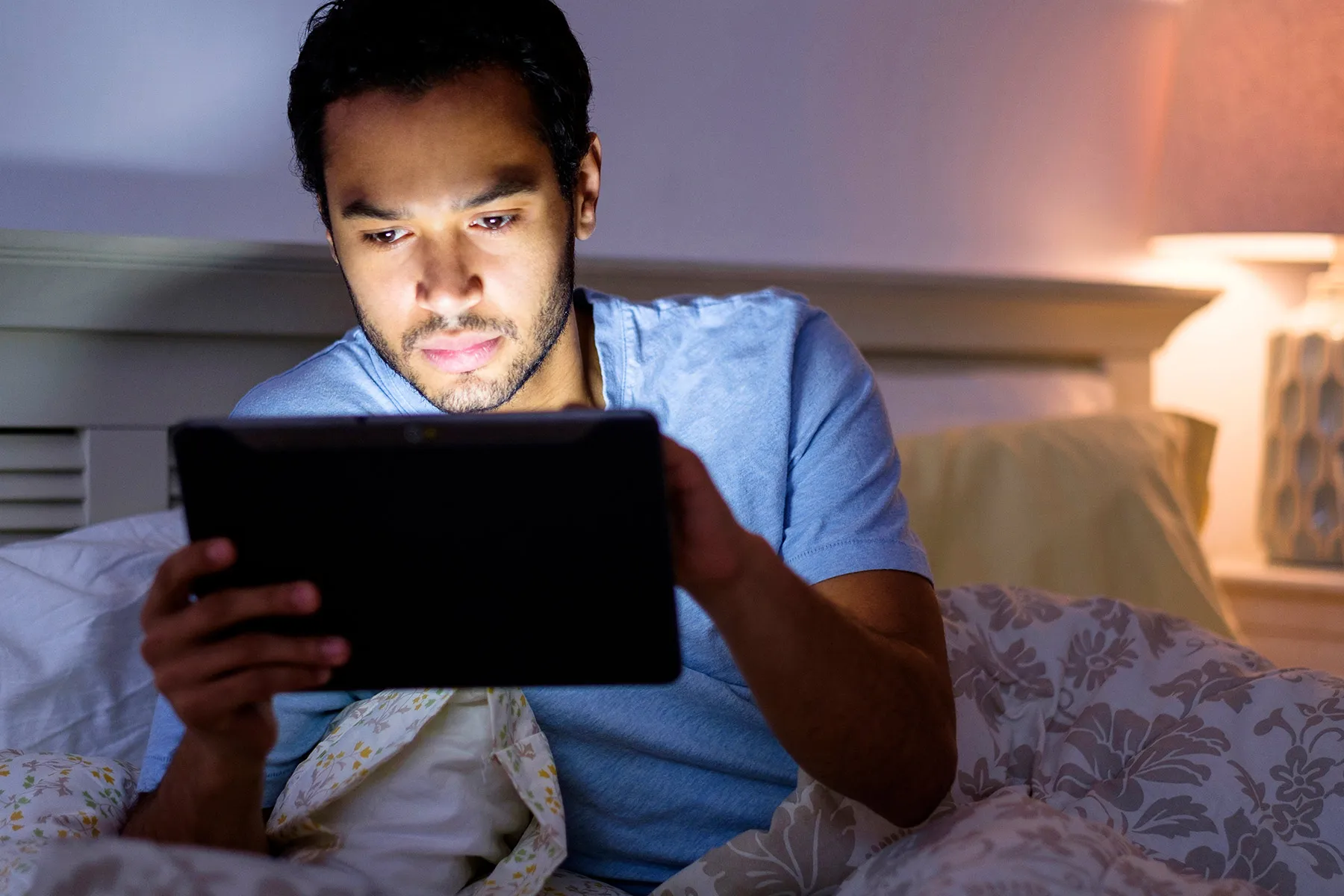
These light-sensitive retinal cells are especially responsive to blue wavelengths. During the day, that is useful. Blue-rich light tells the brain that it is time to be awake, focused, and mildly productive. At night, however, blue-rich light can send the wrong message. Your brain may interpret late-night screen brightness as a miniature sunrise, even though you are actually in bed watching one more video “for research.”
Does Blue Light Damage Your Eyes?
This is the big question, and the answer is: normal screen use has not been proven to cause permanent eye damage. Research has shown that very intense blue light can damage retinal cells in laboratory or animal settings, but everyday exposure from phones, tablets, and computers is much lower than those experimental conditions.
Major eye-health organizations generally do not consider digital screen blue light a proven cause of eye disease. That does not mean your eyes are imagining discomfort. It means the discomfort is more likely caused by how you use screens than by blue light alone.
Why Your Eyes Feel Tired After Screen Time
Digital eye strain, also called computer vision syndrome, is a real and common problem. Symptoms may include dry eyes, burning, headaches, blurred vision, trouble focusing, watery eyes, neck pain, and shoulder tension. But the usual culprits are not mysterious rays from your monitor. They are ordinary habits repeated for hours.
When people stare at screens, they blink less often. A normal blink spreads tears across the eye surface, keeping it moist and comfortable. Fewer blinks mean the tear film evaporates faster, which can leave the eyes feeling dry, gritty, or irritated. Add glare, poor lighting, small text, uncorrected vision problems, bad posture, and a screen too close to your face, and your eyes may file a formal complaint.
Blue Light and Sleep: The Stronger Scientific Link
Blue light’s clearest effect is not eye damage; it is sleep timing. Light exposure in the evening can suppress melatonin, the hormone that helps signal the body that nighttime has arrived. Blue wavelengths are especially powerful in this process because they strongly influence the circadian system.
This is why scrolling in bed can make sleep harder, even when your eyes feel tired. Your brain receives two competing messages: your body says, “Please shut down,” while your phone says, “But what if we reorganize your entire life at 12:43 a.m.?” Blue light is not the only factor. Brightness, duration of exposure, emotional content, and mental stimulation all matter. A stressful email can keep you awake even if it arrives in candlelight.
Do Blue Light Glasses Work?
Blue light glasses are popular because they offer a simple promise: wear these lenses and defeat screen fatigue. Unfortunately, the evidence is not that simple. Some people feel more comfortable wearing them, especially in the evening, but research has not strongly shown that blue-light-filtering lenses reliably prevent digital eye strain or protect the retina during ordinary computer use.
They may help certain users reduce brightness sensitivity or create a bedtime ritual that encourages lower light exposure. However, they should not be treated as magic shields. If your screen habits are chaotic, blue light glasses are like putting a tiny umbrella over a house with no roof.
Blue Light Is Not Always the Enemy
Blue light has benefits. Morning light exposure helps anchor your circadian rhythm. Daytime blue-rich light can improve alertness, reaction time, mood, and concentration. This is why getting outside in the morning can help people feel more awake and sleep better at night.
The goal is not to eliminate blue light from your life. That would be difficult unless you plan to live in a cave, which has other SEO-unfriendly disadvantages. The smarter approach is to get healthy daytime light and reduce bright, blue-rich light close to bedtime.
Practical Ways to Protect Your Eyes From Screen Strain
1. Use the 20-20-20 Rule
Every 20 minutes, look at something about 20 feet away for at least 20 seconds. This relaxes the focusing muscles inside the eyes and reminds you to blink. It sounds almost too simple, but simple habits are often the ones we actually do.
2. Blink Like You Mean It
During intense screen work, blinking becomes suspiciously rare. Try intentional blinking, especially when reading long pages or editing documents. If your eyes feel dry, preservative-free artificial tears may help, but persistent dryness deserves an eye exam.
3. Match Screen Brightness to the Room
Your screen should not look like a lighthouse in a basement. If the room is dim, lower the brightness. If the room is bright, reduce glare and adjust contrast. Comfort matters more than keeping brightness at maximum like you are signaling aircraft.
4. Fix Your Screen Position
Place your monitor about an arm’s length away, with the top of the screen at or slightly below eye level. Looking slightly downward can reduce the exposed surface area of the eyes, helping slow tear evaporation.
5. Reduce Evening Light Exposure
Use night mode, warm display settings, dim lights, and screen limits in the hour before bed. Better yet, give your brain a non-screen landing strip: reading a physical book, stretching, journaling, or doing something calm enough that your phone gets jealous.
6. Wear Sunglasses Outdoors
For eye health, ultraviolet protection outdoors is more important than worrying about normal indoor screen exposure. Choose sunglasses that block 100% of UVA and UVB rays. A wide-brimmed hat also helps, and as a bonus, makes you look like you have weekend plans.
7. Get Regular Eye Exams
If you have headaches, blurry vision, eye pain, light sensitivity, double vision, or persistent dryness, do not blame blue light and move on. Uncorrected nearsightedness, farsightedness, astigmatism, dry eye disease, allergies, and other conditions can mimic digital eye strain.
Blue Light, Kids, and Teens
Children and teenagers may be more vulnerable to the sleep-disrupting effects of late-night screens because their schedules, homework, entertainment, and social lives often collide on the same glowing rectangle. Blue light is part of the issue, but so is stimulation. A calm video and a dramatic group chat do not affect the nervous system the same way.
For families, the best strategy is not panic but structure. Keep screens out of bed when possible, create a charging station outside the bedroom, dim devices in the evening, and encourage outdoor light exposure during the day. The goal is not to raise children in a technology-free museum. It is to help their eyes, brains, and sleep schedules survive modern life with fewer tiny meltdowns.
Myths About Blue Light
Myth 1: Blue Light From Screens Causes Blindness
There is no strong evidence that ordinary screen use causes blindness. Screen overuse can cause discomfort, but discomfort is not the same as permanent damage.
Myth 2: All Blue Light Is Harmful
Daytime blue light helps regulate alertness and sleep-wake timing. The problem is mainly excessive or poorly timed exposure, especially at night.
Myth 3: Blue Light Glasses Fix Everything
They may feel helpful for some people, but they do not replace breaks, blinking, good lighting, proper screen distance, sleep hygiene, or eye care.
Myth 4: Night Mode Makes Bedtime Scrolling Harmless
Night mode can reduce blue wavelengths and brightness, but the content itself can still keep your brain alert. A heated comment section at midnight is not exactly lavender tea.
The Real Science-Based Takeaway
Blue light is not a monster hiding in your monitor. It is a normal part of visible light with real biological effects. The strongest evidence links evening blue-rich light with circadian rhythm disruption and sleep delay. The evidence that everyday screen blue light damages the eyes is much weaker. Most screen-related discomfort comes from digital eye strain: reduced blinking, long periods of near focus, glare, posture, lighting, and uncorrected vision needs.
So the best eye-protection plan is refreshingly practical: take breaks, blink often, adjust your lighting, use comfortable screen settings, reduce evening brightness, go outside during the day, wear UV-protective sunglasses outdoors, and get an eye exam when symptoms persist. Your eyes do not need fear. They need maintenance, moisture, and occasional permission to look at something that is not a spreadsheet.
Experiences Related to Blue Light and Eye Comfort
Many people first notice blue light concerns not because they read a scientific paper, but because their eyes start feeling weird after a long digital day. The experience usually begins innocently. You open your laptop in the morning, answer emails, check messages, edit a document, watch a video during lunch, return to more tabs, and later relax by staring at a different screen. By evening, your eyes feel dry, your forehead feels tight, and every bright rectangle looks personally offensive.
One common experience is the “late-night phone trap.” You plan to check one notification before sleep. Then a message becomes a video, the video becomes a search, the search becomes an article, and suddenly your bedtime has been kidnapped by a glowing slab of glass. The next morning, your eyes may feel heavy and your brain may feel like it is buffering. In this situation, blue light may have contributed to delayed sleep, but so did brightness, mental stimulation, and the simple fact that time continued passing while you were investigating whether raccoons make good pets. They do not, generally speaking.
Another relatable experience happens in office work. After several hours of reading tiny text, switching between windows, and staring at spreadsheets, the eyes may become dry or blurry. Many people assume blue light is the main cause, then buy blue light glasses and feel disappointed when the problem remains. The missing fix is often environmental. Raising the font size, reducing glare, positioning the screen correctly, using artificial tears, and taking real breaks can make a bigger difference than lenses alone.
Students often experience a different version. Homework, online classes, research, social media, and entertainment may all happen on the same device. Their eyes rarely get a transition between “study screen” and “fun screen.” A helpful routine is to separate tasks: use brighter settings during daytime study, shift to warmer and dimmer settings in the evening, and stop high-stimulation screen use before bed. Even a 30-minute screen-free wind-down can feel surprisingly powerful.
For people who work creatively, such as writers, designers, editors, and coders, eye fatigue can sneak in because focus feels productive. When the brain is engaged, the body gets ignored. Hours pass. Blinking drops. Shoulders rise toward the ears. The eyes start stinging, and the solution is not always another app. Sometimes the best “technology” is standing up, looking out a window, drinking water, and remembering that humans were not designed to become punctuation marks over keyboards.
A realistic blue light strategy is personal rather than dramatic. Some people enjoy blue light glasses and feel they help them relax at night. Others notice no difference. Some benefit most from dark mode; others prefer larger text and better room lighting. The point is to test habits instead of buying every product with the word “protective” on the box. Your eyes will usually tell you what works: less dryness, fewer headaches, clearer focus, and better sleep are good signs.
The best experience-based advice is simple: treat your eyes like living tissue, not camera lenses. They need moisture, distance changes, rest, and sensible lighting. Screens are part of modern life, but screen fatigue does not have to be the subscription fee for existing in the digital age.
Conclusion
Blue light affects your eyes and body in nuanced ways. It helps regulate alertness during the day, but at night it can interfere with melatonin and sleep timing. Regular screen exposure has not been proven to cause permanent eye damage, yet long hours of screen use can absolutely cause digital eye strain. The solution is not fear-based living or throwing your phone into a lake. It is smarter screen behavior: breaks, blinking, better ergonomics, reduced evening light, and professional eye care when symptoms do not improve.
Note: This article synthesizes current information from reputable eye-health, medical, sleep-science, and public-health organizations, including ophthalmology, optometry, clinical, academic, and circadian-rhythm resources. It is educational content and should not replace personalized medical advice from an eye-care professional.