At Walt Disney World, you can ride a runaway mine train, fly through space, meet a mouse in formalwear, and then sit in a stately theater while every president of the United States blinks, nods, breathes, and waits politely for a roll call. That last experience is not a fever dream brought on by too many churros. It is The Hall of Presidents, one of Magic Kingdom’s most unusual, ambitious, and oddly mesmerizing attractions.
Located in Liberty Square, The Hall of Presidents is part history lesson, part theater show, part robotics showcase, and part “wait, did Andrew Jackson just move his eyebrows?” The attraction gathers Audio-Animatronics figures of the nation’s presidents on one stage, presenting the American presidency through film, narration, music, and lifelike mechanical performance. It is patriotic, theatrical, occasionally controversial, and deeply Disney in the way it turns a civics topic into a carefully lit stage spectacular.
The robot presidents of Disney World are not “robots” in the cold, sci-fi sense. They are Disney Audio-Animatronics: sculpted, costumed, programmed figures built to suggest personality through tiny movements. A nod, a glance, a hand gesture, a shoulder shiftthese are the details that sell the illusion. And while thrill rides often get the spotlight, The Hall of Presidents remains one of the best examples of Walt Disney Imagineering’s long obsession with making technology feel alive.
What Is The Hall of Presidents?
The Hall of Presidents is a theater attraction in Magic Kingdom Park’s Liberty Square at Walt Disney World Resort. The show runs about 25 minutes and combines a widescreen historical film with a dramatic stage reveal of the presidents. It opened with Magic Kingdom on October 1, 1971, making it one of the park’s original attractions.
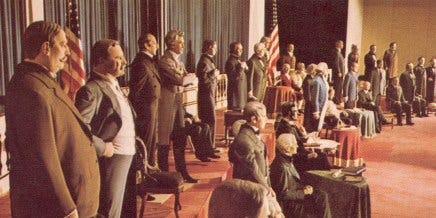
The show’s basic structure has remained surprisingly durable. Guests enter a colonial-style building, sit in a large theater, watch a film about the founding and endurance of the American presidency, and then see the curtain rise on a stage filled with Audio-Animatronics figures. The presidents are introduced in order, each responding with a subtle movement as the spotlight finds them. George Washington speaks. Abraham Lincoln has long held a starring role. The current president traditionally receives a featured moment, though the exact format has changed over time.
That blend of history and showmanship is the attraction’s calling card. The Hall of Presidents does not try to be a roller coaster, a museum, or a congressional hearingthank goodness, because the snack carts would never survive. Instead, it is a theatrical tribute to the office of the presidency, using Disney’s mechanical artistry to transform textbook names into a room full of moving figures.
From Walt Disney’s Dream to a Stage Full of Presidents
The idea behind The Hall of Presidents started long before Walt Disney World opened. Walt Disney had imagined a patriotic attraction for Disneyland that would celebrate American history with lifelike figures. Early concepts involved animated wax figures, but Walt wanted something more convincing. Static figures were not enough. He wanted movement, speech, and personality.
The turning point came with Abraham Lincoln. Disney’s team developed a full-size human Audio-Animatronics figure of Lincoln for the 1964 New York World’s Fair. The result, Great Moments with Mr. Lincoln, became a landmark in themed entertainment technology. It showed that a human figure could rise, gesture, speak, and command a theater without being, technically speaking, human. That success helped pave the way for the much larger presidential gathering that would later appear in Florida.
When Magic Kingdom was developed, Imagineers finally had the space and ambition to expand the concept. Instead of one robotic president, they created a full presidential assembly. The Hall of Presidents took the Lincoln technology and multiplied the challenge many times over. Sculptors, engineers, costume designers, writers, historians, lighting designers, and programmers all had to work together to create a show that felt grand rather than gimmicky.
How Disney Builds a Robot President
Creating a Disney president is not as simple as placing a wig on a mannequin and calling it James Monroe. The process involves research, sculpture, mechanics, costuming, programming, voice work, and theatrical staging. Disney Imagineers study portraits, photographs, film footage, clothing, body language, and historical context. For modern presidents, the challenge becomes even trickier because guests know their faces from television, speeches, memes, and late-night comedy sketches.
The Sculpting Challenge
Legendary Disney sculptor Blaine Gibson played a central role in shaping the attraction’s early presidential figures. His task was not merely to copy facial features but to capture character. A president’s posture, expression, eyes, and proportions all matter. Some presidents are familiar to nearly everyone; others are mostly remembered by historians, trivia champions, and that one uncle who insists Millard Fillmore was underrated.
The sculpting work has to strike a delicate balance. Too flat, and the figure looks lifeless. Too expressive, and it risks looking like a caricature. The best Audio-Animatronics figures suggest presence without overacting. In The Hall of Presidents, subtlety is the real magic trick.
The Mechanics Beneath the Suit
Under the fabric, hair, and carefully painted skin are mechanical systems designed to produce controlled movement. Disney’s Audio-Animatronics technology has evolved dramatically since the 1960s, but the goal remains the same: synchronize motion, sound, and lighting so the audience believes a figure is thinking, listening, or speaking.
Small movements do big work. A head turn can direct attention. A blink can soften a face. A hand gesture can make a speech feel less like a recording and more like a performance. When dozens of presidents share the stage, the programming must also keep the tableau alive without making it look like a mechanical cocktail party has broken out behind the Constitution.
The Role of the Current President
One reason The Hall of Presidents stays culturally relevant is that it changes when the presidency changes. Since the 1990s, the sitting president has typically had a featured role in the show, often with a recorded voice performance. Bill Clinton became the first sitting president to record remarks for his Audio-Animatronics figure, and later presidents followed with their own contributions in different formats.
These updates are part of the attraction’s identity. Every new administration brings a technical and creative refresh: a new figure, revised staging, updated audio, and sometimes script adjustments. In recent years, the show has become especially watched because politics has become more polarized. A theme park attraction about presidents now has to navigate the same cultural weather as everything else: enthusiasm, criticism, memes, and people on the internet zooming in on animatronic cheekbones like forensic analysts.
As of the current version, the attraction features Donald Trump in the incumbent position with a recorded performance of the presidential oath of office. The show continues to present the full presidential lineup while maintaining its familiar combination of film, roll call, and stage reveal.
Why the Robot Presidents Fascinate Guests
The Hall of Presidents is fascinating because it sits at the intersection of history, technology, politics, and theme park storytelling. It is not just about who is on stage. It is about how Disney turns national memory into theater.
It Makes History Physical
Most people encounter presidents through paintings, monuments, coins, speeches, documentaries, or school assignments. The Hall of Presidents gives them bodies. Guests see height differences, facial features, costumes, and posture. Even if the figures are mechanical, their physical presence changes the way visitors relate to the subject.
That physicality is especially useful for younger guests. A child may not fully understand the constitutional debates or the complexities of American history, but they can understand that these figures represent a long chain of leadership. The roll call turns an abstract list into a visual sequence. History, suddenly, has shoulders.
It Is Comfortably Weird
Let’s be honest: a room full of robot presidents is wonderfully strange. The attraction is dignified, yes, but it also has that unmistakable Disney oddity that makes it memorable. Theme parks thrive on controlled weirdness. Pirates sing. Bears host a jamboree. Ghosts ask you to join them. Presidents nod under stage lights. Somehow, it all makes sense in Magic Kingdom.
That weirdness is part of the appeal. Guests may enter expecting a quiet break from the Florida heat and leave thinking about robotics, national identity, and whether robot John Quincy Adams looked directly into their soul.
The Technology Behind the Theatrical Illusion
Disney’s Audio-Animatronics are not just machines; they are performance tools. The figures must work in harmony with lighting, music, narration, and the audience’s sightlines. The Hall of Presidents is especially demanding because human faces are difficult to fake. People are experts at reading faces. A slightly stiff smile or unnatural blink can push a figure into the famous “uncanny valley,” where something looks almost real but not quiteand your brain rings a tiny alarm bell.
Imagineers manage this by using stage distance, lighting, limited but expressive movement, detailed costumes, and carefully paced performances. The audience is not inches away from the figures. They are watching a theatrical composition. The show does not need every president to behave like a living actor. It needs them to create the impression of a living assembly.
That is why the attraction remains important in Disney history. It demonstrates that realism in themed entertainment is not only about technology. It is about timing, context, and restraint. The presidents do not need to tap dance. In fact, please no. They need to breathe just enough for the audience to feel the room has come alive.
Controversy, Memes, and the Modern Hall of Presidents
No attraction about U.S. presidents can avoid politics forever. The Hall of Presidents has drawn debate over scripts, speaking roles, figure likenesses, and whether the show should continue in its traditional format. Every time a new president is added, the internet becomes a temporary panel of art critics, robotics engineers, constitutional scholars, and comedians.
The Donald Trump Audio-Animatronics figure, first added during his initial term, became one of the most discussed figures in the attraction’s history. Online reactions focused heavily on its appearance, with jokes comparing it to various celebrities and political figures. The Joe Biden figure also drew attention for its styling, including props that referenced his Delaware roots and signature aviator sunglasses. In 2025, the attraction reopened after refurbishment with Trump returned to the central role following his second inauguration.
These reactions show how unusual the attraction is. A new figure is not just a theme park update; it becomes a cultural event. Disney is not simply building a robot. It is making a public likeness of a living political figure in a family vacation destination. That is a very specific creative tightrope, and below it is a moat filled with comment sections.
Why The Hall of Presidents Still Matters
Some guests visit The Hall of Presidents for air conditioning. This is understandable. Florida in July can make even the Liberty Bell want to sit down. But the attraction offers more than a climate-controlled nap opportunity. It is a rare surviving example of Walt Disney’s educational ambitions. Walt believed entertainment could teach without feeling like homework, and The Hall of Presidents is one of the clearest expressions of that philosophy.
The attraction also preserves a style of theme park storytelling that is slower, more ceremonial, and more reflective than many modern rides. There are no drops, no 3D glasses, no competitive scoring system, and no villain threatening to destroy the galaxy. Instead, the show asks guests to sit, listen, and look at the long arc of American leadership. That may sound old-fashioned, but in a park built on fantasy, a little civic reflection is its own kind of bold choice.
It also serves as a living timeline of Disney technology. From the early Lincoln figure to today’s presidential updates, The Hall of Presidents reflects decades of progress in sculpting, figure animation, show control, projection, and sound design. The attraction is both a history show and a history of showmanship.
Experiencing The Robot Presidents at Disney World
Visiting The Hall of Presidents is a unique Disney World experience because it changes the pace of a Magic Kingdom day. One minute you may be weaving through crowds near Cinderella Castle, dodging bubble wands and stroller traffic with the grace of a secret-service agent. The next minute you are inside a quiet theater, surrounded by deep red curtains, patriotic music, and the solemn promise that several dozen robotic heads are about to turn in your general direction.
The best way to enjoy the attraction is to treat it as theater, not as a ride. Arrive with curiosity. Look at the building details in Liberty Square before entering. The area is designed to evoke colonial America, and The Hall of Presidents fits naturally beside attractions and architecture that reference the nation’s early history. Once inside, give yourself permission to slow down. This is not the attraction to rush through while checking wait times for Space Mountain. It rewards attention.
During the film portion, notice how Disney frames the presidency as an institution rather than a single personality. The show moves through conflict, founding ideals, constitutional questions, and national struggle. It is broad by necessity; no 25-minute theme park presentation can unpack every presidency with graduate-seminar precision. Still, it gives emotional shape to the idea that the office has survived through disagreement, crisis, and change.
The stage reveal is the moment guests tend to remember. When the curtain rises and the presidents appear together, the room gets that unmistakable Disney “big finale” energy. The figures are arranged like a formal portrait that suddenly learned how to blink. This is where the attraction’s craft becomes most visible. Watch the non-speaking presidents, not just the featured speaker. Some shift subtly. Some nod. Some seem to exchange glances. Whether you find it inspiring, eerie, or both, it is difficult to deny the technical achievement.
Families can use the show as a conversation starter. Kids may ask why some presidents are more famous than others, why there are fewer individuals than numbered presidencies, or why Disney updates the show after elections. Adults may find themselves thinking about how public memory is shaped through performance. And everyone can agree on one thing: robotic presidents are far better behaved than most group chats.
The attraction is also practical. It is indoors, seated, accessible, and usually less frantic than headline rides. On a hot or rainy day, it can be a welcome reset. But calling it merely a place to cool off sells it short. The Hall of Presidents offers one of Disney World’s strangest and most thoughtful blends of education, engineering, and spectacle. It may not deliver adrenaline, but it delivers atmosphereand sometimes, atmosphere is exactly what a theme park day needs.
Conclusion: Long May the Robot Presidents Nod
The robot presidents who rule Disney World are more than mechanical look-alikes. They are part of a decades-long experiment in making history move. The Hall of Presidents began with Walt Disney’s dream of lifelike educational entertainment, grew through the breakthrough of Great Moments with Mr. Lincoln, and became one of Magic Kingdom’s most distinctive opening-day attractions.
Today, it remains a fascinating piece of Disney storytelling. It is patriotic but theatrical, educational but entertaining, serious but just odd enough to be unforgettable. Where else can George Washington, Abraham Lincoln, Joe Biden, Donald Trump, and Grover Cleveland’s nonconsecutive-term energy all share a stage while guests whisper, “Did that one just blink?”
For visitors who love Disney history, robotics, American history, or delightfully specific theme park experiences, The Hall of Presidents deserves more than a passing glance. It is not the loudest attraction in Magic Kingdom, but it may be one of the most ambitious. After all, building a roller coaster is hard. Building a room full of presidents who can nod on cue without starting a constitutional crisis? That is Imagineering.
Note: This article is based on real Walt Disney World attraction history and current public information, rewritten in original American English for web publication without embedded source links.