Ask ten gardeners about the best soil for growing vegetables and you may get twelve answers, three compost recipes, and at least one passionate speech about earthworms. Fortunately, the science is much less dramatic. Healthy vegetable soil needs to perform several jobs at once: hold enough moisture to keep roots hydrated, drain excess water before roots suffocate, supply nutrients, provide oxygen, and remain loose enough for roots to explore.
Recommendations published by Bob Vila, combined with guidance from U.S. university extension programs, point toward the same basic formula: vegetable plants generally thrive in loose, fertile, well-drained soil rich in organic matter. For containers and indoor vegetables, a lightweight potting mix is usually preferable to ordinary backyard soil. For in-ground gardens, improving the soil you already have with compost is often more practical than replacing it entirely.
Here is how to choose the best soil for vegetable gardening, whether your future harvest is growing in a backyard bed, raised planter, patio container, or sunny kitchen corner.
What Makes Soil Good for Growing Vegetables?
The word “soil” sounds simple until you start gardening. Then suddenly you’re discussing loam, tilth, pH, perlite, compost, drainage, microbial activity, and whether your tomatoes are being emotionally neglected by insufficient phosphorus.
For most vegetables, excellent growing soil has four essential characteristics.
1. A Loose, Crumbly Structure
Vegetable roots need both water and oxygen. Dense, compacted ground makes it difficult for roots to spread and limits the air spaces between soil particles.
Good garden soil should feel crumbly rather than sticky or brick-like. This physical condition is often called soil tilth. Carrots, radishes, potatoes, beets, and other root crops are especially appreciative of loose soil because rocks and compacted layers can cause crooked or stunted roots.
Bob Vila’s soil-preparation guidance emphasizes loamy soil as an excellent starting point. Loam contains a useful balance of sand, silt, and clay, combining moisture retention with drainage and aeration.
2. Good Drainage Without Drying Out Immediately
Vegetables enjoy water. They generally do not enjoy living in a swamp.
After heavy rain or irrigation, excess water should move downward instead of remaining on the surface for hours. Waterlogged conditions can reduce oxygen around roots and encourage disease. On the other hand, extremely sandy soil may drain so quickly that plants become thirsty again almost immediately.
Organic matter helps solve both problems. In heavy clay, it promotes a more open structure. In sandy soil, it improves moisture and nutrient retention. That makes compost one of the most versatile ingredients available to vegetable gardeners.
3. Plenty of Organic Matter
Finished compost is about as close as gardening gets to a universal upgrade button.
Adding organic matter can improve soil structure, encourage biological activity, increase water-holding capacity, and contribute nutrients as materials slowly decompose. University extension recommendations commonly suggest incorporating compost when establishing vegetable beds, although the ideal amount depends on existing soil conditions.
More compost is not automatically better, however. Mature beds can accumulate excessive phosphorus, soluble salts, or nutrients when compost and manure are applied heavily year after year. A soil test provides a much better answer than the gardening philosophy of “throw another bag on it and see what happens.”
4. A Vegetable-Friendly pH
Soil pH influences how readily plants can obtain nutrients. Most common vegetables prefer mildly acidic to near-neutral conditions.
A useful target is approximately pH 6.0 to 7.0, with roughly 6.5 being an excellent middle ground for many crops. Bob Vila’s garden guidance similarly identifies about 6.5 as ideal for most vegetables, while noting that individual crops may prefer somewhat different conditions.
Do not automatically add lime simply because gardening advice says vegetables like a certain pH. Test first. If your soil is already alkaline, blindly adding lime is the gardening equivalent of fixing a flat tire by adding more air to the other three.
Bob Vila’s Recommendations for Vegetable Soil
Bob Vila has addressed vegetable soil from two important angles: improving outdoor garden soil and choosing commercial mixes for containers or indoor growing.
Best Characteristics for Outdoor Vegetable Gardens
For outdoor gardens, Bob Vila recommends nutrient-rich soil that drains well while retaining sufficient moisture. Their soil-preparation guidance favors loamy conditions and encourages gardeners to correct imperfect native soil with compost rather than assuming the existing dirt is ready for vegetables.
Bob Vila also stresses soil testing before modifying fertility or pH. This is particularly important because a vegetable plant that looks unhappy does not automatically need fertilizer. Too much nitrogen, for example, can produce spectacular tomato foliage accompanied by a disappointing shortage of tomatoes.
Best Commercial Soil for Vegetable Containers
Container vegetables require a different approach. Ordinary garden soil is typically too dense for pots, where roots are confined and drainage is limited by the container.
Bob Vila’s vegetable-growing recommendations favor lightweight mixes containing ingredients such as peat moss or coconut coir for moisture management and perlite or vermiculite for aeration. Their earlier indoor-vegetable guide named Espoma Organic Potting Mix as its best overall choice, with FoxFarm Happy Frog as runner-up and Perfect Plants Organic Indoor Potting Mix as an organic option.
In Bob Vila’s later hands-on potting-soil testing, Pro-Mix Organic Vegetable and Herb Mix was selected as the vegetable-focused pick. Its formula includes peat-based material, compost, perlite, fertilizer, limestone, gypsum, and mycorrhizae. The testers liked its balance of moisture retention and drainage, while noting that blending it with a coarser material could improve aeration and root support.
Product formulas can change, so gardeners should always check the current package before purchasing rather than treating an old ingredient list like sacred garden scripture.
Best Soil for In-Ground Vegetable Gardens
If you are planting directly into the ground, the best soil is usually not something you buy by the truckload. It is properly improved native soil.
A productive vegetable bed should be deep enough for roots, relatively free of stones, loose enough to crumble in your hands, and capable of draining after rainfall. If the soil is poor, finished compost is usually the first amendment to consider.
If You Have Heavy Clay Soil
Clay contains extremely small particles and can store significant amounts of nutrients and water. Unfortunately, tightly packed clay may drain slowly and become difficult to work.
Regular additions of finished organic matter can gradually improve aggregation and pore space. Avoid working clay when it is soaking wet. Minnesota Extension and Bob Vila both recommend a simple squeeze test: soil that forms a sticky, persistent ball is generally too wet to cultivate. Wait until it breaks apart more easily.
Do not attempt to “fix” clay by dumping a little sand into it without understanding the proportions involved. Poorly planned combinations can create an unpleasantly concrete-like structure rather than fluffy garden soil.
If You Have Sandy Soil
Sandy soil is usually easy to dig and drains quickly, but those advantages come with an irritating habit: water and nutrients can disappear faster than expected.
Compost and other appropriate organic matter improve its ability to hold water and nutrients. Mulching the surface can further reduce moisture loss during hot weather.
If You Already Have Loam
Congratulations. Somewhere, a clay-soil gardener is quietly jealous.
Even good loam benefits from responsible management. Add organic matter as needed, avoid compacting wet soil, keep bare ground protected with mulch or cover crops, and use periodic soil tests to prevent nutrient levels from drifting too high or too low.
Best Soil for Raised-Bed Vegetables
Raised beds give gardeners much more control over drainage and soil structure. They are especially useful where native soil is compacted, poorly drained, shallow, or otherwise difficult to cultivate.
A successful raised-bed soil normally combines mineral soil with organic material rather than consisting entirely of compost. University of Maryland Extension recommends loose, deep, crumbly soil that stores usable moisture while allowing excess water to drain downward.
For a new bed, a practical mixture might combine quality topsoil with finished compost and, where additional aeration is needed, an appropriate soilless growing material. The exact proportions should reflect your ingredients rather than an internet recipe treated as mathematically universal.
Be cautious with beds filled entirely with compost. Organic materials continue decomposing, so the bed may shrink substantially. Excessively rich mixes can also create nutrient imbalances. Raised-bed soil should behave like fertile soil, not like a giant compost bin with tomatoes stuck in it.
Best Soil for Vegetables in Containers
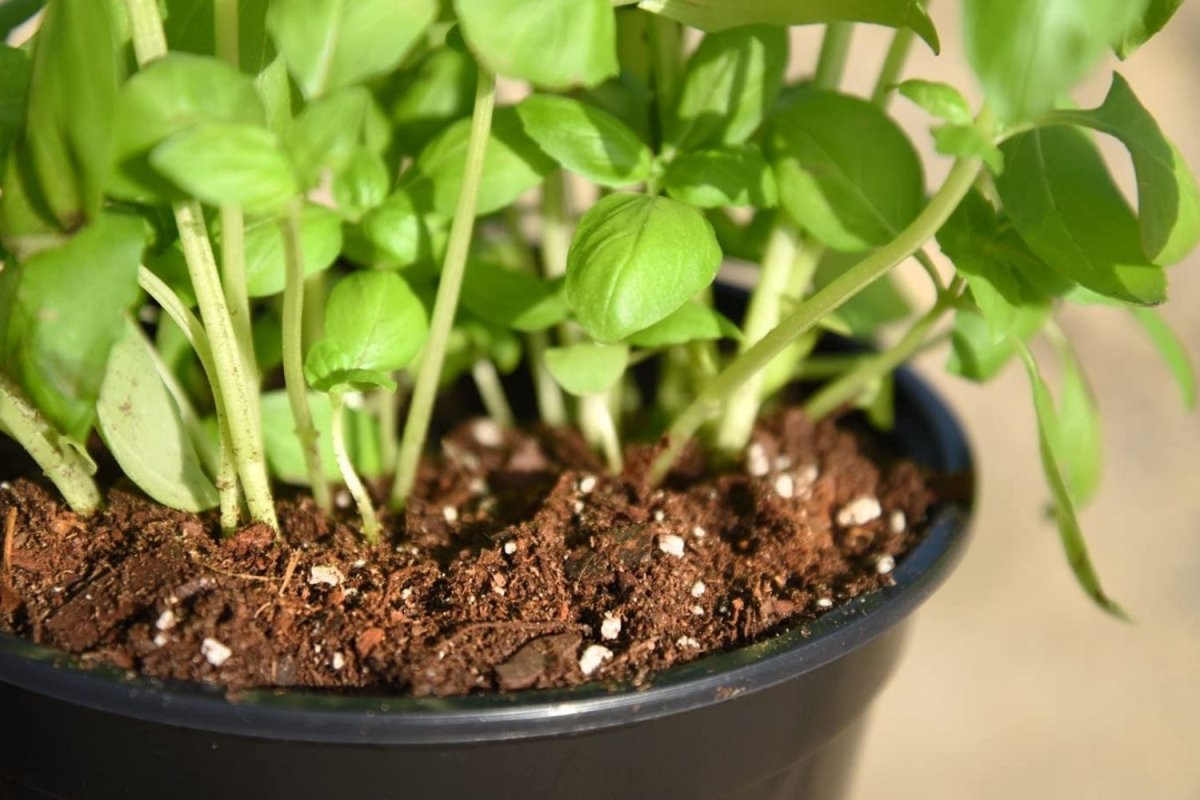
For tomatoes, peppers, lettuce, herbs, cucumbers, and other vegetables grown in pots, choose a high-quality potting mix rather than garden soil.
A vegetable container mix commonly contains several of these ingredients:
- Peat moss or coconut coir for water retention
- Perlite for drainage and aeration
- Vermiculite for moisture and nutrient retention
- Composted bark or other organic ingredients for structure
- Finished compost or earthworm castings
- Organic or conventional fertilizer, depending on the product
- Mycorrhizal fungi in some premium formulations
The perfect balance depends on the plant and container. A large tomato in summer consumes far more water than a small pot of herbs, so extremely fast-draining soil that works beautifully for one crop might require exhausting twice-daily watering for another.
Drainage holes are non-negotiable. Even premium potting mix cannot rescue a vegetable whose container functions like a bathtub.
Best Soil for Starting Vegetable Seeds
Seedlings have different needs from mature vegetable plants. Heavy garden soil is rarely ideal for germinating seeds indoors.
Seed-starting mixes are fine-textured, lightweight, and designed to remain moist without becoming badly compacted. That makes it easier for delicate new roots to develop and tiny seedlings to emerge.
Once seedlings become established, they can be transplanted into a richer potting mix or outdoor garden soil. If you start dozens of tomato seedlings every spring because “just a few varieties” somehow became fourteen varieties, investing in a proper seed-starting medium is especially worthwhile.
Should You Add Fertilizer to Vegetable Soil?
Possiblybut test before turning your vegetable bed into a nutrient buffet.
Nitrogen promotes leafy growth. Phosphorus and potassium perform other essential functions related to roots, flowering, fruiting, plant strength, and overall development. Vegetables vary in nutrient demand, and your soil may already contain sufficient levels of some nutrients.
Soil testing reveals what is present and helps determine what should be added. This approach is both economical and environmentally responsible. Recent Penn State guidance specifically cautions that repeatedly overapplying compost can add excessive nutrients that may eventually move into surrounding waterways.
Remember that compost and fertilizer are not synonymous. Compost is primarily valuable as a soil-building amendment, although it also contributes nutrients. Fertilizer is formulated around specified nutrient concentrations. A garden can need one without necessarily needing a large amount of the other.
Common Vegetable Soil Mistakes to Avoid
Using Yard Soil in Containers
Native soil may become dense and poorly aerated inside a pot. Use container-formulated growing media instead.
Working Wet Soil
Digging or tilling saturated ground can damage soil structure and create stubborn clods. Wait until it is moist but crumbly.
Adding Amendments Without Testing
Lime, sulfur, fertilizer, and even compost should be applied for a reason. Soil chemistry does not improve simply because another colorful bag arrived from the garden center.
Applying Too Much Nitrogen
Excess nitrogen can produce impressive foliage while delaying or reducing fruit production in some crops.
Ignoring Drainage
Vegetable roots require oxygen as well as water. Correct drainage problems before planting or consider raised beds when naturally wet soil is difficult to improve.
Expecting Soil Improvement Overnight
Building healthy soil is a long-term project. Repeated sensible additions of organic material, mulching, cover cropping, reduced compaction, and responsible fertilization can improve soil year after year.
How to Choose the Best Vegetable Soil: A Simple Checklist
Before buying soil or amending a garden bed, work through these questions:
- Where are the vegetables growing? Native ground, raised beds, containers, and seed trays require different mixes.
- Does the soil drain? Water should not remain pooled around roots for long periods.
- Does it hold some moisture? Extremely fast-draining mixtures can create constant watering problems.
- Is the texture loose? Roots need room to penetrate and access oxygen.
- Is there adequate organic matter? Compost can improve both sandy and clay-dominant soils.
- What is the pH? Most vegetables perform well around mildly acidic to near-neutral conditions.
- What does the soil test recommend? Use the report instead of guessing about fertilizer, lime, or other amendments.
Practical Experience: What Vegetable Gardeners Learn About Soil Over Time
There is a large difference between reading that vegetables require “well-drained soil” and discovering what that phrase means after three days of rain. Practical gardening experience tends to turn abstract soil advice into lessons that are difficult to forget.
The Most Expensive Soil Is Not Automatically the Best
A common beginner experience is standing in the garden center staring at bags labeled garden soil, topsoil, potting soil, raised-bed mix, organic mix, moisture-control mix, and premium mix. It can feel as though tomatoes require a graduate degree in dirt.
In reality, the growing location matters more than the fanciness of the bag. A reliable potting mix is worth paying for when growing vegetables in containers because aeration and drainage are crucial. In an established backyard bed, however, gradually improving existing soil with compost may give better long-term value than repeatedly buying bagged soil.
Drainage Problems Usually Announce Themselves Quickly
One of the easiest problems to recognize is a bed that remains soggy long after rain. Plants may grow slowly, leaves can yellow, and roots can struggle in oxygen-poor soil.
Raised beds can dramatically simplify gardening in these conditions because they allow better control of the root zone. But raised beds also dry faster, particularly during hot weather. Solving one problem therefore creates a new responsibility: keeping moisture consistent.
Container Tomatoes Teach a Master Class in Water Management
A tomato growing in a large container may look perfectly happy in spring and become spectacularly thirsty when midsummer arrives. This is where the balance between drainage and moisture retention becomes obvious.
A mix containing adequate organic material or moisture-holding components can reduce watering stress while perlite and similar ingredients preserve aeration. Mulching the surface also helps slow evaporation.
The lesson is simple: the “best draining soil” is not necessarily the soil that drains fastest. Vegetable roots need a useful reservoir of moisture between waterings.
Compost Produces Better Results When Treated as a Tool, Not a Religion
Gardeners often begin by adding too little organic matter, notice an improvement, and logically conclude that adding enormous quantities must be even better. Soil testing eventually teaches a more nuanced lesson.
Compost is superb for building soil structure, but established vegetable beds can accumulate high levels of certain nutrients after years of generous applications. The more mature the garden becomes, the more useful periodic testing becomes.
Root Vegetables Reveal Bad Soil Preparation Immediately
Tomatoes and beans can sometimes disguise imperfect soil. Carrots are less diplomatic.
Plant carrots in rocky, compacted ground and the harvest may emerge forked, twisted, short, or shaped like something from a modern-art exhibit. Deep, loose, relatively stone-free soil gives straight-rooted crops a much better opportunity to develop normally.
Testing Soil Saves More Time Than Guessing
Perhaps the most valuable experience-based lesson is that plant symptoms can be misleading. Yellow leaves might suggest nitrogen deficiency, but they can also appear because of wet roots, incorrect pH, disease, root damage, or other stresses.
A laboratory soil test turns several unknowns into useful information. It can reveal pH, nutrient status, and organic matter levels, helping gardeners avoid unnecessary amendments. For a new food garden, testing can also be important where previous land use raises concern about contaminants such as lead.
After several seasons, the best vegetable growers tend to stop searching for one magical soil recipe. They start paying attention to texture, drainage, moisture, organic matter, crop performance, and test results. Healthy soil is not a static product you purchase once; it is a growing environment you manage.
Final Thoughts on the Best Soil for Growing Vegetables
The best soil for growing vegetables is not defined by a brand name or a single universal recipe. In the ground, aim for loose, fertile, well-drained soil enriched with appropriate amounts of organic matter. For raised beds, create a stable blend of mineral soil and organic material that holds moisture without becoming waterlogged. For pots, follow Bob Vila’s core recommendation and use a lightweight, well-aerated commercial potting mix rather than heavy backyard dirt.
Across all growing methods, soil testing remains one of the smartest investments a gardener can make. Most vegetables are comfortable in mildly acidic to near-neutral soil, commonly around pH 6.0 to 7.0, but actual fertilizer and amendment needs should come from your soil conditions rather than guesswork.
Build soil gradually, protect its structure, feed it responsibly, and pay attention to drainage. Do that and your vegetables will have the underground conditions they need to do the fun part above ground: turning sunlight, water, and a little gardener obsession into dinner.