A traditional sprinkler timer has one main talent: doing exactly what it was told three summers ago, even when it is pouring rain outside. That is not loyalty. That is a very wet misunderstanding.
Smart sprinkler controllers offer a better way to manage lawn, garden, and landscape watering. They connect to Wi-Fi, use local weather information, let homeowners control zones from an app, and can automatically pause watering when rain, wind, freezing temperatures, or watering restrictions make irrigation unnecessary. In other words, they give your yard a small digital assistant that is less likely to water the driveway at 3 a.m.
Bob Vila’s 2026 roundup of smart sprinkler controllers highlights options for nearly every kind of watering setup: full in-ground irrigation systems, garden-hose timers, large lawns, small planting beds, and homeowners who prefer touching a screen instead of opening another app. The right pick depends less on which controller has the flashiest dashboard and more on how your yard actually drinks water.
Why a Smart Sprinkler Controller Is Worth Considering
Outdoor watering can consume a surprising amount of water, especially in warm climates where lawns, shrubs, flowers, and vegetable gardens all compete for attention. The problem is not simply watering too much. It is watering the wrong places, at the wrong time, for the wrong duration.
A smart irrigation controller replaces a fixed schedule with a more responsive approach. Most systems use local weather data, forecasts, seasonal conditions, rainfall totals, and landscape information to adjust watering. Some models also allow users to enter soil type, sun exposure, slope, plant type, and sprinkler details. That information helps the controller estimate how much water each zone needs instead of treating a shady flower bed and a blazing-hot lawn like identical twins.
WaterSense-certified controllers deserve extra attention. The Environmental Protection Agency’s WaterSense program identifies irrigation controllers designed to reduce overwatering while still supporting healthy landscapes. Certification does not guarantee that every yard will suddenly become a botanical masterpiece, but it is a useful signal that the controller meets recognized water-efficiency standards.
The most important lesson is simple: smart watering is not magic. It is better decision-making. A controller can skip a cycle before a rainstorm, but it cannot fix a broken sprinkler head that is turning the sidewalk into a temporary river.
Bob Vila’s Top Smart Sprinkler Controller Picks
Best Overall: Rachio 3 Smart Sprinkler Controller
The Rachio 3 is Bob Vila’s top overall pick, and it is easy to see why. It is built for homeowners with an existing in-ground irrigation system who want detailed control without needing an engineering degree and a flashlight held between their teeth.
Available in configurations that support up to 16 zones, the Rachio 3 uses weather intelligence to adjust watering schedules automatically. Users can fine-tune each zone by entering information about grass type, soil, sun exposure, and other yard conditions. The app also allows remote control, quick manual watering, schedule adjustments, and estimated water-use monitoring.
The biggest advantage is balance. Rachio gives experienced homeowners plenty of customization while keeping the setup approachable for beginners. It also works with several smart-home ecosystems, making it a practical choice for households already using voice assistants or connected-home platforms.
The trade-off is price. The Rachio 3 is not the cheapest option, especially when an outdoor enclosure is needed. Still, for an established in-ground irrigation system with multiple zones, it is one of the strongest all-around smart sprinkler controller choices available.
Best for: Homeowners with in-ground irrigation systems who want advanced scheduling, strong app controls, weather-based adjustments, and room to grow.
Runner-Up: Netro Sprite Smart Sprinkler Controller
The Netro Sprite is another capable option for homeowners with multi-zone sprinkler systems. It supports up to 12 zones and is designed to build automatic schedules using weather information, local restrictions, and landscape needs.
One appealing feature is its focus on automation. The controller is intended to take historical weather patterns and current conditions into account before deciding whether a zone should run. It also supports Alexa and Google Home, which can be useful for people who like saying, “Water the backyard,” while standing safely indoors with a cup of coffee.
The Netro Sprite is WaterSense certified and offers cloud-based access through mobile devices and web browsers. Its indoor-only installation makes it better suited to a garage, utility room, basement, or protected wall rather than an exposed exterior location.
Before buying, consider Wi-Fi reliability in the installation area. A smart controller is only as clever as its connection. If the garage is a wireless dead zone where even text messages arrive emotionally exhausted, a Wi-Fi extender may be worth adding to the project.
Best for: Homeowners who want a WaterSense-certified 12-zone controller with automated scheduling and smart-home compatibility.
Best Bang for the Buck: Orbit B-hyve Smart Hose Watering Timer
Not every yard has a buried irrigation system with multiple valves and a control panel that looks like it belongs on a submarine. For container gardens, raised beds, small lawns, drip lines, and simple hose-based watering, the Orbit B-hyve Smart Hose Watering Timer offers a more affordable entry into smart irrigation.
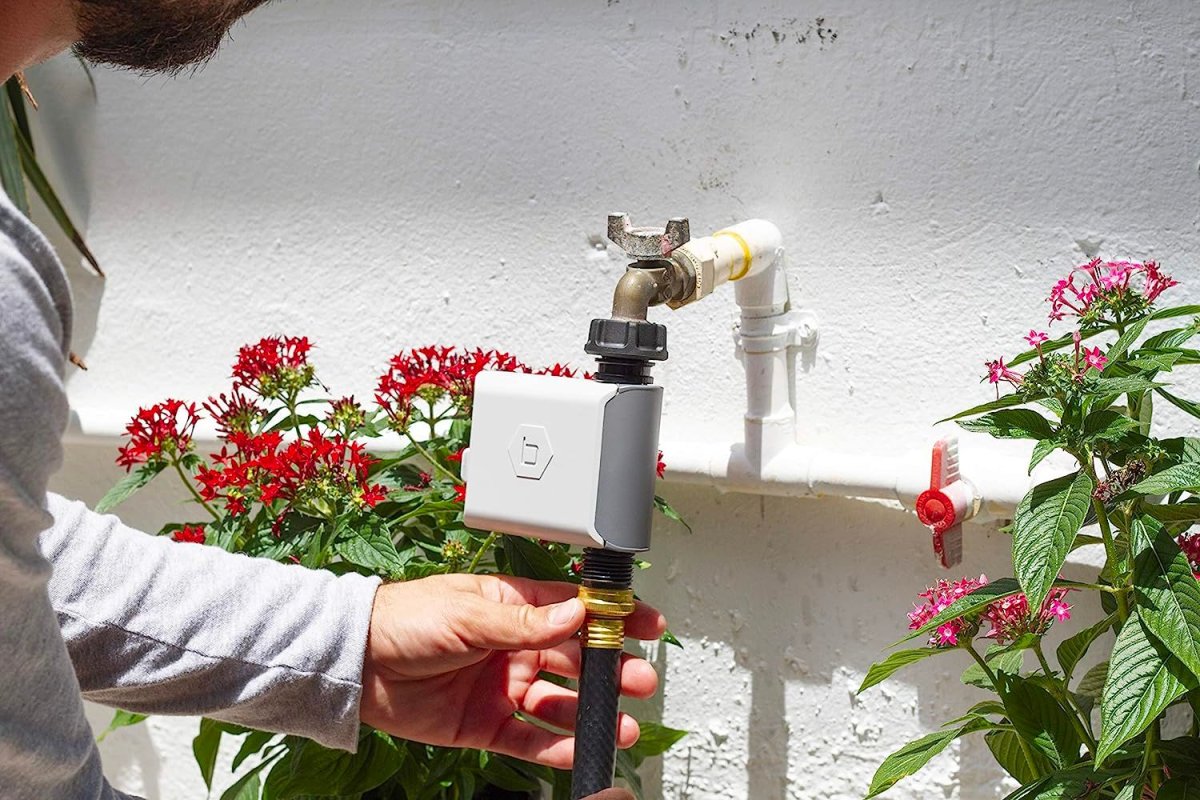
This type of device attaches to an outdoor faucet and controls water flowing through a garden hose. With a compatible hub and app connection, it can use Orbit’s weather-based scheduling tools to adjust watering around local conditions. It can also consider factors such as soil, slope, plant type, and sunlight.
The limitation is obvious but important: a basic single-outlet hose timer controls one watering line. That is perfect for a drip system feeding a vegetable garden or a sprinkler serving a compact lawn, but it is not a substitute for a full multi-zone in-ground irrigation controller.
For many homeowners, that is actually good news. It is a lower-cost way to automate watering without hiring someone to dig up half the yard. Pair it with a hose splitter or additional compatible timers, and a small garden can become surprisingly organized.
Best for: Gardeners and homeowners who need smart hose control rather than a full in-ground sprinkler controller.
Best Hose-Based Upgrade: LinkTap G2S Wireless Water Timer
The LinkTap G2S is another hose-based smart watering solution, but it takes a more safety-conscious approach. It is designed for homeowners who want weather-aware watering plus stronger monitoring for potential problems such as leaks, low flow, water shutoffs, or unexpected valve issues.
Its flow-monitoring and fault-alert features can be especially useful for people who travel frequently or maintain gardens away from their main residence. Instead of discovering a leak after returning from vacation to a lawn that resembles a minor wetland, users can receive an alert and respond sooner.
The controller is weatherproof for outdoor use, while its hub stays indoors. It also allows users to review water-use information and estimate watering costs based on local water rates. That level of detail may be more than a casual gardener needs, but it can be valuable for anyone managing drip irrigation, garden beds, or high-value landscaping.
The downside is that it costs more than simpler faucet timers, and it does not carry WaterSense certification. Still, its alert system makes it a compelling option for homeowners who prioritize monitoring and protection.
Best for: Hose-based irrigation systems where leak detection, flow tracking, and remote alerts matter as much as scheduling.
Best Touch Screen: Orbit 57950 B-hyve Smart Irrigation Controller
Most smart sprinkler controllers assume that every adjustment should happen through a phone app. That works until your phone is inside, your hands are muddy, and the sprinkler is enthusiastically watering the wrong hydrangeas. The Orbit 57950 B-hyve controller solves that problem with convenient on-device controls.
This model supports up to 12 zones and can be installed indoors or outdoors. It uses weather-based scheduling and includes WaterSense certification, helping homeowners avoid waste without constantly reprogramming the system.
The built-in touchscreen is the main attraction. It makes quick manual changes easier, which is useful for homeowners who want smart features but do not want their irrigation system to become completely dependent on a smartphone. You can still use the app, receive alerts, and manage schedules remotely, but the physical controls provide welcome backup.
As with any Wi-Fi controller, installation location matters. A weatherproof case is helpful, but a weak wireless signal can still create annoying connection issues. Test your Wi-Fi near the intended mounting location before committing to the install.
Best for: Homeowners who want smart irrigation features but also prefer direct controls on the controller itself.
Best for Large Lawns With Hose-Based Watering: RainPoint Smart WiFi 2-Zone Sprinkler Timer
The RainPoint Smart WiFi 2-Zone Sprinkler Timer is aimed at homeowners who need more flexibility than a single hose timer can provide. It controls two separate watering lines, which makes it useful for a large lawn plus a garden bed, a front yard plus a backyard, or a sprinkler zone plus a drip irrigation zone.
It offers multiple timing periods per day and includes irrigation and spray modes. The faucet-mounted design makes it easier to install than a hardwired irrigation controller, while its brass connection and weather-resistant housing are designed for outdoor use.
This is not the right pick for a complex in-ground system with eight or 12 valves. It is a more focused solution for homeowners who want to divide hose-based watering into separate zones without turning the faucet area into a tangled metallic sculpture.
It is not WaterSense certified, so buyers focused on rebates or formal water-efficiency certification may prefer another option. However, its two-zone design can make it a practical fit for larger yards using hoses, sprinklers, drip lines, or a combination of all three.
Best for: Larger hose-fed lawns and gardens that need two independently controlled watering zones.
How to Choose the Right Smart Sprinkler Controller
Start With Your Existing Watering System
The first question is not “Which smart controller is best?” It is “What exactly am I controlling?”
- In-ground irrigation system: Choose a multi-zone controller such as Rachio 3, Netro Sprite, or Orbit B-hyve.
- Garden hose, drip line, or faucet sprinkler: Choose a hose timer such as Orbit B-hyve, LinkTap G2S, or RainPoint.
- Mixed landscape: Look for enough zones to separate lawn sprinklers, flower beds, shrubs, trees, and drip irrigation.
Do not assume a controller with more zones is automatically better. A six-zone controller is ideal for a six-zone system. Buying a 16-zone model for a two-zone yard is like renting a bus to drive to the mailbox: technically possible, not especially necessary.
Look for Weather Intelligence, Not Just Wi-Fi
Wi-Fi alone does not make a sprinkler controller smart. The meaningful feature is how the controller uses weather and landscape data. Look for rain delays, freeze skips, seasonal adjustments, forecast-based changes, and the ability to account for soil type or sun exposure.
Weather-based irrigation is particularly useful in regions where summer can deliver a heat wave on Monday, a thunderstorm on Wednesday, and a surprisingly chilly morning by Friday. A fixed timer cannot adapt. A smart controller can.
Check WaterSense Certification and Local Rebates
WaterSense certification can matter for both water savings and rebates. Some local water agencies offer discounts or rebates for qualifying weather-based or soil-moisture-based irrigation controllers. Before purchasing, check local utility programs, because rebate rules often depend on the exact model and installation type.
Even without a rebate, WaterSense certification is useful for buyers who want independently recognized water-efficiency standards rather than relying only on marketing promises.
Think About Installation Location and Wi-Fi Strength
Indoor controllers are ideal for garages, basements, utility rooms, and covered equipment areas. Outdoor-rated units are better for exposed locations, but they still need a reliable Wi-Fi signal and safe electrical access.
Before purchasing, stand where the controller will be installed and test your phone’s Wi-Fi connection. If the signal is weak, plan for a mesh node, extender, or different installation location. Smart irrigation is much less impressive when the controller spends its time pretending the internet does not exist.
Smart Watering Still Requires a Little Human Intelligence
A smart sprinkler controller can reduce waste, but it should not be treated as a permanent excuse to ignore your landscape. Inspect sprinkler heads regularly. Check for clogged nozzles, overspray, leaks, sunken heads, broken drip emitters, and areas where water collects too quickly.
It is also wise to calibrate your system. Place small straight-sided containers around a sprinkler zone, run the zone for a set time, and compare how much water collects in each container. This helps reveal uneven coverage and gives you a clearer idea of how long a zone should run.
Deep, less frequent watering is often healthier for many established plants than tiny daily doses. Shallow watering can encourage shallow roots, while a more thorough soak can help roots grow deeper and become more resilient. Naturally, plant type, soil, temperature, and local conditions all matter, so a vegetable garden should not be programmed exactly like a mature shade tree.
A 500-Word Ownership Experience: What Smart Watering Feels Like Day to Day
Living with a smart sprinkler controller changes the relationship between homeowner and lawn. Before installation, watering tends to be a background chore. You program a timer, hope for the best, and occasionally notice that the sprinklers are operating during a rainstorm with the confidence of a machine that has never looked out a window.
After switching to a smart controller, the first noticeable change is convenience. Instead of walking to the garage, opening a dusty control box, decoding a few mysterious buttons, and wondering whether “Program B” is the backyard or a forgotten experiment from 2019, you can open an app and see the schedule. Zones can be named clearly: front lawn, rose bed, vegetable garden, side yard, citrus trees, and the suspicious patch of grass that seems to have its own emotional needs.
Remote control becomes surprisingly useful. Maybe a landscaper is coming tomorrow and you want to postpone watering. Maybe you notice a dry spot from the kitchen window. Maybe you are away for the weekend and realize the weather has been unusually hot. A few taps can start, pause, skip, or change a cycle without rushing home or calling a neighbor with instructions that sound increasingly complicated.
The best part is often what does not happen. The controller skips watering after rain. It shortens a cycle during cooler weather. It delays irrigation during freezing conditions. Those small changes may not feel dramatic on any single day, but over a season they can reduce unnecessary watering and help prevent the familiar sight of sprinklers polishing an already soaked lawn.
There is also a quiet sense of control. A smart controller turns watering from a vague routine into something measurable. You begin to notice which zones run longest, which areas dry out faster, and whether your garden bed needs a different schedule from the turf. That knowledge is useful even if you never become the kind of person who uses the phrase “evapotranspiration rate” at a backyard barbecue.
Of course, smart irrigation has a learning curve. The app may ask questions about soil, plant types, slope, sprinkler heads, and sun exposure. It can feel tempting to choose random answers just to finish setup faster. Resist that urge. A controller makes better decisions when the information is accurate. Spend a little extra time setting up each zone, and the results will be more useful.
Wi-Fi is another reality check. A controller can have brilliant weather intelligence, but it still needs a stable internet connection to receive updates and communicate with an app. Testing the signal before installation can save a lot of frustration later. It is far easier to add a Wi-Fi extender before mounting the controller than after discovering the garage behaves like a tiny digital cave.
Ultimately, the ownership experience is less about showing off technology and more about reducing little annoyances. A smart sprinkler controller cannot pull weeds, repair a broken valve, or convince your dog to stop digging in the flower bed. But it can make watering more efficient, more flexible, and far less likely to happen during a thunderstorm. For most homeowners, that is smart enough.
Final Thoughts
The best smart sprinkler controller is the one that matches your irrigation system, your yard size, and your willingness to manage details. For most homes with an in-ground system, the Rachio 3 remains the strongest overall choice because it combines easy setup, zone flexibility, weather intelligence, and polished app control.
For hose-based watering, Orbit B-hyve offers an accessible and budget-friendly route into smart irrigation, while LinkTap G2S is worth considering for stronger leak monitoring and alerts. The Orbit 57950 B-hyve appeals to homeowners who want a physical touchscreen, and RainPoint provides a practical two-zone option for hose-fed lawns and gardens.
Whichever model you choose, remember that the controller is only one part of the system. Healthy landscaping still depends on correct zone setup, reliable sprinkler heads, appropriate run times, and occasional inspections. Give the controller good information, maintain the irrigation hardware, and let technology handle the boring part of watering while you enjoy the part where your yard looks alive.
Note: Product versions, pricing, app features, rebate eligibility, and availability can change. Confirm current specifications and local water-agency requirements before purchasing or publishing buying recommendations.