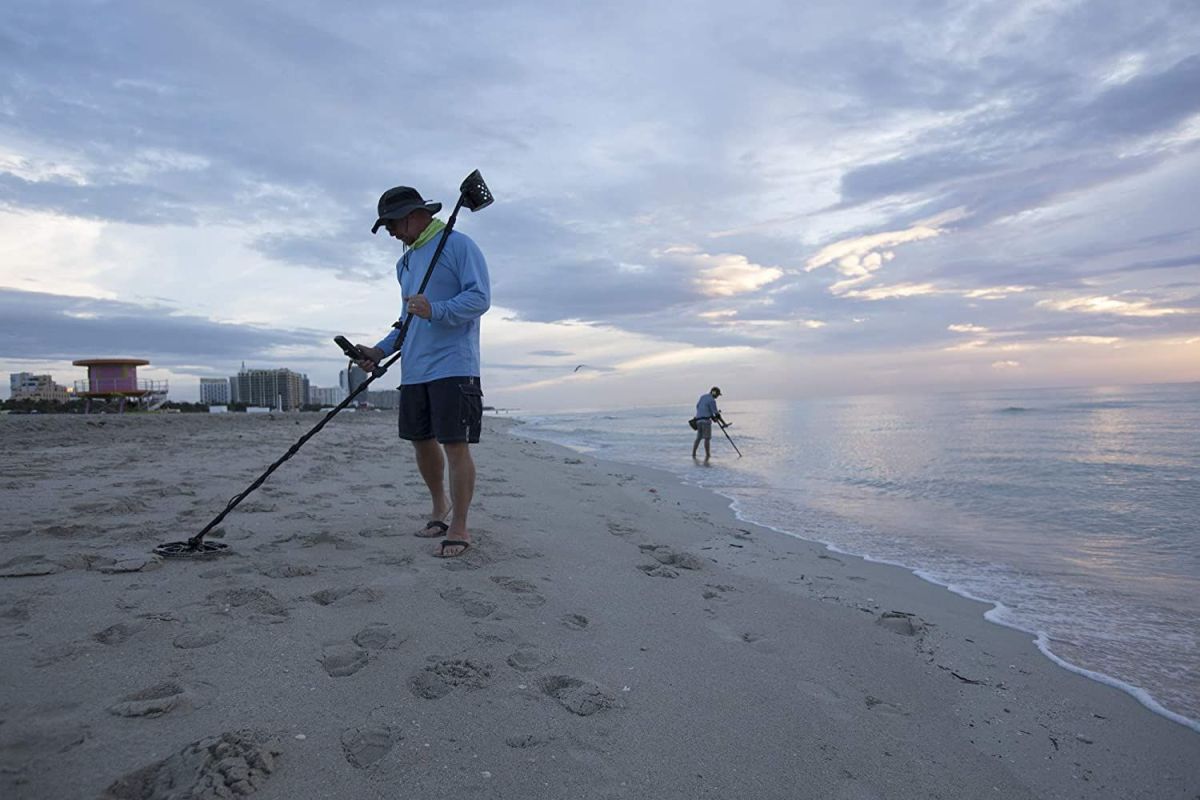
Metal detecting is one of the few hobbies in which finding a rusty bottle cap can feel like a legitimate scientific breakthrough. Every beep creates suspense: Is it a silver coin, a lost ring, or the pull tab from somebody’s 1997 root beer? You will not know until you dig.
The best metal detectors for beginners make that learning process enjoyable rather than frustrating. They should be light enough to swing comfortably, simple enough to operate without a graduate degree in electromagnetic engineering, and capable enough to keep working as your skills improve.
For this guide, we compared beginner metal detectors based on ease of use, target identification, discrimination controls, weight, waterproofing, search modes, coil design, battery system, and long-term value. The seven models below cover casual park hunting, beach detecting, family adventures, relic searching, and budget-friendly experimentation.
Quick Comparison of the Best Beginner Metal Detectors
| Metal Detector | Best For | Water Protection | Skill Level | Price Tier |
|---|---|---|---|---|
| Minelab Vanquish 440 | Best overall | Waterproof coil | Beginner to intermediate | $$ |
| Nokta FindX Pro | Best waterproof value | Fully waterproof to 16 feet | Beginner | $$ |
| Nokta Simplex Ultra | Best feature-rich starter | Fully waterproof to 16 feet | Beginner to intermediate | $$ |
| Garrett ACE 300 | Best traditional design | Waterproof coil | Beginner | $$ |
| Fisher F22 | Best lightweight detector | Weatherproof control box | Beginner | $$ |
| Minelab X-Terra Pro | Best upgrade path | Fully waterproof to 16 feet | Beginner to advanced | $$$ |
| Bounty Hunter Tracker IV | Best ultra-budget option | Waterproof coil | Absolute beginner | $ |
1. Minelab Vanquish 440: Best Overall Metal Detector for Beginners
The Minelab Vanquish 440 earns the top position because it combines beginner-friendly controls with technology that remains useful after the training wheels come off. Its Multi-IQ system operates across multiple frequencies simultaneously, helping the detector respond effectively to different target types without requiring the user to choose a frequency manually.
Four search modesCoin, Relic, Jewelry, and All Metalmake setup straightforward. Select a mode, adjust the sensitivity if necessary, and begin swinging. The pinpoint function helps narrow down a target’s exact location, which means smaller holes and fewer ten-minute arguments with an invisible penny.
The Vanquish 440 weighs approximately 2.8 pounds and folds down for transportation. Its V10 Double-D search coil is waterproof, but the control box is not designed for submersion. That distinction matters: You can search shallow water while keeping the display dry, but you should not take the complete detector swimming.
Why Beginners Will Like It
- Turn-on-and-go operation
- Simultaneous multi-frequency technology
- Useful pinpoint mode
- Clear numerical target identification
- Strong performance in parks, fields, and beach sand
Possible Drawbacks
The control unit is not waterproof, and the included accessories may feel basic. Nevertheless, the detector itself offers one of the best combinations of simplicity, versatility, and long-term value in the beginner category.
2. Nokta FindX Pro: Best Waterproof Value
The Nokta FindX Pro is built for beginners who want a complete, modern detector without paying for dozens of expert settings they may never touch. It includes simple search modes, a large target ID display, a depth indicator, pinpointing, adjustable sensitivity, and a rechargeable battery.
Its greatest advantage is full IP68 waterproofing. The detector can be submerged to approximately 16 feet, opening the door to shallow rivers, lakes, rainy fields, and family beach trips. It weighs about 2.6 pounds and collapses to roughly 25 inches, so it is easy to carry in a vehicle or travel bag.
The internal lithium battery provides approximately 12 hours of typical operation. Unlike detectors that consume disposable batteries like a television remote possessed by a demon, the FindX Pro can be recharged through USB.
Why Beginners Will Like It
- Fully waterproof construction
- Rechargeable battery
- Simple visual controls
- Lightweight and collapsible shaft
- Good package value
Possible Drawbacks
The FindX Pro is a single-frequency detector. It can operate on beaches, but mineralized wet salt sand may require lower sensitivity and more patient adjustments than a simultaneous multi-frequency model.
3. Nokta Simplex Ultra: Best Feature-Rich Starter Detector
The Nokta Simplex Ultra is an excellent choice for an ambitious beginner who enjoys learning settings instead of avoiding them. It offers several search modes, including Field, Park, Beach, All Metal, 4-Tone, and 99-Tone. Beginners can start with a preset mode and gradually explore tone breaks, recovery speed, iron volume, notch discrimination, and other controls.
The detector operates at 15 kHz and includes a numerical target ID scale from 1 to 99. Its 11-inch Double-D search coil covers ground efficiently, while the carbon-fiber shaft helps keep the total weight near 2.6 pounds. The machine is fully waterproof to approximately 16 feet and uses a rechargeable 2300mAh battery.
Firmware updates provide another long-term advantage. Instead of replacing the detector whenever software improvements arrive, owners can install supported updates and continue hunting.
Why Beginners Will Like It
- Beginner presets plus advanced adjustments
- Fully waterproof body and coil
- Carbon-fiber shaft
- Rechargeable battery
- Adjustable recovery speed and audio
Possible Drawbacks
The number of settings can look intimidating during the first afternoon. Start in Park mode, resist the urge to customize everything, and allow your ears to learn the basic signals first.
4. Garrett ACE 300: Best Traditional Beginner Metal Detector
The Garrett ACE 300 has been a popular entry-level detector because it presents information clearly without burying the operator beneath complicated menus. Its digital target ID uses a 0-to-99 scale, helping beginners compare signals before deciding whether to dig.
Five search modes, electronic pinpointing, adjustable sensitivity, notch discrimination, and depth information cover the essential features most beginners need. The standard package uses a 7-by-10-inch concentric search coil and four AA batteries. The detector weighs about 2.8 pounds, making it manageable for typical park and yard hunts.
Garrett also provides extensive educational material, training videos, and beginner guidance. That support is valuable when your first dozen targets appear to be members of the International Brotherhood of Bent Nails.
Why Beginners Will Like It
- Simple control layout
- Reliable numerical target ID
- Five useful search modes
- Built-in pinpoint function
- Large community of existing users
Possible Drawbacks
Only the search coil is waterproof. The ACE 300 also lacks the rechargeable battery, full submersion, and wireless features found on some newer competitors. It remains a dependable dry-land coin and jewelry detector, however.
5. Fisher F22: Best Lightweight Metal Detector for Beginners
At approximately 2.3 pounds, the Fisher F22 is one of the easiest full-size detectors to swing for extended periods. That reduced weight is especially useful for younger users, older hobbyists, and anyone whose shoulder begins negotiating an early retirement after an hour outdoors.
The F22 operates at 7.69 kHz and offers four search modes: Jewelry, Coin, Artifact, and Custom. It includes four-tone audio, a 1-to-99 numerical target ID, nine discrimination segments, pinpointing, adjustable volume, and adjustable sensitivity.
Its control box is rated as weatherproof rather than fully waterproof, while the elliptical search coil can handle water. Two AA batteries may provide up to about 25 hours of operation, making the F22 economical during frequent weekend hunts.
Why Beginners Will Like It
- Very light and comfortable
- Long battery life
- Weather-resistant housing
- Custom audio mode
- Clear target identification
Possible Drawbacks
The F22 does not provide manual ground balancing, and the control box cannot be submerged. Its strongest environment is dry land or rainy-weather detecting rather than serious underwater hunting.
6. Minelab X-Terra Pro: Best Beginner Detector for Growing Skills
The Minelab X-Terra Pro is designed for newcomers who expect metal detecting to become more than a two-week experiment. Its interface is approachable, yet the detector provides enough control to support more advanced hunting techniques later.
Minelab’s Pro-Switch system allows the user to select operating frequencies for different conditions. Dedicated Park, Field, and Beach modes provide convenient starting points, while adjustable recovery speed, iron bias, target tones, sensitivity, and ground balance encourage gradual skill development.
The X-Terra Pro is fully waterproof to approximately 16 feet, weighs about 2.9 pounds, collapses for transportation, and uses a rechargeable internal battery. It also includes pinpoint mode, vibration feedback, a built-in flashlight, and compatibility with additional coils and wireless audio accessories.
Why Beginners Will Like It
- Easy presets with advanced customization
- Fully waterproof design
- Selectable operating frequencies
- Rechargeable battery
- Excellent room for skill development
Possible Drawbacks
The X-Terra Pro costs more than a basic starter detector. It also uses selectable single frequencies rather than simultaneous Multi-IQ, so buyers should not confuse it with Minelab’s multi-frequency X-Terra Elite.
7. Bounty Hunter Tracker IV: Best Ultra-Budget Metal Detector
The Bounty Hunter Tracker IV is old-school, inexpensive, and refreshingly uncomplicated. It uses two knobs, a mode switch, an analog meter, and audio tones rather than a detailed digital display. For someone who simply wants to discover whether metal detecting is enjoyable, that simplicity can be appealing.
It provides All Metal, Tone, and Full Discrimination modes. Preset ground balancing reduces setup work, while the 8-inch waterproof search coil can scan damp grass, shallow freshwater, and dry beach sand. The control box is not waterproof and must remain dry.
This detector is best used in playgrounds, open lawns, lightly littered fields, and similar locations. It can locate coins and larger objects, but target separation and identification are limited compared with newer digital machines.
Why Beginners Will Like It
- Very low purchase cost
- No complicated menus
- Three basic operating modes
- Waterproof search coil
- Suitable for casual family use
Possible Drawbacks
The Tracker IV is heavier and less informative than most modern starter detectors. Beginners who can increase their budget may receive much better long-term value from the Nokta FindX Pro, Minelab Vanquish 440, or Garrett ACE 300.
How to Choose Your First Metal Detector
Consider Where You Will Search
A detector for neighborhood parks does not need the same protection as one used in rivers. For dry-land hunting, weather resistance and a waterproof coil may be sufficient. For wading or underwater detecting, select a model with a fully waterproof control box and shaft.
Wet saltwater beaches present another challenge because conductive salt and mineralized sand can create false signals. Simultaneous multi-frequency detectors generally provide a smoother experience in these conditions, although single-frequency machines can still work with proper beach modes and reduced sensitivity.
Prioritize Weight and Balance
A difference of half a pound looks trivial on a specification sheet. After two hours of repeated swinging, it feels less trivial. Detectors around 2.3 to 3 pounds are usually comfortable for beginners, provided the shaft is adjusted correctly and the coil is not excessively nose-heavy.
Look for Useful Target Identification
Numerical target ID gives you an estimate of a target’s conductivity. It cannot tell you with certainty that a signal is a quarter or gold ring, but it helps identify repeatable patterns. Audio tones are equally important because experienced detectorists often recognize a promising signal by sound before checking the screen.
Do Not Obsess Over Advertised Depth
Detection depth changes with target size, coil size, soil mineralization, moisture, electromagnetic interference, target orientation, and user settings. A detector that finds a large metal can at two feet may detect a small coin at only several inches. There is no universal depth number that allows fair comparison in every environment.
Budget for a Pinpointer and Digging Tool
A handheld pinpointer helps locate the target after the plug has been opened. It reduces recovery time and prevents you from repeatedly scooping dirt through your fingers while questioning every life decision that brought you to this hole.
Metal Detecting Laws and Responsible Hunting
Owning a metal detector does not grant permission to search anywhere that looks interesting. Obtain the property owner’s approval before detecting on private land, and check city, county, state, and federal rules before visiting public property.
Metal detecting and possession of a detector are generally prohibited in areas managed by the National Park Service. Bureau of Land Management and National Forest lands may allow certain low-impact recreational or prospecting activities, but archaeological sites, historic objects, mining claims, protected resources, and locally restricted areas remain subject to additional rules. Regulations vary by location, so contacting the responsible land office is the safest approach.
Responsible detectorists also refill holes, remove trash, avoid damaging roots, use appropriate recovery tools, and report potentially significant archaeological discoveries rather than quietly placing them in a kitchen drawer beside the batteries.
Beginner Metal Detecting Experiences: What Your First 10 Hunts Will Teach You
Your first metal detecting trip will probably begin with unrealistic optimism. You may imagine returning home with a colonial coin, a diamond ring, and enough historical evidence to receive a documentary series. The first target will more likely be foil. The second may be a bottle cap. The third will sound magnificent and turn out to be a larger bottle cap.
This is not failure. Digging common trash teaches you how the detector communicates. Sweep the same target from two directions and notice whether its identification number remains stable. Listen for differences between a short, clean tone and a broken, scratchy response. Compare the sound of a shallow coin with the broad signal produced by a large piece of metal. Each ordinary target becomes a free lesson.
During the first few hunts, many beginners swing too quickly. The coil lifts at the end of each pass like a windshield wiper, leaving large sections of ground insufficiently scanned. A better technique is to keep the coil level, low, and parallel to the surface. Overlap each sweep slightly and move forward in small steps. Metal detecting rewards patience more reliably than enthusiasm with cardio.
You will also discover that location matters as much as equipment. An inexpensive detector used at an old picnic grove may outperform an expensive detector used in an empty modern field. Begin with manageable sites such as playground edges, shade trees, volleyball courts, sports sidelines, older yards with permission, and swimming areas where people commonly lose coins or jewelry.
The first genuinely old or valuable find changes the experience. It may be a silver coin, a brass button, a token, or a ring that is worth more emotionally than financially. Suddenly, every signal feels connected to a human story. Who dropped it? How long did it remain underground? Did someone search for it? That historical curiosity is what keeps many people in the hobby long after the fantasy of instant treasure has faded.
Another lesson arrives when you begin recovering targets cleanly. At first, holes may resemble miniature meteor impacts. With practice, you will learn to use the detector’s pinpoint function, cut a tidy hinged plug, protect grass roots, retrieve the object, replace the soil, and leave almost no visible trace. Responsible recovery is not merely polite; it helps preserve access for every detectorist who visits later.
Your ears will gradually become more useful than your eyes. Target ID numbers can jump because of soil conditions, nearby trash, target angle, or corrosion. A repeatable tone from multiple directions often deserves investigation even when the display is uncertain. Conversely, a signal that vanishes when approached from another angle may be iron falsing or adjacent trash.
By the tenth hunt, you will probably have a container filled with pull tabs, screws, toy-car parts, unidentified metal blobs, and several coins that almost cover the cost of one battery. You will also understand your detector’s language, know how to choose better sites, and dig smaller holes. That experience matters far more than buying the most expensive machine on day one.
The best beginner metal detector is therefore not simply the model with the longest feature list. It is the detector that matches your hunting locations, feels comfortable in your hand, fits your budget, and encourages you to keep exploring. For most newcomers, the Minelab Vanquish 440 offers the strongest all-around balance. The Nokta FindX Pro delivers exceptional waterproof value, while the Simplex Ultra and X-Terra Pro provide more room for growth. Choose thoughtfully, obtain permission, fill every hole, and remember: Treasure is possible, but bottle caps have a much larger workforce.
Note: Product specifications, included accessories, prices, and availability can change. Confirm the current package details with the manufacturer or an authorized U.S. retailer before purchasing, and verify all local metal-detecting regulations before searching or digging.