Motherhood in Hollywood is rarely just about packing lunches, finding missing socks, or asking, “Did you bring a jacket?” even when the jacket question is clearly the foundation of civilization. The best movies about motherhood dig deeper. They explore sacrifice, ambition, identity, guilt, tenderness, class pressure, generational conflict, and the strange emotional magic of loving someone who may roll their eyes at you for the next 15 years.
Hollywood has spent decades turning mothers into saints, martyrs, comic relief, warriors, worriers, and occasionally women who simply need five minutes alone in a quiet bathroom. But the finest films about mothers do something more honest: they let mothers be human. They can be loving and difficult, brave and exhausted, protective and imperfect. That complexity is why motherhood movies remain so powerful for audiences of every generation.
This list of ten Hollywood movies about motherhood blends classic melodrama, modern coming-of-age drama, family comedy, ensemble storytelling, and award-winning performances. These films are not ranked by how many tissues they destroy, although several could qualify as paper-product emergencies. Instead, they are chosen for their emotional insight, cultural impact, memorable performances, and ability to show motherhood as both a personal relationship and a lifelong story.
Why Movies About Motherhood Stay With Us
Great motherhood films work because they make private emotions visible. A mother’s love is often shown through practical things: cooking, driving, working late, making impossible choices, or pretending everything is fine while mentally calculating three bills and a grocery list. Cinema turns these everyday acts into drama without needing superheroes, explosions, or anyone wearing a capeunless we count the robe worn during a 6 a.m. school run.
Another reason these stories endure is that motherhood is never one single experience. Some mothers are biological parents. Some are adoptive parents, stepmothers, grandmothers, guardians, or women who mother through friendship and care. Some relationships are warm and easy; others are complicated, full of love that arrives with static on the line. The best Hollywood family dramas understand that motherhood is not a greeting card. It is a whole weather system.
1. Mildred Pierce (1945)
A mother’s ambition turns into a noir-soaked tragedy
Mildred Pierce remains one of Hollywood’s most fascinating films about maternal sacrifice. Joan Crawford plays Mildred, a hardworking woman who builds a successful restaurant business after her marriage falls apart. On paper, this sounds like an inspiring entrepreneurial story. In practice, it becomes a smoky, sharp-edged melodrama about class, desire, and the danger of confusing love with total self-erasure.
Mildred wants the best for her daughter Veda, but Veda’s appetite for status is bottomless. The mother-daughter relationship becomes a painful study of emotional imbalance: Mildred gives, Veda takes, and the audience slowly realizes that unlimited sacrifice is not the same thing as healthy love. Crawford’s performance gives Mildred pride, vulnerability, and steel. She is not a perfect mother, but she is unforgettable because her flaws come from a recognizable place: the wish to give a child everything she never had.
As one of the great classic Hollywood motherhood movies, Mildred Pierce shows that maternal devotion can be heroic and dangerous at the same time. It is glamorous, dramatic, and as emotionally calm as a thunderstorm in high heels.
2. Stella Dallas (1937)
The original queen of maternal sacrifice
Few films have shaped the Hollywood image of self-sacrificing motherhood as strongly as Stella Dallas. Barbara Stanwyck stars as Stella, a working-class mother who dreams of a better life for herself and her daughter Laurel. Stella is loud, stylish in her own questionable way, and painfully aware that society judges her every move. She is not the refined mother people expect, but her love for Laurel is sincere and fierce.
The film’s emotional power comes from its class tension. Stella understands that her daughter may have more opportunities if Stella steps back from the picture. That idea is heartbreaking, and the movie presents it with the full force of classic melodrama. The famous final moments still work because they show love as both presence and absence. Sometimes a mother is close enough to fix everything. Sometimes she is standing outside, watching from a distance, trying not to fall apart.
Stella Dallas may feel old-fashioned in style, but its central question remains modern: how much should a parent give up for a child’s future? The answer is not simple, which is exactly why the movie still matters.
3. Imitation of Life (1959)
Motherhood, race, identity, and heartbreak
Douglas Sirk’s Imitation of Life is one of Hollywood’s most visually lush and emotionally devastating films about mothers and daughters. The movie follows two mothers: Lora, a white actress pursuing fame, and Annie, a Black woman whose daughter Sarah Jane struggles with racial identity in a society built on prejudice. While the film carries the glossy style of 1950s melodrama, its emotional core is painfully direct.
What makes Imitation of Life so important is that it treats motherhood as inseparable from social pressure. Lora’s ambition affects her daughter. Annie’s love is tested by a world that makes her daughter ashamed of her. The film asks whether love can overcome systems that teach people to reject parts of themselves. That is a heavy question, and the movie does not pretend there is an easy answer hiding behind the curtains.
For viewers exploring the best movies about motherhood, Imitation of Life is essential because it expands the conversation beyond private family drama. It shows that mothers do not raise children in a vacuum. They raise them inside history, culture, economics, and bias. That may sound like a college lecture, but Sirk makes it feel like a beautiful heartbreak wrapped in Technicolor.
4. Terms of Endearment (1983)
The mother-daughter movie that laughs before it cries
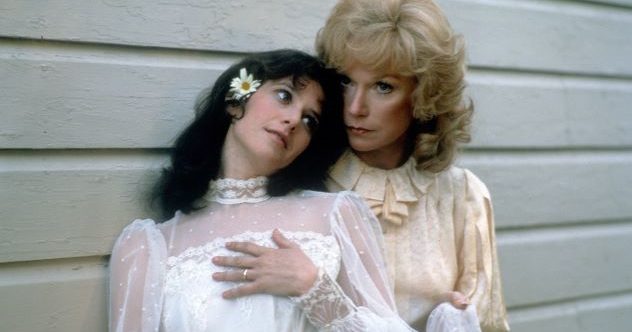
Terms of Endearment is often remembered as a tearjerker, but its secret weapon is comedy. Shirley MacLaine plays Aurora Greenway, a sharp, controlling, deeply loving mother whose relationship with her daughter Emma, played by Debra Winger, is messy from the start. They argue, joke, disappoint each other, and remain emotionally attached in ways neither can fully escape.
The film understands that mother-daughter relationships can be built from contradiction. Aurora can be overbearing and hilarious. Emma can be independent and still long for her mother’s approval. Their bond is not polished into sentimental perfection, which is why it feels alive. The movie gives audiences decades of family life: marriage, children, distance, resentment, forgiveness, and the kind of phone calls that begin casually and somehow contain an entire emotional biography.
Winner of major Academy Awards, including Best Picture, Terms of Endearment remains one of Hollywood’s defining motherhood films because it balances wit and sorrow so gracefully. It reminds us that family love is not always gentle. Sometimes it arrives with sarcasm, bad timing, and a mother who has absolutely no intention of minding her own business.
5. Steel Magnolias (1989)
A Southern sisterhood built around mothers, daughters, and survival
Steel Magnolias is technically an ensemble film, but motherhood runs through it like a live wire. Sally Field’s M’Lynn and Julia Roberts’ Shelby form the emotional center of the story, a mother and daughter whose love is tender, tense, and full of worry. Around them is a circle of women who provide humor, gossip, support, and the kind of salon wisdom that should probably be covered by health insurance.
The movie’s title captures its central idea: these women are delicate and strong at once. M’Lynn wants to protect Shelby, but Shelby wants to live fully and make her own choices. That conflict is one of the most relatable themes in Hollywood family dramas. A mother may want to shield her child from pain, but children grow into adults who have their own dreams, risks, and definitions of happiness.
Steel Magnolias earns its emotional reputation because it surrounds grief with laughter. The jokes are not decorations; they are survival tools. The film shows motherhood not as a solo performance but as part of a community. Sometimes the best support system is a group of women with hairspray, casseroles, and absolutely no fear of speaking their minds.
6. The Joy Luck Club (1993)
Four mothers, four daughters, and generations of unspoken love
The Joy Luck Club, adapted from Amy Tan’s novel, is one of the richest Hollywood movies about mother-daughter relationships. The film follows four Chinese immigrant mothers and their American-born daughters, moving between past and present to reveal the secrets, losses, expectations, and hopes that shape each family.
What makes the film powerful is its structure. Instead of presenting motherhood as one story, it presents it as a chorus. Each mother carries memories her daughter does not fully understand. Each daughter struggles with expectations she sometimes mistakes for criticism. The emotional gap between them is not caused by lack of love; it is caused by language, history, trauma, and the ordinary difficulty of telling the truth across generations.
For audiences seeking meaningful films about mothers, The Joy Luck Club offers a deeply layered portrait of immigrant family life. It shows how mothers can pass down strength even when they struggle to express tenderness. It also reminds us that many daughters do not understand their mothers until they begin to see them as women with entire lives before motherhood. That realization can arrive late, but in this film, it arrives beautifully.
7. Erin Brockovich (2000)
A single mother turns survival into power
Erin Brockovich is often described as a legal drama, but it is also one of the most energizing movies about single motherhood in modern Hollywood. Julia Roberts plays Erin, a struggling mother of three who becomes involved in a major environmental case. She is broke, underestimated, and constantly judged, yet she refuses to shrink herself to make other people comfortable.
What makes Erin such a compelling mother character is that the film does not separate her work from her parenting. Her fight for justice grows out of her lived experience. She understands what it means to worry about bills, health, safety, and whether the world is built to ignore people without power. Her motherhood is not used as a soft background detail. It is part of her fuel.
The movie also challenges the old Hollywood idea that a “good mother” must be endlessly quiet, polished, and self-denying. Erin is loud, funny, flawed, stylishly inappropriate for every office dress code ever invented, and extremely effective. In other words, she is a reminder that maternal strength can look like persistence, intelligence, and refusing to let anyone talk down to you.
8. Juno (2007)
A sharp, funny look at unexpected pregnancy and chosen family
Juno brought a quirky voice to a serious subject. The film follows Juno MacGuff, a teenager facing an unexpected pregnancy and making decisions about adoption, family, and adulthood before she has even finished high school. The movie’s humor is fast and distinctive, but underneath the clever dialogue is a thoughtful story about responsibility and care.
Motherhood in Juno appears in several forms. There is Juno herself, trying to understand what carrying a pregnancy means for her future. There is Vanessa, the hopeful adoptive mother played by Jennifer Garner, whose longing for a child is treated with surprising tenderness. There is also Juno’s stepmother Bren, who quietly becomes one of the film’s strongest examples of practical love. She may not deliver grand speeches every five minutes, but she shows upand showing up is basically the Olympic event of parenting.
Juno deserves a place among the best Hollywood movies about motherhood because it broadens the definition of maternal love. It is not only about biology. It is about readiness, choice, support, and the courage to imagine a good life for a child, even when that life may not look exactly as expected.
9. Little Women (2019)
Marmee and the art of raising independent daughters
Greta Gerwig’s Little Women is often celebrated as a story of sisterhood, creativity, and female ambition, but Marmee March is the quiet force holding the family together. Played by Laura Dern, Marmee is warm without being weak, moral without being dull, and patient without seeming like a decorative household appliance.
The film’s portrait of motherhood is especially interesting because Marmee is raising daughters who are very different from one another. Jo wants artistic freedom. Meg wants domestic happiness. Amy wants beauty, status, and security. Beth wants peace and music. Marmee does not flatten them into one ideal version of womanhood. She guides them while allowing each daughter to become herself.
Gerwig’s adaptation also gives Marmee emotional complexity. She is kind, but she is not empty of anger. She teaches compassion while clearly knowing how difficult life can be for women with limited choices. That makes her one of the most quietly modern mothers in recent Hollywood cinema. Little Women reminds us that good motherhood is not control. It is guidance, honesty, and the ability to let children develop their own voices, even when those voices are very loud at the dinner table.
10. Lady Bird (2017)
The beautifully awkward war zone of mothers and daughters
Lady Bird may be one of the most accurate modern films about a mother and teenage daughter because it understands how quickly love can turn into an argument over nothing. Saoirse Ronan plays Christine “Lady Bird” McPherson, a Sacramento teenager desperate to leave home. Laurie Metcalf plays Marion, her hardworking mother, who loves her daughter deeply but often expresses it through criticism, worry, and aggressively practical shopping advice.
The genius of Lady Bird is that it refuses to choose sides. Lady Bird is dramatic, funny, selfish, and vulnerable. Marion is loving, exhausted, sharp, and scared. Their conversations can feel like emotional fencing matches, but beneath every jab is fear: fear of not being enough, fear of being misunderstood, fear of losing each other when adulthood begins.
As a Hollywood motherhood movie, Lady Bird captures the painful transition when a child starts becoming separate from the parent who raised her. It is not about heroic sacrifice or grand tragedy. It is about thrift-store dresses, college applications, family finances, car rides, silent treatments, and the heartbreaking moment when ordinary life becomes memory. Somehow, that is more than enough.
Common Themes In The Best Hollywood Movies About Motherhood
Love is not always soft
These films show that maternal love can be protective, clumsy, fierce, funny, and occasionally delivered in a tone that sounds suspiciously like a weather warning. From Aurora in Terms of Endearment to Marion in Lady Bird, Hollywood’s best mother characters often love imperfectly. That imperfection is what makes them believable.
Sacrifice has limits
Classic films like Stella Dallas and Mildred Pierce are built around maternal sacrifice, but they also invite modern viewers to question it. How much should a mother give? What happens when giving becomes self-destruction? The best motherhood movies do not treat sacrifice as automatically noble. They explore its emotional cost.
Mothers have stories before they become mothers
The Joy Luck Club, Little Women, and Erin Brockovich all remind viewers that mothers are not supporting characters in someone else’s coming-of-age story. They have histories, ambitions, disappointments, anger, humor, and dreams. A truly great film about motherhood makes room for the woman inside the role.
Viewing Experiences: What These Movies Teach Us About Motherhood
Watching these movies back-to-back would be emotionally ambitious, like deciding to “quickly reorganize the garage” and finding three generations of family drama behind one box of holiday decorations. Still, the experience is rewarding because each film reveals a different emotional angle. Together, they create a fuller picture of motherhood than any single movie could offer.
One experience many viewers have with motherhood films is recognition. You may see your own mother in Marmee’s patience, Marion’s anxiety, Aurora’s sharp tongue, or M’Lynn’s protective fear. You may recognize a grandmother, aunt, teacher, neighbor, or family friend who gave care without asking for applause. These movies can make ordinary memories feel cinematic: a ride home, a packed meal, a warning repeated too many times, a late-night conversation that seemed small until years later.
Another experience is discomfort, and that is useful too. Mildred Pierce and Stella Dallas can make modern viewers question the way society praises mothers for disappearing into their children’s needs. Lady Bird can make us laugh and cringe at how easily teenagers and parents hurt each other while trying to be understood. Imitation of Life can open conversations about race, identity, and the painful pressures that shape family bonds. These films are not always cozy, but cozy is not the same thing as honest.
There is also a strong lesson here about communication. In many of these stories, mothers and children love each other intensely but speak different emotional languages. One person offers advice; the other hears judgment. One person asks for independence; the other hears rejection. The movie theater becomes a kind of translator. It lets us see both sides at once, which is something real life rarely pauses long enough to do.
For families, these movies can become conversation starters. A mother and daughter might watch Lady Bird and laugh at how accurate the arguments feel. Friends might watch Steel Magnolias and talk about the communities that helped raise them. Someone who grew up between cultures may find The Joy Luck Club especially meaningful because it understands the silence between generations. Someone who was raised by a single parent may feel the grit and pride in Erin Brockovich.
The biggest experience these films offer is empathy. They encourage viewers to see mothers not as perfect symbols but as people carrying invisible labor, private fears, old wounds, and stubborn hope. That is why Hollywood keeps returning to motherhood. Not because it is simple, but because it is endlessly dramatic, quietly funny, and emotionally enormous. Also, because somebody has to remind everyone to bring a sweater.
Conclusion
The best Hollywood movies about motherhood do not all tell the same story, and that is exactly why they endure. Mildred Pierce and Stella Dallas examine sacrifice through the lens of classic melodrama. Imitation of Life expands motherhood into questions of identity and social injustice. Terms of Endearment and Steel Magnolias mix laughter with heartbreak. The Joy Luck Club turns generational memory into moving drama. Erin Brockovich celebrates single-mother resilience. Juno explores choice and adoptive love. Little Women honors guidance without control. Lady Bird captures the messy comedy of growing up and letting go.
Together, these films prove that motherhood on screen is not one mood, one role, or one perfect image. It is work, love, conflict, humor, fear, memory, and courage. Sometimes it is a dramatic close-up. Sometimes it is a grocery receipt. Either way, Hollywood’s greatest motherhood movies remind us that behind every family story is someone trying, failing, trying again, and loving harder than any screenplay can fully contain.