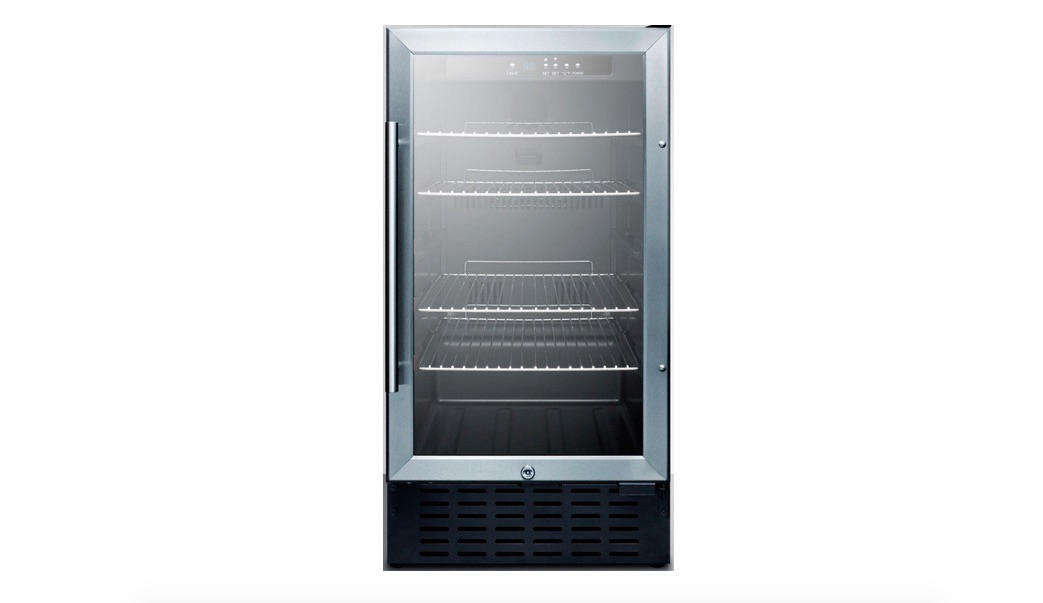
The Summit SCR1841B 18 Inch Undercounter Beverage Cooler is designed for people who want cold drinks within arm’s reach without surrendering half the kitchen to another refrigerator. At just 17.75 inches wide, it slides into compact cabinet openings while offering the polished glass-door appearance of a commercial beverage display.
This is not a bargain dorm-room cube with a tiny freezer compartment and a mysterious dial labeled one through seven. The SCR1841B is a purpose-built, single-zone beverage refrigerator with digital temperature controls, front ventilation, adjustable shelving, automatic defrost, LED lighting, and a locking glass door.
Those features make it suitable for home bars, kitchens, offices, entertainment rooms, hospitality areas, and certain commercial settings. However, its premium price, modest 2.7-cubic-foot capacity, and mixed customer experiences mean it deserves a careful look before you measure a cabinet opening and emotionally commit.
Summit SCR1841B Specifications at a Glance
| Product type | Single-zone built-in or freestanding beverage cooler |
|---|---|
| Exterior dimensions | 34.25 inches high, 17.75 inches wide, and 23.5 inches deep |
| Depth with handle | Approximately 25.25 inches |
| Depth with door open 90 degrees | Approximately 39.75 inches |
| Capacity | 2.7 cubic feet, or approximately 76 liters |
| Temperature range | 34°F to 64°F |
| Shelves | Four removable and adjustable chrome shelves |
| Door | Reversible, stainless-steel-trimmed glass door with lock |
| Defrost system | Automatic |
| Electrical requirements | 115 volts, 60 Hz, grounded three-prong outlet |
| Estimated annual energy use | Approximately 284 kWh per year |
| Installation | Built-in undercounter or freestanding indoor use |
Retailers sometimes advertise dramatically different can counts for this model. That is not necessarily a conspiracy involving tiny soda cans. Capacity changes according to container diameter, shelf spacing, bottle height, and whether cans are stacked. The 2.7-cubic-foot interior measurement is more dependable than a theoretical maximum can count.
What Makes the Summit SCR1841B Different?
A Narrow Design for Difficult Spaces
The principal attraction is its width. Standard undercounter beverage refrigerators are commonly around 24 inches wide, which can be excessive in a compact kitchen or home bar. The Summit SCR1841B needs an opening of roughly 18 inches, making it a practical candidate for a narrow cabinet bay, converted trash-compactor space, kitchenette, or small refreshment station.
Its cabinet stands 34.25 inches high, placing it close to standard counter height. Buyers should still measure the opening at the front, middle, and back because cabinets and floors are not always as square as their builders believed.
True Built-In Ventilation
A beverage cooler cannot safely become a built-in model simply because someone pushes it into a cabinet and hopes for the best. Freestanding compact refrigerators typically release heat around their sides and rear. Trapping one inside cabinetry can increase cycling, energy use, and component wear.
The SCR1841B uses a front-breathing design that releases heat through the lower front grille. That arrangement allows the unit to be fully recessed under a counter when installed according to Summit’s clearance requirements. Its finished black cabinet also permits freestanding placement, although freestanding use requires substantially more ventilation space around the appliance.
A Broad 34°F to 64°F Temperature Range
The available temperature range gives this Summit beverage center more flexibility than many wine-only coolers. At the cold end, a 34°F setting is suitable for water, soda, beer, sparkling beverages, and canned cocktails. Warmer settings can accommodate white wine, sparkling wine, or red wine intended for near-term serving.
Because the SCR1841B has one temperature zone, everything inside shares the same climate. It cannot simultaneously hold lager at 36°F and red wine at 60°F. Owners who routinely store beverages with very different serving requirements may prefer a dual-zone model.
Interior Storage and Organization
Four Chrome Shelves
The interior includes four chrome shelves that can be removed or repositioned. This flexibility matters because beverage packaging appears to follow no recognizable international treaty. Slim cans, standard cans, long-neck bottles, champagne bottles, and oversized water containers all compete for different amounts of vertical space.
For a can-heavy setup, keeping the shelves relatively close together provides the greatest density. Removing one shelf creates room for taller bottles, pitchers, or upright wine bottles, although every removed shelf reduces total storage capacity.
The lower rear section contains a compressor step, so the interior is not a perfect rectangular box. Containers placed near that step may require a little experimentation. A mixed arrangement usually works best when taller bottles occupy one zone while cans fill the more uniform shelves above.
Glass Door and LED Lighting
The stainless-steel-trimmed glass door gives the unit a more upscale appearance than a solid black mini fridge. It also lets users check inventory before opening the door. This sounds like a minor benefit until a party guest stands in front of the cooler for 45 seconds trying to decide between sparkling water and a beverage with a pirate on the label.
Interior LED lighting illuminates the contents without producing the heat associated with older incandescent bulbs. The light is controlled from the digital panel and automatically switches off after a limited period. That behavior conserves energy, but buyers seeking permanent display lighting may find it less theatrical than expected.
Factory-Installed Door Lock
A keyed lock is built into the door. It can be useful in shared offices, hospitality environments, rental properties, family homes, or any room where beverage access needs to be controlled. Naturally, the lock protects only the cooler’s contents. It cannot prevent someone from hiding your favorite drink behind six cans of tonic water.
Temperature Control and Everyday Performance
The digital thermostat adjusts the set point in one-degree increments and can display temperatures in Fahrenheit or Celsius. This is more precise and easier to interpret than the vague mechanical controls found on inexpensive compact refrigerators.
Users should understand that the number on the display is not guaranteed to match the temperature of every drink at every moment. Air temperature changes when the door opens, warm beverages are added, or the appliance enters its automatic defrost cycle. Bottled and canned liquids change temperature more slowly than the surrounding air.
For the most accurate setup, place an independent refrigerator thermometer near the center of the loaded cabinet and monitor it for at least 24 hours. Do not repeatedly change the set point after every compressor cycle. Refrigerators appreciate patience almost as much as people waiting for dinner.
Customer feedback commonly praises the model’s ability to maintain cold serving temperatures and fit into narrow openings. Other owners have mentioned fan noise, shelf stability, shipping damage, or longer-term service concerns. Experiences vary, so the quality of the dealer, delivery inspection, installation, and access to local appliance service should factor into the purchase decision.
Installation Requirements You Should Not Ignore
Measure the Full Depth
The cabinet itself is approximately 23.5 inches deep, but the professional-style handle increases total depth to about 25.25 inches. The door requires nearly 39.75 inches of depth when opened to 90 degrees. Check for nearby islands, walls, drawer handles, and traffic paths before installation.
The door arrives with a right-hand hinge and can be reversed. Reversal involves moving the hinges, support bracket, shaft sleeves, handle, and screw covers. A careful do-it-yourselfer can complete the process, but the door should be aligned precisely so the gasket seals evenly.
Allow the Appliance to Settle
After delivery, Summit instructs owners to leave the cooler upright for at least two hours before connecting power. This allows compressor lubricant and refrigerant to stabilize after transportation. If the unit was carried or stored on its side, giving it additional upright time is prudent.
Use the Correct Outlet
The SCR1841B requires a properly grounded 115-volt, three-prong outlet. It should not be operated through an extension cord or an adapter that removes the grounding connection. The outlet must remain accessible enough to disconnect the cooler for cleaning or service.
The installation area should remain between approximately 61°F and 95°F. This is an indoor appliance, not an outdoor refrigerator. A hot patio, freezing garage, direct sunlight, or a cabinet beside an oven can reduce efficiency and cause temperature fluctuations.
Keep the Front Grille Clear
The lower front grille is functional, not merely decorative. Blocking it with trim, carpet, pet hair, or a dramatically oversized toe kick interferes with heat removal. Vacuuming dust from the grille periodically helps preserve airflow and may reduce unnecessary compressor operation.
Cleaning and Maintenance
Automatic defrost eliminates the need to chip ice from the interior with questionable kitchen tools. Defrost water travels to a collection area near the compressor and evaporates during normal operation.
For routine cleaning, disconnect power and remove the beverages and shelves. Summit recommends cleaning the interior with a mild baking-soda solution, followed by wiping with a soft cloth. The chrome shelves can be washed with mild detergent. Abrasive pads and solvent-based cleaners should be avoided because they may damage interior finishes.
Clean the stainless trim in the direction of its brushed grain, then dry it to minimize water spots. The glass door can develop condensation in humid conditions because warm, moist air contacts the cold surface. Persistent fogging or dripping may indicate high room humidity, frequent door opening, or a gasket that needs cleaning.
Leveling is also important. A cooler that rocks on the floor can vibrate, produce extra noise, and prevent the door from sealing properly. Adjust the front leveling legs until the cabinet is stable and the door closes without assistance.
Advantages and Drawbacks
Advantages
- The 17.75-inch width fits spaces that cannot accept a standard 24-inch beverage refrigerator.
- Front ventilation supports genuine built-in undercounter installation.
- The 34°F to 64°F range handles cold drinks as well as several wine-serving temperatures.
- Digital controls are more intuitive than a numbered mechanical dial.
- Four removable shelves provide flexible storage arrangements.
- The reversible glass door, stainless trim, and LED lighting create a polished appearance.
- A factory-installed lock adds security in shared or commercial environments.
- Automatic defrost reduces routine maintenance.
Drawbacks
- The 2.7-cubic-foot interior is compact compared with full-width beverage centers.
- It has only one temperature zone.
- The glass door may show condensation in humid rooms.
- Fan and compressor sounds may be noticeable in very quiet living spaces.
- Chrome wire shelves may not support every bottle shape as neatly as flat glass shelves.
- The premium price places it above many freestanding mini refrigerators.
- It is not designed for outdoor installation.
- The standard SCR1841B is not the shorter ADA-height version.
Who Should Buy the Summit SCR1841B?
This model makes the most sense for buyers who specifically need a narrow, built-in beverage cooler. It is especially well suited to a home bar, kitchen island, office break room, basement entertainment area, compact apartment, hospitality suite, or remodel with an available 18-inch cabinet opening.
It may also appeal to buyers who need a cooler capable of reaching normal refrigerator temperatures. Many wine coolers stop well above 40°F, making them less satisfying for soda, beer, and water. The SCR1841B’s lower temperature limit provides greater beverage flexibility.
Buyers who need maximum capacity, two independently controlled zones, outdoor certification, smart-home controls, or nearly silent operation should compare alternatives. The Summit is a specialized space-saving appliance, not a universal answer to every cold-drink emergency.
Realistic Ownership Experience: What Living With It May Be Like
The first noticeable benefit of the Summit SCR1841B is usually not its thermostat or glass door. It is the disappearance of beverage clutter from the main refrigerator. Once cans, water bottles, mixers, and party drinks move into a dedicated cooler, the household refrigerator suddenly has room for groceries again. No one must relocate a casserole to make space for twelve sparkling waters.
During the first few days, organizing the shelves can feel like a compact-storage puzzle. Standard 12-ounce cans are easy, but mixed collections require experimentation. Tall mineral-water bottles may fit best upright on the bottom. Beer bottles can occupy a middle shelf, while cans fill the upper levels. Wine bottles may need to lie flat or replace one shelf entirely. The layout becomes much more practical once the owner stops trying to preserve a perfectly symmetrical showroom display.
The digital controls are straightforward. A household using the cooler primarily for beer, water, and soda might settle around 36°F to 39°F. A wine-focused setup may operate closer to 45°F or above. After changing the setting or loading room-temperature beverages, the sensible approach is to close the door and give the appliance several hours to stabilize. Watching the display every two minutes will not make the drinks cool faster, although it may provide low-budget entertainment.
In an open kitchen or quiet office, the owner will occasionally hear the fan or compressor. Some people barely notice normal refrigeration sounds; others can detect a cooling cycle from three rooms away and will compose a strongly worded review about it. Proper leveling, an unobstructed front grille, and stable shelf placement can reduce vibration-related noise, but they cannot make a compressor refrigerator completely silent.
The glass door makes inventory management convenient. It is easy to see when supplies are running low, and the LED lighting gives the cooler a clean, professional appearance. The trade-off is that every mismatched label and lonely half-row of cans remains visible. Owners who enjoy visual order may find themselves arranging beverages by type or label direction. This behavior is harmless unless guests must submit a diagram before returning a bottle.
Entertaining is where the SCR1841B can earn its floor space. Guests can serve themselves without repeatedly opening the kitchen refrigerator, and the lock can secure selected beverages when the event ends. The compact width also lets the cooler fit beside bar cabinetry without dominating the room.
Long-term satisfaction depends heavily on installation and service planning. Inspect the unit immediately after delivery for dents, damaged feet, door misalignment, or broken shelving. Confirm that the door gasket seals and that the cooler reaches the selected temperature before discarding packaging. Because customer reports include both highly satisfied owners and people who experienced component or service problems, purchasing from an established authorized dealer with a clear return policy can be as important as choosing the appliance itself.
Overall, everyday ownership should feel convenient rather than revolutionary. The Summit SCR1841B does one focused job: it places a useful quantity of properly chilled beverages inside a narrow, attractive undercounter footprint. When that exact combination matches the room, the cooler can be an elegant problem-solver. When capacity matters more than width, a larger model will provide better value.
Final Verdict
The Summit SCR1841B 18 Inch Undercounter Beverage Cooler is a strong niche choice for compact installations. Its front-breathing construction, wide temperature range, digital thermostat, reversible locking glass door, automatic defrost, and commercial-style appearance separate it from inexpensive mini refrigerators.
Its limitations are equally clear. Capacity is modest, the interior has one zone, and owner feedback suggests that noise tolerance, delivery condition, and local service availability should be evaluated before purchase. Buyers should also distinguish the standard 34.25-inch model from the shorter SCR1841BADA version when planning an accessible or lower-counter installation.
For a carefully measured 18-inch space, the SCR1841B offers an appealing balance of refrigeration performance and presentation. It is compact without looking temporary, functional without appearing industrial, and cold enough to keep a beverage genuinely refreshing rather than merely less warm.