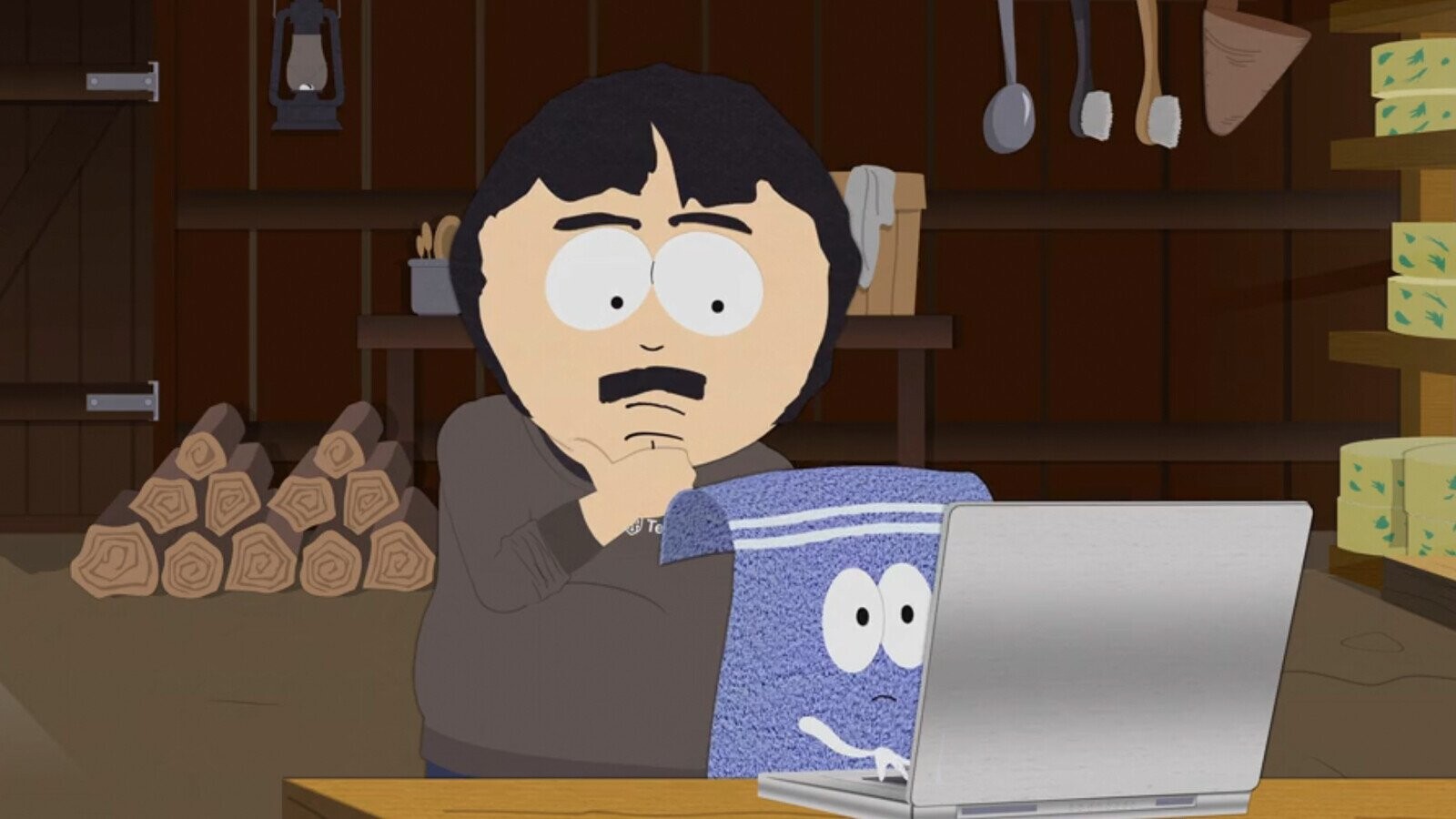
South Park has never been the kind of show that politely waits for the world to calm down before making a joke. If anything, Trey Parker and Matt Stone have built the series on the opposite idea: grab the chaos while it is still hot, slap a paper cutout face on it, and send it sprinting through a Colorado elementary school before anyone in a suit can ask, “Are we sure legal has seen this?”
That is why the show’s recent bi-weekly schedule caused so much fan confusion. Viewers are used to South Park arriving with the urgency of a group project finished the night before it is due. So when Season 27 started spacing episodes farther apart, plenty of people pointed at Paramount, Comedy Central, streaming deals, mergers, corporate nerves, and every other button on the modern media conspiracy board.
But the more interesting explanation is also the most South Park explanation: the schedule appears to be driven by Parker and Stone’s creative process, not simply by Paramount pulling strings from a boardroom. In other words, the same creators who turned deadline panic into an art form may have decided that, for this particular season, the satire needs more breathing room.
Why the South Park Bi-Weekly Schedule Matters
The keyword here is not just “schedule.” It is “control.” Fans care because South Park is famous for feeling dangerously current. Many animated shows take months, sometimes years, to move from script to screen. South Park has long operated like a comedy newsroom with construction-paper explosives. Its fast turnaround is part of the brand.
When that rhythm changes, it does not feel like a normal TV programming decision. It feels like a signal. Is the show being censored? Are executives nervous? Did the creators miss a deadline? Is Paramount stretching the season to keep subscribers longer? Did Cartman eat the production calendar? All reasonable questions, especially that last one.
Season 27 arrived after a long break and during a noisy corporate moment for Paramount. The premiere date was pushed from July 9, 2025, to July 23, 2025. Around the same period, Paramount and the show’s creators finalized a major five-year deal that included 50 new episodes and brought the library and new episodes to Paramount+. That is a lot of business paperwork surrounding a show whose soul is basically “what if fourth graders ran cable news?”
The Real Story: Creative Timing, Not Just Corporate Timing
It is easy to imagine a giant company forcing a staggered rollout. Streaming platforms love stretching hit shows. A weekly release keeps social media talking. A bi-weekly release can keep subscriptions alive longer than a binge drop. From a business perspective, it makes sense.
But South Park is not a normal asset sitting quietly inside a content library. Parker and Stone are unusually hands-on. They write, produce, voice, and shape the show with a level of direct control rare in long-running television. That matters because a bi-weekly schedule gives them something extremely valuable: time to respond to the news without turning each episode into a creative car crash.
The show’s recent political satire has not been subtle. Season 27’s premiere aimed directly at Donald Trump, Paramount, media settlements, streaming politics, and the strange ways entertainment companies become part of national arguments. That is not the kind of episode you casually assemble between lunch and a printer jam. Well, unless you are Parker and Stone, in which case you might still try.
South Park’s Six-Days-to-Air Legend
Part of the fan reaction comes from the legend of 6 Days to Air, the documentary that showed how Parker, Stone, and their team built episodes at terrifying speed. The method became a calling card. While other animated series were carefully polished far in advance, South Park could make jokes about events that happened days earlier.
That speed created some of the show’s sharpest moments. It also created a production culture that, from the outside, looks like a combination of genius, panic, pizza boxes, and someone yelling “render faster” at 3 a.m. The bi-weekly schedule does not erase that legacy. It may be an evolution of it.
Modern news cycles are faster, louder, and more unstable than they were when South Park began in 1997. Political scandals mutate overnight. Social media reactions become stories of their own. A joke that seems perfect on Monday can feel stale, irresponsible, or less accurate by Wednesday. For a show that wants to stay timely, an extra week can mean the difference between a quick jab and a knockout punch.
Why Paramount Became the Obvious Suspect
Fans did not invent their suspicion out of thin air. Paramount was very much part of the larger Season 27 drama. Comedy Central is under the Paramount umbrella, and the show’s streaming future became a major business story in 2025. Parker and Stone’s new agreement with Paramount extended the franchise for five years and made Paramount+ the central streaming home for South Park.
Then there was the Paramount-Skydance merger conversation, which Parker and Stone criticized when the Season 27 premiere shifted dates. The creators’ public frustration made fans more sensitive to every scheduling change that followed. Once a show openly complains about corporate turbulence, viewers naturally watch the release calendar like it is a crime scene.
Still, a delayed premiere and a bi-weekly rhythm are not automatically the same thing. The premiere delay was tied to business chaos and public tension. The ongoing episode spacing appears more connected to production timing, creative choice, and the demands of making topical satire in a season where the real world keeps handing the writers flaming bowling pins.
Season 27 Proved South Park Still Has Ratings Muscle
If Paramount wanted proof that South Park still matters, Season 27 delivered it wearing a smug little hat. The premiere drew nearly 6 million viewers across Comedy Central and Paramount+ in its first three days, according to reporting based on Paramount’s figures. That is a major number for a series that has been on the air since the late 1990s.
The second episode also kept the conversation going, showing that the premiere was not just nostalgia traffic. The season became a reminder that South Park still works because it occupies a strange space: it is old enough to be a TV institution and reckless enough to feel like it just broke into the building.
That makes the release schedule even more important. When a show is drawing headlines, each episode becomes an event. A bi-weekly gap can frustrate fans, but it can also build anticipation. It gives viewers time to argue, meme, analyze, complain, subscribe, unsubscribe, resubscribe, and then pretend they were never emotionally invested in a cartoon about foul-mouthed children.
Why Bi-Weekly May Actually Help the Comedy
Comedy is timing. That phrase is usually about punchlines, but it also applies to release strategy. South Park has always benefited from immediacy, but immediacy is not the same as rushing. A little extra time can help the writers sharpen an angle, avoid chasing the wrong story, or fold new developments into an episode before it airs.
Topical comedy can age badly when it grabs the first obvious joke. Parker and Stone’s best work often comes when they push past the first joke and find the absurd machinery underneath. With current politics, media consolidation, streaming wars, and celebrity outrage all feeding the same furnace, extra production time can make the satire more layered.
The bi-weekly schedule also lets episodes breathe. In the streaming era, entire seasons can vanish into the cultural stomach like popcorn. One weekend, everyone talks about a show. By Monday, the internet has moved on to a raccoon in a grocery store. South Park benefits from the opposite. Each episode can land, offend, amuse, trend, and become part of the week’s argument before the next one arrives with a new stick of dynamite.
Fans Are Split, Because Of Course They Are
The fan reaction has been mixed. Some viewers want the old rhythm back. They miss tuning in every week and seeing what madness Parker and Stone cooked up while the rest of television was still polishing storyboards from six months ago. For those fans, the bi-weekly schedule feels like buying a box of cereal and discovering someone replaced every other spoonful with waiting.
Other fans are more forgiving. If the extra time helps the episodes stay sharp, they will take the delay. This is especially true when a season is dealing with fast-moving political and cultural material. A rushed South Park episode can still be funny, but a precise one can become part of pop culture history.
There is also the practical side: fewer episodes spread across more weeks keeps the show in public conversation longer. Whether that benefits Paramount, Parker and Stone, or both, it changes the viewing experience. Instead of a quick burst, Season 27 becomes a rolling event. The mountain town stays in the news cycle, which is exactly where South Park likes to build its snow forts.
What This Says About Trey Parker and Matt Stone
The bi-weekly schedule reinforces something longtime fans already know: Parker and Stone are not passive creators waiting for network instructions. They have spent decades building a brand around creative autonomy, fast reactions, and a willingness to bite the hand that pays for the animation software.
The new Paramount deal did not suddenly turn them into corporate mascots. In fact, Season 27’s willingness to mock Paramount-adjacent controversies suggests the opposite. The creators understand that South Park loses power the moment it feels domesticated. A safe South Park would be like a decaf energy drink: technically possible, spiritually confusing.
If Parker and Stone want more time between episodes, it is likely because they see a creative advantage. They are not slowing down because the show has nothing to say. They are slowing down because there may be too much to say, and the jokes need to hit the right targets in the right order.
Paramount Still Benefits, Even If It Is Not the Main Driver
None of this means Paramount is irrelevant. A bi-weekly schedule can absolutely help the company. It keeps South Park visible on Comedy Central and Paramount+ for a longer stretch. It gives marketing teams more time to promote each episode. It keeps the franchise from burning through its season too quickly.
But benefiting from a schedule is not the same as causing it. The key point is that South Park’s unusual production model gives Parker and Stone strong reasons to space out episodes on their own terms. Paramount may enjoy the result, but the creative engine is still in Colorado, not just in a corporate spreadsheet.
That distinction matters for SEO searchers, entertainment fans, and anyone trying to understand the future of the show. “Paramount delayed South Park” is a clean headline. “Parker and Stone may be adjusting the schedule to preserve topical sharpness during a chaotic season” is less tidy, but probably closer to how this show actually works.
Examples of Why Extra Time Matters
Consider how quickly political stories changed during 2025. A single week could bring a new legal development, media controversy, viral quote, or government response. For South Park, that is both a buffet and a trap. Grab too early, and the joke misses the real story. Wait too long, and the joke becomes old bread.
The show’s best episodes often find a larger theme behind the headline. It is not simply “look at this politician” or “look at this celebrity.” It is “look at the ridiculous system everyone is pretending is normal.” That kind of comedy benefits from digestion. Even Cartman, a character not famous for thoughtful restraint, would probably agree if there were snacks involved.
By spacing episodes out, Parker and Stone can observe how public conversation develops. They can see what people are overreacting to, what companies are trying to hide, what politicians are trying to reframe, and what fans are obsessing over. Then they can build an episode that feels less like a tweet and more like a trapdoor.
Experience-Based Perspective: Watching South Park in the Bi-Weekly Era
For viewers, the new rhythm changes the emotional experience of watching South Park. A weekly schedule feels like habit. A bi-weekly schedule feels like an appointment. You do not simply stumble into a new episode; you wait for it, speculate about it, and wonder which public figure is nervously checking whether they have been animated yet.
That waiting period can be annoying, but it also restores a bit of old-school TV energy. Before streaming trained everyone to consume eight episodes and three existential crises in one weekend, audiences had time to sit with a show. They talked about theories, repeated jokes, debated meanings, and occasionally discovered that patience was not fatal. Shocking, I know.
With South Park, the gap is even more interesting because the world keeps changing between episodes. Viewers are not just waiting for a plotline to continue; they are waiting to see what real event the show will grab next. That makes each release feel like a response from the creators, almost like Parker and Stone are reading the room, rolling their eyes, and then choosing the dumbest possible puppet to explain the truth.
As someone analyzing the show’s publishing rhythm from an audience and SEO perspective, the bi-weekly schedule has a strange advantage: it extends the life of every episode. Search interest lasts longer. Recaps stay relevant longer. Opinion pieces have time to form. Social media clips circulate before being replaced. Fans who missed the episode have an extra week to catch up before the next cultural grenade lands.
For entertainment websites, that is gold. A weekly schedule creates fast traffic spikes. A bi-weekly schedule creates waves. You can publish a release-date guide, then a recap, then an analysis, then a reaction roundup, then a streaming guide, and somehow still have time to ask, “Wait, did they really just say that?” This is why South Park remains such a strong topic for Google and Bing searches: the show is not just content; it is a conversation machine.
From a fan’s point of view, the biggest benefit is quality control. Nobody wants a delayed episode just for the sake of waiting. But if the extra time leads to sharper writing, tighter satire, and better-targeted jokes, the delay becomes part of the value. It is like waiting longer for pizza and then discovering the crust is perfect. You are still hungry, but at least the cheese had ambition.
The risk, of course, is momentum. South Park thrives on urgency, and too much waiting can make the audience wander. The show must balance anticipation with payoff. If every two-week gap ends in an episode that feels essential, fans will forgive the schedule. If the episodes feel ordinary, the gap becomes a magnifying glass for disappointment.
So far, the bi-weekly structure makes sense because Season 27 is built around high-pressure satire, corporate drama, and real-time cultural reaction. Parker and Stone are not making a cozy animated sitcom about neighborhood misunderstandings. They are making a show that might mock its distributor, irritate political figures, and still deliver massive viewership. That is a difficult machine to run on fumes.
In the end, the bi-weekly schedule may be less a retreat from the classic South Park formula and more a modern adjustment to protect it. The goal is still the same: make the episode feel like it was ripped from the week’s headlines, chewed up by absurdity, and launched back at the audience with a grin. The only difference is that now, Parker and Stone may be giving themselves thirteen days to air instead of six. Honestly, for this show, that still counts as moving at cartoon lightning speed.
Conclusion
South Park’s bi-weekly schedule is not simply a boring programming footnote. It is a window into how one of television’s most durable satire machines is adapting to a messier media world. Paramount may benefit from stretching the season, but the creative logic points strongly toward Trey Parker and Matt Stone needing more space to make topical episodes land with force.
The schedule may frustrate fans who want new episodes every Wednesday, but it also gives the show more room to sharpen its jokes, react to fast-moving events, and keep every release feeling like a cultural incident. For a series that has survived nearly three decades by refusing to behave, that may be the smartest move of all.