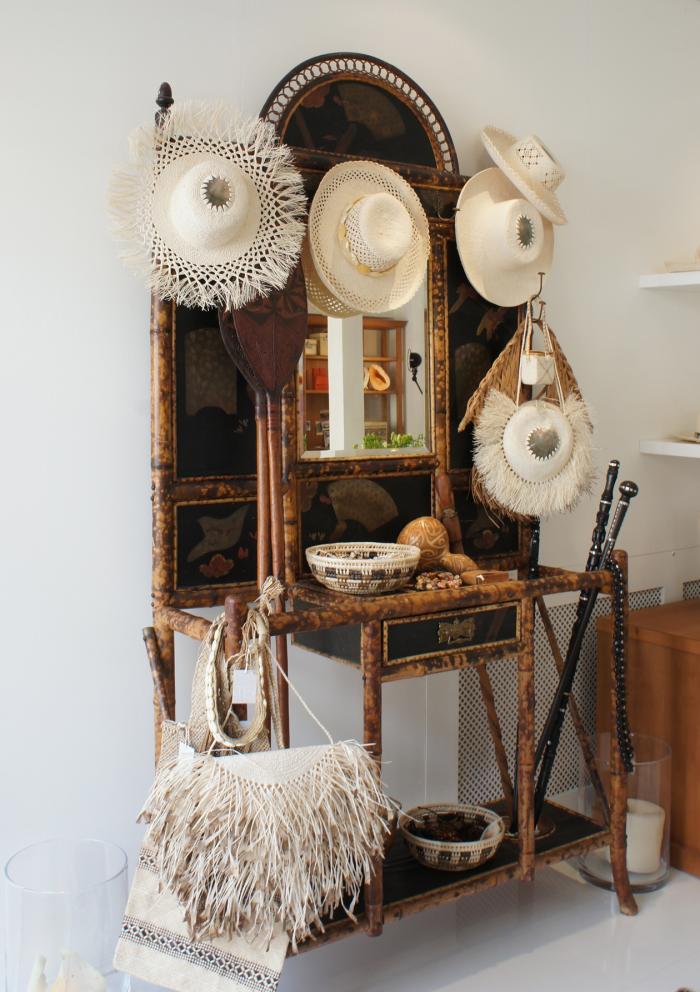
London has a special talent: it can make a gray Tuesday feel like an epic saga. One minute you’re dodging drizzle, the next you’re daydreaming about lagoon-blue water and palm shadowsusually while standing in a queue that moves at the speed of frozen honey. Enter South Pacific exotica: the rush of color, texture, craft, and mythology that can make a city of brick and slate feel a little more… sun-kissed.
But “South Pacific exotica” comes in two very different flavors. One is the real thing: Oceanic artistry and material culturewoven forms, carved histories, textiles made from trees, navigation knowledge that treats the ocean like a readable map. The other is the Western fantasy version: tiki kitsch, retro escapism, and décor that sometimes borrows without asking. London is big enough to hold both, and smart enough (when it tries) to tell the difference.
So let’s do this properly: how Pacific creativity has shown up in Londonthrough design shops and fashion, blockbuster exhibitions, and modern interiorsand how to enjoy the vibe with respect, not cringe.
What “South Pacific exotica” really means (and why it’s not a single look)
The “South Pacific” isn’t one aestheticit’s a vast region often grouped under Oceania, spanning Polynesia, Melanesia, and Micronesia, plus places like Aotearoa New Zealand and Australia depending on context. It’s also thousands of islands, many languages, and deeply distinct artistic traditions. When London says “South Pacific,” it’s usually talking about a mixture of:
- Materials: rattan, cane, pandanus, shell, feathers, barkcloth (tapa), wood carving, fiber weaving.
- Patterns: geometry, tattoo-inspired linework, ocean-wave rhythms, star and navigation motifs.
- Forms: ceremonial objects, domestic textiles, musical instruments, tools made beautiful on purpose.
- Ideas: ancestry, community, land-and-sea relationships, and art that’s meant to be usednot just stared at.
“Exotica” is where things get slippery. It can mean “rare and far away” (which is already a bit of a side-eye word), but it can also mean “stylized fantasy.” London’s best Pacific-inspired moments tend to happen when the city leans into craft, attribution, and collaborationand backs away from caricature.
A London doorway to the islands: the shop that helped define the phrase
If the title “South Pacific Exotica Comes to London” sounds like a chapter heading, that’s because it basically was. In the early 2010s, design media spotlighted a London shop called Atea Oceanie, founded by New Zealander Laura Myers. The shop drew on Myers’s childhood memories of Tahiti and her connections across the Pacific, bringing artisan-made pieces and island influences into a city better known for trench coats than trade winds.
The appeal wasn’t “theme party.” It was edited, modern, and tactile: home goods and clothing shaped by Pacific sensibilitiesrelaxed silhouettes, natural fibers, and objects that felt like they had a story (because many did). That shop is now reported as permanently closed, but the idea it popularized stuck: Pacific-inspired design can look contemporary, collected, and grounded instead of costume-y.
Why it worked
- It centered makers and materials rather than stereotypes.
- It treated “island style” as designnot décor theater.
- It let texture lead: woven elements, soft neutrals, ocean-washed color accents.
In other words, it proved you can bring the Pacific into London without turning your living room into a movie set.
Museums and exhibitions: London’s Pacific moment got bigger (and more serious)
Retail trends come and go. Museums, when they do things well, can change how a city understands culture for a generation. London’s major Pacific “wow” moment in recent years was the Royal Academy’s large-scale Oceania exhibition (late 2018), which gathered Oceanic works spanning centuries and emphasized the region’s depth, variety, and living traditions.
At the same time, London institutions like the British Museum have long held significant Oceanic collections, with ongoing research and (increasingly) collaboration with source communities. The key shift is the storyline: away from “discovery” narratives and toward indigenous knowledge, context, and the ethics of collecting.
This isn’t just a London conversation, either. In the U.S., major institutions have been rethinking how Oceania is presented and who gets to speak for itlike the Metropolitan Museum of Art’s reopening of reimagined Arts of Oceania galleries discussed in public media coverage.
What you actually feel when Oceanic art is presented well
It’s not “tropical.” It’s powerful. Oceanic works can be monumental or intimate, but they often carry a sense of purposeobjects tied to community, lineage, ceremony, music, and daily life. A carved figure isn’t just “decor.” A woven mat isn’t just “texture.” Context changes everything.
The textile that explains half the aesthetic: tapa (barkcloth)
If you’ve ever seen a Pacific-inspired print and thought, “That’s gorgeouswhat is that pattern?” there’s a decent chance you’re looking at something influenced by tapa (also called barkcloth). Tapa is made from the inner bark of certain trees, processed and beaten into cloth, then decorated with dyes and designs that vary by island and community.
Historically, tapa was used for clothing, furnishings, and ceremonial life in many Pacific cultures. It can carry family identity, social meaning, and artistic innovationsometimes all at once. Modern discussions of tapa also emphasize that it’s not just “historic”; it’s a living practice with contemporary makers and changing contexts.
How tapa shows up in London today (often without being labeled)
- Wall art and prints: geometric motifs adapted into modern graphic design.
- Textiles and upholstery: earth-toned patterning used as a “global” accent.
- Fashion: barkcloth-inspired repeats, wrap silhouettes, and natural-fiber emphasis.
The opportunityand the responsibilityis to treat tapa-inspired design as more than “a cool pattern.” When possible, look for attribution, learn the origin, and support makers whose work is connected to the traditions being referenced.
How South Pacific style translates into a London home (without turning into a theme park)
London interiors have an ongoing love affair with textureprobably because texture does what the weather doesn’t: it adds warmth. That’s why Pacific-influenced materials like rattan, cane, and woven accents keep cycling back into trend reports. The best versions feel timeless, not “vacation rental.”
The London-friendly Pacific palette
- Base: sand, bone, chalky white, soft clay.
- Wood tones: honey, teak-ish warmth, weathered oak.
- Accents: deep ocean blue, leaf green, sun-faded coral (used sparingly).
- Black/brown detail: for linework, contrast, and graphic punch.
Five design moves that feel “Pacific,” not “party store”
- Let one artisan piece be the hero. A woven wall hanging, a carved bowl, a textile with provenancesomething that feels made, not manufactured.
- Choose woven lighting. A rattan pendant or cane shade makes London evenings feel less like “overhead interrogation” and more like “soft sunset.”
- Layer natural textures. Linen, jute, raffia, woolmix them so the room feels collected, not curated-by-algorithm.
- Use pattern like punctuation. One tapa-inspired print on a cushion or framed panel beats a full room of loud motifs.
- Add green like you mean it. A single plant that thrives (even in British winter light) is more convincing than a jungle of struggling houseplants staging a protest.
The pop-culture “South Seas” vibe: tiki, exotica, and the respect test
Here’s where London’s South Pacific fascination can wobble. The mid-century tiki boomborn in the U.S. and built on escapismcreated a visual language of carved faces, bamboo, palm fronds, and “mystery island” fantasy. It also created a long-running debate: when does playful remixing become cultural appropriation?
Cultural institutions and writers have pointed out that tiki often trades in a fictional mash-up that can flatten real Pacific cultures. That doesn’t mean every palm leaf is forbidden. It does mean you should know the difference between: nature-inspired tropical design and using sacred imagery as décor.
A simple “respect test” for your Pacific-inspired choices
- Is it a generic material (rattan, linen, wood)? Usually safe territory.
- Is it a specific cultural symbol or deity figure? Pause. Learn. Attribute. Consider not using it.
- Is the maker identified and compensated? That’s the direction you want to walk in.
- Is it presented as costume/fantasy? That’s where stereotypes sneak in.
If you want the playful “tropical lounge” energy without the baggage, focus on what’s universally joyful: warm lighting, lush greenery, rhythmic music, bold color accents, and zero-proof tropical drinks (yes, pineapple can be fabulous without turning into a chemistry experiment).
London stages a Pacific story, too: “South Pacific” as cultural touchpoint
London’s relationship with the South Pacific isn’t only visualit’s theatrical. Rodgers & Hammerstein’s South Pacific has returned to UK stages in modern productions that lean into both its romance and its serious critique of racism. That matters, because the “South Pacific” in Western imagination has often been framed as paradise-without-peoplebeautiful scenery with the humanity edited out. The best versions of the story refuse to do that.
You don’t need to memorize show trivia to appreciate the point: when London audiences engage with Pacific-related stories thoughtfully, the conversation gets deeper than “vibes.” It becomes about how culture is seen, portrayed, and respected.
Why this trend isn’t just a trend: diaspora, climate, and a new Pacific visibility
Pacific creativity is traveling not because it’s “exotic,” but because Pacific communities are visiblethrough artists, designers, scholars, and diaspora life in global cities. There’s also a growing public awareness of what many Pacific islands face: climate vulnerability, environmental pressure, and the need for global attention that isn’t patronizing.
Even the old romantic idea of the ocean as “empty space” is being corrected. Stories of Pacific voyaging and wayfinding emphasize skill, science, and traditionnavigation as a living knowledge system. That lens can change how you see every “wave pattern” in design: it stops being decoration and becomes a reminder that the ocean has always been read, traveled, and understood with sophistication.
So, what does it look like when South Pacific exotica comes to Londondone right?
It looks like a city learning to swap fantasy for curiosity. It looks like buying fewer things, better thingsobjects with makers, materials with meaning. It looks like museums and media telling fuller stories, including the uncomfortable parts. And yes, it looks like a London flat with a woven pendant lamp that makes even a rainy afternoon feel like it has a soundtrack.
“South Pacific exotica” doesn’t have to mean “faraway fantasy.” In its best form, it’s a bridge: between islands and metropolis, between tradition and contemporary design, between looking and understanding. London doesn’t need to pretend it’s Tahiti. It just needs to make room for Pacific voicesand let the craft speak.
Extra: 10 South Pacific–in–London experiences that feel immersive (and respectful)
The easiest way to appreciate Pacific influence in London is to stop trying to “do a theme” and start building a day around materials, stories, and senses. Think of it like a mini expeditionminus the compass, plus a very reasonable snack budget. Here are experiences you can piece together in real life, each one adding a layer to what “South Pacific” can mean in a global city.
1) Start with Oceanic objects in a museum setting
Begin your day with the kind of quiet attention museums invite. Even when Oceanic works aren’t gathered in a single dedicated room, London institutions often show selections that reveal the variety of the regioncarving, fiber, shell, and tools that are beautiful because they were meant to be used and valued. Stand close enough to notice the handwork. Step back and notice silhouette. Then do the most important thing: read the label. Provenance and cultural context turn “cool object” into “real story.”
2) Notice texture in the city (London is secretly great at this)
On the walk to your next stop, play a small game: count textures. Brick. Stone. Wool coats. Umbrellas. Then imagine what happens when you add rattan, cane, linen, and woven fiber into that mix. Pacific-inspired design doesn’t fight Londonit softens it. That’s the whole trick. It’s not about palm trees; it’s about warmth.
3) Hunt for woven pieces like you’re building a collection, not a costume
Whether you’re browsing a design shop, a vintage market, or a small gallery, aim for pieces that feel honest: baskets with tight weave, lampshades with real structure, textiles that don’t look printed-on. If you find a tapa-inspired pattern, treat it like art, not wallpaper: one framed panel or one cushion can do more than a full room of “island overload.”
4) Take a “pattern break” and sketch what you see
This sounds cheesy until you do it, and then it’s weirdly addictive. Sit somewhere warmcafé, library, museum benchand sketch a motif you saw: a repeating diamond, a wave rhythm, a grid of lines. You’re not copying sacred imagery; you’re training your eye to recognize structure. Suddenly, “South Pacific influence” becomes less about props and more about design language.
5) Listen for the Pacific in sound, not just sight
Oceanic musical traditions are incredibly diversepercussion, wind instruments, vocal styles, and performance contexts that can be ceremonial or communal. If you’re lucky enough to catch a performance event, talk, or exhibition program that includes Pacific music, you’ll feel how incomplete “tropical décor” is without the deeper cultural layer. Sound makes the idea human.
6) Choose tropical flavors without centering alcohol
“Tropical” in London often gets marketed as cocktails first, culture second. Flip that. Go for fruit-forward flavors and Pacific-adjacent ingredients in a way that’s accessible and age-appropriate: coconut, citrus, pineapple, ginger, passionfruit, lime, mint. A sparkling pineapple-ginger drink tastes like vacation without turning the experience into a bar tutorial.
7) Watch for the difference between “nature-inspired” and “culture-as-prop”
You’ll see palm prints and bamboo everywhere. The question is what else is being done. Is the space using generic tropical cues (plants, woven textures) or leaning on cartoonish “tribal” masks and fake “mystic island” stereotypes? When you start noticing that difference, you become the kind of consumer London needs: one who rewards better choices.
8) Read one Pacific voice, not just one Pacific vibe
Pair the aesthetic with an author, artist, or curator from the region. Even a short essay or exhibition note can reframe what you saw earlier in the day. The goal isn’t homeworkit’s balance. If London is borrowing beauty from the Pacific, London can also make room for Pacific perspectives.
9) Build a tiny “Pacific corner” at home
Instead of redecorating your entire room, make one corner feel intentional: a woven lamp, a linen throw, a small piece of art with maker credit, and a plant that actually thrives. This approach is more respectful (and more affordable) than going full “set design.” Bonus: it still makes winter feel 12% less wintery, which is basically magic in Zone London.
10) End the day with a story on stage (or a film night with context)
If a production like South Pacific is on, it can be a strong closerespecially when staged with awareness of its themes. If not, choose a film or documentary night that’s not just “island scenery,” but actually includes Pacific creators or historians. The best takeaway from a South Pacific–in–London day isn’t a shopping bagit’s a sharper sense of what’s real, what’s remix, and what respect looks like in practice.