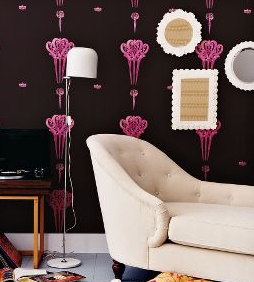
Every once in a while, a home décor discovery appears with the quiet drama of a handwritten invitation slipped under a very stylish door. “Felix Spicer at Anthropologie” is exactly that kind of design moment: niche, artistic, a little mysterious, and just specific enough to make serious wallpaper lovers sit up straight. The original buzz centered on Felix Spicer’s Hairpin wallpaper designs, notably Bilitt Hairpin Wallpaper and Cancan Hairpin Wallpaper, appearing at Anthropologie at a striking markdown. For shoppers who love interiors with a story, this was not simply a sale. It was a tiny treasure hunt wrapped in pattern, craft, and a very good reason to measure your walls immediately.
Felix Spicer’s work stands apart from ordinary wallpaper because it does not feel like background decoration. It feels collected. His patterns draw from 19th-century French and Italian hair adornments, transforming small decorative objects into graphic silhouettes with antique charm and modern rhythm. That is the fun of the design: what begins as a hairpin becomes a repeat pattern, what begins as a historical reference becomes a living-room conversation starter, and what begins as “I should just browse for five minutes” becomes “Why am I suddenly redesigning the powder room?”
This shopper’s alert deserves a second look because it captures several ideas that still matter in home design today: the return of expressive walls, the appeal of artisanal prints, the pleasure of finding designer pieces through mainstream retailers, and the very real thrill of a markdown that does not insult your taste. Whether you are studying Felix Spicer as a designer, hunting for vintage Anthropologie wallpaper, or simply looking for inspiration for a character-filled interior, this guide breaks down what made the moment special and how to shop similar statement wallpaper today.
Who Is Felix Spicer?
Felix Spicer is best known in design circles as a British fabric and wallpaper designer associated with hand-printed textiles, refined pattern work, and a deeply historical eye. His designs have been described through the lens of craftsmanship rather than trend-chasing. That distinction matters. In a world full of fast décor, Spicer’s work feels like the visual equivalent of a carefully restored antique: detailed, thoughtful, and unlikely to apologize for having a personality.
His inspiration from antique hairpins is especially memorable. Many designers borrow from flowers, birds, landscapes, or geometric motifs. Spicer looked to 19th-century French and Italian hair adornments, then enlarged and repeated those shapes until they became architectural. The result is delicate without being fussy and historical without looking dusty. Think less “grandmother’s attic” and more “museum curator with excellent lamps.”
The Hairpin wallpaper designs, including Bilitt and Cancan, are strong examples of this approach. They use romantic silhouettes and rhythmic repeats to create walls that feel decorative yet disciplined. The motifs have an old-world source, but the scale and repetition make them suitable for contemporary interiors. That mix of antique reference and modern graphic impact is exactly why the Anthropologie appearance felt so notable.
Why Anthropologie Was the Perfect Retail Stage
Anthropologie has long occupied a distinct space in American retail. It is not simply a place to buy a dress, a candle, or a decorative bowl shaped like something your practical friend would never approve of. It is a lifestyle destination built around discovery. The brand’s home department, in particular, has become known for color, pattern, artisan-inspired details, and pieces that feel more curated than generic.
That is why Felix Spicer and Anthropologie made sense together. Spicer’s wallpaper was not the kind of product that disappears politely into a beige room. It had a point of view. Anthropologie shoppers often respond to that exact quality: a sense that the item was found somewhere interesting, even if the “somewhere” is an online cart at 11:43 p.m. with free shipping anxiety hovering in the background.
The original alert noted two Spicer wallpapers available through Anthropologie at a sale price: Bilitt Hairpin Wallpaper and Cancan Hairpin Wallpaper. Both were listed at $69.95 per roll, reduced from $168. For designer wallpaper, that kind of markdown is the home décor version of finding a perfect vintage coat with your name already embroidered inside. It turns a splurge into a possibility.
The Design Appeal of Hairpin Wallpaper
A Pattern With a Story
Wallpaper works best when it does more than fill a blank surface. Felix Spicer’s Hairpin designs succeed because they come with a built-in narrative. The motif is not random. It begins with antique hair adornments, objects once used for personal beauty and display. Enlarged on a wall, those shapes become decorative architecture. They hold the eye because they are unfamiliar but not chaotic.
This story-driven quality is especially valuable in interiors because it gives a room depth. A wall covered in generic pattern may look nice, but a wall covered in a design inspired by 19th-century hair ornaments gives guests something to ask about. The answer is far more interesting than “It was on sale,” although, to be fair, that answer also has charm.
Graphic Yet Romantic
Spicer’s Hairpin wallpaper sits between several design moods. It has the romance of antique references, the discipline of repeated pattern, and the sharpness of silhouette. That makes it surprisingly flexible. In a dining room, it can feel elegant and slightly theatrical. In a hallway, it can add rhythm and movement. In a powder room, it can deliver the tiny-room drama that wallpaper does so well.
The hairpin motif also avoids the obviousness of many decorative prints. It is not another floral, not another stripe, not another polite neutral texture pretending it has plans for the weekend. It has specificity. That specificity is what makes a room feel designed rather than merely decorated.
Hand-Printed Character
One of the most attractive aspects of Spicer’s design language is its connection to hand-printed craft. Hand-printed wallpapers and textiles often carry a slight irregularity and warmth that mass-produced surfaces can lack. Even when the repeat is precise, the impression feels human. That matters in modern homes, where so many finishes are smooth, engineered, and flawless to the point of emotional numbness.
A hand-printed-inspired wallcovering can soften that perfection. It brings texture, history, and a little eccentricity into the room. It says someone made choices here. Possibly bold choices. Possibly choices made after coffee. Either way, the room benefits.
How Felix Spicer Fits Today’s Wallpaper Trends
Although the Anthropologie shopper’s alert dates back to an earlier design moment, the appeal of Felix Spicer’s wallpaper feels surprisingly current. Wallpaper has moved far beyond the old idea of something your parents spent a weekend steaming off the wall while muttering darkly about paste. Today, wallpaper is one of the fastest ways to give a room identity.
Recent interiors trends favor expressive surfaces: murals, block prints, bold colors, nature-inspired patterns, textured papers, and the use of wallpaper in unexpected places such as ceilings. Spicer’s work fits beautifully into that conversation because it has the qualities shoppers now seek: personality, artistry, pattern, and a sense of origin.
His Hairpin designs also align with the renewed appreciation for prints that feel collected rather than mass-produced. While many current wallpapers lean botanical or scenic, Spicer’s motif offers a more unusual decorative direction. It is historical but not stuffy, graphic but not cold, and ornamental without tipping into sugar overload.
Where to Use Felix Spicer-Style Wallpaper
Powder Rooms
If a room is small, wallpaper can be brave. In fact, small rooms often benefit from bold pattern because there is less visual competition. A Felix Spicer-style wallpaper in a powder room could turn a functional space into a jewel box. Add a brass mirror, a stone sink, and warm lighting, and suddenly your guest bathroom has more personality than most dating profiles.
Dining Rooms
Dining rooms are ideal for wallpaper with history. The repeated hairpin motif would pair well with dark wood, linen curtains, vintage silver, or modern black dining chairs. The key is contrast. Let the wallpaper bring decorative movement while the furniture keeps the room grounded.
Entryways and Hallways
Entryways are often neglected, which is rude considering they make the first impression. A patterned wallpaper can turn a pass-through space into a statement. Because Spicer’s motifs have strong silhouettes, they could work beautifully in a hallway where the pattern is seen in motion.
Bedrooms
In a bedroom, use a design like this with restraint. A feature wall behind the bed may be enough, especially if the pattern has strong contrast. Pair it with solid bedding, simple lamps, and natural textures. The goal is romantic, not “I sleep inside a decorative teacup.”
How to Style a Statement Wallpaper Without Overdoing It
The first rule of styling statement wallpaper is simple: let it be the star. If your walls are wearing antique-inspired hairpin silhouettes, your sofa does not also need to shout. Choose supporting pieces that echo the wallpaper’s mood without competing with it. For example, if the paper has a warm brown or sepia tone, pair it with cream upholstery, walnut furniture, aged brass, or matte black accents.
Second, repeat one color from the wallpaper elsewhere in the room. This creates cohesion and prevents the wallpaper from looking like it wandered in from another house. A pillow, lampshade, rug border, or painted trim can do the job. You do not need to match everything. In fact, please do not. Matching too much is how rooms start to look like catalog pages that have never heard laughter.
Third, balance pattern scale. If the wallpaper has a medium or large repeat, keep nearby textiles simpler. A quiet stripe, small check, or solid linen can work. If you are confident with pattern mixing, choose designs that share a color family or historical feeling. If you are not confident, start with solids and congratulate yourself on being wise.
Shopping Tips for Vintage Anthropologie Wallpaper
Because Felix Spicer’s Anthropologie wallpaper appears to be a past offering rather than a routine current stock item, shoppers may need to think like collectors. Search resale platforms, design forums, estate sales, and vintage décor marketplaces using specific terms such as “Felix Spicer Bilitt Hairpin Wallpaper,” “Cancan Hairpin Wallpaper,” “Anthropologie Hairpin Wallpaper,” and “Felix Spicer wallpaper.” Specificity matters. Searching only “Anthropologie wallpaper” is like asking the internet to bring you “a snack” and expecting it to know you meant pistachio gelato.
When buying discontinued wallpaper, always confirm the roll dimensions, coverage, condition, dye lot, and whether the roll is sealed. Wallpaper from different dye lots can vary slightly in color, and that difference may become visible once installed. If you need multiple rolls, try to buy them together. If only one roll is available, consider using it in a small space, framed panels, the back of bookcases, cabinet interiors, or above wainscoting.
Also check whether adhesive is required. The Bilitt product details described it as non-woven paper requiring adhesive, with a roll size of 27 feet long by 27 inches wide and coverage of about 60.75 square feet. Those numbers are important because wallpaper math has a wicked sense of humor. Always order extra for pattern matching, mistakes, and future repairs.
Modern Alternatives If You Cannot Find Felix Spicer
If the original Felix Spicer wallpaper is unavailable, look for designs with similar qualities: hand-printed character, antique-inspired silhouettes, graphic repeats, sepia or neutral palettes, and unusual source material. Block-print wallpapers can provide a similar artisanal feeling. Botanical papers with strong linework can offer comparable elegance. Geometric patterns based on historical motifs may also satisfy the same craving for decorative intelligence.
Anthropologie’s current wallpaper selection includes peel-and-stick styles, murals, florals, novelty prints, geometrics, abstracts, and nature-inspired designs. That means shoppers can still find expressive wallcoverings through the retailer, even if the Felix Spicer designs are now more of a collector’s pursuit. The spirit of the original shopper’s alert lives on in the idea of finding something distinctive before everyone else does.
Why This Shopper’s Alert Still Matters
The charm of “Felix Spicer at Anthropologie” is not only about one markdown. It is about the meeting point between designer craft and accessible retail. It shows how a mainstream store can introduce shoppers to work with depth, history, and artistic identity. It also reminds us that the best home purchases are not always the newest or loudest. Sometimes they are the oddly specific pieces that make you pause, research, and imagine an entirely different room.
In an age of endless scrolling, a design like Spicer’s Hairpin wallpaper rewards attention. It asks you to look closer. Once you do, you see the antique source, the rhythm of the repeat, the elegance of the silhouette, and the reason a wallpaper can feel like more than wall covering. It can feel like a point of view.
Extra Experience Notes: Living With a Felix Spicer-Inspired Find
Shopping for a wallpaper like Felix Spicer’s Hairpin design is a different experience from buying a plain white paint sample. Paint asks, “Do you want warm white or cooler white?” Wallpaper asks, “What kind of person do you want your hallway to become?” That is a much more entertaining question and, admittedly, a more dangerous one for the budget.
The best way to approach a design like this is to start with the room’s emotional purpose. If you want a space to feel collected, layered, and quietly dramatic, a historical motif works beautifully. Imagine opening the door to a small dining room where the walls carry those elongated hairpin silhouettes. The table is set simply, perhaps with linen napkins and low candles. The wallpaper does not scream for attention; it hums. Guests notice it, then lean closer. That is the sweet spot.
Another practical experience: always order or view a sample if possible. Wallpaper changes dramatically with light. A pattern that looks soft online may become bold in a narrow hallway. A brown tone may read warm in daylight and almost black by evening. Tape the sample to the wall and observe it morning, afternoon, and night. Yes, this makes you look like a very serious wallpaper scientist. Embrace it.
If you manage to find a discontinued roll, treat it like a limited resource. One roll may not cover a full room, but it can still create magic. Use it behind open shelving, inside a glass-front cabinet, as framed wall panels, or on the upper half of a powder room above beadboard. These smaller applications preserve the impact while avoiding the heartbreak of running out halfway through a wall. Nothing ruins a design fantasy faster than realizing your rare wallpaper stops behind the toilet.
Installation is another area where experience matters. Hand-printed or specialty wallpapers deserve careful handling. If the roll is valuable or irreplaceable, hiring a professional installer is often worth it. Professionals understand pattern repeats, wall preparation, seam placement, and trimming. They also tend not to panic when paste appears where paste should not be. For DIY shoppers, preparation is everything: smooth the wall, prime properly, measure twice, and do not begin installation when hungry, tired, or emotionally vulnerable.
Styling after installation should feel intentional but not stiff. A Felix Spicer-inspired wallcovering pairs well with antique frames, sculptural lamps, woven textures, and furniture with clean lines. Avoid filling every surface with more decorative objects. The wallpaper already carries detail. Give it breathing room. A single black-framed mirror or a quiet piece of art may do more than a crowded gallery wall.
Finally, remember that the joy of this kind of shopper’s alert is the chase. Even if you never find the exact Bilitt or Cancan wallpaper, the search teaches you what to look for: uncommon motifs, designer collaborations, markdowns on premium materials, and home pieces with a story. Felix Spicer at Anthropologie remains a reminder that great style often begins with curiosity. Sometimes the best room in the house starts with a sale listing, a strange motif, and the brave sentence, “I think this could work.”
Conclusion
“Shopper’s Alert: Felix Spicer at Anthropologie” is more than a nostalgic design note. It is a compact lesson in why distinctive home décor matters. Felix Spicer’s Hairpin wallpapers brought together antique inspiration, hand-printed character, and graphic sophistication. Anthropologie provided the accessible retail stage, while the sale price transformed a rarefied design into a tempting opportunity for style-minded shoppers.
For today’s readers, the takeaway is clear: look beyond ordinary wallpaper. Search for patterns with history, craft, and personality. Use statement designs thoughtfully, especially in powder rooms, dining spaces, entries, and accent areas. And when a designer piece appears at a serious markdown, do not simply admire it from afar. Measure the wall, check the roll size, and act before another shopper with excellent taste gets there first.