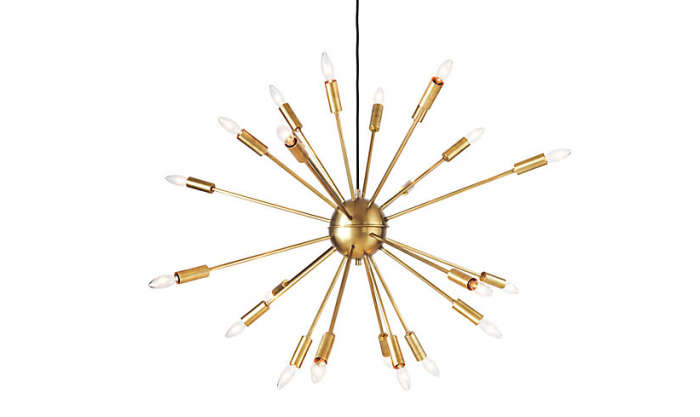
A satellite chandelier is what happens when a light fixture looks at a normal ceiling lamp and says, “Cute, but what if we became the center of the galaxy?” With its radiating arms, glowing globes, metallic finishes, and sculptural silhouette, the satellite chandelier is one of the most recognizable statement lights in modern interior design. It is part lighting, part architecture, part conversation starter, and part “yes, I absolutely meant to be this dramatic.”
Often connected with Sputnik chandeliers, atomic age lighting, and mid-century modern design, the satellite chandelier takes inspiration from space exploration, orbital movement, and starburst forms. But this fixture is not stuck in a 1950s time capsule. Today, it appears in dining rooms, kitchens, foyers, bedrooms, studios, restaurants, boutique hotels, and modern apartments where people want light that does more than politely exist.
This guide explores what a satellite chandelier is, why it remains popular, how to choose the right size, where to install one, what materials and bulbs work best, and how to make it look intentional instead of like a small spacecraft accidentally landed above your table.
What Is a Satellite Chandelier?
A satellite chandelier is a ceiling-mounted light fixture designed with multiple arms extending from a central point or arranged around a circular frame. Each arm usually holds a bulb, globe shade, reflector, or decorative element. The overall shape often resembles a satellite, starburst, atom, orbit, or small constellation.
The term is frequently used interchangeably with “Sputnik chandelier,” although not every satellite chandelier is strictly Sputnik-style. Sputnik chandeliers usually have a spiky, radial form inspired by the first artificial satellite launched in 1957. Satellite chandeliers can be softer, more minimal, more globe-heavy, more linear, or even tiered. Think of Sputnik as the bold cousin who arrives wearing metallic boots, while satellite chandeliers include the whole stylish family.
Common design features include brass or black metal arms, exposed bulbs, opal glass globes, clear glass shades, adjustable rods, circular frames, sculptural symmetry, and warm ambient lighting. Some look vintage and playful; others feel sleek, architectural, and almost gallery-like.
Why Satellite Chandeliers Became So Popular
The satellite chandelier owes much of its appeal to mid-century modern and atomic age design. After World War II, American homes became fascinated with science, technology, rockets, atoms, satellites, and the future. Designers translated that optimism into furniture, clocks, textiles, and lighting. Suddenly, a ceiling fixture did not have to look like a bowl, a lantern, or your grandmother’s formal crystal chandelier. It could look like an idea.
That idea still works because satellite chandeliers balance nostalgia and modernity. They feel retro without being dusty. They feel futuristic without looking like a prop from a low-budget robot movie. Their geometry is simple enough to fit many rooms, but bold enough to create a focal point.
Another reason they remain popular is flexibility. A brass satellite chandelier can warm up a white dining room. A matte black version can sharpen a modern kitchen. A globe-style chandelier can soften a bedroom. A crystal-accented model can add sparkle to a foyer. In short, the satellite chandelier is not a one-trick pony. It is more like a stylish octopus with excellent lighting instincts.
Best Rooms for a Satellite Chandelier
Dining Room
The dining room is the classic home for a satellite chandelier. Positioned above the table, it becomes the visual anchor of the room. A fixture with exposed bulbs or glass globes can create a warm, flattering glow that makes dinner feel special, even if the menu is reheated pizza and emotional resilience.
For rectangular tables, a wider satellite chandelier or linear orbital design usually works well. For round or square tables, a symmetrical starburst shape often feels balanced. The goal is to make the chandelier feel related to the table, not like it is hovering there with no social skills.
Living Room
In a living room, a satellite chandelier adds sculptural energy. It works beautifully with vaulted ceilings, open floor plans, and spaces that need a central feature. A larger model can replace a plain ceiling fan or basic flush mount and instantly make the room look more designed.
If your living room already has bold furniture, choose a simplified satellite chandelier with fewer arms or a matte finish. If the room is minimal, a brass or globe-heavy design can provide personality without requiring you to buy twelve throw pillows named “sand dune.”
Kitchen and Breakfast Nook
A smaller satellite chandelier can look excellent over a breakfast table, kitchen island, or casual dining corner. In kitchens, finishes matter. Black, brushed nickel, or aged brass can coordinate with cabinet hardware and faucets. Clear glass globes feel airy, while milk glass or opal shades diffuse light and reduce glare.
Bedroom
In a bedroom, a satellite chandelier can replace the expected drum shade or flush mount. The trick is to choose a design that feels calm rather than hyperactive. Soft globes, warm bulbs, and a dimmer switch help keep the fixture elegant instead of “airport runway, but personal.”
Entryway or Foyer
A foyer is a great place to be dramatic. Guests see it first, delivery drivers admire it briefly, and you get to enjoy the feeling that your home has a proper opening scene. For taller ceilings, a larger or tiered satellite chandelier creates vertical presence. Just make sure the fixture is high enough that tall guests do not have to perform a defensive crouch.
How to Choose the Right Size Satellite Chandelier
Size is the difference between “designer statement” and “why is there a metal jellyfish attacking the room?” Fortunately, chandelier sizing follows a few useful rules.
Use the Room-Size Formula
A common guideline is to add the room’s length and width in feet, then use that number in inches as the approximate chandelier diameter. For example, a room that is 12 feet by 14 feet equals 26, so a chandelier around 26 inches wide may look balanced.
This formula is a starting point, not a court order. Satellite chandeliers can appear visually wider because their arms extend in several directions. If the arms are thin and airy, you may be able to go larger. If the fixture is dense, dark, or packed with globes, slightly smaller may feel better.
Size It to the Dining Table
When hanging a satellite chandelier over a dining table, the fixture should generally be narrower than the table. Many designers recommend choosing a chandelier about one-half to two-thirds the width of the table, or roughly 12 inches narrower than the tabletop. This leaves visual breathing room and reduces the chance of elbows, heads, or holiday centerpieces competing with the light.
Check the Hanging Height
For dining tables, a common hanging height is about 30 to 36 inches above the tabletop for an 8-foot ceiling. With higher ceilings, the fixture can usually rise a few inches for each additional foot of ceiling height. The chandelier should feel close enough to define the table but high enough to keep sightlines open. You want dinner conversation, not guests speaking through a brass asteroid field.
Popular Satellite Chandelier Styles
Classic Sputnik Satellite Chandelier
This is the starburst icon: a central hub with arms shooting outward in all directions. It often features exposed bulbs, brass finishes, and a lively atomic silhouette. It is bold, fun, and perfect for mid-century modern rooms.
Globe Satellite Chandelier
Globe satellite chandeliers use round glass shades at the ends of their arms. Clear globes feel crisp and bright, while opal or frosted globes create softer light. This style works well in dining rooms, bedrooms, and living spaces where comfort matters as much as drama.
Linear Satellite Chandelier
A linear satellite chandelier stretches horizontally, making it ideal for rectangular dining tables, kitchen islands, and long conference-style spaces. It keeps the orbital attitude but adds practical coverage.
Tiered Satellite Chandelier
Tiered designs use two or more rings, levels, or layers of lights. These are best for foyers, stairwells, high-ceiling living rooms, and spaces where a smaller fixture would look underdressed.
Minimalist Satellite Chandelier
Minimalist versions reduce the number of arms, simplify the shapes, and often use matte black, brushed nickel, or integrated LED elements. They are great for modern homes that want the satellite look without full space-age jazz hands.
Best Finishes and Materials
Brass is the most iconic finish for satellite chandeliers. It brings warmth, vintage character, and a little glamour. Aged brass looks softer and more traditional, while polished brass feels bold and dressy.
Matte black is another popular option. It works especially well in modern farmhouse, industrial, Scandinavian, and contemporary interiors. Black outlines the fixture clearly and can make even a simple design look graphic.
Chrome and polished nickel create a cooler, shinier look. They pair well with glass, mirrors, marble, and modern furniture. Bronze and oil-rubbed finishes feel warmer and more traditional, while white or mixed-metal designs can look playful and fresh.
For shades, clear glass offers brightness and sparkle but can show dust and fingerprints. Opal glass diffuses light beautifully and hides the bulb. Smoked glass adds mood, while crystal accents make the fixture more decorative. Choose based on the room’s personality and how much maintenance you are willing to pretend you enjoy.
Bulbs, Brightness, and Color Temperature
Because many satellite chandeliers have multiple bulbs, brightness adds up quickly. Six bulbs at 800 lumens each can produce a lot of light. That may be great in a dining room with dark walls, but too intense in a small bedroom unless you use dimming.
LED bulbs are usually the best choice because they use less energy and last longer than incandescent bulbs. For living rooms and dining rooms, warm white bulbs around 2700K to 3000K often create the most comfortable glow. Cooler bulbs can make a satellite chandelier look sharper, but too much cool white in a dining room may give your pasta the emotional warmth of a spreadsheet.
If your chandelier uses exposed bulbs, choose attractive bulb shapes. Globe, tubular, and Edison-style LED bulbs can enhance the design. If the chandelier has opaque globes, the bulb shape matters less, but brightness and dimmer compatibility still matter.
Should You Use a Dimmer?
Yes, in most cases, a dimmer is one of the best upgrades for a satellite chandelier. These fixtures are naturally eye-catching, and dimming lets you shift from bright task lighting to soft evening ambience. It also helps control glare from exposed bulbs.
Before installing a dimmer, confirm that the bulbs and the dimmer are compatible. Not every LED bulb works smoothly with every dimmer. A poor match can cause flickering, buzzing, limited dimming range, or the haunted-house effect nobody requested. Look for dimmable LED bulbs and check manufacturer recommendations when possible.
Installation Tips for Satellite Chandeliers
Satellite chandeliers can be simple or surprisingly fussy to install, depending on weight, arm assembly, ceiling height, wiring, and the mounting box. Always turn off power at the breaker before working with a fixture. Turning off only the wall switch is not enough because wires may still carry voltage.
Check the ceiling electrical box to make sure it is rated to support the chandelier’s weight. Some satellite chandeliers are lightweight, but large metal or glass models can be heavy. If the fixture is oversized, complex, or going into a high ceiling, hiring a licensed electrician is money well spent. It is cheaper than repairing drywall, rewiring a ceiling, or explaining to guests why the chandelier is now part of the centerpiece.
Also consider the room rating. Most indoor chandeliers are intended for dry locations. For bathrooms, covered patios, laundry rooms, or damp spaces, choose a fixture specifically rated for damp or wet locations as appropriate.
How to Style a Satellite Chandelier
The easiest way to style a satellite chandelier is to let it be the star. Avoid crowding it with too many competing ceiling elements. If the fixture is bold, keep nearby decor clean. If the chandelier is minimal, you can layer in more texture with rugs, art, plants, and furniture.
In dining rooms, center the chandelier over the table, not necessarily the room. This matters when a dining table is slightly shifted because of traffic flow or built-ins. A perfectly centered room fixture can look wrong if it is not aligned with the table below.
Pair brass satellite chandeliers with walnut furniture, cream walls, green plants, black accents, or leather chairs. Pair black chandeliers with white walls, oak, concrete, marble, or warm textiles. Pair globe versions with curved furniture and soft materials to echo the round shapes.
Common Mistakes to Avoid
Choosing a Fixture That Is Too Small
A tiny satellite chandelier in a large room can look nervous. The shape is meant to have presence. If you are between sizes, consider the visual weight, not just the measurements.
Ignoring Bulb Glare
Exposed bulbs can be beautiful, but they can also feel harsh. Use lower-lumen bulbs, frosted bulbs, globe shades, or a dimmer to keep the light comfortable.
Hanging It Too High or Too Low
Too high, and the chandelier looks disconnected. Too low, and it becomes a forehead obstacle. Measure carefully before final installation.
Forgetting Maintenance
Satellite chandeliers have arms, bulbs, globes, and sometimes many small surfaces. Dust will find them. Dust always finds them. Choose a design you can clean without needing mountaineering equipment.
Cleaning and Maintenance
Turn off the fixture and let bulbs cool before cleaning. Use a microfiber cloth for metal arms and a soft glass cleaner for removable glass shades. Avoid spraying cleaner directly onto sockets, wiring, or metal finishes. For brass and specialty finishes, follow the manufacturer’s care instructions because aggressive cleaners can damage protective coatings.
Check bulbs occasionally and replace them with matching color temperature and brightness. Mixing random bulbs can make the chandelier look uneven, like it got dressed in the dark. If one globe glows warm yellow and another glows blue-white, the whole fixture loses its polished effect.
Is a Satellite Chandelier Worth It?
A satellite chandelier is worth it if you want a fixture that functions as both lighting and decor. It can instantly change the mood of a room, make a plain space feel designed, and add architectural interest without renovation. Compared with repainting, replacing furniture, or remodeling, a chandelier can be a relatively focused upgrade with a big visual payoff.
However, it is not the right choice for every room. If your ceiling is very low, your space is already visually crowded, or you dislike cleaning exposed bulbs and glass, a simpler pendant or flush mount may be better. But for many homes, the satellite chandelier hits a sweet spot: stylish, practical, expressive, and just weird enough to be memorable.
Experience Notes: Living With a Satellite Chandelier
The first thing people notice about a satellite chandelier is not the wattage, the socket type, or the mounting plate. It is the shape. A good satellite chandelier changes the entire rhythm of a room. Before installation, a dining room might feel like four chairs, a table, and a vague hope that guests will not notice the ceiling. After installation, the room suddenly has a center. It feels intentional.
One practical lesson is that scale matters more in real life than it does online. Product photos often show chandeliers in perfect rooms with high ceilings, enormous windows, and suspiciously calm fruit bowls. In an actual home, ceiling height, table size, wall color, and furniture weight all affect how the fixture feels. A 30-inch satellite chandelier may look modest on a website but surprisingly bold in a compact dining room. Measuring with painter’s tape or holding up a cardboard circle can prevent expensive regret.
Another lesson is that bulbs are not an afterthought. With many chandeliers, the bulb hides behind a shade. With satellite chandeliers, the bulb is often part of the design. Clear bulbs can look crisp but may glare. Frosted bulbs soften the effect. Warm LEDs usually make food, faces, and wood tones look better. A dimmer turns the fixture from “family homework interrogation lamp” into “cozy dinner glow” with one small adjustment.
Cleaning is also part of the ownership experience. A satellite chandelier is not difficult to maintain, but it does ask for attention. Dust collects on arms and globes, especially in kitchens or open-plan spaces. A long-handled microfiber duster helps. Removable glass shades make deeper cleaning easier. If you choose a fixture with twenty delicate globes, you are also choosing a small lifestyle. A glamorous lifestyle, yes, but one that occasionally involves standing on a step ladder muttering at fingerprints.
The best surprise is how adaptable the fixture can be. A brass satellite chandelier can make a plain apartment dining area feel warmer and more mature. A black one can make a builder-grade kitchen look sharper. A globe-style version can soften a bedroom without becoming boring. Even in older homes, the contrast can work beautifully. A modern satellite chandelier against traditional molding or vintage wallpaper creates tension in the best way: old house, new attitude.
Guests tend to comment on it, which is useful if small talk has reached dangerous levels. Instead of discussing weather, parking, or someone’s mysteriously complicated sourdough starter, people look up and say, “I love that light.” That is the quiet power of a satellite chandelier. It provides illumination, yes, but it also gives the room a personality. It is lighting with a little wink.
The final experience-based tip is to buy with the whole room in mind. Do not choose a satellite chandelier only because it looks beautiful by itself. Choose it because it makes sense with your table, chairs, ceiling height, wall color, and daily habits. The right one should look exciting when turned on, sculptural when turned off, and comfortable enough to live with every day. After all, a chandelier is not a museum object. It is part of breakfast, bills, birthdays, late-night snacks, and all the ordinary moments that deserve better lighting.
Conclusion
The satellite chandelier continues to shine because it solves a rare design problem: it is functional and expressive at the same time. It lights the room, defines the space, adds movement overhead, and brings a little space-age confidence into everyday life. Whether you choose a classic Sputnik chandelier, a globe-style design, a minimalist black fixture, or a tiered showpiece for a tall foyer, the key is proportion, comfortable brightness, safe installation, and a finish that supports the rest of your decor.
If your room feels flat, unfinished, or slightly too polite, a satellite chandelier may be the design upgrade that gives it orbit. Just measure carefully, use the right bulbs, install it safely, and prepare for people to look up. That is the whole point.