Heat is one of engineering’s most persistent troublemakers. It stretches bridges, warps circuit boards, loosens bolts, cracks ceramics, and turns “perfectly measured” into “close enough, I guess.” Most materials expand when they get hotter and contract when they cool down. That sounds harmless until you remember that buildings, roads, aircraft, satellites, electronics, and medical devices are all made from materials that would very much prefer not to change shape every time the temperature moves.
That is why researchers are developing materials that do not react to heat in the usual way. More accurately, they are creating materials with extremely low, zero, or even negative thermal expansion. Instead of swelling like a metal bridge on a summer afternoon, these materials can be engineered to stay nearly the same sizeor, in some cases, shrink when heated. It sounds like a physics prank, but it is real materials science, and it could reshape how we build, manufacture, and protect high-precision structures.
One of the most fascinating approaches comes from 3D-printed mechanical metamaterials. These are not magical substances mined from a secret volcano. They are carefully designed structures whose internal geometry gives them unusual behavior. By arranging tiny beams, lattices, and trusses in specific patterns, researchers can make an object respond to heat in a way that ordinary materials cannot. The result is a customizable material that may expand, contract, or stay dimensionally stable depending on how it is designed.
What Does “Doesn’t React to Heat” Really Mean?
When people say researchers are developing a material that “doesn’t react to heat,” they usually do not mean the material ignores heat completely. Heat still affects atoms, molecules, and internal energy. The key idea is that the material does not significantly change its dimensions when temperature changes.
This property is called zero thermal expansion, or ZTE. A closely related phenomenon is negative thermal expansion, or NTE, where a material contracts when heated. Most familiar materials have positive thermal expansion. Steel rails, aluminum frames, concrete slabs, glass panels, and copper pipes all grow slightly when warmed. That movement may be tiny on a kitchen spoon, but on a bridge, pipeline, telescope, or semiconductor chip, tiny is plenty big enough to cause trouble.
Why Thermal Expansion Happens
At the atomic level, heat makes atoms vibrate more energetically. In many solids, those stronger vibrations increase the average distance between atoms. That extra spacing makes the material expand. Engineers measure this behavior using the coefficient of thermal expansion, often shortened to CTE.
A high CTE means a material changes size more noticeably with temperature. A low CTE means it stays more stable. A zero or near-zero CTE is the dream for many precision applications. It is the materials-science version of a person who remains calm during airport delays, printer jams, and group-text chaos.
The Problem: Heat Makes Structures Move
Thermal expansion is not a small annoyance. It is one of the reasons bridges include expansion joints, sidewalks crack, and railroad tracks require careful design. Without room to move, materials can buckle, fracture, or transfer stress into nearby components.
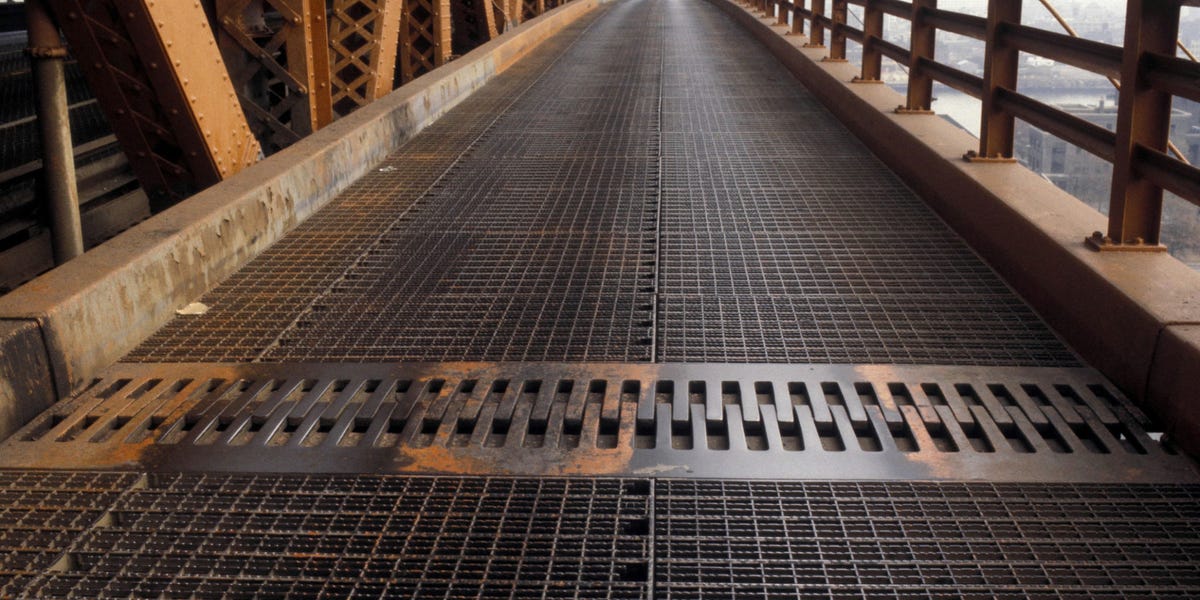
Consider a bridge. During hot weather, metal and concrete components expand. During colder weather, they contract. Expansion joints allow this movement so the structure does not tear itself apart. Those joints are essential, but they are also maintenance points. They can wear out, collect debris, leak water, and create noise. If civil engineers had materials that barely changed size with temperature, certain structures could become simpler, safer, and longer-lasting.
The same challenge appears in electronics. Computer chips, circuit boards, solder joints, and packaging materials often expand at different rates. When devices heat up and cool down repeatedly, the mismatch can create fatigue and failure. In high-power electronics, aerospace systems, and advanced sensors, dimensional stability is not a luxury. It is survival.
How 3D-Printed Metamaterials Beat the Heat
A major breakthrough in this field involves 3D-printed metamaterials. A metamaterial is a material whose performance comes not only from what it is made of, but also from how it is structured. Think of it like architecture at the micro-scale. The material’s internal design does the heavy lifting.
Researchers from institutions including the University of Southern California, MIT, and Lawrence Livermore National Laboratory have explored lightweight mechanical metamaterials with tunable negative thermal expansion. Their work showed that a structure can be made from ordinary materials that normally expand when heated, yet the full structure can contract because of its internal geometry.
The Lattice Trick
The key is the lattice. Researchers can print tiny beams at specific angles using different materials. When heated, those materials expand at different rates. Instead of simply pushing outward, the expansion causes the angled beams to bend or pull inward. The whole structure can shrink, even though the individual materials are doing the normal “I’m hot, I’m expanding” routine.
This is the same kind of cleverness that makes a folding umbrella compact or a collapsible toy ball expand and contract. The material is not breaking the laws of physics. It is negotiating with them using geometry.
Multi-Material 3D Printing
The manufacturing method matters. Researchers use advanced 3D-printing techniques that can combine more than one material in a single microstructure. In some experiments, liquid photopolymers are solidified layer by layer using ultraviolet light. By switching materials during printing, scientists can create tiny structures with different expansion behaviors built into the same object.
One demonstrated approach used a polymer and a polymer-copper composite in a microlattice. Because the two materials respond differently to heat, their interaction produces a controlled mechanical response. Change the material combination, beam angle, thickness, or lattice pattern, and the thermal behavior changes too.
Why Negative Thermal Expansion Is So Valuable
A material that shrinks when heated may sound like a novelty, but it becomes powerful when paired with materials that expand. If one component expands and another contracts by the right amount, the two effects can cancel each other out. That is how researchers can aim for zero thermal expansion materials.
This idea could lead to customized composites designed for specific temperature ranges. A bridge component might need one expansion profile. A satellite mirror mount might need another. A circuit board in a high-performance computer may require a material that stays stable through thousands of heating and cooling cycles. With tunable metamaterials, engineers could design the response instead of merely accepting what nature offers.
From “One Material Fits All” to Designed Performance
Traditional materials are usually selected from a catalog of known properties: steel for strength, aluminum for lightness, copper for conductivity, ceramic for heat resistance, and so on. Metamaterials change the conversation. Instead of asking, “Which material has the property we need?” engineers can ask, “What structure can create the property we need?”
That shift is enormous. It turns materials design into something closer to programming. Geometry becomes a control panel. The lattice becomes the code. The final object behaves in ways that would be difficult or impossible with a solid block of conventional material.
Real-World Applications for Heat-Stable Materials
The practical uses for materials that do not expand with heat are broad. Some are obvious, like bridges and buildings. Others are hidden inside devices where most people never look, which is rude because those little parts are working very hard.
1. Safer Bridges and Buildings
Construction materials experience daily and seasonal temperature swings. Roads heat up under the sun. Bridges cool at night. Large buildings face uneven heating from sunlight, HVAC systems, and weather changes. Materials with low or zero thermal expansion could reduce stress, improve durability, and potentially lower maintenance needs.
This does not mean tomorrow’s skyscrapers will be printed entirely from exotic heat-defying lattices. Civil engineering moves carefully, and for good reason. But specialized components, joints, panels, connectors, and protective systems could benefit from materials that remain dimensionally stable.
2. Heat-Resistant Circuit Boards
Electronics are especially vulnerable to thermal mismatch. A circuit board may include metals, polymers, ceramics, silicon, solder, and adhesives. Each material expands at its own rate. When the device heats during operation and cools afterward, repeated movement can cause warping or cracking.
Metamaterials with tunable thermal expansion could help circuit boards and electronic packages maintain their shape. That could be especially useful in electric vehicles, data centers, aerospace electronics, and high-frequency communication systems where heat management is already a major design challenge.
3. Space Telescopes and Precision Optics
Space is not gentle. A spacecraft may move between sunlight and shadow, producing extreme temperature changes. For telescopes searching for exoplanets or faint cosmic signals, even tiny distortions can reduce image quality. Mirrors, frames, struts, and optical benches must remain incredibly stable.
Low-expansion materials already matter in space technology. Beryllium, for example, is valued in telescope mirrors because it is rigid and has low thermal expansion. Newer negative-expansion and zero-expansion materials could help future observatories maintain alignment with less active correction.
4. Aerospace and Defense Systems
Aircraft, satellites, missiles, and high-speed vehicles experience heat from engines, friction, sunlight, and electronics. Thermal expansion can affect panels, sensors, fuel systems, antennas, and precision guidance components. Materials that resist dimensional change could improve reliability in environments where “oops, it warped” is not an acceptable maintenance note.
5. Medical and Dental Materials
Thermal mismatch also matters in the human body. Dental fillings, crowns, implants, and prosthetic materials may encounter temperature changes from hot coffee, cold drinks, and normal body conditions. If materials expand at very different rates from natural tissue, stress and discomfort can result. Tailored thermal expansion could help future medical materials fit better and last longer.
The New Alloy Angle: Beyond 3D Printing
Metamaterials are not the only path toward heat-stable materials. Researchers are also improving metallic alloys with ultra-low thermal expansion. The classic example is Invar, an iron-nickel alloy famous for changing very little with temperature. It has been used in precision instruments, measuring tapes, clocks, scientific equipment, and components where stability matters.
Recent research has pushed this idea further with complex magnetic alloys, including pyrochlore magnets containing multiple elements such as zirconium, niobium, iron, and cobalt. These materials can show extremely low thermal expansion over wide temperature ranges. Their behavior comes from a balance between normal lattice expansion and magnetic or electronic effects that encourage contraction.
This is different from the 3D-printed lattice strategy, but the goal is similar: stop temperature from changing the size of critical parts. One method uses architecture. The other uses atomic and magnetic interactions. Both are part of a larger movement toward materials that behave with surgical precision.
Challenges Researchers Still Need to Solve
Although the science is exciting, heat-stable materials are not ready to replace steel, concrete, silicon, or aluminum everywhere. Several challenges remain.
Manufacturing Scale
Many 3D-printed metamaterials are currently made at small scales. Producing tiny lattices in a laboratory is very different from manufacturing square miles of bridge decking or millions of electronics components at low cost. Researchers must improve printing speed, quality control, repeatability, and material durability.
Strength and Fatigue
A material may have excellent thermal behavior but still need to survive mechanical loads, vibration, moisture, chemicals, impacts, and long-term fatigue. In construction and aerospace, a clever material must also be tough enough to face the real world, which has a talent for being impolite.
Temperature Range
A material designed to stay stable from room temperature to a few hundred degrees may not work the same way at cryogenic temperatures or in extreme heat. Engineers need materials tuned for specific operating ranges. A satellite, a microchip, and a desert bridge do not share the same thermal lifestyle.
Cost
Advanced manufacturing and specialty alloys can be expensive. For broad adoption, researchers must show that the performance benefits justify the cost. In high-value fields like space optics or semiconductor manufacturing, that case may be easier. In everyday construction, cost will be a tougher gatekeeper.
Why This Research Matters
The development of materials that do not react to heat is important because modern technology is becoming more precise, compact, and thermally demanding. Chips are hotter. Devices are smaller. Space missions are more ambitious. Buildings are expected to last longer with fewer repairs. Renewable-energy systems, electric vehicles, and advanced manufacturing all require better control over heat and stress.
Materials that resist thermal expansion could reduce failures, improve safety, and open new design possibilities. They could help engineers build structures with fewer weak points, electronics that survive longer, and instruments that remain accurate under changing conditions.
The most exciting part is not simply that one material can shrink when heated. The real breakthrough is control. Researchers are learning how to design thermal behavior on demand. That could turn heat from an unpredictable enemy into a design variable.
Experience-Based Reflections: What Heat-Stable Materials Could Change in Everyday Engineering
Anyone who has worked around buildings, machines, or electronics has seen heat create small problems that become big headaches. A door that fits perfectly in the morning may rub by late afternoon. A metal gate can expand just enough to stop latching cleanly. A long concrete walkway may develop cracks after repeated hot and cold cycles. These are not dramatic movie-scene failures, but they are the daily evidence that materials are always moving.
In construction, thermal movement is often treated as something to manage rather than eliminate. Contractors leave gaps, install expansion joints, use flexible sealants, and choose fasteners that tolerate movement. These solutions work, but they add complexity. Every joint is also a potential point of leakage, wear, or misalignment. A material with near-zero thermal expansion would not remove every design challenge, but it could reduce the number of places where temperature quietly causes trouble.
In electronics, the experience is even more familiar. A laptop gets hot, fans spin up, and internal components expand slightly. Over time, repeated thermal cycling can stress solder joints and connectors. People rarely notice the microscopic motion, but they notice the result: devices that fail, screens that flicker, batteries that swell, or components that become unreliable. Heat-stable materials could help electronics last longer, especially in high-performance devices that run hot for hours.
For makers and product designers, the idea of tunable thermal expansion is especially exciting. Imagine designing a drone frame, camera mount, sensor housing, or robotic arm that maintains alignment in the sun, cold, or inside a hot enclosure. Instead of overbuilding parts to tolerate movement, designers could choose or print internal structures that cancel movement before it becomes a problem. That is a smarter kind of strength.
There is also a lesson here about innovation. The researchers did not simply search for a mysterious natural material that ignores heat. They redesigned structure itself. That is a useful mindset far beyond materials science. When a problem seems unavoidable, sometimes the answer is not to fight harder with the same tools. Sometimes the answer is to change the geometry, the system, or the assumptions.
Of course, these materials will not instantly appear in every bridge, phone, spacecraft, and coffee maker. New materials need testing, standards, manufacturing pathways, and cost reductions. Engineers are cautious because failure has consequences. Still, the direction is clear. As 3D printing, metamaterial design, and alloy research mature, more products will be built not just from strong materials, but from materials that behave intelligently under stress.
Heat has always forced engineers to compromise. Materials that do not expand, or that can be tuned to expand exactly as needed, could reduce those compromises. That is why this research matters. It is not just about making something that refuses to swell in the sun. It is about giving builders, scientists, and designers a new level of control over the physical world.
Conclusion
Researchers developing a material that does not react to heat are not chasing science fiction. They are solving one of engineering’s oldest problems: how to keep things stable when temperature changes. Through 3D-printed metamaterials, negative thermal expansion structures, zero thermal expansion composites, and advanced low-expansion alloys, scientists are learning to control how materials moveor do not movewhen heated.
The implications are huge. Bridges could become more durable. Circuit boards could resist warping. Space telescopes could stay aligned. Aircraft components could perform more reliably. Medical and dental materials could better match the body. The road from laboratory demonstration to everyday use will take time, but the foundation is already being built, one tiny lattice beam at a time.
Note: This article is an original, web-ready synthesis based on established materials-science research, university reports, national laboratory work, and published studies on thermal expansion, negative thermal expansion, zero thermal expansion, metamaterials, and advanced alloys. It is written for general educational and SEO publishing purposes, not as engineering design advice.