James Cameron has never been accused of making tiny movies. The man does not wake up and say, “What if we filmed two people talking in a kitchen for 87 minutes?” He wakes up, invents underwater cameras, terrifies accountants, and asks audiences to emotionally invest in ten-foot-tall blue aliens who ride dragons, commune with trees, and somehow still look ready for a luxury fragrance campaign.
That brings us to one of the strangest, funniest, and most revealing parts of the Avatar phenomenon: Cameron did not merely want the Na’vi to be alien. He wanted them to be attractive. Very attractive. Maybe a little too attractive, depending on how much coffee you have had before reading his old interviews. The result is a franchise where the Na’vi are presented as spiritual, athletic, ecological, noble, andlet us be honestsuspiciously sculpted for creatures who supposedly evolved on a moon far from Earth.
This article takes a closer look at James Cameron’s Na’vi design choices, the internet’s long-running jokes about Avatar thirst, Neytiri’s role as a CGI fantasy icon, and why Pandora’s blue people still inspire debates about beauty, biology, storytelling, and the male gaze. Buckle up. Or, in Na’vi terms, connect your braid responsibly.
Why the Na’vi Had to Be Beautiful, Not Just Alien
From a filmmaking standpoint, Cameron had a practical problem. Avatar needed audiences to side emotionally with the Na’vi against the human invaders. If the Na’vi looked too monstrous, the love story between Jake Sully and Neytiri might have landed like a deleted scene from a creature-feature fever dream. If they looked too human, Pandora would feel like a blue cosplay convention with better lighting.
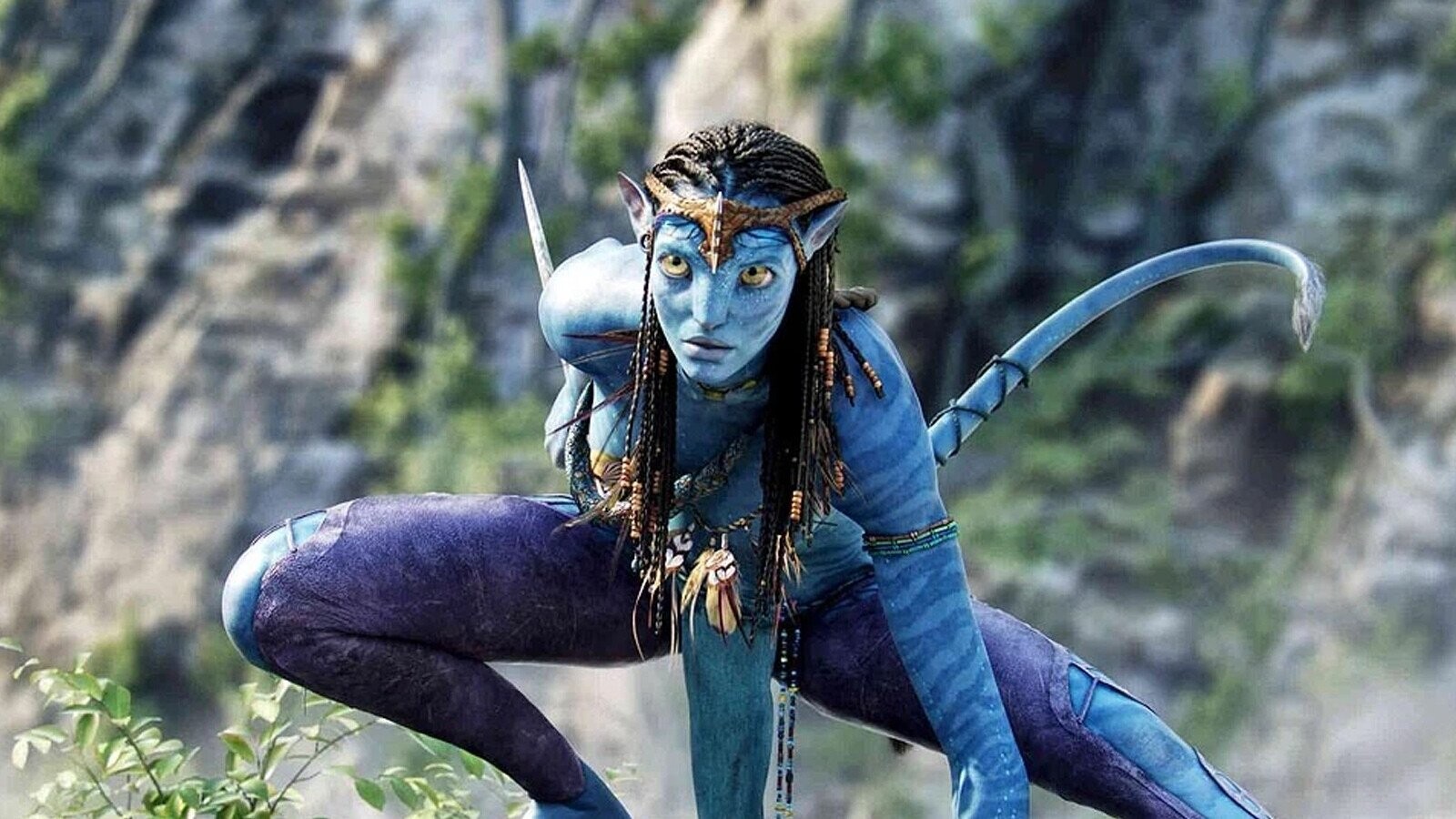
So the Na’vi design walked a careful line. They have feline noses, long tails, golden eyes, blue skin, and exaggerated proportions. Yet they also have human-like faces, expressive mouths, familiar body language, and athletic physiques. That mix is not accidental. It is the exact recipe for “alien enough to be exotic, human enough to be hot,” which is a sentence that should probably be carved into the side of every Hollywood concept-art department.
The Na’vi are not bug-eyed blobs or unknowable cosmic beings. They are tall, graceful, symmetrical, emotionally readable, and visually elegant. Their alienness is decorative rather than alienating. Pandora may be full of floating mountains and bioluminescent forests, but the emotional gateway into that world is a very recognizable kind of cinematic beauty.
James Cameron’s Comments Made the Subtext Text
Plenty of filmmakers design attractive characters without announcing the quiet part into a microphone. Cameron, however, has always had the confidence of a man who once made the ocean itself seem like a manageable production challenge. In interviews around Avatar, he discussed Neytiri and the female Na’vi with a frankness that turned subtext into bright-blue text.
He acknowledged that the female Na’vi were designed with human attraction in mind, even when the biology did not entirely add up. The famous discussion about why female Na’vi have breasts became a perfect example of the franchise’s design logic: realism was important, yes, but visual appeal and audience recognition were more important. In other words, Pandora’s evolutionary biology apparently had a meeting with Hollywood marketing, and Hollywood marketing won.
That does not mean Avatar is simply a two-and-a-half-hour thirst trap with helicopters. It is also a sincere environmental epic, a technological milestone, and a sweeping anti-colonial fantasy. But Cameron’s comments help explain why the Na’vi feel less like unknowable aliens and more like idealized versions of humans wearing the world’s most complicated blue body paint.
Neytiri: Warrior, Guide, Love Interest, Internet Awakening
Neytiri, performed by Zoe Saldaña, is the center of this conversation because she carries so much of the first film’s emotional weight. She is Jake’s teacher, protector, critic, romantic partner, and gateway into Na’vi culture. She is fierce enough to make a charging predator reconsider its life choices, yet vulnerable enough to sell the love story that powers the movie’s second half.
Her design is also unmistakably cinematic. Neytiri has large eyes, sharp cheekbones, graceful movement, expressive ears, and a body framed by athletic action scenes and dramatic lighting. She is not merely “pretty for an alien.” She is designed to be compelling in a way that blends warrior nobility with fantasy romance.
The internet noticed. Of course it did. The internet notices when a sandwich looks vaguely like a celebrity. A blue alien archer with cheekbones, emotional intensity, and excellent posture was never going to escape commentary. Fans joked. Critics raised eyebrows. Forums debated whether attraction to Neytiri was proof of Cameron’s genius, the audience’s flexibility, or humanity’s urgent need to go outside.
The Male Gaze on Pandora
The phrase “male gaze” gets thrown around a lot, sometimes thoughtfully and sometimes like a decorative grenade. In the case of Avatar, it is useful because the Na’vi are not just designed to be believable. They are designed to be desirable through a very familiar mainstream-Hollywood lens.
Neytiri is powerful, but the camera also knows she is beautiful. The female Na’vi are spiritual and physically capable, but their bodies are still framed for an audience trained by decades of fantasy art, superhero costumes, warrior-princess imagery, and blockbuster romance. The film wants us to respect the Na’vi, but it also wants us to look at them and think, “Wow, everyone on this moon has incredible core strength.”
To be fair, the male Na’vi are idealized too. Jake’s avatar body turns him from a wounded Marine into a tall, fast, muscular alien athlete. The fantasy is not only sexual; it is physical, spiritual, and aspirational. The Na’vi represent freedom from weak bodies, polluted cities, military hierarchies, and sad human lunch breaks under fluorescent office lights. They are beautiful because Pandora itself is beautiful.
Why the Thirst Actually Helped the Movie Work
Here is the awkward truth: Cameron’s strategy worked. Avatar became one of the biggest movies in history, not because audiences admired the mineral-rights subplot, but because they wanted to live on Pandora. They wanted to run through glowing forests, ride banshees, bond with tulkun, and maybe look like they had never eaten a gas-station burrito in their lives.
The Na’vi’s beauty made the fantasy accessible. If they had been too strange, the romance might have failed. If the romance failed, Jake’s transformation from human soldier to Na’vi defender would have felt less personal. Neytiri’s appeal helps sell the idea that Jake is not just choosing a side in a political conflict; he is choosing a world, a body, a love, and an identity.
That is why the “James Cameron was thirsty” joke is funny but incomplete. The thirst is part of the machine, but the machine is larger than lust. Cameron built an entire sensory argument for Pandora: the world is more alive, more connected, more beautiful, and more emotionally honest than human industrial society. The Na’vi are the faceand yes, the cheekbonesof that argument.
Avatar, CGI Attraction, and the Future of Digital Characters
One reason the Na’vi conversation still matters is that Avatar helped normalize emotional and even romantic investment in fully digital characters. Before 2009, audiences had loved animated characters, but Cameron pushed performance capture toward a new kind of realism. Neytiri was not a cartoon in the traditional sense. She was Zoe Saldaña’s performance transformed through technology into a character who could cry, rage, flirt, grieve, and fight while still looking nonhuman.
That achievement changed expectations. A CGI character could be more than impressive; it could be emotionally persuasive. It could be admired, mourned, shipped, memed, and, apparently, thirsted after. Welcome to the future. Please keep your neural queue inside the ride at all times.
Today, digital characters are everywhere: superheroes with enhanced bodies, de-aged actors, video-game avatars, AI-generated influencers, and entire fantasy species engineered for fan devotion. Avatar sits near the center of that shift. It showed Hollywood that audiences would not reject synthetic beauty if the performance underneath felt alive.
The Weird Biology Question
The Na’vi are not human, yet they are human-coded in almost every way that matters to mainstream viewers. They have recognizable family structures, romantic pairings, expressive faces, gendered visual cues, and bodies shaped by human ideals of elegance and strength. That creates a fun biology problem: how alien are they, really?
Science fiction often cheats this way. Aliens speak through convenient mouths, express emotion with familiar eyes, and fall in love according to patterns audiences already understand. Truly alien intelligence is difficult to dramatize. It might not smile, kiss, cry, wear jewelry, or care about heroic speeches. Great for speculative philosophy; terrible for selling popcorn to teenagers on a Friday night.
Cameron’s Na’vi are designed for myth, not biology class. They are forest elves, cat people, Indigenous-coded warriors, eco-spiritual athletes, and romantic leads all at once. Their bodies are less about plausible evolution than emotional translation. The audience must understand them quickly, love them deeply, and root for them loudly when the military hardware shows up to ruin the vibes.
Why Critics Keep Returning to the Na’vi Design
The Na’vi design keeps getting discussed because it sits at the crossroads of multiple debates: representation, fantasy, colonial storytelling, digital performance, gender, environmentalism, and good old-fashioned blockbuster spectacle. That is a lot of baggage for people who technically do not own pants.
Some viewers see the Na’vi as inspiring: graceful, community-centered, spiritually connected, and physically free. Others see the design as another example of Hollywood borrowing Indigenous aesthetics while filtering them through a commercial fantasy lens. Some admire the technical craft; others side-eye the way beauty and otherness are packaged together.
Both responses can be true. Avatar is sincere and commercial, progressive and old-fashioned, visually radical and narratively familiar. It wants to criticize exploitation while also turning alien bodies into mass-market icons. That tension is one reason people keep arguing about it years later. Well, that and the fact that arguing about blue aliens is cheaper than therapy.
What the Sequels Changedand Did Not Change
Avatar: The Way of Water expanded Pandora beyond the forest and introduced the Metkayina, an oceanic Na’vi clan with different bodies, customs, tattoos, and environmental adaptations. The sequel leaned harder into family drama, grief, adolescence, and ecological wonder. It also proved that audiences were still willing to spend hours with blue CGI characters if the world looked immersive enough.
Yet the basic design philosophy remained. The Na’vi are still beautiful. The bodies are still idealized. The camera still treats Pandora as a place of visual seduction. Even when the sequel explores pain and parental fear, the franchise continues to sell the fantasy of living in a body perfectly adapted to a spectacular world.
That continuity matters because it shows Cameron was not just making Neytiri attractive as a one-time gimmick. Beauty is built into the franchise’s operating system. Pandora is desirable because everything in it, from glowing plants to ocean creatures to Na’vi movement, is choreographed to make our tired Earth brains whisper, “I would like to transfer my consciousness immediately.”
Experience Section: Rewatching Avatar With the Thirst Goggles On
Rewatching Avatar after learning about Cameron’s design comments is a strange experience. The first time, you may be swept away by the scale: floating mountains, bioluminescent forests, giant flying creatures, military machines, and James Horner’s score doing emotional push-ups in the background. On a later viewing, though, the Na’vi design starts waving at you from behind the spectacle.
You notice how carefully Neytiri is introduced. She is dangerous first, then graceful, then emotionally open. The movie does not simply say, “Here is an alien.” It says, “Here is someone Jakeand the audiencemust learn to admire.” Her physical beauty is tied to competence. She can survive the forest, read signs in nature, move with precision, and scold Jake with the authority of someone who has absolutely had enough of this human nonsense.
You also notice how the film makes Jake’s avatar body feel like wish fulfillment. His first run is not just a medical miracle; it is a full-body fantasy. He goes from limitation to speed, from metal corridors to open air, from being treated as disposable to being seen as extraordinary. The Na’vi body becomes freedom. That is why the attraction question is bigger than Neytiri alone. Avatar asks viewers to desire an entire way of being.
There is also a funny social experience around the movie. Mention Avatar in a group, and someone will say it has “no cultural impact.” Then, three minutes later, everyone is debating whether they would ride an ikran, whether Pandora has Wi-Fi, and whether being attracted to a Na’vi is weird or simply evidence of healthy visual literacy. For a movie with “no cultural impact,” it sure does keep making people talk like they are defending a doctoral thesis titled Blue Feelings: The Jake Sully Problem.
The best way to experience the topic is to hold two ideas at once. Yes, Cameron’s comments can sound hilariously blunt and extremely Hollywood. Also yes, the design choices helped make Avatar emotionally effective. The Na’vi are beautiful because the movie needs us to want what Jake wants: connection, belonging, purpose, and a body that can sprint through alien moss without needing orthopedic inserts.
That may be the real reason the jokes endure. “James Cameron was thirsty” is a punchline, but it points to a serious truth about blockbuster filmmaking. Desire is not always separate from world-building. Sometimes desire is the doorway into the world. Cameron wanted Pandora to be irresistible, and he made its people irresistible too. Subtle? Not especially. Effective? The box office has entered the chat.
Conclusion: The Na’vi Were Built to Be Loved, Debated, and Meme’d
So, was James Cameron thirsty for the Na’vi? In the internet’s favorite exaggerated shorthand: absolutely. But the more interesting answer is that Cameron understood attraction as a storytelling tool. He designed the Na’vi to be alien, but not too alien; spiritual, but not abstract; physically idealized, but emotionally readable. Neytiri became a symbol of that balance: warrior, romantic lead, digital performance milestone, and the blue face that launched a thousand forum threads.
The debate around Avatar Na’vi design is not going away because it touches something central to modern entertainment. Blockbusters do not merely show us worlds. They ask us to desire them. Pandora works because audiences do not only understand Jake’s choice; on some level, they feel it. They look at the glowing forests, the flying mountains, the connected communities, and the absurdly photogenic alien warriors and think, “Fine. I get it.”
That is Cameron’s real trick. He made a science-fiction epic about ecological connection, colonial violence, and identity transfer, then smuggled it into the global imagination through beauty, romance, and spectacle. The Na’vi are not scientifically perfect aliens. They are cinematic fantasy engineered with terrifying precision. And yes, they are hot. Pandora help us all.