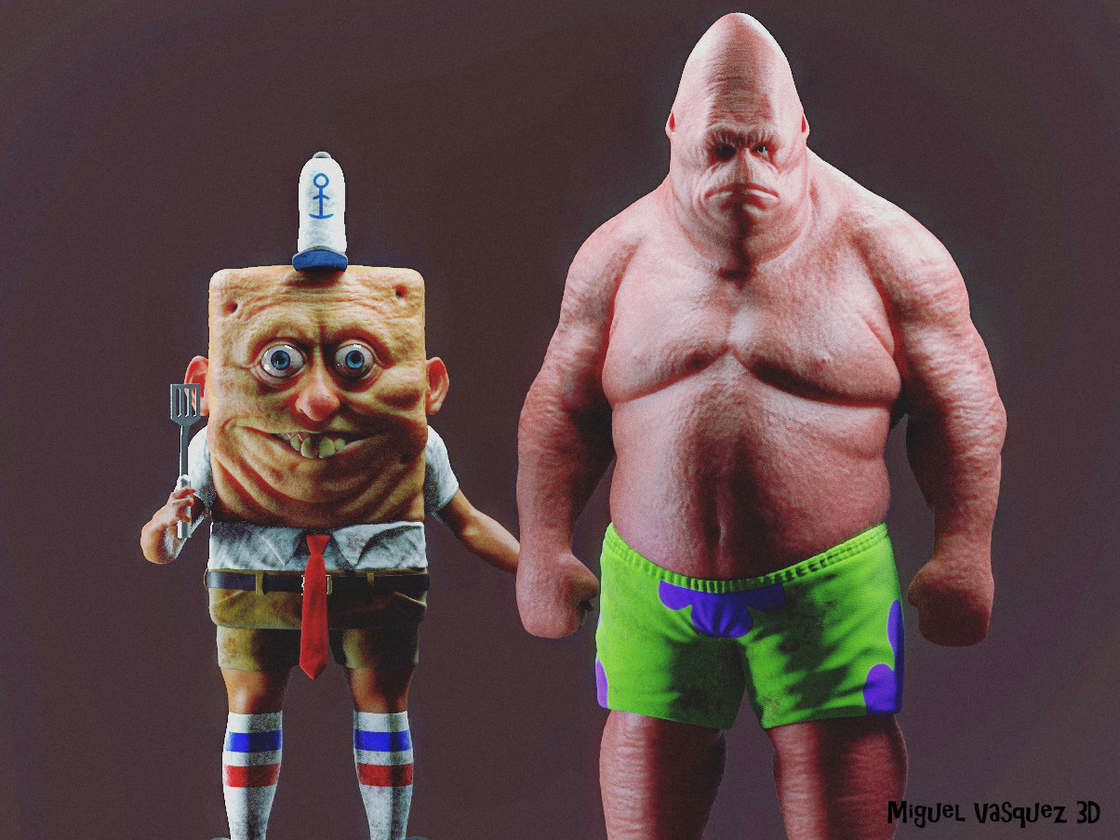
Imagine Bikini Bottom after someone accidentally turned the “cartoon” slider down and the “marine biology documentary” slider all the way up. SpongeBob is no longer a tidy yellow rectangle with a tie and the optimism of a motivational poster. Patrick is no longer a pink best friend shaped like a cheerful traffic cone. Instead, we get pores, tube feet, wet textures, odd anatomy, and the sudden realization that the ocean is basically nature’s weirdest art department.
The idea of a realistic version of SpongeBob and Patrick is funny, fascinating, and just a little cursed. It combines childhood nostalgia, fan art, 3D rendering, meme culture, and real ocean science. The result can be adorable, horrifying, or both at the same timelike seeing your favorite cartoon characters show up in a National Geographic special and realizing they forgot to moisturize.
But the concept is more than a quick internet joke. SpongeBob SquarePants was created by Stephen Hillenburg, an animator with a background in marine science. That means the show’s silly underwater world has always had one footor possibly one tube footin real biology. When artists redesign SpongeBob and Patrick realistically, they are not just making them “creepy.” They are asking a fun question: what happens when a cartoon built on exaggeration meets the strange truth of the sea?
Why Realistic SpongeBob and Patrick Became an Internet Obsession
Realistic cartoon redesigns are popular because they break a comfortable rule. Cartoons are supposed to be simple. SpongeBob’s square body, giant blue eyes, buck teeth, and tiny limbs are easy to recognize in half a second. Patrick’s pink body, sleepy expression, and green-purple shorts are just as iconic. Their designs are clean, memorable, and emotionally safe.
A realistic redesign throws that safety blanket into the washing machine with a live lobster. Suddenly, SpongeBob’s holes become actual pores. Patrick’s smooth pink skin becomes rough, bumpy sea-star tissue. Their eyes, mouths, and teeth look less like comedy tools and more like anatomical mysteries. The joke works because the brain recognizes the characters but also says, “Absolutely not. Put them back.”
This reaction is closely related to the uncanny valley, the uneasy feeling people get when something looks almost real but not quite right. A simple cartoon sponge is cute. A fully realistic sea sponge is interesting. A humanoid sponge with huge eyes, teeth, pants, and a job in fast food? That is where the brain starts packing an overnight bag.
The Real SpongeBob: What Would a Realistic Sponge Look Like?
In the show, SpongeBob is a sea sponge who looks like a yellow kitchen sponge. That is part of the joke. Real sea sponges are animals, but they do not usually walk around, laugh, wear polished shoes, or panic about boating school. They are mostly stationary filter feeders that live attached to surfaces in the ocean. Their bodies are full of pores and channels that move water through them, allowing them to capture tiny food particles.
A realistic SpongeBob would probably not have perfectly straight edges. He would be irregular, porous, and textured, with a body that looks more organic than geometric. Instead of neat circular holes placed like polka dots, he might have a network of openings, ridges, tubes, and soft-looking surfaces. Depending on the species, he could be yellow, orange, brown, purple, or another color entirely. The ocean does not care about brand consistency.
Realistic SpongeBob Design Features
A convincing realistic SpongeBob would keep his most recognizable traits while translating them into natural materials. His square shape could remain as a stylized silhouette, but the edges should look uneven and sponge-like. His holes should vary in size. His surface should appear damp, flexible, and slightly rough. His limbs could be thin and exaggerated, but they should feel attached to a body made of living tissue rather than foam from the kitchen sink.
The face is the tricky part. SpongeBob’s personality lives in his eyes and mouth. If artists make his eyes too human, he becomes disturbing. If they make them too small, he stops feeling like SpongeBob. The best realistic versions usually preserve the round eyes, big smile, and buck teeth, but add details carefully: glossy eye reflections, uneven teeth, skin-like texture around the cheeks, and subtle pores near the mouth. It should be weird, not lawsuit-level nightmare fuel.
The Real Patrick: A Sea Star With Comedy Timing
Patrick Star is often called a starfish, but scientists usually prefer the term sea star because these animals are not fish. They do not have fins, scales, or gills. They are echinoderms, related to sea urchins and sand dollars. Instead of moving with legs, sea stars use a water vascular system and many tiny tube feet on their underside. In other words, realistic Patrick would not stroll to SpongeBob’s house so much as slowly suction-cup his way across the seafloor.
A realistic Patrick would have five arms radiating from a central disk. His body would likely be firmer, rougher, and more textured than the smooth pink cartoon version. Many sea stars have small spines, bumps, or plates across their surface. Their undersides are especially alien-looking, lined with tube feet that help them move, grip prey, and explore their surroundings. Cartoon Patrick is soft and goofy. Realistic Patrick is goofy only if you politely ignore the fact that sea stars can be serious predators.
Patrick’s Biology Makes the Friendship Funnier
In the cartoon, SpongeBob and Patrick are best friends. In real marine ecosystems, that relationship could be much less wholesome. Some sea stars eat sponges, clams, oysters, coral, and other animals. So a realistic SpongeBob and realistic Patrick sitting side by side might not look like two pals planning jellyfishing adventures. They might look like a snack and a creature deciding whether it is hungry. That adds a hilarious dark twist to the whole idea. Childhood friendship, meet the food chain.
The Real-Life “SpongeBob and Patrick” Ocean Moment
One reason the realistic SpongeBob and Patrick idea became even more entertaining is that the ocean actually produced something close to it. During a deep-sea exploration, scientists observed a bright yellow sea sponge near a pink sea star. The pair immediately reminded people of SpongeBob SquarePants and Patrick Star. It was one of those rare internet moments when marine biology and meme culture shook hands while wearing diving gloves.
The real animals were not living in a sunny cartoon neighborhood with pineapple houses and underwater campfires. They were found in a deep-sea environment, far from the colorful sitcom energy of Bikini Bottom. That contrast made the comparison even funnier. The ocean had accidentally created a gritty reboot: SpongeBob and Patrick, but now with darkness, pressure, and no Krabby Patty employee discount.
That sighting also revealed why realistic versions feel so compelling. Real marine animals already look strange enough to be fictional. Sponges can be bright and oddly shaped. Sea stars can look cute from above and unsettling from below. When nature resembles a cartoon, the line between fantasy and science gets delightfully blurry.
Why Realistic Versions Look Creepy Even When They Are Well Made
Realistic SpongeBob and Patrick often look creepy because their original designs were never meant to obey real-world anatomy. SpongeBob’s head is most of his body. Patrick has no obvious nose, ears, or neck. Their limbs are tiny compared with their torsos. Their mouths stretch beyond normal biological limits. Their eyes sit in places that make perfect cartoon sense and questionable medical sense.
When artists add realistic skin, teeth, shadows, and eye moisture to those proportions, the result becomes unsettling. The brain reads the characters as familiar, but the details feel wrong. SpongeBob’s smile can become too toothy. Patrick’s blank face can look less innocent and more like he has just heard a secret from the universe. The more realistic the texture becomes, the more obvious the absurd anatomy gets.
That is also why these designs are so shareable. They create a strong emotional reaction. People do not scroll past realistic SpongeBob and Patrick calmly. They stop, laugh, cringe, tag a friend, and possibly question the entire concept of childhood. Strong reactions fuel memes, and these characters are already meme royalty.
How Artists Create a Good Realistic SpongeBob and Patrick
A strong realistic redesign needs balance. If the characters become too biologically accurate, they may no longer read as SpongeBob and Patrick. If they stay too cartoonish, the realistic concept loses impact. The sweet spot is somewhere between “scientifically inspired” and “please do not let this crawl out of my bathtub.”
1. Keep the Silhouette
SpongeBob should still be square-ish. Patrick should still be star-shaped. These silhouettes are the foundation of recognition. Even if the textures change, the outline tells the viewer who they are looking at.
2. Preserve the Color Story
Yellow and pink are essential. A realistic SpongeBob can have muted yellows, sponge-brown shadows, or greenish underwater tones, but he should still feel like SpongeBob. Patrick can have coral pinks, salmon tones, and rougher shading while keeping his classic identity.
3. Add Real Texture Without Overloading the Face
Texture sells realism, but too much detail on the face can make the characters unpleasant. SpongeBob needs pores, but not so many that viewers feel itchy. Patrick needs bumps and sea-star texture, but not so much that he looks like a medical diagram with shorts.
4. Use Environment to Support the Redesign
Lighting matters. A realistic version placed in a dim deep-sea setting feels eerie. A version placed in a bright reef environment feels adventurous. A version standing in the Krusty Krab under fluorescent lights feels like a health inspection waiting to happen.
Realistic SpongeBob vs. Human SpongeBob
There are two common approaches to realistic SpongeBob and Patrick fan art. One makes them more like real marine animals. The other turns them into human-like 3D characters while keeping their cartoon proportions. The second approach is usually much creepier because it forces human skin, teeth, and facial features onto bodies that were never designed for them.
A marine-animal version can be strange but still beautiful. SpongeBob becomes a living sponge with expressive eyes. Patrick becomes a textured sea star with a lovable face. A humanized version, however, often turns SpongeBob into a pale rectangular person and Patrick into a pink, noseless humanoid cone. That kind of art is memorable, but it may also owe viewers an apology and a glass of water.
Both styles have value. The animal-based version connects the characters to the real ocean and Hillenburg’s marine-science roots. The humanized version explores absurdity, horror, and the uncanny valley. One says, “What if SpongeBob were biologically plausible?” The other says, “What if sleep were optional tonight?”
What a Realistic Bikini Bottom Would Change
A realistic SpongeBob and Patrick would also change the world around them. Bikini Bottom could no longer be just a cheerful town with roads, restaurants, and houses shaped like fruit. It would need currents, sediment, coral, algae, predators, pressure, and actual underwater physics. SpongeBob’s pineapple house might become a decaying organic structure covered in marine growth. Patrick’s rock would be less of a cozy home and more of a damp shelter with questionable ventilation.
The Krusty Krab would become especially interesting. A realistic underwater restaurant raises many questions. How does the grill work? Why is there fire? Are the customers fish eating burgers underwater? What is the health code situation? In the cartoon, none of this matters because the world runs on comedy logic. In a realistic version, every detail becomes either science fiction or a lawsuit from the Department of Undersea Sanitation.
That tension is exactly why the concept works. Realism does not replace the joke. It creates new jokes by forcing a silly universe to answer serious questions.
The Deeper Appeal: Nostalgia Meets Biology
People love realistic SpongeBob and Patrick because the redesigns let them revisit a familiar world from a new angle. For many viewers, SpongeBob is childhood comfort: Saturday mornings, after-school episodes, quotable scenes, and the kind of humor that somehow works for kids and adults at the same time. A realistic version turns that comfort into curiosity.
It also reminds us that the real ocean is already full of cartoon-level creativity. Sponges can look like tubes, barrels, fans, blobs, and alien architecture. Sea stars can be delicate, spiny, colorful, predatory, slow-moving, and surprisingly dramatic. The real ocean does not need to copy cartoons. Cartoons have been borrowing from the ocean all along.
Stephen Hillenburg’s genius was not making sea creatures accurate. It was making them emotionally recognizable. SpongeBob is not lovable because he resembles a textbook sponge. He is lovable because he is enthusiastic, loyal, hardworking, and wonderfully ridiculous. Patrick is not funny because he is a precise sea star. He is funny because he turns simple thoughts into philosophical accidents.
Experiences Related to Realistic SpongeBob and Patrick
The first experience most people have with realistic SpongeBob and Patrick is not quiet appreciation. It is usually a loud emotional noise. Someone sees an image online, pauses for half a second, and then reacts with laughter, discomfort, or the classic sentence: “Why would someone make this?” That reaction is part of the fun. Realistic versions of these characters are designed to interrupt the normal way we remember them.
When people look at a realistic SpongeBob, they often notice the holes first. In the cartoon, the holes are cute design marks. In a realistic interpretation, they become pores, cavities, and organic texture. The viewer suddenly remembers that a sponge is not just a cheerful square with eyelashes. It is an animal built around water flow. That small shift changes everything. SpongeBob goes from “adorable fry cook” to “porous undersea citizen with suspiciously good dental work.”
Patrick creates a different reaction. His cartoon simplicity is his superpower. He is basically a pink star, shorts, eyebrows, and confidence he has not earned. When redesigned realistically, the missing details become obvious. No nose. No ears. A body that is both face and torso. Tiny eyes floating on a sea-star form. Add realistic skin texture, and the comedy becomes more physical. Suddenly, Patrick looks like he evolved specifically to misunderstand instructions.
Another common experience is surprise at how educational the topic becomes. A person starts by laughing at a weird fan-art image, then ends up learning that sea stars are not fish, that they move with tube feet, and that some sea stars eat sponges. That last fact always lands like a plot twist. SpongeBob and Patrick may be best friends in Bikini Bottom, but in a realistic marine ecosystem, their relationship could become less “jellyfishing buddies” and more “please do not eat my porous body.”
For artists, the experience is a design challenge. How much realism is enough? Too little, and the image feels like ordinary fan art. Too much, and the characters become hard to look at. The best versions keep the emotional identity of the characters while adding believable materials. SpongeBob still needs a smile that says he is ready for work at the Krusty Krab. Patrick still needs an expression that suggests his brain has gone out for snacks and may return next Thursday.
For viewers, realistic SpongeBob and Patrick also create a strange kind of nostalgia. They remind us that childhood characters can grow with usnot by becoming serious, but by becoming flexible. As kids, we enjoyed the bright colors and silly voices. As adults, we can enjoy the biology, the design theory, the meme value, and the absurd horror of imagining a real sea sponge wearing square pants. That layered experience is why the idea keeps coming back. It is funny, weird, smart, and just uncomfortable enough to be unforgettable.
Conclusion: The Funniest Realism Is Still Full of Heart
The realistic version of SpongeBob and Patrick works because it respects two very different truths. The first truth is that real marine life is stranger, older, and more fascinating than many people realize. Sponges and sea stars are not background decorations. They are complex animals with unusual bodies and important roles in ocean ecosystems.
The second truth is that cartoons do not need realism to feel real. SpongeBob and Patrick are emotionally believable because their friendship, optimism, stupidity, panic, loyalty, and chaos feel familiar. A realistic redesign can add pores, tube feet, shadows, and unsettling teeth, but the heart of the characters remains the same. SpongeBob is still the enthusiastic square who tries too hard. Patrick is still the lovable star who proves that confidence and confusion can live in the same body.
So whether you prefer a scientifically inspired sea sponge and sea star, a horrifying 3D humanized version, or the classic cartoon duo exactly as they are, the realistic SpongeBob and Patrick trend proves one thing: Bikini Bottom still has plenty of creative oxygen. Even underwater.
Note: This article synthesizes real background information about SpongeBob SquarePants, Stephen Hillenburg’s marine-science influence, sea sponge biology, sea star biology, realistic fan art, and the popular real-life “SpongeBob and Patrick” ocean comparison. It is written as original, publish-ready editorial content without source links.