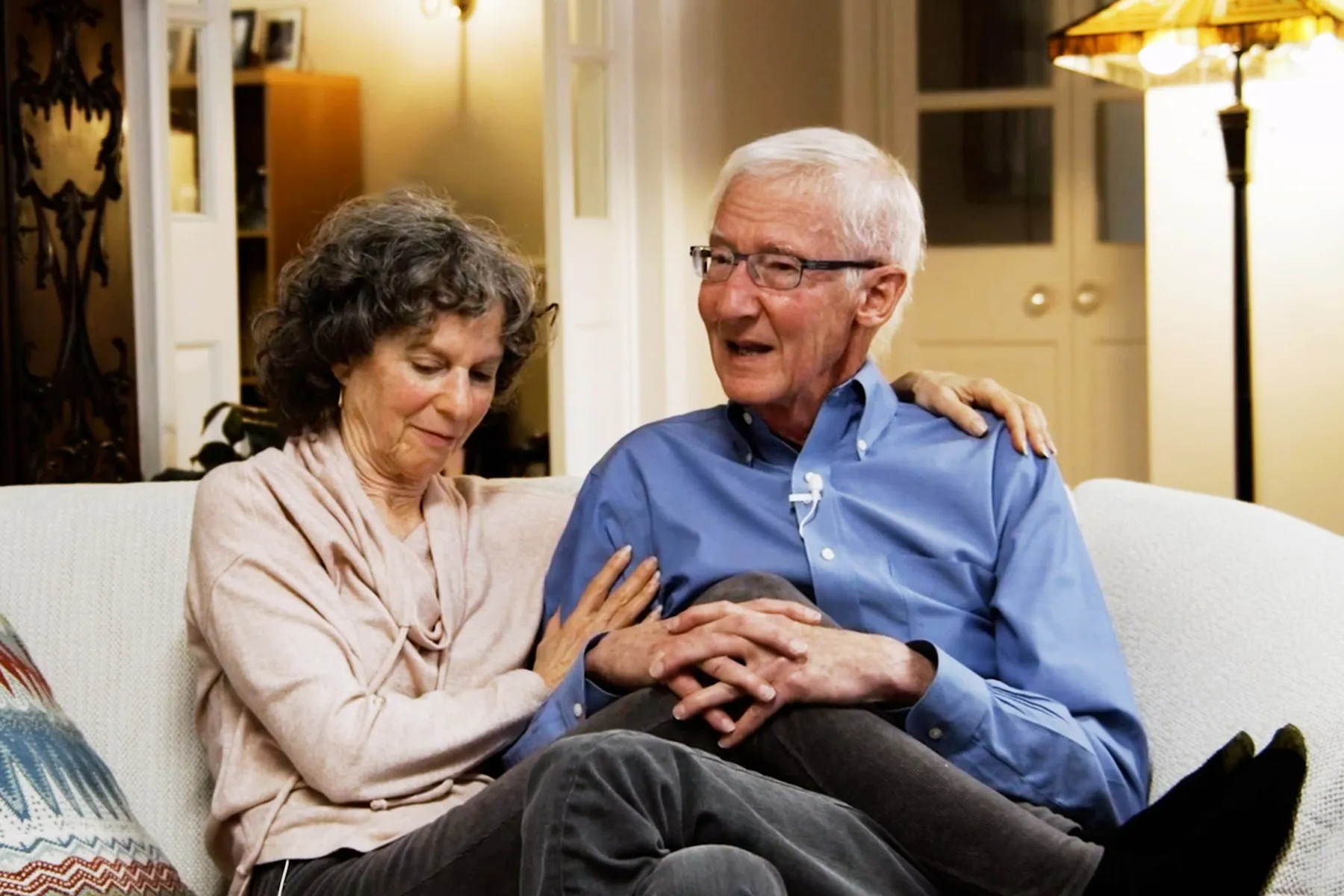
Most people would not put “terminal cancer diagnosis” and “joy” in the same sentence unless they were writing a very strange greeting card. Yet Roland Griffiths, the pioneering Johns Hopkins scientist who helped bring psychedelic research back into mainstream medicine, managed to do exactly that. Near the end of his life, after receiving a stage 4 colon cancer diagnosis, Griffiths spoke not only about illness, uncertainty, and mortality, but also about gratitude, awe, curiosity, and the astonishing fact that any of us are conscious enough to complain about traffic.
His story is not a simple feel-good tale. It is not “take a mushroom and fear nothing,” nor is it a shiny advertisement for psychedelic therapy. Griffiths was a rigorous researcher, not a festival brochure in a lab coat. His work helped show that psilocybin, the active compound in so-called magic mushrooms, may reduce depression, anxiety, addiction, and fear of death when used in carefully controlled clinical settings. But his final lesson may have been even larger: science can study the mind, medicine can treat suffering, and a human being can still meet the end with wonder.
This article explores Roland Griffiths’ life, his landmark psychedelic science, his encounter with mortality, and why his unexpected joy continues to matter for medicine, mental health, spirituality, and everyday living.
Who Was Roland Griffiths?
Roland R. Griffiths, Ph.D., was a professor in the Departments of Psychiatry and Neurosciences at the Johns Hopkins University School of Medicine. He was widely respected for his work on mood-altering substances, including caffeine, sedatives, nicotine, and eventually psychedelics. Before psilocybin became a dinner-party buzzword and every podcast host discovered “ego dissolution,” Griffiths had already spent decades studying how drugs affect human behavior.
That background matters. Griffiths did not enter psychedelic research as a starry-eyed enthusiast. He was trained in psychopharmacology, careful methodology, and double-blind clinical trial design. In plain English: he knew how to separate real effects from wishful thinking, hype, and the suspicious confidence of someone who has just bought a crystal online.
At Johns Hopkins, Griffiths became the founding director of the Center for Psychedelic and Consciousness Research. The center helped legitimize the modern psychedelic renaissance by studying psilocybin under controlled conditions, with trained guides, medical screening, preparation, and follow-up. His work helped move psychedelics from the cultural shadows of the 1960s into the sober world of peer-reviewed journals, hospital ethics boards, and very serious people with clipboards.
The Psychedelic Renaissance: Why Griffiths’ Work Was Different
Psychedelics were studied in the mid-20th century, but the field was derailed by politics, cultural backlash, and irresponsible promotion. For decades, serious research was difficult. By the early 2000s, however, scientists began asking whether compounds like psilocybin could be studied safely and whether they might help with depression, anxiety, addiction, and end-of-life distress.
Griffiths and his colleagues helped answer that question with uncommon care. Their research was not about recreational use. Participants were screened. Sessions were supervised. The environment was supportive. Doses were measured. Researchers collected data using validated psychological scales. In other words, nobody was handed mushrooms behind a music stage and told, “Good luck, brave astronaut.”
One of Griffiths’ landmark areas of research focused on mystical-type experiences. That phrase can sound slippery, like something whispered by a yoga mat, but researchers used structured measures to define it. Participants often reported a sense of unity, sacredness, deep meaning, transcendence of time and space, and a feeling that the experience was more real than ordinary awareness. Griffiths’ studies found that these experiences could be personally meaningful and, in some cases, associated with lasting positive changes.
Psilocybin and Cancer-Related Distress
Perhaps the most emotionally powerful part of Griffiths’ research involved people with life-threatening cancer. Cancer does not only attack the body. It can also ambush the mind with fear, depression, anxiety, loss of identity, and the haunting question: “How much time do I have?” Traditional treatment often focuses on tumors, scans, surgeries, and medications. But patients also need care for existential distress, the kind that cannot be solved by saying, “Try not to worry,” which has never helped anyone in the history of worrying.
In a randomized, double-blind study published in 2016, Griffiths and colleagues found that psilocybin, given with psychological support to patients with life-threatening cancer and symptoms of depression or anxiety, produced substantial and sustained decreases in depressed mood and anxiety. Many participants also reported increases in quality of life, life meaning, and optimism. The results did not suggest that psilocybin cured cancer. It did something different: it appeared to help some people relate to their fear, mortality, and suffering in a new way.
That distinction is crucial. Psychedelic-assisted therapy is not magic. It does not erase grief or replace oncology. Instead, under the right conditions, it may help the mind loosen its grip on terror and open toward acceptance, connection, or meaning. For someone facing death, that shift can be enormous. When the body cannot be promised more years, the mind may still be offered more peace.
Facing His Own Diagnosis
Then came the plot twist no scientist can control: Griffiths himself was diagnosed with stage 4 colon cancer. After studying how people face mortality, he became a person facing mortality. That sentence lands heavily because it removes the comfortable distance between researcher and subject. The lab coat becomes a hospital gown. The theory becomes Tuesday morning.
Griffiths did not pretend that dying was easy. But he spoke with striking calm about his diagnosis. He described feeling gratitude and wonder, even while knowing his time was limited. He seemed fascinated by consciousness itself: the miracle that humans exist, perceive, love, question, laugh, grieve, and somehow remember where they put the car keys at least 40 percent of the time.
His reflections were not a denial of death. They were a refusal to let death steal the entire room before it arrived. He acknowledged the seriousness of his illness while continuing to focus on the mystery and privilege of being alive. That is not toxic positivity. Toxic positivity says, “Everything is fine,” while the house is on fire. Griffiths’ perspective was closer to, “The house is on fire, and yet look at the astonishing color of the flames, the people beside me, and the fact that I was ever given a house at all.”
Finding Joy at the End: What Did Griffiths Mean?
When people hear that Griffiths found joy near the end of life, they may imagine some permanent state of bliss, as if he floated above suffering on a cloud shaped like a serotonin receptor. That is probably the wrong picture. Joy, in this context, does not mean constant happiness. It means a deeper orientation toward gratitude, presence, and awe.
Griffiths often emphasized the preciousness of conscious experience. From that point of view, life is not valuable only when it is long, healthy, productive, or neatly arranged. Life is valuable because awareness itself is astonishing. We are matter that woke up and started asking questions. We are stardust with calendars. We are biology capable of Beethoven, tacos, forgiveness, and worrying about email subject lines.
His joy seemed rooted in noticing this absurd magnificence. Even at the edge of death, he could experience existence as a gift. That does not make grief disappear. It does not make pain pleasant. But it offers a wider frame. In that frame, a person is not only a diagnosis, a prognosis, or a medical chart. A person is also a witness to beauty, relationship, and meaning.
The Science of Awe, Meaning, and Mortality
Griffiths’ end-of-life reflections connect closely with his research on psychedelics and death anxiety. Studies from Johns Hopkins and other institutions have suggested that powerful experiences, whether psychedelic or non-drug near-death-type experiences, may reduce fear of death for many people. Participants often report increased meaning, spiritual significance, and psychological insight.
Researchers are still trying to understand why. One possibility is that psychedelic experiences temporarily disrupt rigid patterns of self-focused thinking. People may experience a reduced sense of separateness, a feeling of connection to others or the universe, or a new perspective on personal suffering. The brain, for a while, may stop acting like a terrified office manager guarding every file cabinet.
Another possibility is that these experiences help people emotionally process truths they already know intellectually. Everyone knows they will die. But knowing it as a fact and integrating it as a lived reality are two different things. The first is a calendar problem. The second is a soul-level software update.
Why Set and Setting Matter
One of the most important lessons from Griffiths’ work is that context matters. In psychedelic research, “set” refers to mindset: expectations, emotional state, personality, and intention. “Setting” refers to environment: the room, music, support, safety, and people present. This is not decorative. It can shape the experience profoundly.
Clinical psychedelic sessions are carefully designed because these substances can intensify perception, emotion, memory, and vulnerability. For some people, that can be healing. For others, especially without support, it can be frightening or destabilizing. This is why Griffiths’ research should not be misread as a casual invitation to self-medicate.
Psilocybin is not approved by the U.S. Food and Drug Administration as a general medical treatment, and federal restrictions still apply. Health agencies also warn that psilocybin may be unsafe for people with certain psychiatric conditions, including psychotic disorders and some forms of bipolar disorder. The responsible takeaway is not “everyone should try psychedelics.” The responsible takeaway is “this is promising science that requires careful research, screening, preparation, and professional support.”
The Human Side of Psychedelic Science
What made Griffiths’ work compelling was not just the data. It was the human question beneath the data: Can people suffer less? Can fear loosen? Can addiction release its grip? Can someone facing death still feel connected to life?
Science sometimes gets caricatured as cold, but good science can be an act of compassion. Griffiths measured mystical experience not to flatten it, but to understand it. He studied end-of-life distress not as an abstract problem, but as a source of real human pain. His work asked whether the deepest experiences of awe, love, and meaning could be investigated without turning them into mushy slogans.
That is a delicate balance. Too much hype, and psychedelic science becomes a carnival. Too much skepticism, and we ignore tools that may help people. Griffiths’ contribution was to stand in the middle: curious, disciplined, open, and careful.
What His Story Means for Patients and Families
For patients with serious illness, Griffiths’ story offers hope without false promises. It suggests that emotional suffering at the end of life deserves serious care. Pain management matters. Family support matters. Spiritual care matters. Mental health treatment matters. And perhaps, in controlled settings, psychedelic-assisted therapy may one day become another option for some patients.
For families, his story offers a different way to talk about death. Many families avoid the topic until it bursts into the room wearing hospital socks. But conversations about meaning, fear, gratitude, unfinished business, and love can be profoundly healing. They do not have to be perfect. Nobody needs to speak like a poet. Sometimes the most sacred sentence is simply, “I’m here.”
Griffiths’ example also reminds caregivers that joy and sorrow can coexist. A dying person may laugh, plan, reminisce, cry, nap, and complain about soup temperature all in the same afternoon. That is not inconsistency. That is being human.
Lessons From Roland Griffiths’ Final Chapter
1. Mortality Can Clarify What Matters
Death has a rude but effective editing style. It cuts through status games, petty grudges, and the nonsense we call urgent. Griffiths’ diagnosis seemed to sharpen his attention toward gratitude, consciousness, and love. Most of us do not need a terminal diagnosis to begin that shift. We can start by asking what would matter if time felt less guaranteed, because it already is.
2. Awe Is Not a Luxury
Awe is often treated as decorative, like a nice sunset after “real life” is done. Griffiths’ work suggests awe may be psychologically powerful. Whether through nature, music, meditation, prayer, art, service, or deep conversation, awe can remind us that the self is not the whole universe. This is excellent news, because the self can be a noisy roommate.
3. Science and Spirituality Can Speak
Griffiths did not reduce spirituality to brain chemistry, nor did he abandon science for vague mysticism. His work created space for careful study of experiences people often describe as sacred. That does not mean science can prove metaphysical claims. It means science can investigate how certain experiences affect suffering, meaning, behavior, and well-being.
4. Joy Is Not the Opposite of Grief
Joy and grief are not enemies. They often sit at the same table, awkward at first, then surprisingly companionable. Griffiths’ final reflections show that joy can exist even when life is painful and limited. It may appear in gratitude for a friend, a breath, a memory, a moment of beauty, or the strange privilege of having been alive at all.
Experiences and Reflections Inspired by Roland Griffiths’ Story
One of the most practical ways to understand Griffiths’ message is to imagine how it might show up in ordinary life. You do not need a laboratory, a mystical vision, or a dramatic soundtrack. You might be sitting in a hospital waiting room, holding a paper cup of coffee that tastes like warm cardboard, when suddenly you notice the kindness of the nurse who remembers your name. That tiny moment can become a doorway. It does not fix the diagnosis. It does not cancel fear. But it says: even here, life is still offering connection.
Many people who face serious illness describe a strange rearrangement of priorities. The inbox becomes less holy. The argument from three years ago loses its dramatic lighting. A simple meal with family can feel more important than a promotion. This is not because suffering is good. Suffering is not a productivity hack, and cancer is not a motivational speaker. But crisis can reveal what was already true: love matters, presence matters, and the ordinary world is not ordinary when attention finally arrives.
Griffiths’ story also resonates with people who are not ill but feel trapped in anxiety. Fear of death often hides inside fear of aging, fear of failure, fear of losing control, or fear that life is passing too quickly. His work invites a different question: What if the goal is not to eliminate fear, but to hold it inside a larger sense of meaning? A person can be afraid and still grateful. A person can be uncertain and still generous. A person can know life is temporary and still make pancakes on Sunday morning like pancakes are a sacred civic duty.
For caregivers, the lesson may be even more tender. When someone you love is approaching the end, it is natural to want the perfect words. But often the best experiences are simple: reading aloud, playing music, sharing old stories, sitting quietly, rubbing lotion into tired hands, or laughing at a family memory that has been repeated so many times it should have its own copyright. These moments may not look profound from the outside. From the inside, they can be everything.
Griffiths’ final joy does not ask us to be fearless. It asks us to be awake. Awake to the people near us. Awake to the fact that consciousness is brief and brilliant. Awake to the possibility that meaning is not something we find once, frame, and hang on the wall. Meaning is practiced. It is noticed. It is renewed in small choices: call the friend, forgive where possible, say thank you, watch the sky, take the walk, put down the phone, taste the coffeeeven if, tragically, it is hospital coffee.
In the end, Roland Griffiths’ life and work point toward a deeply human conclusion: the mind is more flexible than we think, suffering deserves compassion, and death does not have to erase wonder. His scientific legacy belongs to medicine, but his final lesson belongs to everyone. We are alive for a while. We know it will end. And still, somehow, there is room for joy.
Conclusion
Roland Griffiths helped transform psychedelic science from a taboo topic into a serious field of medical research. His studies on psilocybin, mystical-type experiences, addiction, cancer-related distress, and fear of death shaped the modern conversation about psychedelic-assisted therapy. Yet his most unforgettable contribution may have come near the end of his own life, when he met terminal cancer with clarity, gratitude, and an almost luminous sense of awe.
His story should not be twisted into hype. Psychedelics are powerful substances, not wellness confetti. They require careful study, ethical safeguards, and clinical responsibility. But Griffiths showed that the scientific study of consciousness can illuminate some of life’s deepest questions: How do we face fear? How do we live with uncertainty? How do we find meaning when control disappears?
The answer he embodied was not simple, but it was beautiful: pay attention, stay curious, love generously, and do not wait until the final chapter to notice the miracle of being here.
Note: This article is for educational and editorial purposes only. It does not recommend self-medication or unsupervised psychedelic use. Psychedelic-assisted therapy should only be considered within legal, ethical, and medically supervised settings.