Pistachios are tiny green overachievers. They can dress up a cookie, rescue a boring salad, turn rice into something restaurant-worthy, and somehow make ice cream look more expensive than it has any right to be. But then a recipe casually says “1 cup shelled pistachios,” while your pantry contains a half-open bag of in-shell roasted pistachios, a handful of chopped nuts, and one mysterious green dusting at the bottom of the container. Suddenly, dinner has become math class.
This guide breaks down pistachio measures, equivalents, and substitutions in plain kitchen language. You will learn how many pistachios are in an ounce, how to convert cups to grams, when to measure before or after shelling, what to use when pistachios are missing, and how to avoid turning a delicate dessert into nutty cement. Grab a measuring cup, a kitchen scale if you have one, and possibly a snack bowl. For research purposes, of course.
Quick Pistachio Measurement Chart
For the most reliable results, measure pistachios by weight. Pistachios vary in size, whether they are whole, chopped, salted, roasted, raw, packed loosely, or packed like they are trying to win a suitcase-stuffing contest. Still, these common equivalents work well for everyday cooking and baking.
| Measurement | Approximate Equivalent | Best Use |
|---|---|---|
| 1 ounce shelled pistachios | 28 grams, about 49 kernels | Snacking, toppings, portioning |
| 1/4 cup shelled pistachios | About 30 grams | Garnishes, small batches, cookies |
| 1/2 cup shelled pistachios | About 60 grams | Cakes, pesto, fillings |
| 1 cup shelled pistachios | About 120 to 125 grams | Baking, nut crusts, pistachio paste |
| 1 pound in-shell pistachios | About 2 cups shelled kernels | Bulk buying, recipe planning |
| 1 tablespoon chopped pistachios | About 7 to 8 grams | Finishing desserts, oatmeal, salads |
Shelled vs. In-Shell Pistachios: Do Not Let the Shells Trick You
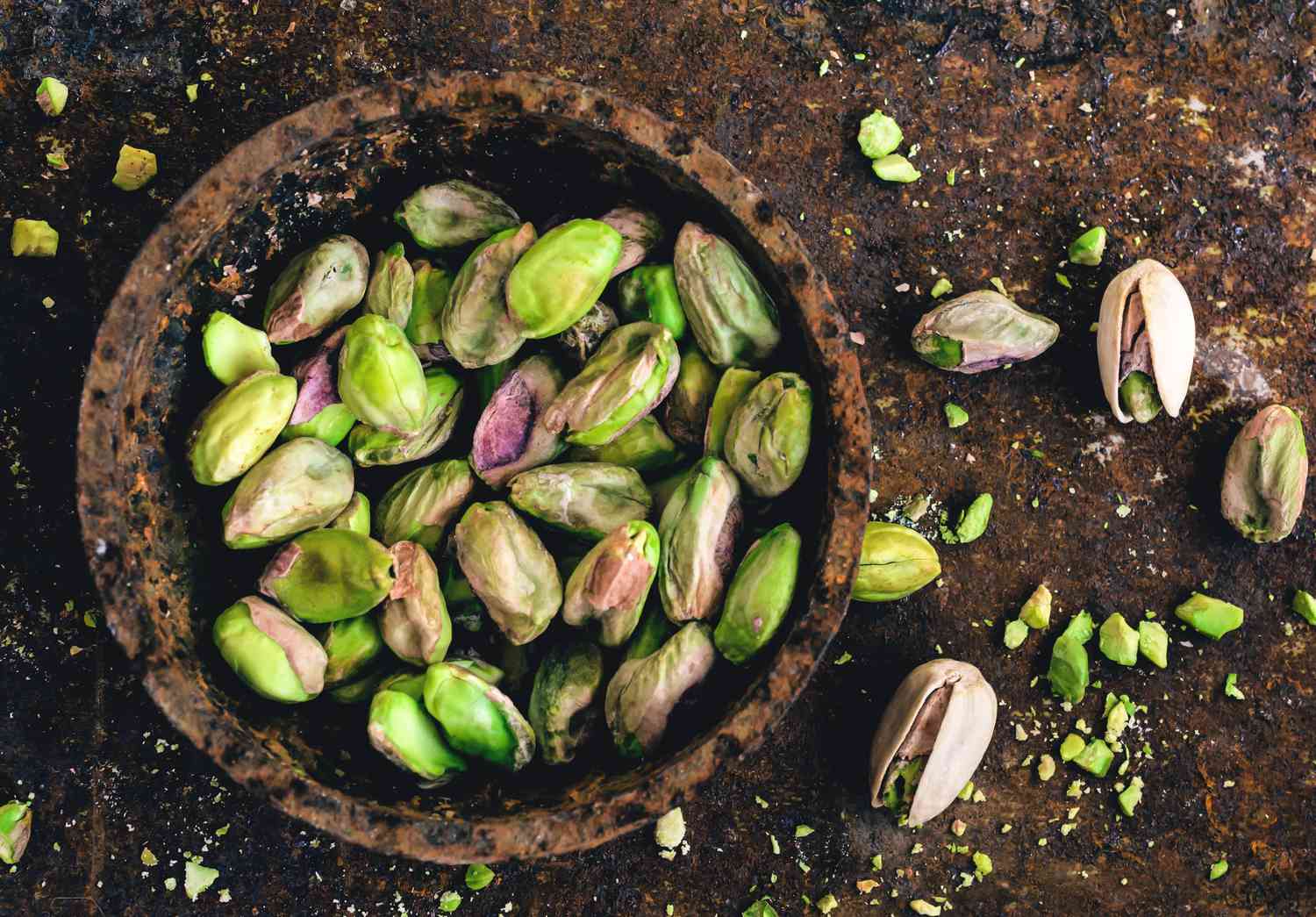
In recipes, “shelled pistachios” means the hard outer shells have already been removed. “In-shell pistachios” means you still have to crack them open before measuring the edible kernels. This sounds obvious until a recipe calls for 1 cup of pistachios and you confidently pour in 1 cup of in-shell nuts. That is not a substitution. That is a crunchy construction project.
As a practical kitchen rule, pistachio shells make up nearly half the total weight of in-shell pistachios. If you need 4 ounces of shelled pistachios, you may need roughly 8 ounces of in-shell pistachios to get there. The exact yield depends on variety, size, moisture, and how many stubborn closed shells are hiding in the bag like tiny green vaults.
When to Measure Pistachios
Always measure pistachios after shelling when the recipe calls for shelled nuts. For baking, sauces, fillings, and pastes, measure the edible kernels only. Shells are not part of the recipe, not part of the flavor, and definitely not part of your guests’ dental plan.
Whole, Chopped, Ground, and Pistachio Flour: Why Form Matters
A cup of whole pistachios does not behave the same as a cup of chopped pistachios. Whole kernels leave more air space in the measuring cup, while chopped pieces settle more tightly. Ground pistachios pack even more densely. That means a cup measurement can shift depending on how the pistachios are prepared.
Whole Pistachios
Whole pistachios are best for snacking, decorating cakes, folding into biscotti, stirring into rice pilaf, or scattering over roasted vegetables. They give dramatic color and a satisfying bite. Use them when the pistachio is meant to be seen and appreciated, not hidden like a supporting actor with no lines.
Chopped Pistachios
Chopped pistachios are ideal for cookies, baklava-style desserts, crusts, granola, yogurt bowls, and salad toppings. For even chopping, use a sharp knife and a cutting board. A food processor works, but pulse carefully. Pistachios contain oil, and over-processing can quickly move them from “pleasantly chopped” to “accidental nut butter.”
Ground Pistachios and Pistachio Flour
Ground pistachios are useful in cakes, macarons, shortbread, tart crusts, and fillings. Pistachio flour is usually finer than home-ground pistachios, but both can add flavor, tenderness, and a soft green hue. For best results, grind pistachios with a little sugar or flour from the recipe to help absorb oil and prevent clumping.
How to Substitute Pistachios in Recipes
Pistachios have a mild sweetness, buttery texture, and beautiful green color. No substitute copies all three perfectly, but several ingredients can step in depending on the job. The secret is to ask what the pistachio is doing in the recipe: adding crunch, flavor, color, richness, structure, or all of the above.
Best Pistachio Substitutes for Baking
For cookies, cakes, muffins, quick breads, and biscotti, almonds are the easiest swap. They have a similar firmness and a clean nutty flavor that plays nicely with vanilla, citrus, chocolate, and dried fruit. Use chopped almonds in a 1:1 ratio for chopped pistachios. For pistachio flour, almond flour is usually the most reliable replacement by weight.
Hazelnuts work beautifully in chocolate desserts, though they bring a stronger toasted flavor. Walnuts and pecans are softer and richer, making them excellent in brownies, banana bread, carrot cake, and rustic cookies. Cashews are milder and creamier, which makes them useful in bars, fillings, and dairy-free sauces.
Best Pistachio Substitutes for Savory Dishes
For salads, grain bowls, roasted vegetables, and rice dishes, try almonds, pine nuts, pumpkin seeds, sunflower seeds, or walnuts. Pine nuts are especially good when you want a tender bite and buttery flavor, while pumpkin seeds keep a greenish look and offer crunch without using tree nuts.
In pesto-style sauces, pistachios can be replaced with almonds, walnuts, pine nuts, cashews, or sunflower seeds. Use the same amount by weight, then adjust olive oil as needed. Softer nuts like cashews make a creamier sauce, while walnuts add earthiness. Almonds keep the flavor cleaner and more neutral.
Best Nut-Free Pistachio Substitutes
For people avoiding tree nuts, roasted pumpkin seeds are often the best option. They are green, crunchy, widely available, and pleasant in both sweet and savory dishes. Sunflower seeds are another practical choice, though their flavor is more direct and seed-like. For desserts where color matters, a small amount of matcha powder or natural green coloring can help recreate the visual effect, but use it carefully so the flavor does not wander into “lawn smoothie.”
Salted vs. Unsalted Pistachios
Unsalted pistachios are best for baking and cooking because they give you control. Salted pistachios can work in cookies, brownies, brittle, granola, and savory dishes, but reduce the added salt in the recipe. If using heavily salted pistachios in a dessert, wipe off excess salt or give them a quick shake in a clean towel.
Roasted pistachios have a deeper flavor and stronger crunch. Raw pistachios taste softer, sweeter, and more delicate. For pistachio paste, pistachio butter, ice cream, pastry cream, or refined desserts, raw unsalted pistachios are usually the better choice. For salads, toppings, and snacks, roasted pistachios bring more personality.
How to Convert Pistachios Without a Scale
A kitchen scale is the easiest path to accuracy, but not every kitchen has one. If you are measuring by volume, use a dry measuring cup, spoon the pistachios in loosely, and level the top. Do not press them down unless the recipe specifically says packed. Pistachios are not brown sugar; they do not need emotional compression.
Here is a simple approach: if a recipe calls for 100 grams of shelled pistachios, use a little less than 1 cup. If it calls for 50 grams, use about 1/2 cup minus a spoonful. If it calls for 30 grams, use about 1/4 cup. These conversions are approximate, but they are close enough for salads, toppings, rice dishes, and many casual bakes.
Common Pistachio Recipe Examples
Pistachio Cookies
For cookies, chopped pistachios are usually better than whole kernels because they distribute evenly. If the recipe calls for 1 cup chopped pistachios, start with about 1 cup shelled kernels, chop them, and measure again if precision matters. For a bakery-style finish, save a few larger pieces to press on top before baking.
Pistachio Pesto
Pistachio pesto is flexible. Combine shelled unsalted pistachios with basil, parsley, mint, garlic, lemon, olive oil, and Parmesan. If replacing pistachios, use almonds or walnuts in a 1:1 ratio. Add oil gradually because different nuts absorb and release oil differently.
Pistachio Crust for Fish or Chicken
For a savory crust, chopped roasted pistachios bring crunch and color. Almonds, pecans, or pumpkin seeds can substitute well. Keep the pieces small enough to stick to the surface but not so fine that the crust becomes paste-like.
Pistachio Ice Cream or Cream Filling
For smooth desserts, use raw unsalted pistachios when possible. Blanching and peeling the skins can make the color brighter and the texture smoother, though it is optional. If substituting, cashews create creaminess, while almonds give a mild nut flavor. Neither will taste exactly like pistachio, but dessert rarely complains when handled kindly.
Storage Tips for Better Measuring and Better Flavor
Pistachios contain natural oils, which means they can turn stale or rancid if stored poorly. Keep them in an airtight container away from heat, light, and moisture. For short-term use, a cool pantry works. For longer storage, the refrigerator or freezer is better.
Before using pistachios, smell them. Fresh pistachios should smell nutty and slightly sweet. If they smell sour, paint-like, bitter, or dusty, do not use them. One bad handful can ruin a batch of cookies faster than you can say, “Maybe no one will notice.” They will notice.
Practical Buying Advice
Buy in-shell pistachios for snacking when you want built-in portion control and a slower eating pace. Buy shelled pistachios for recipes, especially when you need a specific amount. Shelled pistachios cost more per pound, but you are paying for edible kernels and convenience. If your recipe needs 2 cups of shelled pistachios, buying them already shelled may save time, mess, and a surprising amount of thumb fatigue.
For baking, choose raw or dry-roasted unsalted pistachios. For toppings, flavored pistachios can be fun, but be careful with garlic, chili, barbecue, or vinegar flavors unless they fit the recipe. Chili-lime pistachios on a chocolate cake may be bold. It may also be a story your family repeats for years.
Personal Kitchen Experience: What Pistachios Teach You After a Few Recipe Experiments
After working with pistachios in both sweet and savory recipes, one lesson becomes clear: pistachios reward patience. They are not difficult, but they do ask you to pay attention. The first mistake many home cooks make is measuring in-shell pistachios as though the shells are edible. It feels harmless at first. You pour a generous cup, crack a few open, and then realize your “cup” of pistachios has turned into a much smaller pile of kernels and a mountain of shells that looks like a tiny armadillo convention.
The second lesson is that pistachios are sensitive to texture. In cookies, large chunks feel luxurious, especially with dark chocolate or dried cranberries. In cakes, however, big pieces can sink or create uneven slices. Finely chopped pistachios blend more gracefully into batters, while ground pistachios add flavor without interrupting the crumb. When making a pistachio cake, I prefer a mix: mostly finely ground pistachios for flavor, plus a small handful of chopped pieces for personality. It gives the cake a natural nutty taste without making each bite feel like trail mix moved into the bakery aisle.
Another practical discovery: salted pistachios can be either genius or chaos. In brownies, a little salt makes chocolate taste deeper and more dramatic. In delicate shortbread, too much salt can take over like a guest who brings a karaoke machine to brunch. If salted pistachios are all you have, taste them first and reduce the recipe’s salt. If they are heavily seasoned, save them for salads, grain bowls, or snacking instead of refined desserts.
Substituting pistachios also becomes easier once you stop chasing an identical replacement. Almonds are dependable and polite. Cashews are creamy and gentle. Walnuts are bold and earthy. Pumpkin seeds are the friendly nut-free hero that keeps the green color theme alive. None of them is pistachio, but each can do part of the job well. For a pistachio-style garnish, pumpkin seeds with a tiny pinch of sugar and salt can work surprisingly well. For pistachio flour in baking, almond flour is usually the least dramatic swap.
The biggest improvement comes from using a scale. Measuring cups are useful, but pistachios are irregular little characters. Whole kernels, chopped pieces, and ground nuts all fill space differently. A scale removes the guessing game. Once you start weighing nuts for baking, you may wonder why recipes ever trusted cups with this much responsibility.
Finally, pistachios remind you that garnish is not decoration only. A tablespoon of chopped pistachios can change the entire personality of a dish. Sprinkle them over oatmeal with honey, yogurt with berries, roasted carrots with lemon, rice with herbs, or vanilla ice cream with warm chocolate sauce. That small green crunch adds contrast, color, and a little “I know what I’m doing” energy, even if dinner was assembled while standing in front of the refrigerator.
Conclusion
Pistachio measures, equivalents, and substitutions are easier once you remember three rules: measure shelled kernels for recipes, use weight when accuracy matters, and choose substitutes based on the pistachio’s role. One ounce of shelled pistachios is about 28 grams or roughly 49 kernels. A quarter cup is about 30 grams, and a full cup is about 120 to 125 grams. In-shell pistachios yield much less edible nut than their total weight suggests, so plan accordingly.
For substitutions, almonds are the most reliable all-purpose option, cashews are best for creamy textures, walnuts and pecans add richness, pine nuts work in savory dishes, and pumpkin seeds are a smart nut-free alternative. Whether you are baking cookies, making pesto, decorating a cake, or simply trying to understand why your “one cup” turned into a tiny pile of kernels, pistachios become much friendlier when measured with confidence.
Note: This article is written for practical home cooking and baking. Pistachio weights and cup conversions are approximate because size, cut, roasting level, and packing style vary by brand and batch. For professional baking, nutrition labeling, or large-scale recipe production, use gram measurements whenever possible.