Note: This article is written in standard American English, based on publicly reported information, and formatted as a clean HTML body for web publishing.
There are ordinary internet stories, and then there are the kind that make you stare into the middle distance and whisper, “Well, breakfast is canceled forever.” The Cinnamon Toast Crunch shrimp-tail saga belongs firmly in the second category. What began as one man’s baffled complaint about his cereal quickly transformed into a viral social media carnival full of disbelief, food-safety anxiety, brand-response analysis, and a mountain of memes that practically wrote themselves.
The headline sounds like parody. A person opens a box of beloved cinnamon cereal, spots what appears to be shrimp tails, tags the company online, and gets a response suggesting the objects are really just clumps of sugar. The internet, being the internet, did not respond with calm breathing exercises and measured silence. It responded the way it always does when reality gets stranger than satire: with jokes, screenshots, side-eyes, and enough shellfish puns to fill a seafood buffet.
But beneath the surreal comedy was a story that touched on something very real: trust. People trust packaged foods to be safe, properly sealed, and accurately labeled. So when a bizarre contamination claim collides with a public corporate reply that seems to minimize the complaint, the story stops being just gross and starts becoming fascinating. That is why this weird little breakfast disaster became one of the most unforgettable consumer stories on the internet.
How the Cinnamon Toast Crunch Shrimp-Tail Story Started
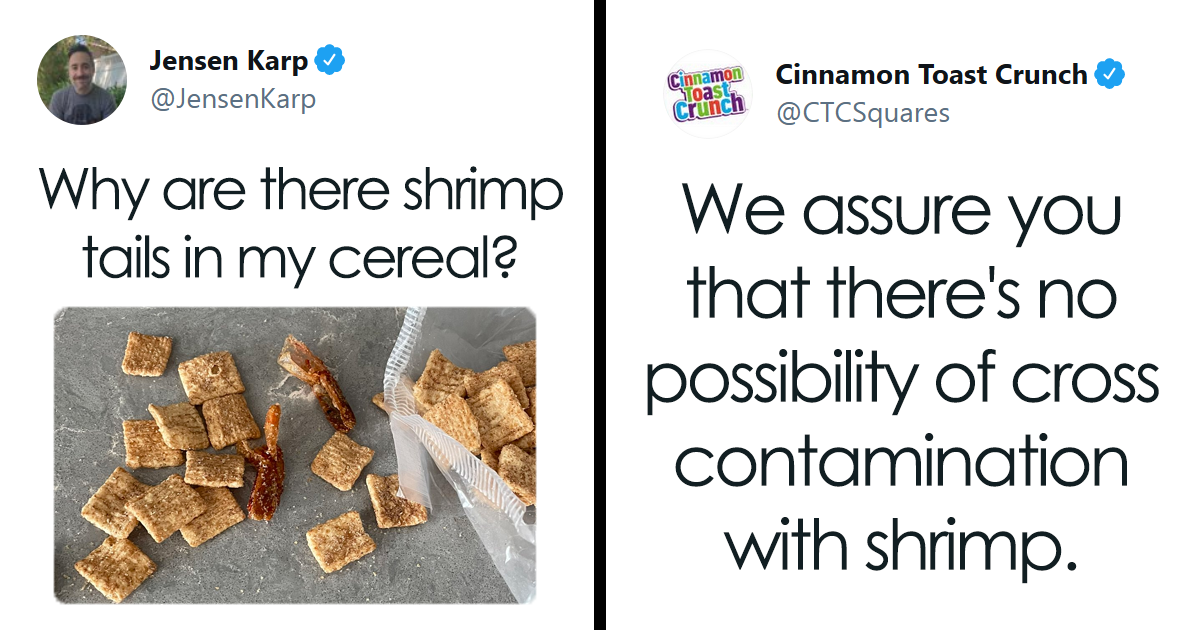
The now-famous episode began when writer and podcaster Jensen Karp posted photos of what he said were shrimp tails in a box of Cinnamon Toast Crunch. According to reports at the time, he had already eaten a bowl before noticing the unexpected extras. That detail alone turned the story from “odd” to “please excuse me while I never trust a cereal bag again.”
As the post spread, the appeal was instant. It had all the ingredients of a perfect viral thread: a recognizable brand, a disturbing image, a genuinely weird claim, and a tone that balanced disgust with disbelief. It also had the modern internet’s favorite seasoning: public customer service drama. Once a brand account enters the chat, the whole thing stops being a consumer complaint and starts becoming theater.
Karp later shared more images and said he found additional strange material in the cereal package, including string and dark bits attached to some cereal pieces. That escalated the story from “one deeply cursed surprise” to “this box appears to have lost a fight with reality.” Even people who were skeptical of the original shrimp claim had to admit the overall situation looked terrible.
The Company’s “It’s Sugar” Response Lit the Match
If the original complaint was the spark, the company’s response was the industrial-grade fuel. The brand account initially suggested the objects in the image were an accumulation of cinnamon sugar that can form when ingredients are not thoroughly blended. In other words, the message boiled down to: what looks exactly like shrimp may actually be cereal glitter having a rough day.
That explanation did not land well.
In crisis communication, tone matters almost as much as facts. A brand can buy itself time with empathy, caution, and a promise to investigate. What it usually cannot get away with is sounding instantly dismissive while the entire internet is zooming in on a photo that appears, at least to most eyeballs, to show shrimp tails. The response felt less like “we take this seriously” and more like “your seafood is actually sugar wearing a disguise,” which is not the sentence any consumer wants attached to their breakfast.
As a result, the public conversation shifted. It was no longer just about what was in the cereal. It was also about whether the company had mishandled the complaint. Communications experts quickly pointed to the moment as an example of how not to answer a bizarre but potentially serious customer concern in public. Denial came too fast, empathy came too late, and the internet noticed every second of it.
Why This Story Exploded So Fast
The Cinnamon Toast Crunch shrimp-tail story went viral because it sat at the exact center of four irresistible internet circles.
1. It was disgusting in a very specific way
People have a strong reaction to contamination stories, especially when they involve familiar comfort foods. Cinnamon cereal belongs in the category of nostalgic, safe, sweet, and boring in the best possible way. Shrimp tails belong somewhere else entirely. The collision was so absurd that it felt almost scripted.
2. The brand involved was huge
This was not a complaint about some mysterious off-brand snack sold in a gas station next to windshield wiper fluid. It involved one of America’s best-known cereals. Big brands generate big reactions because people already have a relationship with them. Even folks who had never eaten Cinnamon Toast Crunch understood the betrayal on a spiritual level.
3. The response made the story funnier
Had the company simply said, “We are very concerned, please preserve the package, we are investigating immediately,” the story still would have traveled. But the “it’s sugar” explanation transformed it into internet folklore. A weird claim became a weird claim plus a wildly meme-able corporate reply. That is how you accidentally turn a customer complaint into a cultural event.
4. Social media loves a mystery with snacks
Online audiences are built for this kind of story. People could debate whether the objects were really shrimp, speculate about packaging tampering, joke about secret ingredients, and create reaction memes, all without needing a law degree or a background in marine biology. It was participatory chaos, which is the internet’s favorite genre.
From Consumer Complaint to Meme Goldmine
Once the images and replies began circulating, the memes arrived right on schedule. Some focused on the visual absurdity. Others mocked the official explanation. Many played with cereal-brand language, joke product variants, and the kind of cursed mashups that only social media could invent. “Oops! All Shrimp Tails” was exactly the sort of joke you could predict and still laugh at, because the setup was too perfect.
The meme cycle mattered because it changed the emotional temperature of the story. People were grossed out, yes, but they were also entertained. Humor became the way the public processed the incident. That is common in modern internet culture: if something is confusing, mildly horrifying, and unbelievably shareable, the crowd converts discomfort into comedy within minutes.
At the same time, memes can sharpen criticism. In this case, the jokes were not just about shrimp in cereal. They were also about disbelief toward the company’s explanation. Every wisecrack about “sugar” carried a second message: consumers do not like feeling talked down to, especially when the evidence looks unsettling and the complaint is public.
Why the Story Was Not Just Funny
For all the jokes, this was not merely a punchline. Food contamination claims raise legitimate concerns, especially when shellfish is involved. Shrimp is a major allergen category under U.S. food labeling rules, which is one reason the story hit a nerve beyond simple disgust. Even the suggestion of undeclared shellfish in a product is enough to make consumers pay attention.
That is part of what gave the story staying power. This was not just “ha-ha, weird object in a cereal box.” It touched on food safety, labeling, consumer trust, and the responsibilities brands have when responding to alarming complaints. People online may have cracked jokes, but plenty also asked the serious question: what if someone with a shellfish allergy had eaten this?
And that question helps explain why the company’s public posture drew so much criticism. When there is even a remote appearance of an allergen issue, consumers expect caution. They expect seriousness. They expect the digital equivalent of putting on gloves and saying, “Let’s handle this carefully.” They do not expect the food version of, “Actually, that shrimp-looking thing is probably just sugar having a personality crisis.”
The Later Twist: General Mills Pushes Back
As the story grew, General Mills later said it was highly unlikely that the material came from its facility. Reports also noted that the company pointed to evidence suggesting the packaging may have been tampered with, including clear tape found on the bag. That shifted the narrative again. The company was no longer just saying the objects looked like sugar; it was suggesting that whatever happened may have taken place after the product left its control.
That position gave the story a more complicated shape. Instead of a neat ending, the public got a messy unresolved one. Was it a manufacturing problem? A packaging issue? Tampering somewhere in distribution or retail? Something else entirely? The answer, at least in public reporting, never arrived with the satisfying clarity people wanted.
And honestly, that may be why the incident stuck around in the culture. The internet loves closure, but it also loves unresolved weirdness. The shrimp-tail cereal story never became a simple solved mystery. It just became one of those online legends people reference whenever a brand says something obviously questionable with too much confidence.
What the Meme Storm Revealed About Modern Brand Culture
The whole saga became a case study in how fast reputation can shift online. A single complaint can become national conversation in hours. A poorly phrased reply can become the defining image of the incident. And once the meme machine starts rolling, the public no longer sees a private customer-service issue. It sees a live demonstration of brand character.
That is why marketers, PR teams, and digital strategists studied this moment so closely. The lesson was not “never respond.” The lesson was “respond like a human being who understands what the customer is experiencing.” Express concern first. Investigate second. Explain later. Because once the audience decides you sound dismissive, your explanation may be technically possible and still publicly doomed.
In that sense, the cinnamon cereal controversy was bigger than one cereal box. It was about how corporations speak in public during moments of uncertainty. People do not demand immediate perfection. They do, however, strongly prefer empathy over brand voice gymnastics. Especially when shrimp has somehow wandered into the breakfast aisle.
Why People Still Remember the Cinnamon Toast Crunch Shrimp-Tail Story
Years later, the story still pops up whenever people discuss unforgettable internet moments, odd corporate replies, or the strangest food-related headlines ever written. It survives because it combines three things the web never forgets: a vivid image, a ridiculous phrase, and a big brand stepping on a digital rake in public.
It also endures because it tapped into a universal fear. Everybody has had a moment where a favorite food suddenly seems suspicious. Maybe it was stale chips, a dented can, a torn package, or a mystery texture that made dinner feel like a gamble. Most of those moments are too minor to become news. This one was not. This one found the internet, and the internet found a million ways to turn it into legend.
So yes, people reacted with memes. Of course they did. But they also reacted with recognition. Because under every shrimp-tail joke was the same basic thought: if this happened in my cereal, I would also lose my mind, take photos, and question every breakfast decision I have ever made.
Related Experiences: Why This Story Felt So Personal to So Many People
One reason the Cinnamon Toast Crunch shrimp-tail story hit so hard is that it felt weirdly familiar, even to people who had never found anything more dramatic than a stale marshmallow in their cereal. Most consumers have had at least one tiny food betrayal in their lives. You open a package expecting comfort, convenience, or a dependable favorite, and instead you get something off: a broken seal, a strange smell, a weird texture, or an object that absolutely should not be there. Usually it turns out to be harmless. Sometimes it does not. Either way, the emotional reaction is immediate. Trust disappears in a second.
That is why people did not just laugh at the shrimp-tail story. They also imagined themselves in it. They pictured pouring a bowl, taking a bite, spotting something suspicious, and feeling that awful little surge of panic that says, “What did I just eat?” It is one thing to read about contamination from a distance. It is another thing to picture your own kitchen, your own spoon, your own breakfast becoming evidence.
There is also the customer-service angle, which many people found painfully relatable. Plenty of consumers have had the experience of reporting a problem and getting a response that feels canned, dismissive, or disconnected from what actually happened. Maybe it was a defective item, maybe a billing issue, maybe a ruined order. The details change, but the feeling is the same: you want the company to acknowledge reality, and instead you get a polished sentence that sounds like it was assembled by a committee in a room with no windows. That is part of why the “it’s sugar” response landed so badly. People recognized the tone instantly.
The story also resonated with anyone who has ever had to document a ridiculous problem just to be believed. Taking photos, saving packaging, checking the lot number, refusing to throw things away, texting friends for validation, wondering if you should call the company, the store, or maybe an exorcist for the cereal box itself, all of that felt believable. Consumers know the drill. If something bizarre happens, you become an amateur investigator against your will.
Then there is the social element. In the past, a gross discovery in your food might become a family anecdote or an angry phone call. Today it becomes a post, a thread, a screenshot, and sometimes a full public event. That changes the experience. You are not just reacting alone. You are reacting with thousands of strangers who are helping you process the absurdity in real time, often through humor. Memes become a coping mechanism. Jokes make the story easier to stomach, even when the original image makes you want to swear off dry goods forever.
Finally, the saga resonated because it showed how fragile brand loyalty can be. People build routines around food. They buy the same cereal, the same snacks, the same frozen meals, because familiarity feels safe. When that trust cracks, the emotional reaction can be stronger than it seems on paper. It is not just about one bad box. It is about the feeling that a product you treated as ordinary has suddenly become uncanny. That is why this story lived on. It was funny, yes, but it also captured the exact moment when convenience, comfort, and confidence all got replaced by shrimp-shaped doubt.
Conclusion
The “shrimp tails in cereal” controversy was the rare viral story that managed to be hilarious, gross, unsettling, and instructive all at once. It reminded consumers that food safety stories spread fast, that corporate tone matters, and that the internet will turn any absurd detail into a permanent cultural reference if given even half a chance. General Mills may have wanted to contain a complaint. Instead, the company found itself inside one of the strangest meme storms of the decade.
In the end, the story lasted because it was not just about whether something looked like shrimp. It was about how brands react when consumers raise alarming questions in public, how quickly trust can wobble, and how online audiences transform confusion into comedy. Also, to be fair, it was about shrimp in cereal, which is the kind of phrase that sounds fake even when it is real enough to trend.