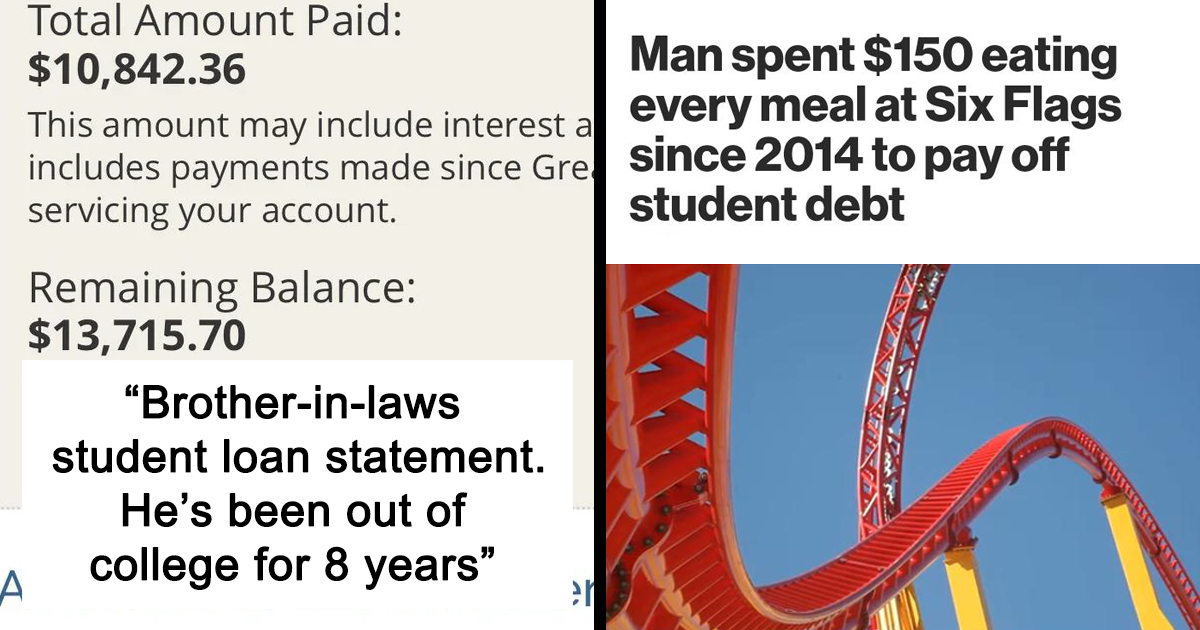
In America, student loans are often sold like a golden ticket: borrow now, earn more later, and pay it all back with a confident smile and a spreadsheet. Then real life walks in wearing muddy boots. Rent rises. Groceries act like luxury goods. Entry-level salaries remain aggressively entry-level. Interest keeps tapping borrowers on the shoulder like an unpaid parking ticket with a PhD.
For millions of Americans, paying off student loans is not a simple story of “budget better” or “skip fancy coffee.” The problem is bigger, heavier, and far less cute than a latte. Federal student loan debt alone sits around the $1.7 trillion mark, carried by tens of millions of borrowers. Recent data also shows serious delinquency rising again after pandemic-era protections ended. Translation: a lot of people are not ignoring their loans because they forgot how math works. They are drowning in a repayment system that can make progress feel almost mythical.
This article looks at why student loan debt in America feels impossible to pay off, how borrowers get trapped, and what real-life repayment experiences reveal about the modern cost of education.
Why Student Loan Debt Feels Different From Other Debt
Student loans are not like buying a couch on credit. A couch may be overpriced, but at least you can sit on it while questioning your choices. Student loans are usually taken out by teenagers and young adults who are told that higher education is the safest route to stability. Many sign promissory notes before they fully understand compound interest, income-based repayment, loan capitalization, or the terrifying emotional power of the phrase “minimum monthly payment.”
The promise is simple: college leads to better jobs. In many cases, that is still true over a lifetime. But the gap between the promise and the monthly bill is where borrowers get crushed. Tuition, fees, housing, books, transportation, and living costs have all made college far more expensive than the glossy brochure suggests. Even public universities can leave students with balances that follow them into their thirties, forties, and beyond.
The challenge is not just the original amount borrowed. It is the way interest grows, the way repayment plans change, and the way a borrower’s financial life rarely moves in a perfectly upward line. Someone may graduate with $35,000 in loans, enter a low-paying field, defer payments during hardship, and later discover that their balance has barely movedor worse, grown like a houseplant watered with panic.
The Numbers Tell a Brutal Story
Federal data shows that more than 42 million people carry federal student loans, with the outstanding federal portfolio totaling roughly $1.7 trillion. That number is so large it stops feeling like money and starts sounding like something NASA would use to measure distance.
Delinquency data makes the picture even sharper. After the pandemic-era payment pause and transition protections ended, many borrowers struggled to restart payments. New York Fed reporting showed student loan balances around $1.66 trillion in early 2026 and serious delinquency above 10% of balances. Behind that percentage are borrowers juggling rent, car payments, medical bills, childcare, and food costs while trying to keep a student loan servicer from becoming their most persistent relationship.
Consumer research also shows that repayment difficulty is not rare. Many borrowers report having trouble making payments, missing payments, or making partial and irregular payments. This matters because missed student loan payments do not stay politely in one corner of life. They can hurt credit scores, raise borrowing costs, limit access to housing, and make it harder to qualify for car loans or mortgages. In other words, falling behind on student loans can make every other financial goal more expensive.
How Interest Turns “Manageable” Debt Into a Monster
The most frustrating part of student loan repayment is that paying every month does not always mean getting closer to freedom. Borrowers often describe the same maddening situation: they pay for years, check their balance, and realize the loan has barely shrunk. It is the financial equivalent of running on a treadmill while someone slowly increases the incline and eats your snacks.
Interest is the main reason. When monthly payments do not cover all accruing interest, the unpaid interest can pile up. In some situations, it may capitalize, meaning it gets added to the principal balance. Then interest starts growing on a larger amount. This is how a borrower can make years of payments and still owe almost what they originally borrowedor more.
Income-driven repayment plans can reduce monthly payments and prevent immediate financial disaster, which is important. But lower payments can also mean slower progress. For borrowers with modest incomes, the trade-off becomes painful: choose a payment they can afford now, or choose a higher payment that actually reduces the balance but may wreck the grocery budget. Neither option feels like winning. It feels like choosing which raccoon gets to live in the attic.
The “Good Job” Myth Does Not Always Save Borrowers
A common misunderstanding is that student debt is only a problem for people who studied something “impractical.” This is both unfair and wildly oversimplified. Teachers, nurses, social workers, public defenders, nonprofit employees, therapists, and government workers often need degrees or advanced credentials to enter their fields. Many of these jobs are socially essential, emotionally demanding, and not exactly famous for making people yacht-rich.
Graduate school can make the trap deeper. A borrower may start with undergraduate loans, then borrow more for a master’s degree, law degree, medical training, or professional credential. The career may eventually pay off, but repayment begins long before many workers reach their peak earnings. Meanwhile, rent does not wait politely for someone’s salary to mature.
Parent PLUS loans add another layer. Parents often borrow to help children attend college, believing they are making a loving investment. But these loans can follow them toward retirement, when incomes may become fixed and medical costs may rise. The result is a family debt story that crosses generations: children trying to launch their lives, parents trying not to delay retirement forever, and everyone pretending not to panic at Thanksgiving.
Why Borrowers Fall Behind Even When They Try
People often imagine delinquency as a moral failure. In reality, it is usually a math failure created by wages, prices, interest, and administrative chaos. Borrowers fall behind for many reasons: job loss, illness, caregiving, divorce, unstable work hours, rising rent, or confusion over repayment-plan changes. A missed email from a servicer can become a missed payment. A missed payment can become a credit-score drop. A credit-score drop can make life more expensive. The dominoes are not tiny; they are wearing steel-toed boots.
The repayment system itself can be confusing. Borrowers may have multiple loans, multiple servicers over time, different interest rates, different repayment plans, and changing eligibility rules. Some borrowers spend hours trying to understand whether they should consolidate, recertify income, switch plans, pursue forgiveness, or simply scream into a decorative pillow. Even financially responsible people can get lost in the paperwork.
Recent changes around repayment options, including the wind-down of certain plans and the requirement for some borrowers to move into other legal repayment plans, have added uncertainty. When rules change, borrowers do not just need information. They need time, clarity, and systems that work. Unfortunately, the student loan system has not always been known for spa-like calm.
Student Loans Delay Adulthood Milestones
Student loan debt does not only affect a bank account. It affects life timing. Borrowers report delaying buying homes, getting married, having children, starting businesses, saving for emergencies, investing for retirement, or going back to school. Some move back in with family. Some take second jobs. Some stay in jobs they dislike because they cannot risk losing income or benefits.
This is why the phrase “pay them off” can sound almost insulting to borrowers. Pay them off with what? The leftover $38 after rent, utilities, groceries, insurance, gas, and the mysterious subscription they keep forgetting to cancel? For many households, student loans are not a single bill. They are a monthly negotiation with reality.
Even borrowers who make payments consistently can feel stuck. A person may pay $300 a month for five years and still see only modest progress. That experience can create emotional exhaustion. It is hard to stay motivated when responsibility does not produce visible results. Personal finance advice often says, “Celebrate small wins.” Student loan borrowers would love to. First, they need the loan balance to stop laughing.
The Emotional Weight of Student Debt
Student loans are financial, but they are also psychological. Debt can create shame, anxiety, resentment, and decision fatigue. Borrowers may feel embarrassed that they cannot pay faster, even when the system is stacked against them. They may avoid opening emails, checking balances, or answering unknown numbers because each interaction feels like being summoned to the principal’s office as an adult.
There is also a special kind of frustration that comes from doing what society told you to do. Go to school. Work hard. Improve yourself. Build a future. Then the bill arrives, and the future looks like a PDF with a due date. Borrowers are not just upset about money. They are upset because the deal feels broken.
That does not mean education has no value. It means the financing model has become painful for too many people. A degree can open doors, but if the key costs decades of repayment, many borrowers reasonably ask whether the door should have come with a warning label.
What Borrower Experiences Reveal
1. The borrower who pays and pays but barely moves the balance
This is one of the most common stories. A borrower makes monthly payments for years, only to discover that interest has eaten most of the progress. They feel like they have been feeding a dragon that keeps sending invoices. The emotional impact is huge because the borrower is not avoiding responsibility. They are doing the “right thing” and still feeling punished.
2. The graduate who earns too much for help but not enough for freedom
Many borrowers fall into the awkward middle. Their income is too high to qualify for the lowest payments or certain assistance, but too low to comfortably attack the debt. On paper, they look fine. In real life, one car repair can turn the month into a financial escape room.
3. The parent who borrowed for a child and now cannot retire
Parent borrowers often carry deep emotional stakes. They wanted to help their children succeed. But later, the monthly payment competes with retirement savings, medical costs, and everyday expenses. The debt becomes a family shadow, not just an individual burden.
4. The public service worker waiting for forgiveness
Some borrowers pursue Public Service Loan Forgiveness or other relief programs. These paths can be life-changing, but they require careful compliance, paperwork, qualifying payments, and patience. One administrative mistake can feel like falling down a staircase made of forms.
What Needs to Change
Solving the student loan crisis requires more than telling borrowers to meal-prep harder. America needs clearer repayment systems, better servicing, stronger consumer protections, more affordable college options, and honest conversations about which degrees lead to which earnings. Students should understand borrowing before they sign. Families should see realistic cost projections. Borrowers should not need a law degree to understand repayment options.
Policy debates will continue over forgiveness, interest subsidies, repayment-plan design, college accountability, and federal lending limits. Reasonable people can disagree on the best solution. But pretending the current system is working beautifully requires ignoring millions of borrowers waving from inside the financial maze.
Additional Experiences: Why Paying Off Student Loans Feels Nearly Impossible
Imagine a borrower named Maya, a first-generation college graduate who leaves school with a degree, a hopeful resume, and $48,000 in federal loans. Her first job pays $44,000 a year. That sounds decent until taxes, rent, transportation, health insurance, groceries, and emergency expenses show up like uninvited relatives. Her student loan payment is not the only bill, but it is the one that makes every other bill feel heavier. She pays what she can, enrolls in an income-driven plan, and watches her balance move with the speed of a sleepy turtle.
Then there is Chris, who went back to school in his thirties to change careers. He was told the new credential would increase his income, and eventually it did. But during school, he borrowed for tuition and living costs. After graduation, he had a better job and a bigger loan balance. His friends assumed he was financially comfortable because his salary improved. What they did not see was the monthly payment quietly eating the raise before he could enjoy it. His “career upgrade” came with a subscription fee that lasted decades.
Another common experience belongs to borrowers in caring professions. A teacher may need a bachelor’s degree, certification, and sometimes a master’s degree to advance. A social worker may need graduate training for licensure. A nurse may take on debt for a program that leads to stable work but not instant wealth. These borrowers often choose careers that serve communities, yet their student loans treat them like they majored in private islands.
Parents face their own version of the trap. A mother may take out Parent PLUS loans because her child’s aid package does not cover the full cost of attendance. She tells herself, “We will figure it out.” Years later, the child is building a life, and the parent is still making payments while trying to save for retirement. The loan was an act of love, but the bill does not care. It arrives every month with the emotional sensitivity of a vending machine.
For borrowers who fall behind, the experience can become frightening fast. A late payment is not just a late payment. It can become a credit problem, a collection problem, and a mental-health problem. Borrowers may avoid opening mail because they are afraid of what it says. They may feel ashamed even when their situation is common. They may wonder why they worked so hard for an education that now feels like a financial ankle weight.
The most revealing part of these experiences is not that borrowers hate paying debts. Most understand that loans must be repaid. What they resent is a system where the original price of education was too high, the interest rules were confusing, the repayment options changed, and the reward for years of payments sometimes feels invisible. People with student loans in America are not asking for a magic wand. Many are asking for a fair path where effort actually leads somewhere.
That is the heart of the issue. Student loan payoff feels impossible not because borrowers are lazy, spoiled, or allergic to responsibility. It feels impossible because millions are trying to climb out of a hole while interest, housing costs, stagnant wages, and administrative confusion keep tossing dirt back in. If America wants education to remain a ladder of opportunity, it cannot keep greasing the ladder and then blaming people for slipping.
Conclusion
Student loan debt in America has become one of the clearest examples of a broken promise. Higher education is still valuable, but the cost of accessing it has left many borrowers trapped between ambition and arithmetic. They borrowed to build better lives. Instead, many found themselves making payments that barely reduce the balance, delaying major life decisions, and navigating a repayment system that often feels designed by a committee of confused robots.
The solution is not simple, but the reality is clear: millions of people with student loans are not failing the system. The system is failing them. Until repayment becomes clearer, college becomes more affordable, and interest stops turning manageable balances into lifelong burdens, borrowers will continue showing America exactly how impossible paying off student loans can feel.
Note: This article is based on real public data and borrower-reported repayment patterns. The named borrower examples are illustrative composites created to reflect common experiences, not direct quotes from specific individuals.