There are public places, and then there are public places. You know the difference the moment you walk in. One spot makes you feel like you are being tolerated. The other makes you feel like you belong. For millions of Americans, the library is that second kind of place: part reading room, part classroom, part cooling station, part career center, part neighborhood living room, and occasionally, part emotional life raft.
That is why conversations about libraries so often sound surprisingly tender. People do not just talk about checking out books. They talk about finding Wi-Fi when the internet at home was cut off. They talk about a librarian printing a résumé five minutes before an interview. They talk about a shy teenager discovering a quiet corner where nobody mocked their interests. They talk about sitting in air conditioning during a brutal heat wave, charging a phone after a storm, learning English, applying for benefits, attending story time, or simply spending an afternoon in a place that asks for nothing more than basic respect.
In other words, libraries are not beloved because they are old-fashioned. They are beloved because they are useful in the most human way possible. They meet people where they are: broke, busy, grieving, hopeful, lonely, ambitious, confused, curious, underdressed for winter, overdressed for a job fair, carrying a toddler, carrying a backpack, carrying a whole lot more than anybody can see.
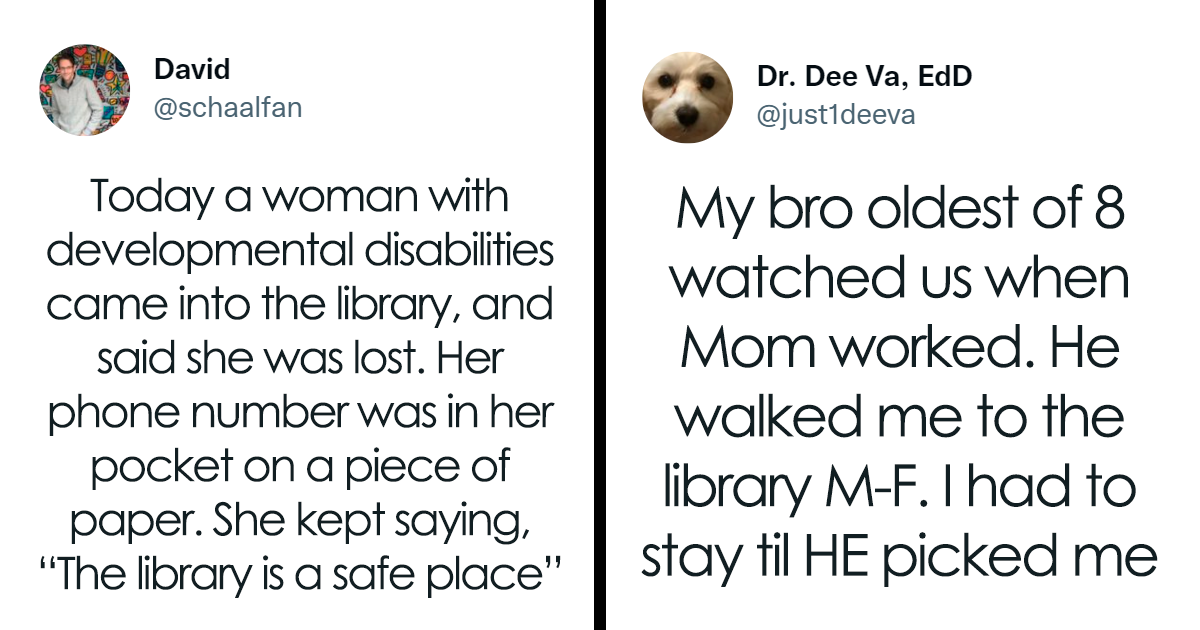
This is what makes the idea of the library as a safe haven feel so powerful. It is not a slogan. It is a pattern. Across the United States, libraries have evolved into trusted civic spaces where people can learn, regroup, connect, and breathe. And when people start sharing stories about that, the stories do not come out sounding stiff or institutional. They come out sounding warm, funny, messy, and gloriously human.
Why Libraries Feel Like Safe Havens in Real Life
The modern library does much more than circulate books, though books are still doing plenty of heroic work. Today’s library may offer homework help, digital literacy classes, tax forms, résumé workshops, after-school programming, citizenship resources, makerspaces, story hours, voter information, meeting rooms, and referrals to local services. In many communities, it is one of the last indoor public places where you can exist without being expected to buy a latte the size of a flower vase.
That matters. A lot. Safe havens are rarely flashy. They are usually built from small, repeatable acts of dignity: a chair, a table, a restroom, a power outlet, a patient staff member, clear signage, a children’s area that feels cheerful instead of chaotic, and enough quiet to let a person’s pulse slow down. Libraries are especially meaningful because they combine physical safety with informational safety. They do not just give people shelter from the weather or the noise. They give people tools to move forward.
And that is why “heartwarming library stories” hit so hard. They are not random acts of niceness floating in space. They happen because the library is designed, at its best, to be welcoming, practical, and steady. The stories feel sweet, sure, but they also reveal something larger: when a community keeps a library open and cared for, it creates a place where ordinary kindness can happen over and over again.
35 Heartwarming Stories People Share About Libraries as Safe Havens
The snapshots below are freshly written, composite, reality-based stories inspired by the kinds of experiences communities, patrons, and library workers across the United States regularly describe.
- The interview rescue. A man walks in wearing a borrowed tie and the expression of someone whose printer betrayed him at the worst possible time. A librarian helps him print his résumé, smooth the pages, and point him toward a quiet desk to prepare. He comes back a week later smiling. He got the job.
- The after-school landing pad. Two siblings spend every weekday afternoon in the teen area until their mom gets off work. They do homework, snack quietly, and argue about dragons at a volume only siblings can achieve. The staff knows their names. The kids know they are safe.
- The heat-wave refuge. During a punishing summer afternoon, older neighbors gather in the library because it is cool, calm, and free. Some read newspapers. Some doze. Some just sit. No one has to explain why they came.
- The winter coat moment. A little kid arrives for story time wearing a jacket that has clearly lost its battle with January. By the next week, the family has quietly been connected with a local coat drive. The child returns bundled up like a triumphant marshmallow.
- The first library card. A new immigrant signs up for a library card and treats the small rectangle of plastic like a gold medal. It is not just access to books. It is proof that this city has room for them too.
- The language bridge. A woman attends English conversation practice every Tuesday, speaking softly at first and then laughing loudly by month three. The library does not just teach vocabulary. It gives her a place to try, stumble, recover, and belong.
- The Wi-Fi parking lot miracle. A college student finishes an assignment in the library parking lot after hours because the building’s signal reaches outside. It is not glamorous, but neither is missing a deadline because the internet at home is out.
- The quiet table for grief. After a funeral, a widower starts coming to the same table every Thursday. He reads almost nothing. He mostly sits. Eventually, he joins a book club. Sometimes healing begins with a chair and no pressure.
- The teen who finally exhales. One high school student says the library is the only place where nobody calls them weird for loving poetry, astronomy, and giant headphones. That alone would make it special. Then a librarian recommends three books that feel like they were written just for them.
- The social worker connection. A patron who came in asking for “just a computer” ends up speaking with a library social worker or community resource specialist. By the time they leave, they have information on housing, food support, and next steps. That is a lot of hope for one afternoon.
- The job seeker circle. A résumé workshop becomes an accidental support group. Strangers swap interview tips, encouragement, and one very strong opinion about serif fonts. Two months later, one participant returns to mentor the next batch.
- The safe place after school. A teenager with nowhere pleasant to go between school and dinner spends hours reading manga, charging a phone, and being gloriously unbothered. In a world full of judgment, the library’s neutrality feels almost luxurious.
- The librarian who remembers. A child asks for “the book with the dog but also maybe a train and maybe some feelings.” Against all odds, the librarian knows exactly what book that means. Sometimes magic wears sensible shoes and a name badge.
- The storm recovery station. After severe weather knocks out power, neighbors show up to charge phones, use computers, and get reliable information. The library becomes part communications hub, part recovery room, part community check-in point.
- The story time friendship. Two parents meet at toddler story hour while their children attempt to eat crayons artistically. The kids become playmates. The adults become friends. Community building is often just organized chaos with picture books.
- The senior tech breakthrough. An older adult comes in determined to learn video calling so they can see their grandkids. There are many passwords, several misunderstandings, and one dramatic moment involving the mute button. By the end, there is a wave, a grin, and maybe a happy tear.
- The homework gap workaround. A middle schooler uses library computers every evening to finish assignments that require internet access. The staff helps with printing, formatting, and the occasional panicked “where did my document go?” The answer, thankfully, is usually “Downloads.”
- The citizenship study group. In one meeting room, a cluster of future citizens practices test questions and pronunciation. The tone is equal parts determined and nervous. When someone passes, the whole room celebrates like a sports team that discovered civics.
- The place to be warm and seen. An unhoused patron spends the afternoon reading, resting, and speaking with staff who treat them like a person instead of a problem. Dignity is not a small thing. It can change the whole day.
- The maker who found a path. A teen tries a 3D printer or creative lab for the first time and suddenly sees a future in design or engineering. It turns out inspiration sometimes begins with a plastic prototype that looks a little crooked and absolutely perfect.
- The family that needed normal. During a rough season at home, a parent brings the kids to the library simply because it feels calm. They leave with books, puzzles, and the rarest thing on earth: an afternoon that did not spiral.
- The accidental mentor. A volunteer tutor helps a struggling reader sound out words week after week. Then one day the child reads a whole page without stopping. Nobody wins a trophy, but it feels like one should be delivered immediately.
- The newcomer orientation. Someone new to town uses the library to learn bus routes, local events, school information, and where to get help. The building becomes a map, not just of streets, but of how to enter a community without feeling lost.
- The quiet room before the exam. A nursing student camps out in a study room surrounded by flashcards, snacks, and the haunted look of someone who has seen too many practice questions. The library gives structure to the stress. Later, they return with a pass.
- The child who discovered books were for them. A kid who never liked reading finds a graphic novel series that unlocks the whole universe. Suddenly, the library is not a place adults drag them to. It is a place they ask to visit.
- The community fridge effect. A library bulletin board loaded with flyers about food pantries, clinics, mutual aid, and local events becomes a low-tech survival network. Sometimes the safest spaces are the ones that connect you to ten other forms of help.
- The free meeting room miracle. A neighborhood support group that could never afford a venue gathers weekly in a library room. They plan, vent, organize, encourage, and occasionally consume too many cookies. Democracy has definitely happened in less comfortable places.
- The librarian who notices. A teen looks upset, quieter than usual. Staff do not pry, but they check in, offer resources, and make sure the young person knows the library is still a safe stop for the day. Not every rescue is dramatic. Some are gentle.
- The bookmobile visit. In a rural area or underserved neighborhood, the library arrives on wheels, carrying books, internet access, and a reminder that public service does not only belong to zip codes with brick buildings.
- The reentry fresh start. Someone rebuilding life after incarceration comes in for job-search help, online forms, and basic computer support. Nobody expects perfection. The library offers what people actually need first: a beginning.
- The summer lunch crowd. For some kids, summer reading programs are not just about reading. They are about routine, friendly adults, free activities, and one stable place in the middle of a long break that can otherwise feel uncertain.
- The family history afternoon. A grandparent uses local archives to show a teenager where the family came from, and both of them leave a little taller. Libraries do not only protect the present. They hold memory open for the future.
- The person who just needed peace. Not every story ends with a job offer, a certificate, or a giant life change. Sometimes somebody simply needed one calm hour indoors with a book, a charger, and no one bothering them. That still counts.
- The civic trust moment. During election season or a community debate, people come to the library looking for neutral information rather than noise. In an age of online shouting, the library’s quiet reliability feels downright revolutionary.
- The return visit. Years later, a former patron walks back in with their own child and says, “This place helped me more than you know.” Libraries hear versions of that all the time. The best safe havens do not just comfort people. They echo across generations.
What These Stories Really Tell Us
At first glance, these stories may seem unrelated. One is about a phone charger. Another is about homework. Another is about a social worker, a storm, a story hour, or a study room. But put them together and a clear pattern emerges: libraries succeed as safe havens because they combine access with humanity.
That combination is rarer than it should be. Plenty of places offer services without warmth. Plenty of places offer warmth without practical help. Libraries, at their best, do both. They provide the tangible tools people need to function in modern life, from internet access to forms to literacy support. And they do it in an environment that says, “You are allowed to be here.” That sentence, spoken or unspoken, changes everything.
It also explains why library workers are remembered so vividly. People often forget the name of the website that helped them. They do not forget the librarian who took them seriously. A safe haven is rarely just a building. It is a culture built by staff, volunteers, neighbors, and public investment. It is the decision to keep the doors open, the restrooms clean, the policies fair, and the welcome real.
Longer Reflections on the Experience of Libraries as Safe Havens
Spend enough time listening to people talk about libraries, and you notice that their stories often begin in stress and end in relief. That emotional arc matters. Libraries are one of the few places left where a person can arrive carrying a problem and leave carrying a plan. The problem may be practical, like no printer, no internet, no quiet place to study, or no clue how to apply for a job online. It may be emotional, like loneliness, anxiety, uncertainty, or the general exhaustion of being human in a very noisy century. Either way, the library offers something increasingly precious: breathable space.
For children, that experience can shape their whole understanding of public life. A child who feels welcomed at the library learns that institutions do not have to feel cold. A teen who finds a safe corner after school learns that community can be protective without being intrusive. A parent who can bring their kids to a free program learns that enrichment does not have to come with a price tag. These experiences look small from the outside, but inside a family’s life they can feel enormous.
Adults feel that impact too, just with more coffee and slightly worse knees. For job seekers, libraries can reduce the humiliation that often accompanies financial hardship. For older adults, they can soften isolation. For newcomers, they can decode an unfamiliar city. For people living through instability, they can provide routine. Routine may not sound glamorous, but routine is one of the secret building blocks of resilience. Knowing that a place will be there tomorrow, with the same tables, the same helpful desk, the same reliable calm, can be deeply stabilizing.
There is also something wonderfully democratic about the library experience. Everyone enters with a different need, but nobody has to audition for humanity first. The toddler heading to story time, the student hunting a power outlet, the retiree reading local history, the unhoused patron warming up, the entrepreneur using market research tools, and the parent trying to survive a rainy afternoon all share the same public space. That kind of quiet coexistence is not just heartwarming. It is civic training.
Maybe that is why so many library stories sound almost sacred without being dramatic. Nobody claims the library solved every problem. What people say, again and again, is something subtler and perhaps more believable: the library helped. It helped them get through the day. It helped them find information. It helped them feel less alone. It helped their child love reading. It helped them make a call, fill out a form, cool off, warm up, calm down, or start over. Public life needs more places that help in those exact ways.
And that is the real heart of these stories. Libraries are not safe havens because they are perfect. They are safe havens because they are present. They stand there, day after day, offering access, patience, and possibility. In a culture that often rushes past whoever is struggling, the library still says: come in, sit down, take your time, and let’s figure this out.
Conclusion
When people describe libraries as safe havens, they are not being sentimental for sport. They are describing a public good that continues to prove its worth in quiet, life-shaping ways. Libraries give people more than books, though the books are lovely and should never be underestimated. They offer trust, breathing room, useful help, and a rare kind of welcome that does not depend on income, status, or perfect timing.
That is why heartwarming library stories keep multiplying. They are really stories about what happens when a community protects one place where people can still learn, gather, recover, and be treated with dignity. And honestly, in a world that keeps trying to monetize every square inch of existence, that is not just heartwarming. It is heroic.