Some buildings get renovated. Others put on a new sign, change the paint, and apparently hope everyone in town develops architectural amnesia overnight.
That is the wonderfully awkward idea behind a viral collection of repurposed buildings shared by an online community devoted to structures that have changed jobs without changing their entire look. A former fast-food restaurant becomes a law office. A church becomes a gym. A Blockbuster becomes something completely unrelated to VHS tapes, yet somehow still looks ready to charge you a late fee.
The funniest examples are not necessarily bad renovations. In fact, many represent a perfectly sensible form of adaptive reuse: keeping an existing structure and giving it a new function rather than demolishing it. The comedy comes from the fact that architecture has a long memory. You can remove a logo, but a distinctive roofline may continue yelling the name of the previous tenant for decades.
When a Building Changes Careers but Keeps Its Old Uniform
The online collection celebrates a simple visual game: look at a building’s current business and guess what it used to be. Often, the challenge lasts approximately half a second.
One of the most memorable examples features a former KFC transformed into a Mexican restaurant. The building’s familiar visual language remained so recognizable that even Colonel Sanders reportedly received a playful makeover. Another example shows a former Blockbuster turned into a bookstore, creating the architectural equivalent of changing from renting movies to selling novels without leaving the 1990s.
Then there are conversions that produce delightful cultural whiplash. The collection includes churches reportedly repurposed as a nightclub, a grocery store, a gym, a tattoo parlor and even a discount store. The architecture may still suggest quiet reflection, stained glass and Sunday morning, while the new sign announces dumbbells, groceries or half-price household supplies.
Nothing is inherently wrong with these transformations. Quite the opposite: a useful building remaining useful is generally better than a vacant structure slowly deteriorating. Still, when a gym occupies an unmistakable former church, it is difficult not to imagine someone completing a set of squats beneath a ceiling that seems designed for an organ recital.
Why Former Fast-Food Restaurants Are So Easy to Recognize
Many older chain restaurants were designed as enormous three-dimensional advertisements. Their buildings did not merely contain the brand; they were the brand.
The Pizza Hut Roof That Refuses to Retire
Few examples are more famous than the classic former Pizza Hut building. Vintage locations were known for their low, highly distinctive roofs, broad overhangs and geometric forms. Even after the red or brown roof was repainted and the pizza ovens disappeared, the basic silhouette often remained unmistakable.
That is why a former Pizza Hut can become a restaurant, a church, a shop, an office or nearly anything else and still make passing drivers think, “I know what you were.” The phenomenon has become so recognizable that entire online communities and photography projects have documented the afterlives of these buildings.
The collection includes examples such as a Five Guys operating in a former Pizza Hut and another restaurant inhabiting a building whose roof still gives away its pizza-serving past. The new businesses may be completely legitimate transformations, but visually, the old identity lingers like the smell of pan pizza in a carpeted dining room.
Taco Bells, KFCs and Other Architectural Fingerprints
Other restaurant chains also created highly recognizable building types. Older Taco Bell locations frequently used arches, tile roofs and design elements influenced by Southwestern and Spanish Colonial imagery. Traditional KFC restaurants often relied on distinctive roof details, striped treatments and instantly recognizable brand features.
When another business moves in, replacing the sign may not be enough. A tax office can occupy the space, but the building may still look emotionally prepared to hand you a burrito.
This is one reason these funny building transformations work so well online. Recognition happens before conscious analysis. People see a silhouette, window arrangement or roof shape and immediately retrieve a memory connected with the original brand.
The 40 Buildings Are Funny, but They Also Tell a Bigger Story
At first glance, a gallery of buildings failing to disguise their previous purpose is simply excellent internet entertainment. Look deeper, however, and the photos become a record of changing American commercial life.
Retail chains expand and contract. Video stores disappear. Pharmacies relocate. Restaurants adopt new formats. Shopping habits change. Congregations move. Businesses close. Real estate, however, remains stubbornly physical.
A building cannot disappear as quickly as a brand can.
That creates a strange architectural timeline. A former Blockbuster may become an orthodontist’s office, yet its proportions still recall Friday-night movie rentals. A former Rite Aid can become a gym while retaining the unmistakable scale of a chain pharmacy. A Dollar Tree operating in an old CVS may inherit entrances, façades and spatial arrangements designed for an entirely different retailer.
One example in the collection even suggests that a Goodwill may occupy a former Circuit City. The merchandise has changed, but the big-box shell continues to whisper about an earlier era of giant electronics stores.
Signs Can Be Even More Stubborn Than Buildings
Sometimes the architecture is not the biggest giveaway. Sometimes it is the sign.
Commercial signs are expensive. Removing a large structure, repairing a façade and installing an entirely new system can cost serious money. New occupants therefore sometimes reuse existing sign boxes, supports, lettering arrangements or other visual elements.
The result can be wonderfully obvious. A new name may occupy the exact space where an old chain logo once sat. Colors may change while proportions remain identical. Certain letters may even appear suspiciously familiar.
This produces a special category of funny architecture: the building equivalent of putting a fake mustache on a celebrity and insisting nobody can tell who it is.
Of course, practical considerations matter. A small local business moving into a former chain restaurant may not have the budget to erase every trace of the previous tenant. Reusing what already exists can be financially sensible. The internet, meanwhile, gets a photograph that says, “Nice try, former fast-food restaurant.” Everyone wins.
Why Adaptive Reuse Makes Practical Sense
Behind the jokes is a serious architectural concept. Adaptive reuse involves giving an existing building a new purpose instead of automatically tearing it down and constructing something new.
At its most ambitious, adaptive reuse can transform factories into housing, industrial buildings into art spaces and historic structures into offices, hotels or community facilities. At its most everyday, it can mean turning a former pizza restaurant into a completely different local business.
Reusing buildings can preserve existing materials, infrastructure and neighborhood character. It can also avoid some of the waste associated with demolition and new construction. Architects and preservation advocates increasingly view existing buildings as resources rather than disposable containers whose value expires with the original tenant.
Not every conversion is elegant, of course. A structure designed for one purpose may have awkward dimensions for another. A drive-through window may become useless. A former retail store may have too few windows for a comfortable office. A church sanctuary may require major alterations before it can function as housing.
Still, imperfect reuse can be more interesting than another empty lot.
The Best Conversions Do Not Always Need to Hide the Past
The funniest buildings in the online group often seem caught between two identities. The new owner wants a fresh business, while the structure remains visually loyal to its previous employer.
But perhaps completely hiding the old purpose is not always necessary.
Successful adaptive reuse often works because designers accept the building’s history rather than fighting it. A former factory can keep exposed industrial details. A converted church can retain dramatic windows and vaulted spaces. A restaurant in an old bank may turn a vault into a feature rather than pretending it never existed.
Likewise, a local business occupying an old Pizza Hut could theoretically embrace the famous roof. The building already has recognition, nostalgia and a story. Those qualities can be valuable, especially in a commercial landscape increasingly filled with standardized rectangular boxes.
The past does not have to be an embarrassing stain that requires three coats of beige paint.
Why People Love Playing Architectural Detective
There is a satisfying little burst of recognition in identifying a building’s former purpose. It is the same pleasure people get from noticing an old logo beneath faded paint or recognizing the outline of a long-closed store on a familiar street.
The experience mixes nostalgia, observation and humor.
Someone who grew up visiting old-style Pizza Hut restaurants may recognize the roof instantly. Someone who remembers Blockbuster can spot the familiar storefront proportions beneath a new sign. Longtime residents may remember every previous tenant of a corner building, creating an unofficial history that no property record could capture quite as vividly.
Online communities turn that local knowledge into a collective game. One person uploads a suspiciously familiar dentist’s office. Someone else identifies its previous chain within minutes. Another commenter remembers visiting the original business twenty years earlier. Suddenly, a random commercial building has a biography.
Some of the Funniest Transformations in the Collection
The collection’s charm comes from variety. Representative examples include:
- A former KFC reportedly transformed into a Mexican restaurant.
- A Blockbuster building reused as a bookstore.
- A church converted into a nightclub.
- Another church repurposed as a grocery store.
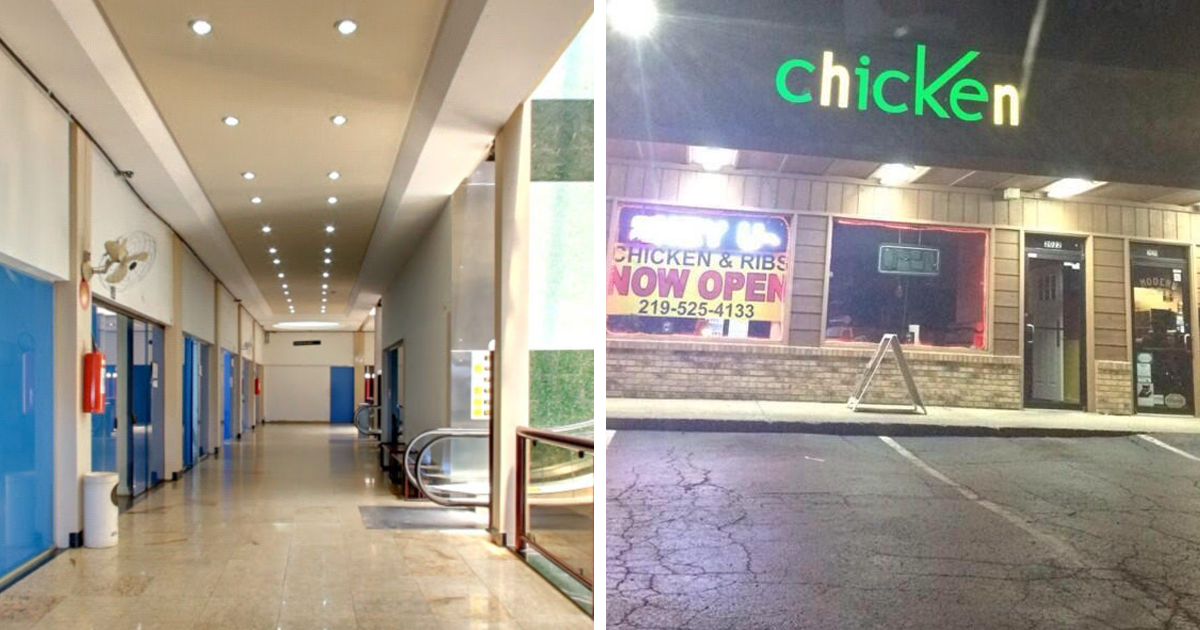
- A former Cricket Wireless location becoming a chicken restaurant.
- A church transformed into a gym.
- A former church operating as a tattoo parlor.
- An orthodontist’s office occupying a former Blockbuster.
- A discount store located in a former church.
- A gym occupying a former Rite Aid.
- A Dollar Tree moving into an old CVS.
- A Five Guys using a recognizable former Pizza Hut building.
Individually, each transformation is amusing. Together, the 40 buildings reveal something more interesting: commercial architecture is often far more permanent than the businesses it was designed to advertise.
The Internet Has Found an Unexpected Form of Preservation
Nobody needs to declare every former fast-food restaurant a historic landmark. Civilization will probably survive if a 1980s drive-through disappears.
Yet documenting these buildings still has cultural value. Ordinary architecture is part of everyday memory. The places where people rented movies, celebrated birthdays, bought electronics or ate after school can matter deeply even when professional architectural history barely notices them.
Photography projects and online communities preserve that history in an informal way. They capture buildings during the strange middle chapter after one identity has disappeared and another has arrived.
A former Pizza Hut serving a completely different cuisine may not be a masterpiece of architectural preservation. But it tells a story about changing neighborhoods, changing businesses and the persistence of recognizable design.
Experience Guide: How to Start Spotting Buildings That Cannot Hide Their Past
Once you become interested in these transformations, an ordinary drive through town can become an architectural scavenger hunt. The experience begins with a dangerous side effect: you may never look at a suspiciously shaped insurance office normally again.
Start with the roofline. Roofs are expensive and structurally important, so new tenants are less likely to replace them purely for cosmetic reasons. A distinctive pitched roof, an unusual hump or an exaggerated overhang can survive several generations of businesses. Classic Pizza Hut buildings are the obvious training exercise, but many chains developed recognizable forms.
Next, examine the windows. Former restaurants often have window patterns designed around booths and dining rooms, while banks may have fewer openings and prominent drive-through areas. Old pharmacies and video stores tend to occupy broad rectangular retail spaces with entrances positioned according to standardized layouts.
Drive-through lanes are especially revealing. A coffee shop using an old fast-food restaurant may make perfect sense, but an office or medical business inheriting a drive-through creates an architectural mystery. Look for covered lanes, suspicious pavement patterns and windows that no longer seem to serve a purpose.
Signs are another giveaway. Even after a logo disappears, the shape of the sign cabinet may remain. You might see a new local brand squeezed into a frame clearly created for a national chain. Sometimes the result looks perfectly professional. Sometimes the new sign has the visual energy of someone changing the name on a school notebook with correction fluid.
The most enjoyable part of the experience is comparing your guess with local memory. Ask longtime residents what used to occupy the building. Old photographs, property listings and historical street imagery can reveal a surprisingly long sequence of former businesses.
A single location might have started as a restaurant, become a bank, turned into a medical office and finally emerged as a furniture store, all while retaining one weird architectural feature from its first life.
There is also a useful lesson in resisting the urge to mock every conversion. Some of the funniest-looking transformations are examples of small businesses making practical use of available real estate. Completely redesigning a commercial structure can be expensive. Keeping an unusual roof or old masonry may allow a new owner to open sooner and invest money in the actual business.
That tension makes these buildings so fascinating. They are simultaneously funny, practical and historically revealing.
Try taking a different route through a familiar neighborhood and looking only at building shapes instead of signs. You may notice a daycare that looks suspiciously like a bank, a veterinary clinic with the bones of an old restaurant or a local shop occupying what was clearly once a national chain.
After a while, the city begins to look layered rather than static. Every building becomes a possible before-and-after photograph. The current business is merely the latest chapter.
And when you finally recognize a former Pizza Hut hiding beneath fresh paint and an entirely unrelated sign, you will understand why online communities find these places so entertaining. The new business may fool a first-time visitor. It will not fool the roof.
Conclusion
The 40 buildings shared online are funny because their transformations are incomplete in the most charming possible way. A business may change its name, purpose, products and customers, yet the architecture continues carrying evidence of an earlier life.
From unmistakable former Pizza Huts to churches, Blockbusters, pharmacies and fast-food restaurants taking on wildly different new roles, these repurposed buildings demonstrate how difficult it can be to erase a strong architectural identity. They also reveal the practical value of adaptive reuse: buildings do not have to become obsolete simply because their original occupants leave.
Sometimes a building gets a perfect renovation. Sometimes it receives a new sign and a heroic amount of paint. Either way, the internet will probably figure out what it used to be.
Note: This article is an original synthesis based on documented examples of recognizable repurposed commercial buildings, adaptive reuse research, architecture reporting and online community discussions. Individual user-submitted building histories may reflect the descriptions provided by their original posters.