Sometimes the internet grabs a truly important issue. Sometimes it grabs a raccoon stealing cat food. And sometimes it grabs a haircut consultation and turns it into a full-blown cultural debate.
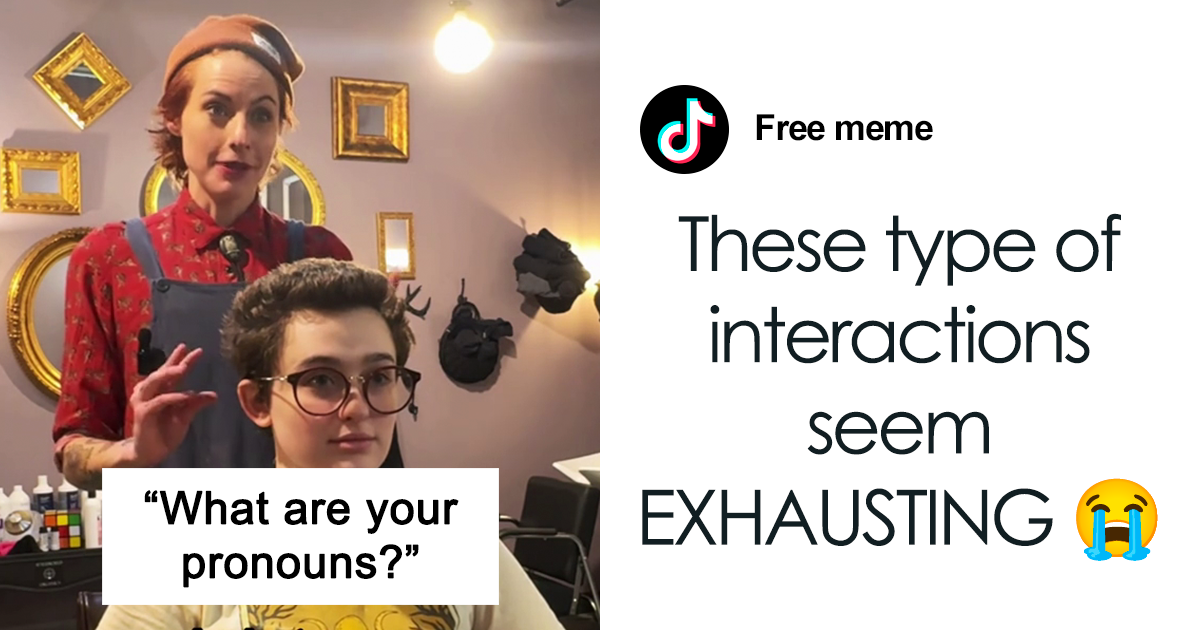
That is exactly what happened when a viral clip featuring a hairdresser and a client made viewers split into two camps almost instantly. One side saw a thoughtful, modern, respectful salon interaction. The other side reacted like their social battery had hit 1% before the cape was even fastened. The now-famous exchange showed a stylist asking for consent before touching the client’s hair and checking pronouns at the start of the appointment. On paper, it sounded polite. Online, it became gasoline poured directly onto the world’s most exhausted comment section.
The reason this moment hit such a nerve is simple: it was never really just about hair. It was about service, boundaries, identity, comfort, expectations, and the increasingly complicated art of talking to strangers while pretending not to stare at yourself in a giant mirror under salon lighting that reveals every life decision you have ever made.
So why did this conversation go viral? Why did some people call it kind, while others called it exhausting? And what does it reveal about how clients and stylists actually want to communicate? Let’s comb through the drama without tangling the truth.
The Viral Salon Moment That Made People Pick Sides
The clip at the center of the discussion came from a stylist associated with JPalm Hairdressing in Omaha, Nebraska. The consultation began with what many viewers considered an unusually deliberate opening: the stylist asked whether it was okay to touch the client’s hair, then exchanged pronouns before continuing with the haircut discussion.
That might sound small, but internet reactions were anything but. Some viewers praised the approach as respectful, inclusive, and emotionally intelligent. Others acted like the opening questions alone had aged them seven years.
The phrase “exhausting conversation” caught on because that is exactly how critics framed it. To them, a salon chair is not the place for extra social navigation. They book a haircut expecting scissors, maybe a little small talk, and hopefully no emotional obstacle course. To those viewers, asking permission to touch hair in a hair salon felt redundant, and discussing pronouns upfront felt like one more social task in a world already overloaded with scripts, signals, and unspoken rules.
But supporters saw the same clip very differently. They argued that hair is personal, identity is personal, and a haircut can be surprisingly vulnerable. A question that feels unnecessary to one person can feel reassuring to another. In that reading, the viral consultation was not a performance. It was a trust-building exercise.
And that is why the clip spread so far: it transformed an ordinary salon interaction into a perfect internet Rorschach test. People did not just watch the video. They saw their values reflected in it.
Why Viewers Found It “Exhausting”
Let’s be fair to the critics for a second. Their reaction did not always come from cruelty. A lot of it came from fatigue.
Modern customer service has become hyper-personalized, hyper-performed, and sometimes hyper-verbal. Customers are regularly asked to confirm preferences, respond to scripts, navigate branding language, and participate in cheerful micro-conversations when all they wanted was a sandwich, a package delivery, or a trim.
So when viewers watched a haircut begin with extra questions, some of them did not hear thoughtfulness. They heard one more social task added to an already crowded mental to-do list. For introverts, people who dread small talk, or anyone hanging on by a single iced coffee, the salon can already feel like a live interview with bangs at stake.
There is also the expectation problem. Many clients assume the salon contract is obvious: if you book a haircut, touching your hair is part of the deal. To them, asking for permission to touch what you literally came in to get touched sounded like asking whether a dentist may inspect your teeth or whether a swimming coach may acknowledge water.
Then there is the quiet luxury of silence. Some people do not go to the salon for conversation. They go for a reset. They want to sit down, hear the snip-snip soundtrack of progress, and briefly transcend adulthood. Anything that interrupts that fantasy can feel like unnecessary turbulence.
Why Others Found It Refreshing
Now for the other side, which had a strong point too.
Hair appointments are intimate. A stylist is standing close, touching your head, discussing your appearance, and making changes you will carry around publicly afterward. That is not the same as buying socks. For many people, especially those with sensory sensitivities, past bad salon experiences, body-image concerns, or identity-related anxiety, a calm and explicit consultation can lower the emotional temperature right away.
That is what made the viral moment resonate with supporters. The stylist’s questions communicated, “You are not just a head with split ends. You are a person, and I want to make sure this experience feels right for you.”
For queer clients, nonbinary clients, and clients who have felt misunderstood in beauty spaces, a thoughtful consultation can mean the difference between leaving seen and leaving defeated. And even outside identity conversations, many clients simply appreciate clarity. They want a stylist who checks in, listens carefully, and does not charge ahead on autopilot.
In other words, the very thing some viewers called exhausting, others recognized as care.
The Real Issue Was Not Pronouns or Permission. It Was Salon Expectations.
The viral debate became loud because it appeared to be about politeness, pronouns, or modern etiquette. But underneath all that noise was something older and more universal: people want different things from service experiences, and they rarely say those things out loud.
Some clients want a stylist who chats like a cousin at Thanksgiving. Others want a stylist who communicates clearly for five minutes, then enters monk mode. Some want reassurance and step-by-step explanation. Others want efficiency, confidence, and blissful silence.
The trouble starts when those preferences stay unspoken.
That is why salon consultations matter so much. A strong consultation is not filler. It is the quality-control system for the entire appointment. It helps define what the client wants, what they do not want, how much effort they are willing to put into styling later, and whether they are looking for transformation, maintenance, or simply damage control after a long romance with dry shampoo.
Professional salon advice consistently points in the same direction: clear communication prevents disappointment. Vague requests lead to vague results. Saying “just a trim” can mean half an inch to one person and a spiritual rebirth to another. Saying “give me layers” without explaining what you hate can send everyone straight into regret territory.
What This Viral Conversation Reveals About Modern Hair Appointments
1. Clients want personalization, but not always performance.
People love customized service until it starts to feel like theater. The ideal appointment for many clients is one that feels personal without feeling forced.
2. Stylists are expected to be mind readers.
They are not. A good stylist can guide, interpret, and troubleshoot, but they still need usable information. Photos help. Specific language helps. Saying what you hate helps even more.
3. Silence is becoming a legitimate preference.
There is a growing understanding that not every salon visit needs to double as a podcast interview. Some salons now recognize the appeal of quiet appointments, private rooms, or more low-interaction experiences. For many clients, that sounds less rude than restful.
4. Inclusion and clarity are no longer niche expectations.
Whether the client is queer, anxious, overwhelmed, or simply tired, many people want salons to feel less presumptive and more collaborative. That does not mean every appointment needs a TED Talk. It means the best ones make room for comfort.
How Clients Can Avoid Their Own “Exhausting” Appointment
If the viral hairdresser-client conversation teaches anything, it is this: the easiest way to reduce salon awkwardness is to say what you need early.
Want quiet? Say, “I’m wiped out today, so I may just relax if that’s okay.” That is not rude. That is communication.
Want lots of explanation? Ask for it. Say you want to understand what is being cut, why, and how to style it later.
Do not want your hair taken too short? Show with your fingers exactly where. Better yet, bring photos of what you like and what you absolutely do not like. The “do not like” folder might be the true MVP.
If something feels off midway through the appointment, speak up kindly before the blow-dry finale turns your concern into a full mystery novel. Most professionals would rather adjust in real time than hear about it later through clenched teeth and a passive-aggressive review.
How Stylists Can Learn From the Backlash Too
The internet can be dramatic, but backlash can still contain useful information. Not every client wants the same emotional temperature. Some want warmth. Some want efficiency. Some want both, but in a very specific ratio only they understand.
The smartest lesson for stylists is not “stop asking questions.” It is “make questions serve the client, not the script.” A consultation should create clarity, not clutter. If a stylist wants to ask about consent, pronouns, styling routine, or comfort level, the best version of that exchange is brief, natural, and confident.
Clients tend to relax when they feel the stylist is tuned in rather than reading from a laminated customer-service spellbook.
There is also a business reality here. Salon loyalty is built on trust. Clients come back when they feel heard, when the result matches the request, and when the overall experience fits their personality. A client who loves conversation is not the same as a client who wants near-silence and an emotionally low-maintenance bob.
So, Was the Viral Conversation Actually Too Much?
Honestly? It depends on who is in the chair.
That is the unsatisfying, grown-up answer the internet hates, but it is the right one. The conversation was not universally exhausting, and it was not universally ideal either. It was highly specific, highly visible, and oddly effective at exposing just how differently people define respect.
For some viewers, the clip looked like a thoughtful blueprint for a more inclusive beauty industry. For others, it looked like one more reminder that even a haircut now comes with dialogue options.
Both reactions tell us something useful. People want to feel comfortable. They just do not all reach comfort the same way.
And maybe that is the real lesson hiding beneath the snark, the stitched reaction videos, and the comments from people who would apparently rather enlist in the Navy than answer two opening questions at a salon.
The best salon experience is not the loudest, trendiest, or most online. It is the one where the client leaves feeling understood, the stylist leaves feeling respected, and nobody has to recover from a five-minute consultation like it was a hostage negotiation.
More Experiences That Make This Viral Hairdresser Story So Relatable
What made the “exhausting” conversation travel so far was not just the clip itself. It was the flood of memories it unlocked for anyone who has ever sat in a salon chair and thought, “Please let this go well.” Hair appointments are weirdly emotional. They are routine, but they are never casual. You are paying for expertise, handing over trust, and hoping the person holding sharp tools understands both your hair and your very fragile relationship with it.
One common experience is the over-chatty appointment. The stylist is friendly, the client is polite, and suddenly the haircut has become a full social marathon. The client nods, smiles, contributes little facts about their week, and silently wonders whether pretending to fall asleep is legally acceptable. This is why so many people reacted strongly to the viral clip. It reminded them of how thin the line can be between personalized service and accidental emotional overtime.
Another familiar experience is the opposite: the stylist who asks almost nothing. That can be peaceful, right up until you realize peaceful and accurate are not always the same thing. A quiet appointment is lovely when the consultation is solid. It is less lovely when “just clean it up” somehow turns into “surprise, your hair now has a new citizenship.” Silence is relaxing only when expectations were clear first.
Then there is the classic “trim” disaster. Clients say trim. Stylists hear reshape. Clients say layers. Stylists imagine movement. Clients imagine soft face-framing. Everyone is technically using the same language, and nobody is picturing the same haircut. This mismatch is exactly why good consultations matter. The viral moment may have seemed overly careful to some viewers, but anyone who has cried in a parking lot after a bad haircut knows that extra clarity can be a bargain.
There are also clients who carry salon baggage into every new appointment. Maybe they were ignored before. Maybe they were talked out of what they wanted. Maybe they were given a version of a cut that fit the stylist’s taste more than their own. Those clients tend to value precision and respect immediately. A stylist who asks thoughtful questions can feel like a relief, not a burden.
And for people with sensory sensitivities, identity concerns, or just a deep dislike of being handled without warning, tiny moments of consent can feel huge. What looks unnecessary from the outside can feel grounding from the inside. That does not make every client want the same script. It just proves that “normal” is not as universal as people think it is.
In the end, the viral hairdresser-client exchange resonated because it captured the central truth of every salon appointment: people are not just getting hair services. They are negotiating comfort, trust, image, and communication in real time. No wonder the comments were intense. It was never only about hair.
Conclusion
The viral conversation between the hairdresser and client became internet fuel because it turned a haircut into a referendum on modern communication. Some people saw empathy. Others saw unnecessary effort. But the strongest takeaway is not that one side was right and the other was wrong. It is that salon experiences work best when expectations are clear, respect is mutual, and communication feels human instead of mechanical.
In a beauty culture shaped by TikTok, identity, customer service trends, and increasing demand for personalization, the salon chair has become more than a place to get a cut. It is now a mini stage where comfort, clarity, and self-expression all compete for mirror space. That may sound dramatic, but then again, so is fringe regret.
If the internet stays boggled by this “exhausting” conversation, that is fine. At least it reminded clients and stylists of one thing worth keeping: ask better, say more, assume less, and for the love of all things blow-dried, define what you mean by “just a little off the ends.”