Movies have given the world a very specific version of America: gigantic apartments, breakfast tables loaded like hotel buffets, dramatic police visits, empty downtown parking spots, and teenagers who look like they have already refinanced a mortgage. It is entertaining, sure. Accurate? About as accurate as a GPS that tells you to drive through a lake.
The funny thing is that many movie myths about America are not completely invented. Yellow school buses really exist. People really do drive enormous distances. Some homes do have front porches, some diners do serve bottomless coffee, and yes, someone somewhere has absolutely said “y’all” while holding a suspiciously large soda. But Hollywood often takes a real detail, inflates it with a bicycle pump, adds dramatic lighting, and presents it as everyday American life.
That is why conversations about what movies get wrong about America are so satisfying. They reveal the gap between cinematic America and actual America: the country of rent, traffic, regional accents, grocery budgets, confusing insurance paperwork, small talk, awkward phone goodbyes, and people who do not, in fact, keep spare car keys in the sun visor.
Why Movie America Feels So Convincing
Hollywood is excellent at visual shorthand. A huge New York apartment tells us a character is “struggling but charming,” even if the rent would require three jobs, a rich aunt, and possibly a treasure map. A packed high school cafeteria tells us exactly who is popular, who is nerdy, and who is about to receive mashed potatoes to the face. A family breakfast with pancakes, eggs, bacon, fruit, orange juice, and toast says “warm household,” even if real families are usually eating cereal over the sink while someone yells, “Where are my keys?”
Movies also have limited time. Real life includes waiting, repeating yourself, mishearing people, searching for parking, checking if a restaurant is open, and sitting in traffic behind a truck carrying landscaping equipment. That is not always thrilling cinema. So scripts compress, exaggerate, and decorate reality until America becomes a place where every city has convenient parking, every bar conversation is perfectly audible, and every apartment has enough space for emotional pacing.
35 Spot-On Observations About What Movies Get Wrong About America
- Everyone is not rich. Movies often show average Americans living in homes and apartments that would make a real estate agent faint with joy. Many Americans budget carefully, rent smaller places, share housing, or live far from expensive city centers.
- Those massive apartments are suspicious. A character with a casual job somehow has exposed brick, skyline views, two bedrooms, and a kitchen island big enough to land a helicopter. Real renters would like a word.
- Breakfast is not usually a banquet. The movie mom makes waffles, eggs, bacon, toast, juice, and fruit. Then the kid takes one bite and runs out. In real life, that level of food waste would cause a family meeting.
- People say goodbye on the phone. Movie characters hang up after one dramatic sentence. Real Americans usually perform the full goodbye ritual: “Okay, sounds good. Alright. Bye. Yep. Bye.”
- Parking is not magically available. In movie cities, the hero pulls up directly in front of the building. In real cities, they would circle for 18 minutes, question their life choices, and pay too much for a garage.
- Bars are louder than scripts admit. Movie characters discuss secrets in loud clubs with perfect clarity. Real people mostly lean in and shout, “WHAT?” until everyone gives up.
- No one orders simply “a beer.” A bartender would ask what kind. Lager? IPA? Draft? Bottle? Local? Imported? The phrase “a beer” works better in screenplays than in actual bars.
- Teenagers do not all look 28. Hollywood high school students often look like they have retirement accounts. Real teens usually look younger, more awkward, and less professionally lit.
- High school cliques are not always cartoon kingdoms. Social groups exist, but most schools are more complicated than “jocks here, nerds there, cheerleaders ruling the lunchroom like a glittery monarchy.”
- School does involve actual schoolwork. Movie students have endless time for hallway drama, parties, and emotional speeches. Real students have homework, tests, group projects, and alarm clocks that feel personally hostile.
- Yellow school buses are real, but not universal for everyone. Many students ride buses, but others walk, drive, carpool, bike, use public transit, or get dropped off by family.
- Americans do not casually travel across the country in an afternoon. The United States is huge. Driving from one state to another can take minutes in some places and most of your youth in others.
- Road trips require planning. Movies make cross-country drives look spontaneous and breezy. Real road trips include gas stops, weather, hotel prices, snack negotiations, and someone refusing to admit they need a bathroom.
- Not every American owns a swimming pool. Movies love backyard pools. Many Americans grew up with no pool, no hot tub, and a yard mostly dedicated to grass, weeds, or a suspicious shed.
- Suburbs are not all identical. Some are wealthy and manicured; others are modest, diverse, aging, or spread out. “The suburbs” is not one single beige kingdom.
- Rural America is not just barns and banjos. Rural communities can be agricultural, industrial, tourist-driven, remote, wealthy, struggling, artistic, conservative, progressive, or all of the above.
- New York is not the entire country. America is not only Manhattan apartments, Los Angeles mansions, and small towns with one sheriff. There are thousands of places in between.
- Everyone does not carry a gun. Gun ownership is a major American issue, but movies often turn it into a universal prop. In reality, experiences vary widely by region, household, culture, and personal belief.
- Crime is not happening every five minutes outside the window. Crime exists and matters, but most daily life is ordinary: work, errands, laundry, bills, traffic, family, and wondering what to cook for dinner.
- Police visits would attract attention. In TV shows, detectives question someone at work and everyone keeps typing. In real life, half the office would notice, whisper, and invent three wrong theories.
- Car crashes do not usually explode like fireworks. Movie cars burst into flames after minor bumps. Real crashes are dangerous, but explosions are not the automatic default.
- Air ducts are not secret highways. Movie heroes crawl through vents like raccoons with missions. Most real ductwork is cramped, noisy, fragile, dusty, and not built for action-movie cardio.
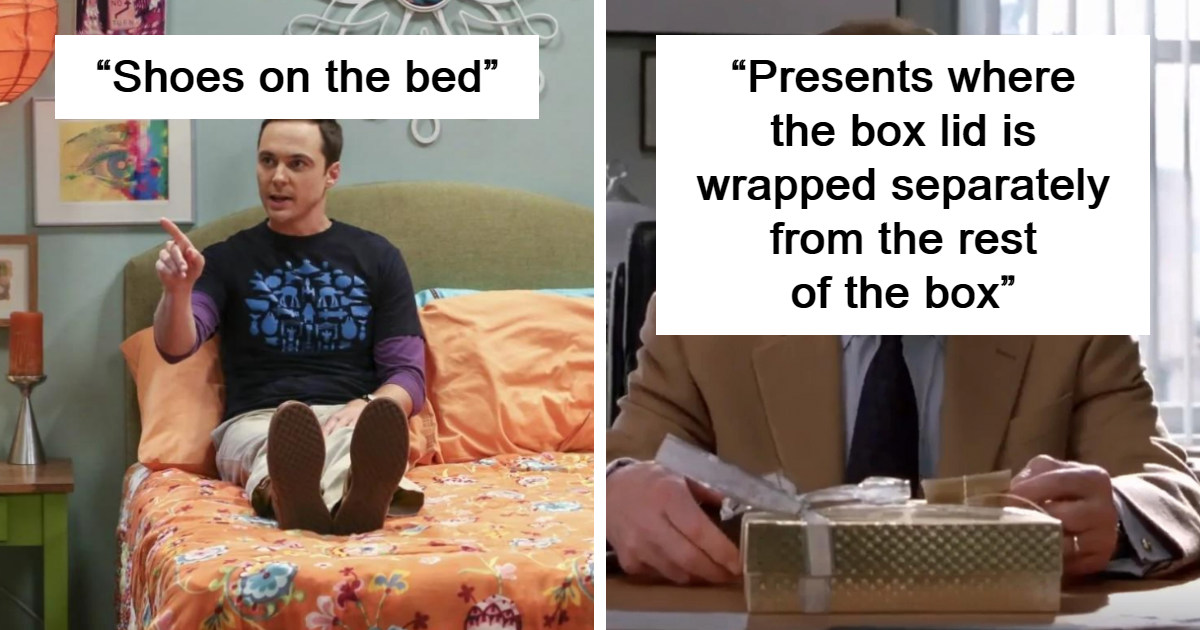
- People wear shoes indoors, but not always on beds. Some Americans keep shoes on inside; others remove them. Shoes on the bed, however, makes many viewers emotionally reach for disinfectant.
- Window screens matter. Movies love open windows with breezy curtains. In many parts of America, skipping screens means inviting mosquitoes, flies, and one insect large enough to have opinions.
- Small talk is real. Americans really do chat with cashiers, neighbors, and strangers in lines. But it is usually quick and casual, not a full inspirational monologue with background music.
- Regional accents are often overcooked. Hollywood sometimes treats Southern, New York, Boston, Midwestern, and Western accents like costume pieces. Real accents are more varied and subtle.
- Thanksgiving is not always a perfect magazine spread. Some families have turkey, pie, and matching plates. Others have arguments, takeout containers, paper plates, or one relative guarding the mashed potatoes like national treasure.
- Halloween costumes are not always cinematic masterpieces. Movies show elaborate costumes with professional makeup. Real parties include last-minute cat ears, cardboard robots, and someone dressed as “tired.”
- People do not wrap gift boxes like movie props. The separate lid-and-box wrapping looks beautiful on camera. Real wrapping involves tape stuck to elbows and at least one corner that looks like a crime scene.
- Medical care is not a quick plot device. Movies often skip the stress of insurance networks, bills, waiting rooms, and paperwork. For many Americans, health care is a serious financial and logistical concern.
- Jobs are less glamorous than shown. Screen characters leave work whenever the plot calls. Real workers have shifts, managers, deadlines, time clocks, meetings, and emails with the subject line “Quick question.”
- Americans do not eat takeout for every meal. Movies love pizza boxes and Chinese food cartons. Plenty of people cook at home, meal prep, eat leftovers, or stare into the fridge hoping dinner appears.
- People ask others to repeat themselves constantly. Film dialogue is crisp. Real conversations include “What?” “Sorry?” “Say that again?” and the classic nod-and-smile when you missed everything.
- Neighbors are not always best friends or enemies. Some people know everyone on the block. Others know only the dog’s name and have accepted that as enough community involvement.
- America is too diverse for one movie version. The biggest mistake is treating the United States as one culture. Life in Miami, Minneapolis, Phoenix, rural Maine, Detroit, Honolulu, and Oklahoma City can feel like different planets with the same streaming subscriptions.
The Biggest Pattern: Movies Make America Look Wealthier Than It Is
One of the most common complaints is that movies and TV shows make Americans look richer than reality. Characters with vague creative jobs live in spacious apartments. Families with one income own perfect houses. Teenagers drive cars that many adults could not comfortably finance. This creates a fantasy version of middle-class America where square footage grows on trees and rent is apparently paid by vibes.
Real American housing is far more complicated. Rent can be expensive, home prices vary wildly by region, and many people make trade-offs: living with roommates, moving farther from work, staying with family, downsizing, or spending a large share of income on housing. A movie apartment needs room for cameras, lighting, blocking, and dramatic entrances. A real apartment needs room for laundry baskets, unpaid bills, and that one chair covered in clothes.
School Movies Are Fun, But They Are Not Documentaries
American high school movies may be the global champion of entertaining nonsense. They gave us unforgettable cafeteria scenes, dramatic prom nights, hallway confrontations, and teenagers who somehow have time to solve mysteries between classes. But real schools are less polished and more routine. Students worry about grades, college applications, sports, jobs, family responsibilities, friendships, and the universal horror of realizing you forgot an assignment.
Movies also simplify school culture into neat categories. The jock, the nerd, the popular girl, the outsider, the rebel, the theater kid: these types exist because they are easy to recognize quickly. But actual students often belong to several groups at once. A football player can love robotics. A quiet kid can be hilarious online. A student in band can also be a track star. Real adolescence is messy, overlapping, and usually less choreographed.
Transportation: America Runs On Cars, But Not Movie Logic
Movies correctly show that cars are central to American life, especially outside dense cities. But they often ignore the unglamorous details: traffic, maintenance, insurance, gas prices, long commutes, parking tickets, and the emotional collapse caused by a mysterious dashboard light. A character may drive across town in three minutes on screen. Real Americans know that “across town” can mean anything from five minutes to “pack snacks.”
Public transportation also varies dramatically. New York, Washington, Chicago, Boston, San Francisco, and other cities have major transit systems, while many smaller towns and suburbs are built around driving. So when movies treat all American transportation like either yellow taxis or empty highways, they miss the patchwork reality.
Food Scenes Are Delicious Lies
Food in movies has one job: look good and support the scene. That is why breakfast spreads appear untouched, coffee cups are suspiciously empty, and characters order meals they abandon after two bites. Real Americans are not casually wasting an entire plate of pancakes because the plot needs them to storm out. Groceries cost money. Bacon especially does not exist merely as table decoration.
Restaurant scenes also skip common realities. Servers ask follow-up questions. Menus are long. People compare prices. Someone has a dietary restriction. Someone else says, “I’ll just have fries,” and then eats half of everyone’s entrée. Real eating is social, practical, regional, and occasionally chaotic.
Crime, Police, And Action Scenes Are Built For Drama
American movies love police tape, car chases, explosions, dramatic interrogations, and people sprinting through alleys with perfect lung capacity. These scenes are exciting because they remove the boring parts: forms, waiting, jurisdiction questions, safety rules, court dates, and the fact that most people do not want to be involved in a police investigation at all.
The action genre also rewires physics. Cars explode. Heroes survive crashes. Glass breaks safely. Air ducts support full-grown adults. People recover from injuries after one tasteful bandage. Real life is less cinematic and more inconvenient. If you crawl through a duct, you are not a spy; you are probably stuck, dusty, and making a building manager very unhappy.
Daily Conversation Is Much Messier Than Movie Dialogue
Movie dialogue is polished because it has to be. Real speech is full of interruptions, filler words, wrong names, repeated questions, nervous laughter, and sentences that begin with a purpose and wander into a swamp. People mishear things. People talk over each other. People forget why they entered a room. If movies showed conversation exactly as it happens, half of cinema would be characters saying, “Wait, what?”
This is especially true in loud places. Bars, parties, stadiums, school cafeterias, and family gatherings are not ideal locations for crisp emotional revelations. In reality, you might confess your deepest secret and receive the reply, “You bought a ferret?” because the music was too loud.
Why These Mistakes Matter
It is easy to laugh at movie inaccuracies, and we should. The giant apartments, perfect parking, and breakfast buffets deserve gentle roasting. But these portrayals also shape how people around the world imagine America. If someone only knows the United States through movies, they might assume Americans are wealthier, louder, more violent, more stylish are wealthier, louder, more violent, more stylish, more reckless, or more uniform than they really are.
In truth, America is ordinary and extraordinary at the same time. It has famous cities and tiny towns, enormous highways and quiet neighborhoods, luxury homes and cramped rentals, world-class universities and underfunded schools, generous communities and serious social problems. It is funny, frustrating, diverse, contradictory, and far too large to fit into one Hollywood template.
Extra Experiences: Watching Movie America Meet Real America
The most interesting experience related to this topic is how quickly the movie version of America collapses when it meets everyday life. Imagine arriving in the United States after years of seeing it on screen. You expect dramatic skylines, shiny diners, friendly neighbors waving from porches, and maybe a spontaneous high school marching band for emotional emphasis. Then real America greets you with airport carpet, a vending machine that refuses your dollar, and a rideshare driver explaining local traffic like a military historian.
One of the first surprises is distance. A place can look close on a map and still require a long drive. Americans will say something is “nearby” when it is 25 minutes away, and “not too far” when it involves crossing several counties and emotionally preparing a playlist. In many areas, daily life is built around cars: grocery runs, school pickups, work commutes, doctor visits, and weekend errands. Movies show the freedom of the open road; real life includes road construction, merging anxiety, and the mysterious law that the lane you choose will immediately become the slow one.
Another eye-opening experience is seeing how varied homes are. Movie America often shows either huge suburban houses or stylish city apartments. Real neighborhoods are a mix: ranch houses, duplexes, apartment complexes, mobile homes, townhouses, older brick buildings, new developments, rural farmhouses, and tiny rentals with one heroic window air conditioner. Some homes are beautiful. Some are practical. Some are clearly losing an argument with humidity. The idea that every American has a big house, a garage, a lawn, and a pool is one of Hollywood’s most persistent fairy tales.
Food culture also feels different in person. Yes, portions can be large, ice water is common, diners exist, and drive-thru windows are everywhere. But Americans are not eating movie-style cheeseburgers at every meal while discussing destiny. Many people cook at home, pack lunch, compare grocery prices, follow specific diets, or survive busy weeks through leftovers. Real food life is less glamorous than cinema, but often more interesting: regional barbecue, immigrant-owned restaurants, farmers markets, gas-station snacks with cult followings, church potlucks, food trucks, and family recipes guarded like state secrets.
Then there is friendliness. Movies sometimes portray Americans as either aggressively cheerful or dangerously suspicious. Real interactions are more nuanced. A cashier may ask about your day and genuinely mean it, or may simply be performing the sacred retail script. A stranger might compliment your shoes, help with directions, or tell you their entire life story while you wait for coffee. In many places, casual friendliness is normal, but it does not always mean deep intimacy. It is social WD-40: it keeps everyday encounters from squeaking too loudly.
Perhaps the biggest experience is realizing that America is not one mood. A snowy morning in Vermont, a humid night in New Orleans, a crowded Los Angeles freeway, a quiet Iowa county road, a Miami beach, a Texas high school football game, and a Seattle coffee shop are all “America,” but they do not feel like the same movie. That is what Hollywood often misses. The country is not a single set. It is thousands of overlapping stories, most of them less cinematic than a blockbuster but much more believable.
Conclusion
Movies get plenty wrong about America, but that is part of the fun. The real issue is not that Hollywood exaggerates; it is that the exaggerations become so familiar that people mistake them for reality. Giant apartments, perfect parking, untouched breakfasts, exploding cars, and glamorous high schools are useful on screen because they are quick, visual, and entertaining. Real America is slower, messier, more expensive, more diverse, and much funnier in accidental ways.
The best observations about movie America work because they are small and specific. They notice the shoes on the bed, the missing window screens, the impossible rent, the silent phone hang-ups, and the empty parking spaces. Those details remind us that authenticity often lives in the ordinary. America is not always cinematic, but it is never boring.
Note: This article is original, publication-ready content written in standard American English. It synthesizes real-world cultural observations and publicly known information about American housing, schools, transportation, health care, food habits, crime perception, and everyday life without copying source text.