One of the biggest mistakes in investing n twirling his mustache inside a brokerage office. It begins with something much more familiar: an ordinary human emotion.
Fear whispers, “Sell before it gets worse.” Greed replies, “Buy before everyone else gets rich.” Regret joins the meeting uninvited and announces, “You should have bought six months ago.” Before long, a carefully designed investment plan has been replaced by financial improvisationand not the cool jazz kind.
The mistake is letting short-term emotions override a long-term investment strategy. It appears in several disguises, including panic selling, chasing hot stocks, repeatedly changing funds, holding too much cash while waiting for the “perfect” entry point, and making concentrated bets based on social-media excitement.
Investing always involves risk, and no strategy can guarantee a profit. However, investors can improve their decision-making by recognizing emotional investing, creating rules in advance, diversifying appropriately, controlling costs, and allowing time to do more of the work.
The Biggest Investing Mistake: Replacing a Plan With a Feeling
Emotions are useful in many parts of life. Fear keeps people away from dark alleys. Excitement makes birthday parties more enjoyable. Neither emotion is particularly talented at managing a retirement portfolio.
Emotional investing occurs when market excitement or anxiety becomes the main reason for buying, selling, or abandoning a strategy. Vanguard describes it as allowing the cycle of market emotions to influence investment decisions. FINRA likewise warns that fear of missing out, panic during volatility, and impulsive reactions can cause investors to abandon sound principles. blem is not that investors feel nervous when prices fall. That reaction is perfectly human. The problem begins when temporary discomfort produces a permanent financial decision.
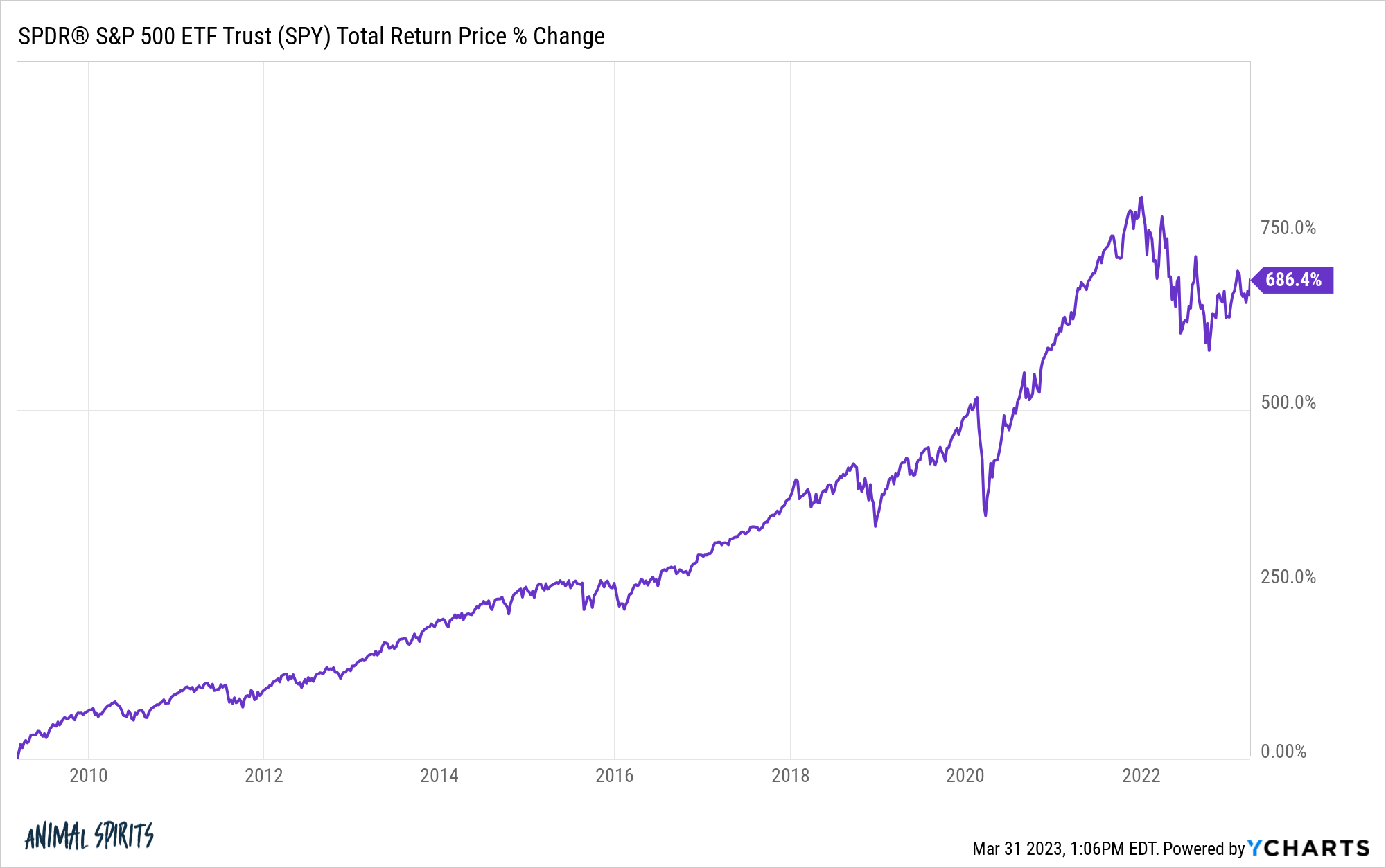
Suppose an investor owns a diversified portfolio designed for a goal 20 years away. The market falls sharply, frightening headlines multiply, and the investor sells everything. That decision may provide immediate emotional relief, but it creates a second problem: deciding when to return. The investor must now make two successful timing decisionswhen to get out and when to get back in.
Accurately repeating both decisions is extraordinarily difficult. Market timing depends on anticipating short-term movements that are influenced by countless economic, political, corporate, and psychological forces. FINRA defines it as shifting money among investments or cash in an attempt to exploit expected short-term price changes, while emphasizing the challenge and risks involved. art People Make Emotional Investment Decisions
Investing knowledge helps, but intelligence does not provide immunity from behavioral biases. A person can understand compound interest, calculate valuation ratios, and still panic when an account balance drops before breakfast.
Loss Aversion Makes Declines Feel More Powerful
Loss aversion is the tendency to experience losses more intensely than equivalent gains. A $5,000 decline can feel much more painful than a $5,000 gain feels satisfying. That imbalance may push investors to sell simply to stop seeing the red numbers.
CFA Institute identifies loss aversion, regret aversion, overconfidence, and self-control problems among the emotional biases that can affect investors. These biases do not disappear because someone has read three finance books and owns a calculator with many buttons. y Bias Turns Yesterday Into Forever
Recency bias encourages people to give excessive weight to what happened recently. After a long rally, investors may assume prices will continue rising and increase their risk at exactly the wrong time. After a painful decline, they may conclude that markets will never recover.
Recent performance feels more convincing because it is vivid. Unfortunately, a dramatic six-month chart is not a complete financial plan. Fidelity notes that investors can overemphasize their current circumstances and recent experiences when making decisions about the future. ncourages Performance Chasing
Fear of missing out is especially dangerous when a stock, sector, cryptocurrency, or investment theme is dominating headlines. After watching an asset climb, an investor may buy without evaluating its valuation, risks, role in the portfolio, or suitability for the investor’s goals.
This is performance chasing: buying primarily because something has already performed well. The SEC has cautioned investors about short-term trading based on social-media enthusiasm, particularly in volatile markets. Popularity may attract attention, but popularity alone is not investment research. nfidence Creates Too Much Activity
After a few successful trades, an investor may mistake a favorable market for personal genius. Confidence becomes overconfidence, and the portfolio begins receiving more adjustments than a crooked picture frame.
Overconfident investors may trade excessively, concentrate money in a few ideas, underestimate uncertainty, or believe they can consistently predict market turning points. More activity can also mean additional transaction costs, taxes, bid-ask spreads, and opportunities to make mistakes.
How Emotional Investing Can Damage Long-Term Returns
Missing a Few Strong Days Can Matter
Some of the market’s strongest days have historically occurred near periods of severe volatility. An investor who sells after a decline may therefore miss an early recovery while waiting for conditions to look comfortable again.
J.P. Morgan has illustrated this timing risk by comparing a continuously invested hypothetical portfolio with portfolios that missed a small number of the market’s best days. Its research shows that missing those days could sharply reduce long-term results. The example does not predict future returns, but it demonstrates why exiting and reentering the market can be so costly. el joke is that the market often appears safest after prices have already risen. By the time the news becomes cheerful, part of the recovery may have occurred. Markets do not send engraved invitations announcing that the next bull market begins Monday at 9:30 a.m.
Investor Returns Can Trail Investment Returns
An investment may report one return while its average investor earns something lower. The difference can arise because people add or withdraw money at unfortunate times, such as buying after strong gains and selling after losses.
Morningstar calls this the investor return gap. Its research distinguishes an investment’s total return from the dollar-weighted return experienced by investors after accounting for the timing and size of their cash flows. The evidence repeatedly shows that poorly timed transactions can reduce the returns investors actually capture. nt Changes Can Increase Costs
Returns do not belong entirely to the investor. Fees, expenses, taxes, and trading costs may claim portions along the way. Small annual fees can become meaningful over long periods because investors lose both the fee and the future growth that money might have generated.
The SEC advises investors to review expense ratios, advisory charges, sales loads, account fees, and other costs before investing. Costs should not be considered in isolationquality, service, taxes, and strategy also matterbut investors should understand exactly what they are paying. Signs That Emotion Is Managing Your Portfolio
Emotional investing is not always dramatic. It may begin with harmless-looking habits. Warning signs include:
- Checking account balances several times a day without a practical reason.
- Buying an investment mainly because friends, influencers, or television commentators are discussing it.
- Selling a diversified portfolio because of a frightening headline unrelated to the original goal.
- Moving repeatedly between funds based on last year’s performance.
- Holding excessive cash indefinitely while waiting for a perfect market entry.
- Changing a retirement strategy after every election, recession forecast, or interest-rate prediction.
- Taking more risk after gains and becoming extremely conservative after losses.
- Making trades without writing down the reason, expected holding period, and conditions for selling.
One isolated behavior does not automatically mean a strategy is flawed. A changing goal, tax situation, income need, or risk capacity may justify an adjustment. The important question is whether the decision is based on a documented financial reason or a temporary emotional impulse.
How to Avoid One of the Biggest Mistakes in Investing
1. Write an Investment Plan Before the Market Tests You
A useful investment plan should identify the goal, time horizon, contribution schedule, target asset allocation, acceptable level of risk, rebalancing method, and circumstances that would justify a change.
Rules are most valuable when written during calm conditions. Deciding how to respond to a bear market while prices are collapsing is like writing a fire-escape plan after the curtains have started smoking.
2. Match Risk to the Goal and Time Horizon
Money needed for an emergency or near-term purchase generally should not depend on volatile assets recovering at the right moment. Long-term goals may have more time to endure market fluctuations, while short-term goals typically require greater stability and liquidity.
A portfolio that is too aggressive may provoke panic selling. A portfolio that is too conservative may fail to provide enough growth for a distant goal. The appropriate balance depends on the investor’s time horizon, financial capacity, income needs, and tolerance for temporary losses.
3. Diversify Deliberately
Diversification spreads exposure among investments rather than allowing one company, industry, country, or asset class to determine the portfolio’s future. It cannot prevent all losses, but it can reduce the damage caused by a single holding or narrow market segment.
Vanguard and Investor.gov emphasize diversification across and within asset classes as a core risk-management principle. A diversified portfolio may include different types of stocks, bonds, and cash investments, depending on the investor’s circumstances. omate Contributions
Automatic investing reduces the number of opportunities for fear or excitement to interfere. Dollar-cost averaging involves investing similar amounts at regular intervals, regardless of short-term market direction.
This approach does not guarantee a profit or protect against losses. It can, however, create consistency and reduce the temptation to wait endlessly for a perfect entry point. Fidelity notes that regular investing results in purchasing more shares when prices are lower and fewer when prices are higher. alance Instead of Reacting
Rebalancing restores a portfolio to its intended asset allocation after market movements push it away from its target. It offers a disciplined reason to buy or sell rather than relying on mood, forecasts, or trending hashtags.
An investor might review allocations on a regular schedule or when they move beyond predetermined ranges. The method matters less than having a consistent process that considers costs and taxes.
6. Use a Cooling-Off Rule
For nonurgent decisions, create a waiting period. Write down the proposed trade, the evidence supporting it, the risks, and how it fits the original plan. Revisit the decision after 24 or 48 hours.
A cooling-off rule cannot make every decision correct, but it can separate durable reasoning from a temporary adrenaline spike. Vanguard suggests waiting periods, reframing, and accountability as methods for balancing emotion and logic. trol the Financial News Diet
Financial news is designed to report what changed today. Most investment plans are designed around goals many years away. Consuming minute-by-minute commentary can therefore create a mismatch between the information received and the decisions actually required.
Investors should remain informed, but being informed is different from feeling obligated to respond. A headline can be important without requiring a trade.
8. Maintain an Emergency Fund
Cash reserves can prevent an investor from being forced to sell long-term investments during a downturn to cover an unexpected expense. The appropriate amount varies, but the principle is straightforward: short-term financial resilience can protect long-term investment discipline.
9. Seek an Objective Second Opinion
A qualified financial professional may help an investor evaluate whether a proposed decision reflects a genuine change in circumstances or an emotional reaction. The professional should be properly registered, transparent about fees, and willing to explain recommendations clearly.
Even experienced investors can benefit from accountability. TIAA notes that advisors may help clients maintain perspective during volatility and reconnect portfolio decisions with the financial plan. elling an Investment Can Be Rational
“Stay invested” does not mean “never sell anything.” Selling may be reasonable when:
- A financial goal or time horizon has materially changed.
- The portfolio requires rebalancing.
- An investment no longer matches its documented purpose.
- The original investment thesis is no longer supported by evidence.
- A holding has become dangerously concentrated.
- Fees, taxes, liquidity, or risk characteristics make a better alternative appropriate.
- The investor needs to fund the goal for which the money was accumulated.
The distinction is intentionality. Rational selling follows analysis and a plan. Emotional selling is primarily an attempt to escape discomfort or chase excitement.
T. Rowe Price observes that valid reasons may exist for changing a strategy, but decisions driven mainly by emotion or attempts to predict short-term market direction can weaken a portfolio’s return potential. ence-Based Lessons: What Common Investor Stories Teach Us
The following scenarios are composites based on common investing behaviors. They are not promises of future performance, and the names are fictional.
The Investor Who Waited for Certainty
Daniel received a large work bonus and planned to invest it for retirement. Unfortunately, every week produced a new reason to wait. Interest rates might rise. Earnings might fall. An election was approaching. A strategist on television used the phrase “unprecedented uncertainty,” which sounded serious enough to deserve dramatic background music.
Daniel kept the money in cash while waiting for an obvious buying opportunity. When the market rose, he refused to invest because prices seemed expensive. When it fell, he became afraid that the decline would continue. His real problem was not choosing the wrong date. It was demanding a level of certainty that markets never provide.
A better process would have been to choose a strategy in advance. Depending on his circumstances and tolerance for regret, he might have invested according to his target allocation immediately or used a defined schedule. Schwab’s market-timing research notes that the long-term cost of waiting for an ideal entry has often exceeded the benefit of achieving perfect timing. vestor Who Bought the Exciting Story
Melissa heard repeatedly about a fast-rising technology company. The product sounded revolutionary, the stock chart looked like a ski lift, and online discussions treated skepticism as a personality defect.
She invested without reviewing the company’s financial condition, valuation, competitors, or role in her portfolio. When the stock declined, she discovered that her “long-term conviction” had actually lasted approximately nine business days.
The experience taught her to separate a good story from a suitable investment. Exciting companies can still be overpriced, risky, or inappropriate for a particular portfolio. She later created a rule limiting speculative positions to money she could afford to lose without disrupting her long-term goals.
The Investor Who Sold to Feel Better
Robert owned a broadly diversified retirement portfolio, but a sharp market decline made him anxious. He sold most of it and immediately felt calmer. For several weeks, the decision appeared wise because prices continued falling.
Then the market began recovering. Robert did not return because he expected another decline. As prices climbed, getting back in became psychologically harder. He eventually reinvested at higher pricesnot because the outlook was suddenly certain, but because the fear of missing further gains became stronger than the fear of another loss.
Robert’s mistake was not simply selling. It was allowing one emotion to make the exit decision and another emotion to make the reentry decision. BlackRock, Schwab, and other investment firms emphasize that staying invested through volatility can help investors avoid missing powerful recovery periods. vestor Who Changed Strategies Every Year
Priya selected funds by reviewing the previous year’s winners. When large-company stocks performed well, she bought them. When international markets led, she switched abroad. When bonds looked attractive, she moved again.
Each choice appeared logical because it was supported by recent performance. Unfortunately, the strategy repeatedly bought investments after strong periods and abandoned them after disappointing ones.
Priya eventually stopped ranking her portfolio against whichever asset class had recently performed best. She chose a diversified allocation tied to her goal and established a yearly review. The portfolio became less entertaining, which was excellent news. Retirement planning is not required to provide the thrills of a casino.
The Investor Who Built a Boring System
Marcus did not predict recessions, discover unknown stocks, or develop a secret algorithm in his garage. He automated monthly contributions, maintained a diversified portfolio, reviewed it on a schedule, and increased his savings rate when his income rose.
During market declines, Marcus still felt nervous. His advantage was not emotional perfection. His advantage was that his system did not require him to feel brave every morning.
That distinction matters. Successful investing behavior is often less about eliminating emotion and more about designing a process that limits emotion’s authority. CFA Institute describes investment behavior as partly a design problem: decision environments can either amplify biases or reduce their influence. sion
One of the biggest mistakes in investing is allowing fear, greed, overconfidence, or FOMO to replace a carefully considered strategy. Emotional decisions may feel protective in the moment, but they can lead to market-timing errors, performance chasing, unnecessary costs, inadequate diversification, and missed recoveries.
The solution is not to become emotionless. That would require becoming either a robot or a particularly calm houseplant. The practical solution is to create rules before emotions arrive: define the goal, choose an appropriate asset allocation, diversify, automate contributions, rebalance methodically, control costs, and pause before making major changes.
Markets will remain uncertain because uncertainty is part of investing. A durable plan does not predict every surprise. It helps an investor continue making reasonable decisions when surprises inevitably occur.