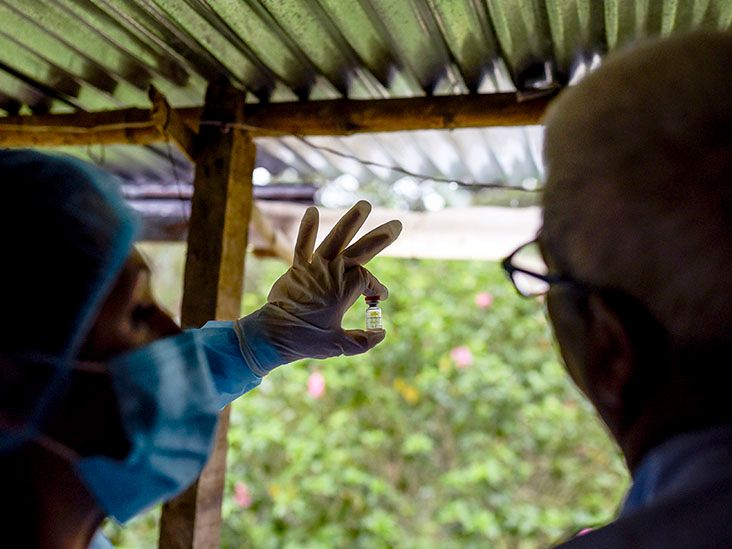
Nuvaxovid, the Novavax COVID-19 vaccine, offers a protein-based alternative to mRNA vaccines. That difference matters to some people, but it does not make the vaccine side-effect-free. A sore arm, fatigue, headache, and muscle pain remain common possibilities, while myocarditis, pericarditis, and severe allergic reactions are considered rare but important risks.
This guide examines the clinical-trial numbers, post-authorization safety reports, warning signs, and practical steps that may make the first few days easier. In other words, it separates useful safety information from the internet’s favorite medical diagnostic tool: a stranger typing in all caps.
Medical note: This article provides general educational information and is not a substitute for advice from a qualified healthcare professional. Vaccine formulas, eligibility rules, and dosing recommendations may change by season.
What is the Novavax COVID-19 vaccine?
Nuvaxovid is an FDA-approved COVID-19 vaccine made with recombinant SARS-CoV-2 spike protein and the Matrix-M adjuvant. The adjuvant helps the immune system recognize the vaccine antigen and build a stronger response.
Unlike the Pfizer-BioNTech and Moderna vaccines, Nuvaxovid does not use messenger RNA. Instead, it delivers laboratory-produced spike protein directly. It does not contain the live coronavirus, cannot reproduce inside the body, and cannot give someone COVID-19.
The current U.S. formulation is administered as a 0.5-milliliter intramuscular injection. Under current FDA labeling, it is indicated for adults age 65 and older and for people ages 12 through 64 who have at least one condition that places them at increased risk for severe COVID-19. CDC recommendations use individual decision-making and consider factors such as age, medical conditions, pregnancy, prior vaccination, exposure risk, and immune status.
Because recommendations are updated as variants and vaccine formulas change, patients should confirm the appropriate product and timing with a pharmacist or healthcare provider rather than relying on an old vaccination card discovered in a kitchen drawer.
What are the most common Nuvaxovid side effects?
The most frequently reported Novavax side effects are temporary local or systemic reactions. A local reaction occurs around the injection site. A systemic reaction affects the body more generally.
Common injection-site reactions
- Pain or tenderness
- Redness
- Swelling
- Occasional itching
Common whole-body reactions
- Fatigue
- Headache
- Muscle pain
- Joint pain
- Malaise or generally feeling unwell
- Nausea or vomiting
- Fever or chills
These symptoms are generally signs that the immune system has noticed the vaccine and started responding. They do not mean the recipient has COVID-19. They also are not required for protection; a person who feels perfectly normal after vaccination has not received a “lazy” dose.
Novavax side-effect rates from clinical studies
The FDA prescribing information summarizes adverse reactions observed across clinical studies of original and variant-updated Novavax vaccines produced using related technology and manufacturing processes. The listed percentages are described as rates of “up to” a particular value.
| Age group | Frequently reported reactions | Highest reported rates |
|---|---|---|
| 12–17 years | Injection-site tenderness, pain, headache, fatigue, muscle pain, malaise, nausea or vomiting, fever, and joint pain | Tenderness: 65.2%; pain: 61.0%; headache: 56.9%; fatigue: 49.9%; muscle pain: 49.1% |
| 18–64 years | Injection-site tenderness, pain, muscle pain, fatigue, headache, malaise, joint pain, and nausea or vomiting | Tenderness: 71.7%; pain: 58.6%; muscle pain: 52.7%; fatigue: 50.5%; headache: 47.4% |
| 65 years and older | Injection-site tenderness, pain, fatigue, muscle pain, headache, malaise, and joint pain | Tenderness: 52.9%; pain: 40.1%; fatigue: 29.2%; muscle pain: 29.2%; headache: 24.9% |
What does “up to” mean?
An “up to” percentage is the highest observed rate among the relevant studies, formulations, or doses summarized in the label. It is not a promise that exactly 71.7% of today’s recipients will experience tenderness. An individual’s likelihood may differ based on age, dose history, immune response, health status, and the specific seasonal formulation.
The figures also show a broad pattern seen with many vaccines: younger adults and adolescents often report more short-term reactions than older adults. A more reactive immune system can be a noisy neighbor, although noise alone does not reveal how much protection a person will develop.
How long do Novavax vaccine side effects last?
Common side effects usually begin on the day of vaccination or during the following day. Most improve within one to three days, although arm tenderness may linger slightly longer. Clinical studies generally found the expected reactions to be mild or moderate and short-lived.
Contact a healthcare professional when symptoms are severe, continue getting worse, or fail to improve after several days. Redness or tenderness that becomes substantially worse more than 24 hours after the injection also deserves medical advice.
Cough, nasal congestion, loss of taste or smell, and a significant sore throat are not classic vaccine reactions. Those symptoms could indicate COVID-19 or another respiratory infection, particularly if exposure occurred shortly before vaccination. The vaccine does not create instant protection, nor does it install an invisible force field in the pharmacy parking lot.
Rare but serious Nuvaxovid side effects
Myocarditis and pericarditis
Myocarditis is inflammation of the heart muscle. Pericarditis is inflammation of the tissue surrounding the heart. FDA labeling states that clinical-trial data provide evidence of an increased risk of these conditions following Novavax vaccination, and cases have also been reported during post-authorization use.
The overall chance is considered very low. However, CDC advises that recipientsparticularly males ages 12 through 39should know the warning signs. Symptoms often warrant the greatest attention during the first week after vaccination.
Seek prompt medical care for:
- Chest pain or pressure
- Shortness of breath
- A fast, fluttering, or pounding heartbeat
Novavax should not be presented as a guaranteed myocarditis-free alternative to mRNA vaccination. Available data do not support such a promise, and studies have not established a precise head-to-head rate for very rare cardiac events across every age and risk group.
Severe allergic reactions
Anaphylaxis is possible after nearly any vaccine, although it is rare. A severe allergic reaction usually develops within minutes to about an hour, which is why vaccination sites may ask certain recipients to remain for observation.
Call 911 for difficulty breathing, swelling of the face or throat, a widespread rash, severe dizziness, marked weakness, or a rapid heartbeat. Nuvaxovid should not be administered to someone who has had a severe allergic reaction to a previous Novavax dose or to one of its ingredients.
Fainting and unusual skin sensations
Fainting can occur in connection with injections, especially among people who become anxious around needles. Sitting or lying down during vaccination and remaining seated afterward can reduce the chance of injury.
Tingling, crawling sensations, or decreased skin sensitivity have been reported during post-authorization use. Because voluntary reports come from an unknown number of recipients and may have other explanations, their frequency cannot be reliably calculated from those reports alone.
What did post-authorization safety monitoring find?
CDC reviewed early U.S. safety monitoring after 69,227 Novavax doses were administered from July 13, 2022, through March 13, 2023. The Vaccine Adverse Event Reporting System received 230 reports during that period. Of those reports, 211, or 91.7%, were classified as nonserious. Dizziness, fatigue, and headache were among the most frequently reported events.
Nineteen reports met the regulatory definition of serious, but a report occurring after vaccination does not automatically prove that vaccination caused the event. CDC concluded that the available observations were consistent with preauthorization clinical-trial findings and identified no new safety concern at that time.
The analysis had important limitations. Novavax represented only a tiny share of all U.S. COVID-19 doses during the monitoring period, leaving less information for detecting very rare outcomes. VAERS is also a passive reporting system: anyone may submit a report, documentation may be incomplete, and reports do not provide an accurate incidence rate without additional investigation and comparison data.
Does Novavax cause fewer side effects than mRNA vaccines?
Some observational research suggests that Novavax may cause fewer short-term systemic symptoms for certain recipients. In one U.S. study of healthcare workers and first responders who selected either Novavax or a Pfizer-BioNTech vaccine, Novavax recipients reported fewer systemic symptoms on the second day and lost fewer productive hours. By day seven, differences were small.
That finding is encouraging but not conclusive. Participants chose their vaccine rather than being randomly assigned, symptoms were self-reported, and the study population came from a limited geographic and occupational setting. It also was not large enough to compare extremely rare adverse events.
The practical interpretation is modest: some people may find the protein-based vaccine easier to tolerate in the short term, but individual experiences vary. “Protein-based” is a description of the technology, not a coupon for a guaranteed symptom-free weekend.
How to manage common Novavax side effects
Simple measures are usually enough for routine post-vaccination discomfort:
- Drink water and eat normally unless a clinician has advised otherwise.
- Rest when tired, but gentle daily activity is generally acceptable.
- Move the vaccinated arm periodically instead of holding it perfectly still.
- Apply a clean, cool, damp cloth to a sore injection site.
- Wear loose clothing if the arm is tender.
- Ask a healthcare professional whether an over-the-counter pain reliever is appropriate after symptoms begin.
CDC does not generally recommend taking fever-reducing or pain-relieving medication before vaccination solely to prevent side effects. Premedicating may be unnecessary, and some medicines are unsuitable for people with particular medical conditions.
Who should speak with a healthcare provider before vaccination?
Discuss Nuvaxovid with a qualified professional before receiving it when you have:
- A previous severe allergic reaction to a COVID-19 vaccine or injectable treatment
- A known allergy to a Nuvaxovid ingredient
- A history of myocarditis or pericarditis
- A current moderate or severe illness or fever
- A bleeding disorder or treatment with blood-thinning medication
- An immune-compromising condition or immunosuppressive treatment
- A history of fainting during injections
- Pregnancy, plans for pregnancy, or breastfeeding
- Recent COVID-19 vaccination or a recent COVID-19 infection
People who developed myocarditis or pericarditis within three weeks of a previous COVID-19 vaccine generally should not receive another dose unless a healthcare team determines that the benefits outweigh the risks after the condition has fully resolved.
Experience-based guide: What the first 48 hours may feel like
The following are evidence-informed composite scenarios, not quotations from identifiable patients. They illustrate common patterns and should not be interpreted as predictions for any individual.
Experience 1: The sore arm but otherwise normal day
One common experience begins with very little drama. The injection itself feels like an ordinary vaccination. Several hours later, the upper arm becomes tender when lifted or pressed, making activities such as reaching for a high shelf surprisingly ambitious.
The recipient continues working, eating, and sleeping normally. By the next morning, the arm is still sore but improves with gentle movement and a cool cloth. No fever or headache appears, and the tenderness fades over the following day or two.
This mild pattern fits the fact that local tenderness and pain are the most frequently reported reactions. It may be inconvenient, but it usually does not require medical care. Scheduling a championship weightlifting session immediately afterward would be optional rather than inspired.
Experience 2: The quiet evening followed by a tired morning
Another recipient feels fine for the first six or eight hours. During the evening, fatigue and muscle aches gradually appear. The person sleeps longer than usual, wakes with a headache, and decides that the day’s most demanding athletic event will be carrying a water bottle from one room to another.
After fluids, food, rest, and medication approved by a healthcare professional, the symptoms improve throughout the day. By approximately 36 to 48 hours, energy is returning and the headache has resolved.
This scenario reflects a moderate systemic response. Planning the vaccination before a lighter workday may be helpful, especially for someone who has previously experienced noticeable reactions. It is sensible preparation, not an admission that the vaccine will definitely ruin the weekend.
Experience 3: An older adult with minimal symptoms
An adult over age 65 receives Nuvaxovid and notices mild arm tenderness that evening. The next day brings a little fatigue, but it is difficult to distinguish from the consequences of staying up too late watching television. There is no fever, significant headache, or interruption to normal activities.
Clinical data show that older adults generally reported systemic side effects less frequently than younger adults. Still, minimal symptoms do not mean the immune response failed. The strength of protection cannot be measured by how dramatically someone negotiates with the sofa.
Experience 4: When symptoms do not fit the routine pattern
A different situation requires more attention. Suppose someone develops chest discomfort, difficulty breathing, or a pounding heartbeat several days after vaccination. Those symptoms should not be dismissed as ordinary fatigue or anxiety without evaluation. Prompt medical care is appropriate because myocarditis and pericarditis, although rare, are recognized risks.
Likewise, facial swelling, breathing difficulty, a widespread rash, or severe dizziness shortly after vaccination requires emergency assistance. The key distinction is not whether a symptom appears on a long internet list. It is whether the symptom is severe, worsening, unusual, or consistent with a known emergency warning sign.
How to plan for a smoother experience
A practical plan can be pleasantly boring: confirm eligibility, review previous allergies and heart conditions, eat and hydrate normally, and avoid arranging an unusually demanding schedule for the following day. Keep basic supplies available, including a thermometer and any pain reliever that a clinician has said is safe for you.
Write down the vaccination date, product, and location. Monitor symptoms without checking your pulse every 90 seconds. Most routine reactions improve quickly, while severe or persistent symptoms deserve professional guidance. Preparation should provide reassurance, not turn the living room into a low-budget intensive care unit.
Conclusion
Clinical trials and U.S. safety monitoring indicate that the most common Nuvaxovid side effects are injection-site tenderness, pain, fatigue, headache, muscle aches, and a temporary feeling of being unwell. These reactions usually begin soon after vaccination and resolve within several days.
Serious reactions are uncommon, but they should not be ignored. Myocarditis, pericarditis, and anaphylaxis are included in official safety warnings. Chest pain, shortness of breath, palpitations, facial or throat swelling, and difficulty breathing require prompt medical attention.
Novavax gives eligible people a non-mRNA vaccine option, and some evidence suggests it may produce fewer short-term systemic symptoms for some recipients. The best choice, however, depends on age, medical history, previous vaccination, and personal risk from COVID-19. A healthcare professional can help place the side-effect data in the context that matters most: the individual patient.