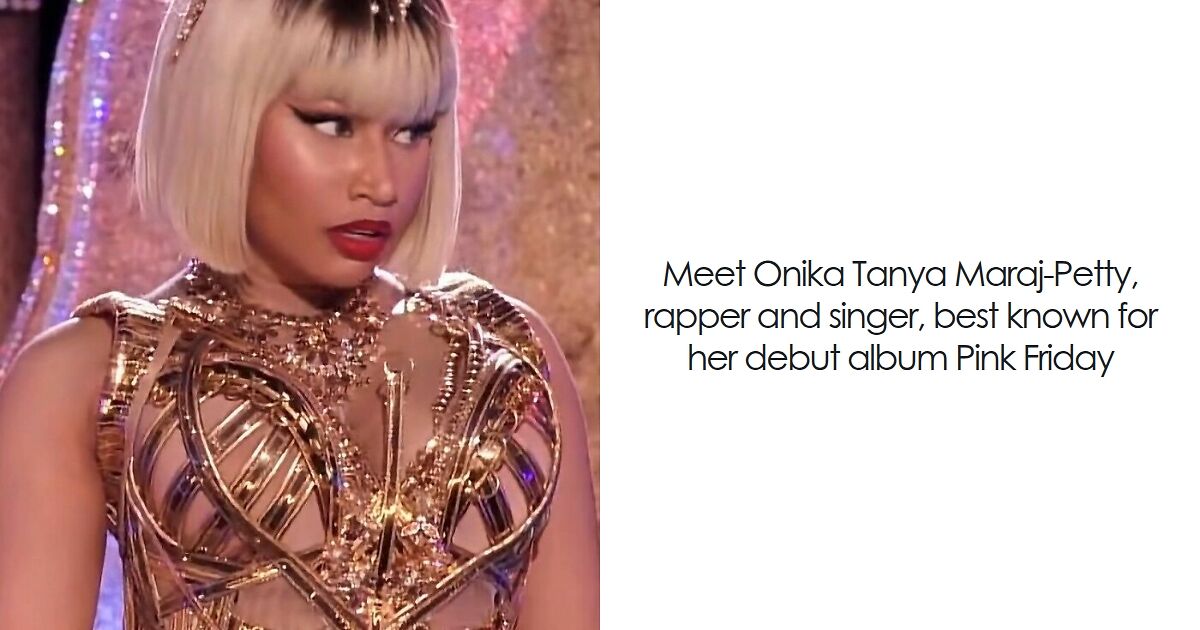
Note: This article is written in standard American English for web publishing and is based on verified public information about Nicki Minaj’s life, music career, awards, albums, tours, and cultural influence.
Nicki Minaj is not the kind of artist who enters a room quietly. She arrives with a voice sharp enough to slice through a beat, a wardrobe loud enough to need its own zip code, and a fan basethe Barbzthat treats chart updates like championship scores. Born Onika Tanya Maraj, Minaj has grown from a Trinidad-born, Queens-raised performer into one of the most recognizable and influential rappers of the 21st century.
Her career is a rare combination of technical rap skill, theatrical character work, pop instincts, viral charisma, and business ambition. She can deliver a machine-gun verse, slide into a sugary pop hook, invent a new alter ego before breakfast, and still have time to trend online by lunch. That mix has made Nicki Minaj a cultural force far beyond hip-hop.
This in-depth Nicki Minaj bio explores her early life, breakthrough mixtapes, major albums, chart records, awards, tours, style evolution, and career highlights. It also looks at why her influence continues to matter in rap, pop, fashion, and internet culture.
Early Life: From Trinidad to Queens
Nicki Minaj was born Onika Tanya Maraj on December 8, 1982, in St. James, Trinidad and Tobago. Her early childhood was split between Caribbean family life and the dream of a new future in the United States. When she was still young, her family relocated to Queens, New York, a move that would later shape her accent, attitude, ambition, and musical identity.
Queens gave Minaj a crash course in hustle. It was competitive, fast-moving, and full of different sounds and cultures. That environment helped form her ear for rhythm and performance. Her childhood was not always easy, and she has spoken publicly about family struggles, financial pressure, and instability at home. But in true future-superstar fashion, she turned difficulty into fuel. Some people get a diary. Nicki got personas.
LaGuardia High School and the Birth of a Performer
Minaj attended Fiorello H. LaGuardia High School of Music & Art and Performing Arts in New York City, the famous arts school associated with theater, music, and ambitious teenagers who probably practiced monologues in the cafeteria. There, she studied performance and acting, skills that would later become central to her music.
Unlike many rappers who rely on one voice or one image, Nicki Minaj built a universe of voices. Her alter egos, animated delivery, facial expressions, and dramatic shifts in tone all reflect her background as a performer. Whether she is rapping as Roman Zolanski, leaning into Harajuku Barbie, or delivering a razor-sharp feature verse, her theater training is always somewhere in the room, probably wearing pink.
The Mixtape Era: Building the Nicki Minaj Blueprint
Before the platinum plaques, arena tours, and fashion-week seats, Nicki Minaj built her name through mixtapes. In the late 2000s, she released projects such as Playtime Is Over, Sucka Free, and Beam Me Up Scotty. These releases introduced her as a rapper with technical confidence, punch-line power, and a fearless sense of image.
The mixtape era was crucial because it showed that Minaj could compete lyrically in a male-dominated rap space while refusing to flatten her personality to fit expectations. She did not simply rap well; she created an event around every verse. Her flows changed shape, her tone swerved from sweet to savage, and her wordplay arrived with the subtlety of a glitter cannon.
Her early work caught the attention of Lil Wayne, and she eventually signed with Young Money Entertainment. That move placed her inside one of the most powerful rap camps of the era, alongside Wayne and Drake. But even in a lineup full of stars, Nicki Minaj had something unmistakably her own.
Breakthrough With Pink Friday
Nicki Minaj released her debut studio album, Pink Friday, in 2010. The album became a major commercial success and helped establish her as a mainstream star. It featured a mix of rap, pop, vulnerability, and playful character work, proving that Minaj could appeal to hardcore hip-hop fans and pop listeners at the same time.
One of the defining songs from the era was “Super Bass,” a bright, infectious single that became one of her signature hits. It was catchy enough for radio, polished enough for pop audiences, and still unmistakably Nicki. The song helped expand her audience and showed that a female rapper could dominate pop culture without giving up lyrical personality.
Why Pink Friday Mattered
Pink Friday mattered because it shifted expectations. At a time when mainstream female rap representation was limited, Minaj arrived with a full-color campaign: sharp bars, Barbie imagery, emotional tracks, colorful wigs, animated voices, and an army of fans ready to defend every syllable. The album did not just launch a career; it opened a new chapter for women in rap.
Minaj’s early success also proved that hip-hop and pop did not have to be separated by a velvet rope. She could rap aggressively on one track, sing a hook on another, and then make a radio hit that teenagers, club DJs, and casual listeners could all quote. That versatility became one of her strongest career assets.
Pink Friday: Roman Reloaded and Global Pop Stardom
In 2012, Nicki Minaj released Pink Friday: Roman Reloaded, an album that leaned further into dance-pop, electronic production, and global radio appeal. The project included “Starships,” one of her biggest international hits. Some rap purists clutched their imaginary pearls, but Minaj was clearly thinking bigger than one lane.
“Starships” helped push her further into global pop territory. It was bright, danceable, and practically engineered to make festival crowds jump in unison. With this era, Minaj proved she could move between rap battles and pop charts without asking permission from either side.
The Roman Reloaded era also amplified one of her most memorable alter egos, Roman Zolanski. Roman allowed Minaj to be chaotic, theatrical, funny, and aggressive all at once. In a genre that often rewards toughness but not theatrical weirdness, Roman was a brilliant loophole.
The Pinkprint: Vulnerability Behind the Persona
Released in 2014, The Pinkprint marked a more personal chapter in Nicki Minaj’s career. While earlier projects emphasized characters and color, this album pulled back the curtain. It included songs about heartbreak, ambition, family, regret, and emotional complexity.
The album also included “Anaconda,” a cultural moment disguised as a single. Built around a bold sample and an even bolder visual identity, “Anaconda” became one of Minaj’s most talked-about songs. It was funny, provocative, confident, and impossible to ignore. Basically, it was a Nicki Minaj press conference with bass.
A More Complete Artist
The Pinkprint showed that Minaj was not just a character rapper or pop hitmaker. She could be reflective and emotionally direct. That balance between vulnerability and bravado helped deepen her artistry. For fans, the album offered both the superstar and the person behind the superstar.
This period also reinforced her status as one of the most sought-after feature artists in music. A Nicki Minaj guest verse could turn a song into an event. Her appearances with artists across rap, pop, R&B, and dance music helped keep her visible across multiple audiences.
Queen and the Defense of a Rap Legacy
In 2018, Minaj released Queen, a title that doubled as both branding and a warning label. The album arrived at a time when the landscape of female rap was expanding, and conversations about Minaj’s place in the genre were becoming louder. Rather than retreat, she leaned into competition, legacy, and lyrical dominance.
Tracks like “Chun-Li” reminded listeners of her technical strengths: sharp delivery, punchy writing, and a flair for turning herself into a larger-than-life character. The Queen era was not only about chart performance; it was about Minaj asserting that her influence had become part of hip-hop’s foundation.
Pink Friday 2: A Full-Circle Moment
In 2023, Nicki Minaj released Pink Friday 2, a sequel to the debut album that made her a household name. The project debuted at No. 1 on the Billboard 200, giving Minaj her third No. 1 album and setting a record for the most No. 1 albums among female rappers.
The album mixed nostalgia with modern production and featured the kind of genre-hopping that has defined her career. It included emotional material, punch-line rap, melodic moments, and tracks designed for the Barbz to blast at a volume that makes neighbors reconsider their lease agreements.
The Pink Friday 2 World Tour
The Pink Friday 2 era also became a touring triumph. The Pink Friday 2 World Tour became the highest-grossing rap tour by a woman, a major milestone that underlined Minaj’s staying power as a live performer. For an artist who began by uploading music and fighting for attention in a crowded industry, selling out arenas around the world is more than a statistic. It is the sound of a long game paying off.
Chart Records and Career Milestones
Nicki Minaj’s career highlights include a long list of chart achievements. She became one of the most successful female rappers in Billboard history, with numerous Hot 100 entries, major streaming numbers, and multiple albums certified platinum or higher. Her catalog includes hits such as “Super Bass,” “Starships,” “Moment 4 Life,” “Anaconda,” “Only,” “Chun-Li,” “Super Freaky Girl,” and “Barbie World” with Ice Spice.
“Super Freaky Girl” was especially important because it debuted at No. 1 on the Billboard Hot 100, making Minaj the first solo female rapper to debut at the top of the chart since Lauryn Hill. That achievement connected her modern dominance to a longer history of women reshaping rap on their own terms.
RIAA Certifications
Minaj’s RIAA certifications show the commercial strength of her catalog. Songs such as “Super Bass,” “Starships,” and “Anaconda” have earned major certifications, while albums including Pink Friday, The Pinkprint, and Queen have also been certified. These plaques are not just shiny wall decorations; they are evidence of years of audience demand, replay value, and cultural staying power.
Awards, Nominations, and Recognition
Nicki Minaj has earned numerous awards and nominations throughout her career, including American Music Awards, MTV Video Music Awards, BET Awards, Billboard honors, and Grammy nominations. Although she has been nominated for multiple Grammy Awards, the trophy itself has famously remained out of reach, a fact that fans bring up with the calm restraint of people discussing a parking ticket from 2012.
In 2022, Minaj received the Michael Jackson Video Vanguard Award at the MTV Video Music Awards, recognizing her influence on music videos and visual performance. Her videos have always been a major part of her brand, combining fashion, humor, fantasy, color, and attitude into moments that are designed to be remembered.
Style, Alter Egos, and Pop Culture Power
Nicki Minaj’s style is one of her greatest career weapons. From candy-colored wigs and Barbie-inspired looks to luxury fashion appearances, she has treated image as part of the music. Her fashion is not simply decoration; it is storytelling. A Nicki Minaj outfit can announce an era before a single note plays.
Her alter egos also helped set her apart. Roman Zolanski, Harajuku Barbie, Chun-Li, and other personas gave her creative freedom to exaggerate, joke, attack, flirt, and dramatize. These characters made her music feel like a stage production, complete with costume changes and emotional whiplash.
The Barbz: A Fan Base With Wi-Fi and Stamina
No Nicki Minaj career overview is complete without mentioning the Barbz. Her fan base is one of the most active in modern music. They stream, organize, trend hashtags, decode lyrics, defend records, and generally operate like a pink digital navy.
The Barbz have helped Minaj maintain visibility across changing music eras. In an industry where attention spans can be shorter than a TikTok caption, that kind of loyalty matters. Her fans are not passive consumers; they are part of the Nicki Minaj ecosystem.
Influence on Female Rap
Nicki Minaj’s influence on female rap is enormous. She helped reopen mainstream space for women rappers at a time when the industry often acted as if only one could exist at a time. Her success showed labels, radio programmers, and audiences that a woman rapper could be lyrical, commercial, theatrical, sexy, funny, and globally profitable.
Many younger women in rap have benefited from a landscape that Minaj helped expand. Her impact can be heard in flows, visuals, branding, fan engagement, and the expectation that female rappers can lead major album campaigns, dominate social media, headline tours, and build business empires.
Business Moves and Entertainment Ventures
Beyond music, Nicki Minaj has explored acting, television, fragrances, radio, fashion collaborations, and business ventures. She voiced characters in animated films, appeared in movies such as The Other Woman and Barbershop: The Next Cut, and served as a judge on American Idol. Her business choices reflect her larger brand: bold, marketable, and built around personality.
She also launched her own label imprint, Heavy On It, signaling a desire to shape music from behind the scenes as well as in front of the microphone. For an artist who has spent years controlling her image, that move feels like a natural extension of her career.
Experiences Related to Nicki Minaj: Bio And Career Highlights
One of the most interesting experiences connected to following Nicki Minaj’s career is watching how she turns every era into a world. Some artists release albums; Nicki builds neighborhoods. Pink Friday had its bubblegum confidence. Roman Reloaded brought dance-pop chaos. The Pinkprint felt more intimate and bruised. Queen sounded like a crown being polished in public. Pink Friday 2 invited fans back into a familiar universe, but with the confidence of an artist who had already survived multiple industry cycles.
For listeners, Nicki Minaj’s career can feel like a lesson in reinvention. She proves that identity does not have to be fixed. A person can be serious and hilarious, vulnerable and aggressive, glamorous and gritty. That is part of why so many fans connect with her. She gives people permission to be more than one thing at once. In a world that loves neat labels, Nicki Minaj is a glitter-covered refusal to fit inside a single box.
Another experience is discovering how technical her rapping can be when you listen closely. Casual listeners may remember the wigs, memes, or big pop hooks, but her best verses reveal complex rhyme patterns, sudden voice changes, internal rhymes, and punch lines that reward replaying. A Nicki verse often feels like a roller coaster designed by someone who studied battle rap, theater, and internet attention spans at the same time.
Her career also offers a practical lesson about branding. Minaj understood early that music alone was not the whole package. Names, colors, characters, videos, interviews, fan language, and visual identity all mattered. The “Barbie” concept was not just a nickname; it became a flexible brand system. It could be cute, dangerous, expensive, cartoonish, or defiant depending on the song. That kind of branding is why her image remains instantly recognizable.
There is also a strong lesson in persistence. Nicki Minaj did not become a global star overnight, even if the later rise looked explosive. The mixtapes, small performances, networking, setbacks, public criticism, and constant pressure all came before the arena tours. Her journey reminds aspiring artists that talent needs stamina. A great verse can open a door, but consistency keeps the lights on.
Finally, following Nicki Minaj’s career means watching the complicated relationship between fame and control. She has often fought to define herself rather than let the industry do it for her. That fight has brought praise, controversy, loyalty, backlash, and debate. But whether people celebrate her, critique her, or argue about her online until their phone battery begs for mercy, one fact remains: Nicki Minaj is central to modern rap history.
Conclusion: Why Nicki Minaj’s Legacy Still Matters
Nicki Minaj’s biography is more than a success story about a rapper from Trinidad and Queens. It is a story about reinvention, ambition, technical skill, branding, and cultural impact. From mixtape standout to global superstar, from “Super Bass” to Pink Friday 2, from alter egos to arena tours, she has built a career that changed what mainstream female rap could look and sound like.
Her career highlights are impressive on paper: No. 1 albums, hit singles, RIAA certifications, major awards, Grammy nominations, record-breaking tours, and a fan base powerful enough to turn album rollouts into online events. But her real legacy is bigger than numbers. Nicki Minaj made space. She made noise. She made characters. She made pink feel dangerous. And she made it very clear that in hip-hop, personality can be as powerful as a punch line.