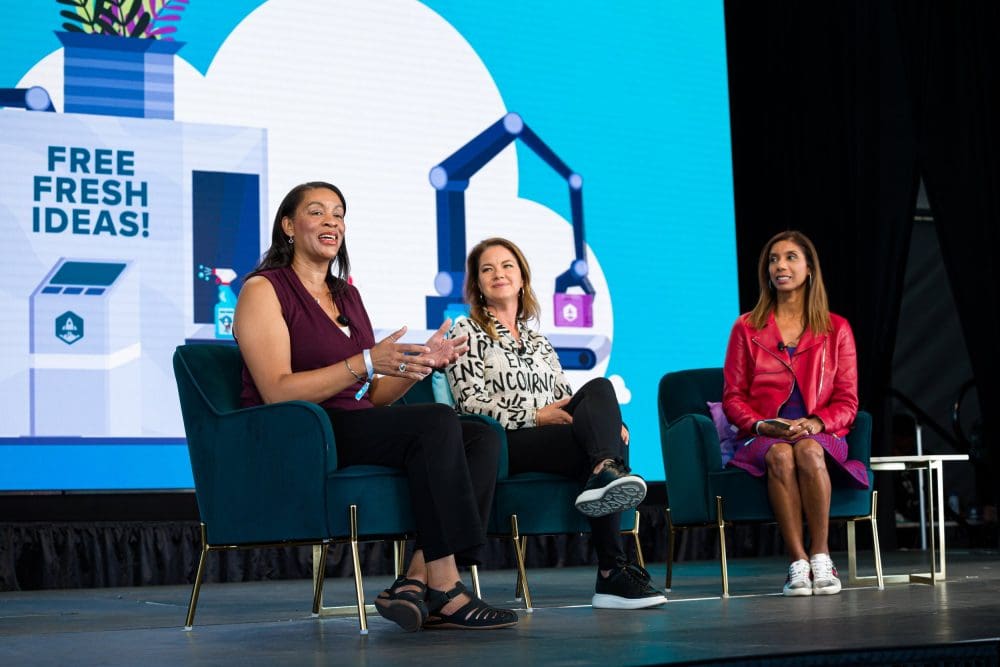
The SaaS world loves a good speaker announcement the way developers love a clean deployment: with relief, curiosity, and just a tiny bit of “please don’t break production.” SaaStr Annual has once again stirred the pot with a fresh wave of heavyweight speakers, including Bill Staples, CEO of GitLab; Josh Reeves, CEO of Gusto; Eddie Kim, CTO and Head of AI at Gusto; Dmitry Shevelenko, Chief Business Officer at Perplexity; and a broad cast of leaders from companies shaping the future of B2B software, AI, cloud, customer success, and go-to-market strategy.
This is not just another conference lineup with shiny titles and LinkedIn-friendly headshots. The latest SaaStr Annual speakers represent the real crossroads of modern SaaS: AI-native product development, profitable growth, enterprise trust, vertical SaaS, customer-led expansion, and the never-ending quest to make sales teams faster without turning them into spreadsheet goblins.
For founders, executives, operators, investors, and anyone building in B2B software, the announcement matters because it signals where the industry is going. SaaStr Annual has always been famous for practical lessons rather than fluffy stage fog. This year’s lineup leans heavily into one giant theme: SaaS is being rebuilt around AI, but the winners will still be the companies that understand customers, distribution, pricing, and execution.
Why the New SaaStr Annual Speaker Lineup Matters
SaaStr Annual has become one of the most watched gatherings in the SaaS ecosystem because it brings together people who have actually scaled companies, managed messy transitions, sold into competitive markets, and lived to tell the story without hiding behind buzzwords. The new speaker wave includes leaders from GitLab, Gusto, Perplexity, Dropbox, Rubrik, Snowflake, HubSpot, Descript, Flock Safety, Canva, Asana, Box, Stripe, Notion, GitHub, ServiceTitan, Wiz, and more.
That mix is important. It is not only a collection of CEOs. It includes CTOs, CBOs, CMOs, CROs, CCOs, customer success leaders, AI researchers, and go-to-market operators. In other words, the event is not asking one question. It is asking ten: How do you build AI into the product? How do you sell it? How do you price it? How do you keep customers? How do you hire leaders? How do you grow when capital is expensive? And how do you avoid becoming the SaaS version of a printer driver: technically useful, emotionally exhausting?
Bill Staples, CEO of GitLab: DevSecOps Meets the Agentic Era
Bill Staples brings a particularly timely perspective to SaaStr Annual. As CEO of GitLab, he leads a company positioned at the center of software development, DevSecOps, AI-assisted coding, security, and enterprise engineering workflows. GitLab has long been known for combining source code management, CI/CD, security, compliance, and collaboration into a single platform. That matters more than ever as companies move from experimenting with AI tools to rethinking how software gets built from start to finish.
Staples’ background includes leadership experience at New Relic, Adobe, and Microsoft, which gives him a rare combination of developer-platform knowledge and public-company operating experience. For SaaS founders, that combination is gold. Building a product is hard. Building a product that enterprise buyers trust, security teams approve, finance teams renew, and engineers actually enjoy using is harder. It is like trying to host Thanksgiving dinner while everyone has a different dietary restriction and one person brought a firewall.
What Founders Can Learn from GitLab’s Moment
GitLab’s story is especially relevant because developer tools are evolving rapidly. AI agents, automated code review, secure software supply chains, and integrated compliance are changing the daily workflow of engineering teams. At SaaStr Annual, a CEO like Staples can speak to both the opportunity and the operational pressure. The big lesson is simple: AI does not remove the need for trust. It raises the bar for trust.
For SaaS companies, this means AI features should not be treated as decorative confetti sprinkled on a product page. They need to improve the core workflow. In GitLab’s world, that might mean helping teams plan, build, test, secure, deploy, and monitor software with fewer handoffs. In a founder’s world, the lesson is broader: the best AI products will not merely impress users for five minutes. They will become part of how real work gets done.
Josh Reeves and Eddie Kim of Gusto: Rebuilding SMB SaaS with AI
Gusto’s presence at SaaStr Annual is another major signal. Josh Reeves, CEO of Gusto, and Eddie Kim, CTO and Head of AI, represent one of the most important categories in software: SMB SaaS. Small businesses need payroll, benefits, onboarding, compliance, HR, and financial workflows, but they usually do not have giant back-office teams standing by with clipboards and heroic caffeine levels.
Gusto built its reputation by making essential employer services more approachable for small and medium-sized businesses. That mission becomes even more interesting in the age of AI. Instead of using AI as a magic trick, Gusto has focused on practical automation and guidance, especially around complex compliance and administrative work. That is the kind of AI customers actually care about: less “look, a chatbot” and more “great, I can finally stop Googling state payroll rules at midnight.”
The Gusto Lesson: AI Should Remove Friction, Not Add Theater
One of the strongest takeaways from Gusto’s AI approach is that successful AI products begin with painful customer problems. SMB owners do not wake up dreaming about machine learning models. They wake up thinking about payroll deadlines, employee questions, taxes, hiring, benefits, and whether the espresso machine is making that noise again. If AI helps them move through those tasks faster and with more confidence, it becomes valuable.
For SaaS founders, Reeves and Kim offer a practical playbook: start with the workflow, not the acronym. Identify the repetitive moments where customers hesitate, ask support for help, or abandon a task. Then use AI to simplify those moments. A conversational interface may help. Automated actions may help. Better recommendations may help. But the goal is not to “have AI.” The goal is to make the product feel like it has been quietly doing push-ups for your customer.
Dmitry Shevelenko, CBO of Perplexity: The New Rules of AI Go-To-Market
Dmitry Shevelenko, Chief Business Officer of Perplexity, adds another dimension to the SaaStr Annual speaker lineup: AI-native growth. Perplexity has become one of the most discussed companies in the answer-engine and AI search space, and Shevelenko’s role puts him close to strategy, partnerships, monetization, operations, and market expansion.
For SaaS audiences, Perplexity is interesting not just because it uses AI, but because it challenges old assumptions about how people discover information. In the traditional SaaS playbook, companies optimized for search engines, built content funnels, created demo flows, and chased buyer intent across a dozen channels. AI answer engines change that behavior. Users increasingly expect direct, synthesized, contextual answers rather than ten blue links and a mild headache.
What Perplexity Teaches SaaS Teams About Distribution
The Perplexity lesson for SaaS companies is that distribution is changing. Buyers are becoming more informed before they ever talk to sales. Research is faster. Comparisons are easier. Market narratives can form quickly. That means companies need sharper positioning, better proof, and content that answers real questions rather than stuffing keywords into digital lasagna.
For go-to-market teams, the implication is clear: AI does not eliminate brand, trust, or sales execution. It forces all three to become more precise. If customers can research alternatives faster, your message must be clearer. If AI tools can summarize public information about your company, your public information had better be accurate, useful, and consistent. If sales reps can use AI to prepare for accounts, they should sound more relevant, not like a robot wearing a Patagonia vest.
Beyond the Headliners: A Lineup Built for the New SaaS Economy
The announcement also includes major names from Dropbox, Rubrik, Snowflake, Observe AI, Clio, HubSpot, Descript, Flock Safety, Canva, OpenAI, Own, Grammarly, Asana, Box, IBM, Notion, Intercom, GitHub, BILL, ServiceTitan, Stripe, and Wiz. That breadth matters because SaaS is no longer one tidy category. It spans horizontal platforms, vertical SaaS, AI infrastructure, productivity tools, customer success systems, cybersecurity, developer platforms, and business automation.
Drew Houston of Dropbox brings the perspective of a founder who helped define cloud collaboration. Sridhar Ramaswamy of Snowflake represents the data and AI infrastructure side of the industry. Yamini Rangan of HubSpot brings expertise in CRM, customer platforms, and scaling across segments. Jack Newton of Clio represents vertical SaaS, where deep industry focus can create durable companies. Rob Giglio of Canva, Shannon Duffy of Asana, Aaron Levie of Box, and other leaders add further angles on brand, productivity, collaboration, and customer engagement.
The Common Thread: AI Plus Execution
Across all these speakers, the common thread is not simply “AI is here.” Everyone knows AI is here. It has entered the building, eaten the snacks, and started suggesting agenda items. The more useful question is: What happens next?
The next stage of SaaS will reward companies that combine AI with disciplined execution. That means better products, clearer packaging, faster onboarding, stronger customer success, and more intelligent sales motions. It also means resisting the temptation to ship half-baked features just because a competitor added “AI-powered” to a landing page. Customers are becoming more sophisticated. They can smell vaporware the way a founder can smell a bad term sheet.
Key Themes to Watch at SaaStr Annual
1. AI-Native Product Strategy
Expect speakers to explore how AI changes product roadmaps. The most interesting conversations will not be about whether to add AI, but where AI belongs in the user experience. Should it be a copilot, an agent, an automation layer, a recommendation system, or an invisible assistant running in the background? The answer depends on the customer problem.
2. Go-To-Market in a More Efficient Era
The old growth-at-all-costs SaaS model has been replaced by a more disciplined operating environment. Teams are expected to grow, but they are also expected to watch efficiency, payback periods, retention, and profitability. SaaStr Annual speakers from companies like Perplexity, HubSpot, ServiceTitan, Stripe, and Canva can offer practical insight into modern GTM systems that rely on focus rather than brute force.
3. Vertical SaaS and Deep Workflow Ownership
Companies like Clio, ServiceTitan, and Flock Safety show why vertical SaaS remains powerful. When a product solves industry-specific problems deeply, it can become the system of record for an entire market. The trick is that vertical SaaS requires patience, domain expertise, and a willingness to learn the messy details customers deal with every day.
4. Customer Success as a Growth Engine
The lineup includes leaders from customer success and commercial functions, which is exactly right for the current market. Retention is not a department; it is a company-wide scoreboard. In a world where buyers scrutinize software budgets, customer outcomes matter more than ever. Renewals, expansions, and advocacy are earned through measurable value, not cheerful quarterly business reviews with twelve slides and one confusing chart.
Why Founders Should Pay Attention
For early-stage founders, SaaStr Annual offers a rare opportunity to learn from operators who have already made the expensive mistakes. That is useful because startup mistakes are rarely cute. They are usually costly, time-consuming, and announced in Slack at 11:47 p.m.
The new speaker lineup can help founders think through practical questions: When should AI become part of the core product? How should a company sell to SMBs versus enterprises? What does a modern revenue organization look like? How do you build a category without burning through capital like it is Monopoly money? How do you hire executives who can scale the company without accidentally turning it into a meeting factory?
For growth-stage companies, the lessons are just as relevant. Scaling is not simply doing more of what worked earlier. It often requires new pricing, new segments, new leadership layers, better forecasting, stronger data systems, and a deeper understanding of customer value. The leaders speaking at SaaStr Annual have dealt with those transitions in different ways, which makes the event valuable beyond inspiration.
What This Speaker Wave Says About the Future of SaaS
The newest SaaStr Annual speakers suggest that the future of SaaS will be more AI-driven, more customer-specific, more operationally disciplined, and more integrated into daily work. The companies that win will not necessarily be the loudest. They will be the ones that use AI to solve real problems, communicate value clearly, and build trust over time.
GitLab points to the future of software development. Gusto points to the future of SMB operations. Perplexity points to the future of AI-native search, discovery, and distribution. Snowflake points to the future of data infrastructure. HubSpot points to the future of customer platforms. Clio and ServiceTitan point to the durability of vertical SaaS. Together, the lineup reads like a map of where B2B software is headed.
And yes, it also reads like the kind of event where your notebook will start strong, your coffee intake will become medically interesting, and your “one quick hallway chat” will somehow turn into a partnership idea, a hiring lead, and three follow-up emails.
Experience-Based Reflections: What Attendees Can Actually Take Home
One of the best ways to approach SaaStr Annual is not as a spectator, but as an operator with a mission. The speaker list is exciting, but the real value comes from turning sessions into decisions. If you are a founder, arrive with three current business problems written down. Not vague problems like “growth” or “AI strategy,” but specific ones: “Our onboarding takes too long,” “Our sales cycle is stretching,” “Our AI feature has demos but not adoption,” or “Our customer success team is reactive instead of proactive.”
When listening to a leader like Bill Staples, the practical question is not “How do we become GitLab?” You probably should not try. GitLab is GitLab. Your company is your company, with its own customers, constraints, and Slack channels full of mysterious acronyms. The better question is: “What principle applies to us?” From GitLab, that principle might be integration. Customers do not want twenty disconnected tools if one trusted platform can manage the workflow more effectively.
From Josh Reeves and Eddie Kim, the takeaway might be customer empathy at scale. Gusto serves businesses that often lack specialized HR and compliance teams. That means product design must be clear, helpful, and forgiving. For any SaaS company, especially one serving SMBs, this is a powerful reminder: your customer may not want to become an expert in your category. They want the outcome. Great software respects that.
From Dmitry Shevelenko and Perplexity, the lesson might be speed of learning. AI-native companies often operate with rapid feedback loops, strong distribution instincts, and a willingness to rethink old interfaces. For SaaS teams, that means growth strategies need to evolve. Content, sales enablement, product education, and customer research should all become more direct and more useful. Buyers are tired of vague claims. They want proof, context, and relevance.
Another useful experience is to treat networking as learning, not collecting business cards like rare insects. The best conversations at SaaStr often happen between sessions, in workshops, or during small group discussions. Ask other founders what is working now. Ask revenue leaders what has stopped working. Ask customer success leaders what customers are pushing back on. You may discover that your “unique” problem is actually a pattern across the market. This is comforting and slightly annoying, which is usually how good business insight feels.
Teams attending together should divide sessions by function. The CEO might focus on strategy and fundraising. The CTO might attend AI product and architecture sessions. The CRO should chase go-to-market and sales efficiency discussions. The CMO should study positioning, demand generation, and category creation. The customer success leader should look for retention, expansion, and onboarding playbooks. Then everyone should regroup and compare notes while the ideas are fresh.
The mistake many attendees make is returning home with inspiration but no operating change. A better approach is to create a 30-day action list. Choose one pricing experiment, one AI workflow improvement, one sales process adjustment, one customer success metric, and one hiring or leadership lesson to test. Keep it small enough to execute. Conferences do not create growth by themselves. They create exposure to better thinking. The growth happens when teams apply that thinking with discipline.
For SaaS builders, this year’s speaker lineup is especially useful because it reflects the reality of the market. AI is not a side topic anymore. It is becoming part of product, sales, support, marketing, analytics, and operations. But the human fundamentals still matter: strategy, trust, customer pain, distribution, leadership, and execution. SaaStr Annual is valuable precisely because it brings those worlds together. It is not just about what software can do next. It is about how companies can build, sell, and support that software in a way customers actually value.
Conclusion
The announcement of new SaaStr Annual speakers, including the CEO of GitLab, the CEO and CTO of Gusto, the CBO of Perplexity, and many more leaders across SaaS and AI, is more than a calendar update. It is a snapshot of an industry in transition. AI is reshaping products. Customers are demanding clearer value. Go-to-market teams are becoming more efficient. Vertical SaaS is proving its strength. Developer platforms are moving into the agentic era. And the best leaders are learning how to balance innovation with operational discipline.
For anyone building, scaling, investing in, or operating a SaaS company, this lineup offers a practical window into what matters now. The future of SaaS will not belong to companies that merely talk about AI. It will belong to companies that use AI to solve painful problems, build trust, and help customers do meaningful work faster. That is why this SaaStr Annual speaker wave is worth watching closely.
Note: This article is original SEO content written in standard American English, based on publicly available information about SaaStr Annual speakers and related company leadership. It does not include source-link markup, duplicate text, or content reference tags.