The Nintendo Switch 2 is not the kind of console that kicks down the front door wearing sunglasses and yelling, “The future has arrived!” Instead, it politely knocks, steps inside, and says, “Hey, remember that wildly successful console you already loved? I made it faster, sharper, smoother, and slightly more expensive.”
That is the honest heart of this Nintendo Switch 2 review: this is not a wild reinvention of Nintendo’s hybrid formula. It is a careful, confident upgrade. The original Switch changed how millions of people played games by making the same system work on the couch, on a plane, in bed, at a coffee shop, and occasionally in the kitchen while pretending to “check on dinner.” The Switch 2 keeps that magic intact, but gives it better hardware, a bigger screen, improved controllers, faster performance, stronger social features, and enough polish to make the old model suddenly feel like it has been running uphill in flip-flops.
After looking at the specs, review consensus, game performance, design changes, battery life, backward compatibility, and the early library, my verdict is simple: the Nintendo Switch 2 is an excellent upgrade for Nintendo fans, families, handheld players, and anyone who wanted the original Switch to feel more modern. But it is not perfect. Battery life can be disappointing, storage fills up faster than expected, accessories are not cheap, and the launch lineup leans heavily on upgrades and familiar franchises. In other words, it is very Nintendo: brilliant, charming, occasionally stubborn, and somehow still impossible to ignore.
What Is the Nintendo Switch 2?
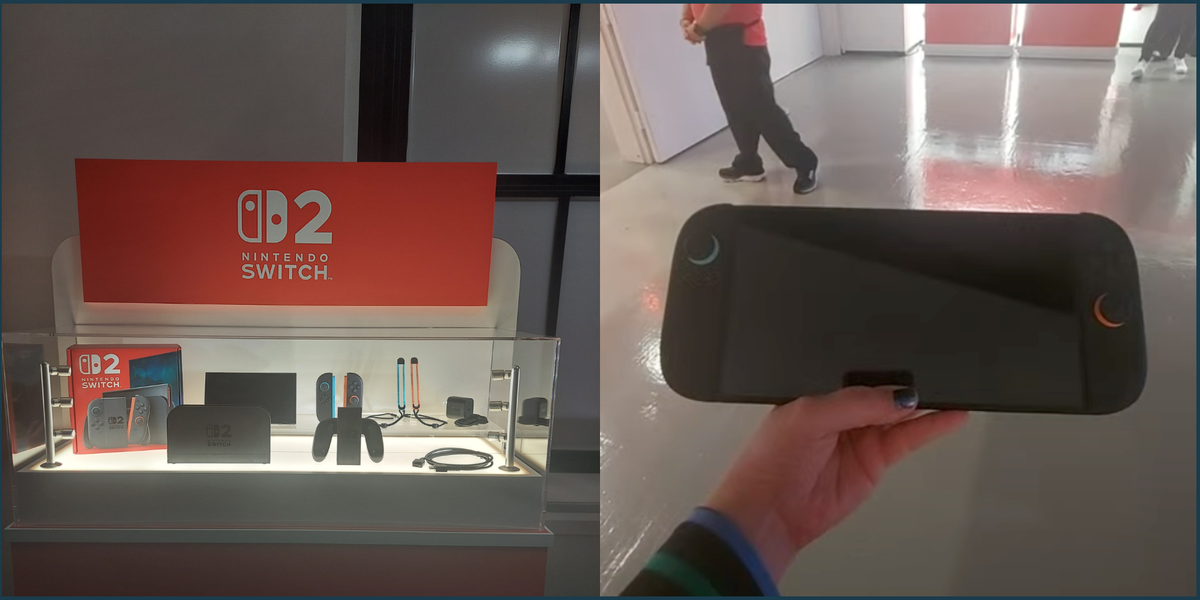
The Nintendo Switch 2 is Nintendo’s next-generation hybrid console, designed to work as both a handheld gaming device and a home console connected to a TV. Like the original Switch, it can be played in handheld mode, tabletop mode, or docked mode. The difference is that nearly everything has been improved: the display, the processing power, the Joy-Con controllers, the dock, the internal storage, the online communication tools, and the way older Switch games run on the new hardware.
At a glance, the Switch 2 still looks familiar. You get a tablet-style console, detachable Joy-Con 2 controllers, a dock, and the same basic promise: play anywhere. But once you actually compare it with the original Switch, the upgrades become obvious. The system feels larger, sturdier, faster, and more premium. It is still playful, but it no longer feels quite as toy-like. The Switch has grown up, put on a better jacket, and learned how to output 4K.
Design and Build Quality: Familiar, But More Premium
The Switch 2 does not abandon Nintendo’s winning design. That is a good thing. The hybrid concept remains the console’s greatest strength. You can start a race in Mario Kart World on the TV, undock the console, and continue playing in handheld mode without feeling like you have switched devices. The transition is still smooth, and that convenience remains something competitors have not fully matched in such a family-friendly, plug-and-play way.
The new console is bigger and heavier than the original, but not uncomfortably so. The larger body makes room for a 7.9-inch display, improved cooling, better speakers, and larger controllers. In handheld mode, the added size makes the system feel more substantial. For adults, that is mostly a win. The original Switch could feel cramped during long play sessions, especially with the tiny Joy-Con buttons. The Switch 2 feels better balanced and more natural in the hands.
For younger players or people with smaller hands, the size increase may be a mixed bag. It is still portable, but not quite as effortless to hold for hours. This is not a Steam Deck-sized wrist workout, thankfully, but it is no longer the feather-light gadget you toss around casually. If the original Switch felt like a game console you could slip into almost any bag, the Switch 2 feels like one you should give its own protected corner, preferably with a case and maybe a tiny velvet rope.
The 7.9-Inch Screen Is a Huge Upgrade
The new 7.9-inch LCD screen is one of the biggest reasons the Switch 2 feels like a true upgrade. It has a 1920 x 1080 resolution, HDR10 support, and up to a 120Hz refresh rate in handheld mode. That is a major improvement over the original Switch’s 720p display. Games look sharper, text is easier to read, colors have more punch, and motion appears smoother when supported.
Is it better than the Switch OLED screen in every way? Not exactly. The OLED model still has deeper blacks and richer contrast. If you are a display snob who whispers “perfect black levels” at dinner parties, you may miss OLED. But the Switch 2’s higher resolution and faster refresh rate make a real difference in actual gameplay. Menus look cleaner, open-world games look less blurry, and fast-moving titles feel more responsive.
In docked mode, the Switch 2 can output up to 4K resolution on supported TVs and games. That does not mean every game magically looks like a high-end PC showcase, but it does mean Nintendo games finally look much cleaner on modern 4K screens. Text, UI elements, and environments benefit the most. Nintendo has never been obsessed with raw power, but the Switch 2 at least enters the modern living room without looking like it forgot its glasses.
Performance: The Upgrade Everyone Wanted
The biggest practical improvement is performance. The Nintendo Switch 2 is powered by a custom Nvidia chip and supports modern graphics features such as DLSS-style upscaling and ray tracing capabilities in supported software. You do not need to memorize the chip architecture to appreciate the difference. Games load faster, run smoother, and look cleaner.
This matters most in games that struggled on the original Switch. Big open-world titles, third-party ports, and demanding games benefit immediately from the stronger hardware. Games that once felt compromised now feel much more playable. The Switch 2 is still not trying to beat a PlayStation 5, Xbox Series X, or gaming PC in a bench-press contest. But compared with the original Switch, it is a dramatic leap.
The console’s increased power also makes older games feel new again. Some titles receive dedicated Switch 2 upgrades, while others simply benefit from more stable performance. That is a major selling point for longtime Switch owners. If your digital library is already large, the Switch 2 does not ask you to start from zero. It says, “Bring your backlog. We made it run better.” Dangerous words for anyone who still has 47 unfinished games and the confidence to buy more.
Joy-Con 2 Controllers: Better, Bigger, and Magnetic
The Joy-Con 2 controllers are one of the most noticeable physical upgrades. They are larger, more comfortable, and attach magnetically instead of sliding onto rails. The magnetic connection feels satisfying and secure, which is exactly what you want from controllers that are constantly being attached, detached, shared, and occasionally lost under couch cushions.
The improved size makes the Joy-Con 2 controllers more comfortable for adult hands. Buttons feel less cramped, shoulder buttons are easier to use, and the controllers no longer feel like emergency backup controls designed for squirrels. They still work well as separate mini-controllers for multiplayer, though they are not as comfortable as a full controller for long sessions.
HD Rumble 2 also adds more detailed vibration feedback. It is not the kind of feature that sells the console by itself, but it adds polish. In racing games, platformers, and minigames, the improved haptics make actions feel more tactile. Nintendo has always been good at making small sensations feel playful, and the Switch 2 continues that tradition.
Mouse Controls Are Clever, But Not Essential
One of the strangest new features is mouse-style control. By placing a Joy-Con 2 on its side, you can use it like a mouse in supported games. It is technically impressive and could be useful for strategy games, simulation titles, creative tools, or future Nintendo experiments. But in everyday use, it feels more like a fun possibility than a must-have feature.
For short sessions, it works better than expected. For long sessions, comfort becomes an issue. It is the kind of feature that makes you smile, then wonder when Nintendo will release the one weird game that makes everyone say, “Oh, that is why they built this.” Until then, mouse mode is clever, quirky, and very Nintendo.
Battery Life: The Biggest Compromise
Battery life is the most obvious downside of the Nintendo Switch 2. Nintendo’s more powerful hardware, brighter display, and higher-performance games all demand more energy. Depending on the game, battery life can range from acceptable to mildly stressful. Less demanding titles can last several hours, but heavier games can drain the battery much faster.
This does not ruin the console, but it changes how you use it. For short commutes, couch play, or relaxed handheld gaming near an outlet, the battery is fine. For long flights, travel days, or marathon handheld sessions, you will want a charger or power bank nearby. The Switch 2 is portable, yes, but it is the kind of portable that appreciates snacks and frequent electrical support.
The addition of a second USB-C port on the top of the system helps. It makes charging in tabletop mode much easier, especially when the bottom port is blocked by the stand. This small design change makes a surprisingly big difference. It is one of those practical improvements that makes you wonder why every device did not do this years ago.
Storage: 256GB Is Better, But Still Not Enough
The Nintendo Switch 2 includes 256GB of internal storage, which is a big improvement over the original Switch. However, modern game sizes are larger, and that space can disappear quickly. Big third-party games, digital downloads, updates, DLC, and enhanced editions can fill the system faster than expected.
The catch is that expanded storage requires microSD Express cards, not the older microSD cards many Switch owners already have. These newer cards are faster, but they are also more expensive. This is one of the hidden costs of upgrading. The console price is only part of the story. Add a storage card, screen protector, case, Pro Controller, extra charger, or camera, and your wallet may start making the same noise Mario makes when he falls into lava.
Still, the faster storage is important for performance. Faster downloads, faster loading, and smoother access to large games all matter on a modern console. The problem is not that Nintendo chose faster storage; it is that 256GB feels like the new “just enough to annoy you later.”
Backward Compatibility: A Major Win for Existing Switch Owners
Backward compatibility is one of the Switch 2’s strongest features. Most original Nintendo Switch games work on the new system, including many physical and digital titles. Some games may have compatibility issues, and certain accessories or unique control setups may require original Joy-Con controllers, but overall support is strong.
This matters because the Switch library is enormous. If you already own games like The Legend of Zelda: Breath of the Wild, Tears of the Kingdom, Super Mario Odyssey, Animal Crossing: New Horizons, Mario Kart 8 Deluxe, Splatoon 3, or a stack of indie games you bought during eShop sales at 1 a.m., the Switch 2 gives that library a longer life.
Some older games receive paid or free upgrades that improve resolution, frame rate, loading times, or features. This can make replaying familiar games surprisingly exciting. A smoother frame rate can change how a game feels. Faster loading can make you more likely to jump back in. Cleaner visuals can turn a replay into a rediscovery.
GameChat and Social Features: Nintendo Finally Joins the Party
Nintendo has historically treated online communication like a mysterious forest creature: interesting, but approached very cautiously. With GameChat, the Switch 2 finally makes voice and video communication feel like a built-in part of the system. The dedicated C button on the Joy-Con 2 gives quick access to chat features, and the built-in microphone makes voice chat easier than before.
This is a major improvement over the awkward phone-app approach used during the original Switch era. GameChat is simple, direct, and surprisingly useful. You can talk with friends while playing, share screens in supported ways, and connect socially without building a small technology shrine around your phone, headset, and console.
The feature is not flawless. Screen sharing can be rough, and video chat requires a camera accessory. There is also the long-term question of subscription access. But as a step forward for Nintendo’s online experience, GameChat is a welcome addition. It makes the Switch 2 feel more modern without losing Nintendo’s friendly personality.
Launch Games and Early Library: Good, But Not Explosive
The early Switch 2 library is both exciting and slightly cautious. Mario Kart World is the obvious showcase, offering larger races, bigger environments, and the kind of joyful chaos that makes friendships stronger or permanently suspicious. It demonstrates the new hardware well and gives players an immediate reason to gather around the system.
There are also enhanced versions of existing games, third-party ports that were not realistic on the original Switch, and upgraded Nintendo classics. This makes the library feel deeper than a traditional launch lineup. You are not just buying into a handful of new games; you are buying into a stronger version of the entire Switch ecosystem.
Still, anyone expecting a massive wave of brand-new Nintendo exclusives on day one may feel underwhelmed. The console’s early appeal depends heavily on improved old games, upgraded ports, and a few major new releases. That is not necessarily bad, but it does mean the Switch 2 feels less like a dramatic reset and more like a powerful continuation.
Who Should Buy the Nintendo Switch 2?
The Nintendo Switch 2 is an easy recommendation for longtime Switch owners who play often, care about smoother performance, and want their existing library to look and run better. It is also a great choice for families because the hybrid design remains unbeatable for shared gaming, travel, and casual multiplayer.
If you skipped the original Switch, the Switch 2 is now the best entry point into Nintendo’s modern ecosystem. You get access to a massive game library, better hardware, and a console that works equally well on the TV or in your hands. For players who value convenience over raw horsepower, it is one of the most appealing gaming devices available.
However, if you already own a Switch OLED and mostly play slower games, indie titles, or cozy life sims, the upgrade may feel less urgent. The OLED screen still looks gorgeous, and many games remain perfectly enjoyable on older hardware. In that case, the Switch 2 is more of a luxury upgrade than a necessity.
What I Like Most About the Switch 2
What I like most is that the Switch 2 respects the original idea. Nintendo did not panic and turn the console into something unrecognizable. It improved the parts that needed help: screen resolution, performance, controller comfort, storage speed, docked output, and online chat. The result is a system that feels familiar in the best way.
The performance boost is the real star. Once you play a game that ran poorly on the original Switch and see it running smoothly on Switch 2, the upgrade makes sense. The larger screen is also a daily quality-of-life improvement. It makes handheld mode feel more luxurious without sacrificing the console’s identity.
What I Do Not Like
The battery life is my biggest complaint. It is not terrible across every game, but it is inconsistent enough to matter. A hybrid console should inspire confidence away from the dock, and the Switch 2 sometimes makes you glance at the battery icon more than you would like.
The storage situation is another frustration. 256GB is better than before, but modern games are hungry. Requiring microSD Express cards makes sense technically, but it increases the real cost of ownership. Add the price of games, accessories, and possible upgrade packs, and the Switch 2 can become expensive quickly.
I also wish Nintendo had gone further with the display. A 1080p 120Hz LCD is strong, but after the Switch OLED, part of me wanted a Switch 2 OLED right away. Nintendo may eventually release one, which creates that classic early-adopter worry: “Am I buying the cool version now or waiting for the cooler version later?”
Extra Experience: Living With the Nintendo Switch 2 Day to Day
The best way to understand the Nintendo Switch 2 is not by staring at a spec sheet. It is by noticing how often you reach for it. A great console disappears into your routine. The Switch 2 does that well. It is the device you pick up for 20 minutes and accidentally play for two hours. It is the console you dock for family multiplayer, then undock because someone else wants the TV. It is the gaming system that makes “just one race” the most dangerous lie in the house.
In handheld mode, the larger screen changes the experience more than expected. Small UI text is easier to read. Fast action is easier to follow. Games with busy environments feel less cramped. On the original Switch, some ambitious ports felt like they were being squeezed through a tiny window. On the Switch 2, those same types of games finally have room to breathe. It does not turn every title into a visual masterpiece, but it removes the constant feeling of compromise.
The improved Joy-Con 2 design also matters during ordinary play. The controllers feel less like a clever gimmick and more like actual controllers. That sounds like a small compliment, but for anyone who used the original Joy-Cons for long sessions, it is huge. The magnetic attachment system also makes the console feel more premium. There is a little moment of satisfaction every time the controllers snap into place. It is not necessary, but neither is the little click of a good pen, and yet here we are, emotionally attached to plastic.
Tabletop mode is better too, especially because of the top USB-C port. On the original Switch, charging while using the kickstand could be awkward. The Switch 2 solves that problem elegantly. It is a small design decision that makes the console more flexible in hotels, airports, bedrooms, desks, and anywhere else people actually play games. Nintendo has always understood that real life is messy. The Switch 2 continues to fit into that mess better than most consoles.
Docked play feels like the area where the Switch 2 most clearly justifies itself to TV-focused players. The original Switch could look soft on a big 4K screen. The Switch 2 is much cleaner. Nintendo’s art direction has always done a lot of heavy lifting, but now the hardware is less of a bottleneck. Bright, colorful games look crisp and lively. More demanding titles feel less like miracle ports and more like proper versions.
Still, the daily experience is not flawless. The battery can shape your habits. You may find yourself charging more often than expected, especially after demanding games. Storage management also becomes part of ownership sooner than it should. If you buy digital games regularly, an expansion card feels less optional and more inevitable.
But here is the honest takeaway: the Switch 2 makes gaming easier to say yes to. That is its superpower. It removes friction. It lets you play on the couch, in bed, on the TV, with friends, alone, online, offline, in short bursts, or in weekend marathons. It is not the most powerful console. It is not the cheapest console. It is not the boldest console Nintendo has ever made. But it is one of the most practical, flexible, and enjoyable gaming systems you can own.
Final Verdict: Is the Nintendo Switch 2 Worth It?
Yes, the Nintendo Switch 2 is worth it for most Nintendo fans and frequent Switch players. It is faster, sharper, more comfortable, more capable, and better suited to modern games. It keeps the hybrid magic of the original while fixing many of its weaknesses. The larger 1080p screen, 4K docked output, improved Joy-Con 2 controllers, stronger performance, backward compatibility, and GameChat features all make the console feel like a meaningful upgrade.
That said, it is not a flawless must-buy for everyone. Battery life is the biggest weakness, storage expansion can be costly, and the early library may not feel urgent if you are waiting for specific new Nintendo exclusives. Switch OLED owners who mostly play casual or indie games may be happy waiting for a price drop, bundle, or future OLED revision.
But as an honest review, I would describe the Nintendo Switch 2 as exactly what Nintendo needed to make: not a revolution, but a refined sequel to one of the most successful gaming ideas ever. It is the Switch, but better. Bigger screen, better performance, better controllers, better TV output, better online communication, and better future potential. It may not shock you, but it will probably win you over anyway.
The Nintendo Switch 2 is like ordering your favorite meal and discovering the restaurant quietly upgraded the ingredients. It is still the thing you loved. It just tastes better now.