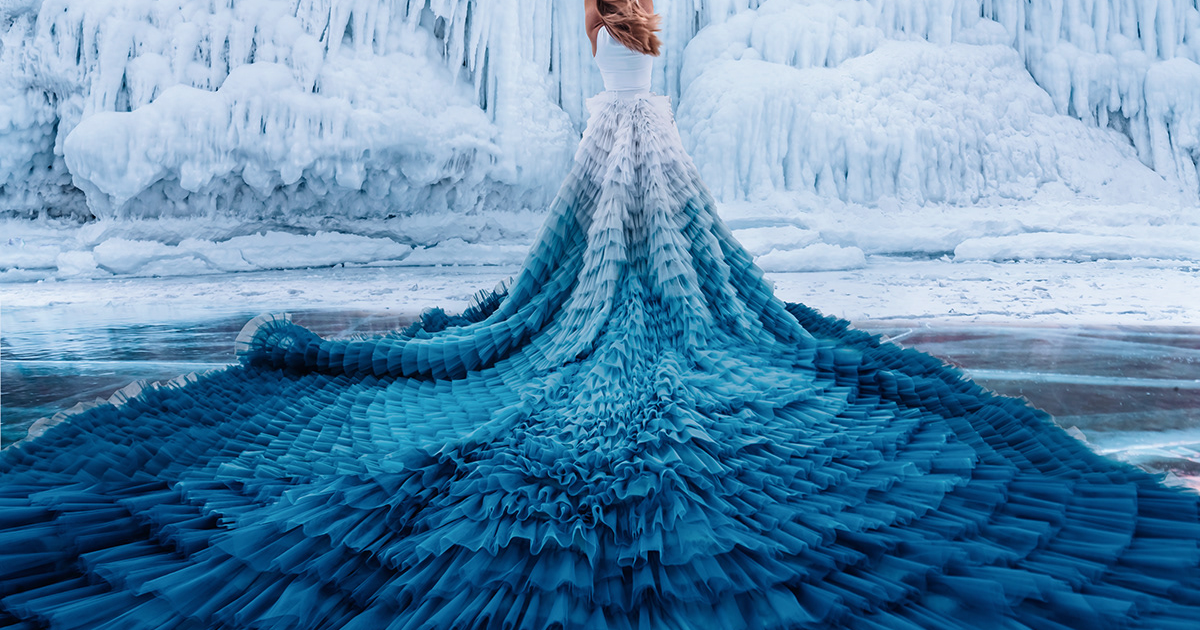
Some landscapes look beautiful in photographs. Lake Baikal looks as though the planet accidentally opened a portal to somewhere else.
One moment, the lake is a silent sheet of blue-black ice marked by white fractures. A few hours later, sunlight turns that same surface turquoise, silver, violet, and occasionally a shade best described as “my camera is definitely making this up.” Along the shore, cliffs rise above frozen caves, wind-polished ice blocks balance on narrow pedestals, and distant figures appear small enough to fit inside a snow globe.
These 34 new Lake Baikal pictures capture only fragments of that enormous landscape. They move from transparent winter ice and frozen bubbles to the cliffs of Olkhon Island, quiet shoreline villages, hardy wildlife, changing weather, and the tiny human moments that give the scenery a sense of scale.
The photographs are dramatic, but the real story beneath them is even bigger. Located in southeastern Siberia, Lake Baikal is widely recognized as the world’s oldest and deepest lake. UNESCO describes it as roughly 25 million years old, about 1,700 meters deep, and home to nearly 20% of the planet’s unfrozen freshwater reserve. It became a UNESCO World Heritage Site in 1996 because of its extraordinary geology, scenery, and biodiversity.
A Lake Built on an Almost Unreasonable Scale
Baikal stretches through Siberia in a long crescent for nearly 400 miles. At its deepest measured point, it reaches approximately 5,387 feet, or 1,642 meters. Its water volume is around 23,000 cubic kilometersroughly comparable to the combined volume of North America’s five Great Lakes. Calling Baikal “a large lake” is therefore a little like calling a blue whale “a fairly substantial fish-shaped object.”
The Ancient Rift Beneath the Water
Lake Baikal occupies an active continental rift where Earth’s crust is slowly pulling apart. Beneath the water lies an immense accumulation of sediment, more than seven kilometers thick in some places. When the depth of the water, sediment, and underlying rift are considered together, Baikal becomes one of the deepest continental depressions on Earth.
This geology helps explain the lake’s steep shores, dramatic headlands, deep basins, and frequent contrast between calm water and rugged mountains. It also gives photographers an endless supply of leading lines. Cracks, ridges, cliffs, bays, and shadows all seem to point toward something interesting.
Why the Ice Looks So Unbelievably Clear
During winter, much of Lake Baikal freezes. The appearance and duration of the ice vary according to temperature, currents, wind, snow, cloud cover, and river inflow. In areas where little snow settles, the ice may appear remarkably transparent, allowing stones, bubbles, and deep darkness to show through below the surface.
Stress within the expanding and contracting ice creates long fractures. Some are hair-thin lines; others form broad networks that stretch toward the horizon. The lake can also produce pressure ridges, ice caves, wind-sculpted blocks, frozen bubble columns, and enormous circular patterns visible from space. NASA researchers have studied Baikal’s giant ice rings using decades of satellite imagery, linking their formation to warmer water moving beneath the ice.
The 34 New Lake Baikal Pictures
I arranged this collection as a visual journey rather than a strict timeline. The first images concentrate on winter ice, the middle photographs explore Olkhon Island and the shoreline, and the final frames focus on wildlife, weather, and the quiet evidence of people living beside such an enormous body of water.
Pictures 1–8: Blue Ice, Cracks, and Frozen Geometry
- The First Step: A pair of boots stands above glass-clear ice, with dark water visible below and a crack running past like a lightning bolt.
- White Lines to the Horizon: Hundreds of fractures spread across the frozen lake, turning the surface into a natural abstract drawing.
- Baikal Blue: Low sunlight enters a broken slab of ice and transforms its edge into a glowing band of electric turquoise.
- Bubbles in Suspension: Small frozen bubbles appear stacked beneath the surface, as though time paused halfway through a glass of sparkling water.
- The Ice Window: A snow-free patch reveals stones below the transparent surface, making the lake look shallow even where it is anything but.
- Pressure Ridge: Jagged ice plates have pushed upward into a miniature mountain range, complete with peaks, valleys, and terrible parking.
- Morning Frost: Delicate ice crystals cover a dark fracture, softening its sharp edges with a feathery white border.
- The Long Crack: One clean line runs toward distant mountains, dividing the frame so perfectly that it almost feels suspiciously organized.
Pictures 9–16: Olkhon Island and the Sacred Shore
- Cliffs Above the Ice: Rust-colored rock rises from the frozen lake, creating a striking contrast with the white snow and blue surface.
- Shoreline Cave: Icicles hang from a small grotto, catching the afternoon light like a chandelier designed by winter itself.
- Cape in the Distance: A headland disappears into pale mist while the foreground ice remains crisp, dark, and highly detailed.
- Shaman Rock at Sunset: The famous formation near Khuzhir becomes a dark silhouette against a warm sky and softly colored snow.
- Serge Poles in the Wind: Ceremonial poles and ribbons stand above the shoreline, reflecting the continuing spiritual importance of the landscape.
- A Lone Pine: One wind-shaped tree clings to a rocky slope, apparently surviving through a combination of deep roots and pure stubbornness.
- Tracks Across the Lake: A faint trail crosses the ice toward the island, giving the immense empty surface a temporary human direction.
- Last Light on the Cliffs: The setting sun touches only the highest rocks while the lake below has already turned deep blue.
Olkhon is Baikal’s largest island and one of its best-known cultural landscapes. The island is closely associated with Buryat traditions, shamanism, Buddhism, and sacred natural formations. Visitors should treat ceremonial sites as living places of cultural importance rather than decorative props for vacation photographs.
Pictures 17–24: Snow, Stone, and Small Winter Details
- Snow Waves: Strong wind has carved the snow into smooth repeating ridges that resemble frozen ocean swells.
- Ice on a Pedestal: A clear block sits above the surrounding surface after wind removed the softer snow and ice around its base.
- Frozen Pebbles: Shoreline stones are sealed beneath a transparent layer, each one magnified by the ice above it.
- Crystal Fringe: Fine frost crystals gather around a small opening, creating a border that looks surprisingly tropical from a distance.
- The Dark Bubble: A large trapped pocket interrupts the clear ice, adding one nearly black circle to an otherwise blue composition.
- Windblown Snow: A thin white veil moves rapidly across the lake, proving that even a perfectly still photograph can contain obvious motion.
- Lake Ice at Dusk: The surface reflects a lavender sky while cracks remain faintly visible beneath the fading light.
- Moon Over Baikal: A pale moon hangs above the mountains as the frozen lake shifts from blue to charcoal.
Pictures 25–34: Life Around the World’s Deepest Lake
- A Baikal Seal at Rest: A round-faced nerpa pauses on the ice, looking both perfectly adapted and mildly inconvenienced by the photographer.
- Ravens Over the Shore: Two dark birds cross a bright sky above a rocky cape, adding movement to the otherwise quiet landscape.
- Fishing Hut: A small shelter stands alone on the frozen lake, dwarfed by the mountains and open sky.
- Smoke Above the Village: Thin chimney smoke rises vertically in still morning air, suggesting breakfast, warmth, and sensible indoor decisions.
- Old Boat in Snow: A wooden vessel rests far from open water, its weathered boards echoing the textures of the surrounding cliffs.
- Red Coat, Blue Lake: A single person in bright clothing provides scale and a rare burst of color against the winter landscape.
- Road Toward Khuzhir: A rough track cuts through snow-covered grassland, with wooden homes scattered beneath a wide Siberian sky.
- Summer Water: In a warmer-season frame, Baikal appears deep blue and almost oceanic beneath green hills and exposed rock.
- Storm Approaching: A dark cloud advances across the lake while a narrow strip of sunlight remains on the distant shore.
- The Final View: Evening light spreads across water, ice, and mountains, leaving no single subject except Baikal itself.
The Wildlife Hidden Beyond the Landscape Photos
Baikal’s scenery tends to dominate the camera roll, but its biological importance is equally remarkable. Millions of years of isolation allowed unusual freshwater organisms to evolve within the lake, leading UNESCO to describe it as a kind of “Galápagos of Russia.” Many of its plants and animals are endemic, meaning they occur naturally nowhere else.
The Baikal Seal
The best-known resident is the Baikal seal, also called the nerpa. It is the only seal species that lives exclusively in freshwater, an unusual distinction for an animal belonging to a group otherwise strongly associated with oceans. Scientists continue to investigate how its ancestors reached this landlocked Siberian lake.
Photographing a nerpa requires patience, distance, and respect. A long lens is preferable to a close approach. Wildlife should never be surrounded, chased, fed, or pressured into leaving a resting place. The finest animal photograph is not worth changing the animal’s behavioror becoming the villain in a very cold nature documentary.
A Complex Freshwater Food Web
Baikal supports endemic fish, amphipods, sponges, plankton, and other organisms adapted to cold, oxygen-rich water. Research has even shown Baikal seals feeding heavily on tiny endemic amphipods, demonstrating how seemingly insignificant creatures can play a substantial role in the lake’s food web.
Winter ice is not merely a photogenic lid. It influences light, water circulation, habitat conditions, and the timing of biological activity. Long-term studies have found that Baikal’s surface waters are warming and that changes in ice conditions may affect organisms adapted to its historically cold environment.
Beauty Does Not Mean Invulnerability
A landscape this vast can create the illusion that human activity is too small to matter. Unfortunately, ecosystems do not recognize dramatic scale as a protective force field.
Scientists have documented concerns involving shoreline pollution, untreated wastewater, algal growth, development, tourism pressure, and climate-related changes. In some populated shoreline areas, unusual growth of filamentous algae has been connected to excessive nutrient inputs, especially where sewage treatment is inadequate.
Changes in lake ice are also important. Ice cover affects transportation, recreation, local safety, weather, water mixing, and ecological processes. Research across northern lakes shows that shorter or less predictable ice seasons can have broad environmental and social consequences.
For photographers, responsible behavior begins with simple choices: pack out waste, avoid damaging shoreline vegetation, respect marked routes, keep distance from wildlife, minimize noise, and ask permission before photographing local people. Sacred sites should be approached quietly and without climbing, rearranging offerings, or treating ceremonial objects as costume accessories.
What It Felt Like to Photograph Lake Baikal
The photographs show clean compositions, but the experience of making them was much less tidy. Photographing Baikal in winter involved numb fingertips, fogged lenses, batteries that behaved as though they had personally resigned, and repeated attempts to operate small camera buttons while wearing gloves designed for handling firewood.
The first surprise was the sound. I had expected a frozen lake to be silent. Instead, Baikal seemed to speak through the ice. Distant cracks produced deep booms, sharp snaps, and low metallic vibrations. Some sounds arrived from far away and traveled underfoot. Others appeared suddenly, close enough to make everyone stop walking and exchange the same expression: “That was probably normal, right?”
Experienced local guides understood the lake in ways no visitor could reproduce after reading a few travel articles. They watched the color and texture of the surface, recognized pressure ridges, checked conditions, and knew which routes were appropriate. Following local safety guidance was not optional. Clear ice may look solid in a photograph while variations in currents, springs, cracks, snow cover, or recent weather can create dangerous conditions.
The second surprise was how quickly the light changed. At midday, the lake could look hard and graphic, with dark fractures cutting through bright snow. Near sunset, the entire landscape softened. Blue ice reflected pink clouds. Cliffs that had looked gray became orange. Shadows stretched across the surface until a single pressure ridge appeared large enough to be a mountain.
Low angles worked best for emphasizing cracks and bubbles. I often placed the camera only a few inches above the ice, using a wide-angle lens to make foreground patterns lead toward distant cliffs. That technique produced dramatic frames, but it also required checking the composition carefully. A boot, backpack, glove, or mysterious snack wrapper could sneak into the corner and ruin the illusion of untouched wilderness.
Condensation was another challenge. Moving a freezing camera directly into a warm room can cause moisture to form on or inside equipment. Keeping the camera sealed in a bag while it gradually warmed helped reduce the risk. Spare batteries stayed inside an inner pocket close to body heat. A lens cloth became nearly as important as the lens itself.
Some of the strongest photographs came from waiting rather than traveling. One evening, I stayed near the same shoreline after the rest of the group began packing. The scene initially looked finished: the sunset had faded, the ice had darkened, and the interesting clouds had moved away. Then a thin band of color appeared beneath the horizon. For perhaps two minutes, it separated the black mountains from the blue lake and gave the entire frame a quiet glow.
Another favorite moment came from focusing on a small piece of ice instead of the huge landscape. Wind had sculpted a clear block into an irregular arch. From standing height, it looked like roadside debris. At ground level, with the sunset visible through its center, it became a crystal window. That photograph reminded me that Baikal rewards both ways of seeing: the enormous and the almost invisible.
Meeting people along the shore added warmth to a collection dominated by cold colors. Villages, fishing gear, weathered boats, dogs, smoke, and footprints showed that Baikal is not an empty fantasy landscape. It is a lived environment with communities, histories, sacred places, livelihoods, and routines that continue beyond the edge of each photograph.
The trip also changed how I edited the images. It was tempting to push every blue tone until the ice looked radioactive. Baikal, however, did not need that much assistance. I kept contrast and saturation controlled, preserved detail in the snow, and allowed some photographs to remain muted. The quiet gray frames often felt more truthful than the spectacular turquoise ones.
Looking through all 34 pictures now, I remember what happened outside each frame: the wind blowing snow into the camera bag, the sudden boom beneath the ice, the smell of wood smoke, the long drive over rough roads, the relief of hot tea, and the strange feeling of standing above more freshwater than the mind can comfortably imagine.
That is the limitation of every Lake Baikal photograph. It may show the color of the ice, the height of a cliff, or the scale of a frozen horizon. It cannot reproduce the sound under your feet or the sensation of looking across a lake so old that nearly all of human history feels like a recent footnote.
Final Thoughts on These Lake Baikal Photos
Lake Baikal is spectacular in the obvious ways: it is ancient, deep, enormous, biologically unusual, and visually unlike almost anywhere else. Yet its real power comes from the combination of those qualities. The lake is simultaneously a geological rift, a freshwater ecosystem, a cultural landscape, a climate archive, a home, and one of the finest natural photography locations on Earth.
These 34 new pictures cannot fully explain Baikal, but they can offer an invitation to look more closely. Follow the cracks. Notice the bubbles. Search for tiny figures beside the cliffs. Look beyond the famous blue ice toward the wildlife, communities, and environmental pressures that rarely fit inside the most shareable frame.
Baikal may be old enough to make human history look brief, but its future still depends on decisions being made now. Photographing it should therefore involve more than collecting dramatic images. It should encourage curiosity, respect, and a desire to protect the extraordinary living lake behind the scenery.