Research basis: U.S. horticultural extension programs, botanical gardens, and pet-safety guidance.
Morning glories are the garden equivalent of a friend who says, “I’ll just stop by for a minute,” then reorganizes your entire living room. Give them a little sunshine, a handful of soil, and something vertical to grab, and these fast-growing vines will turn a plain fence, patio, or balcony into a flowering spectacle.
That enthusiasm is exactly why choosing the right morning glory trellis matters. A flimsy support can collapse under a green avalanche. A solid wall gives a twining vine nothing useful to hold. And planting morning glories beside your prized rosebush may result in a botanical hostage situation by midsummer.
With the right trellis, however, morning glories become one of the easiest ways to add privacy, height, color, and a little old-fashioned cottage-garden magic to a sunny space. This guide covers the best trellis options, planting methods, training tips, maintenance advice, and real-world lessons for keeping your vines dramatic without letting them become tiny green dictators.
Why Morning Glories Need the Right Trellis
Common garden morning glories, including Ipomoea purpurea and related species, are twining vines. They climb by wrapping their stems around thin supports rather than using adhesive roots like ivy. That means they perform best on open lattice, wire panels, netting, string, fencing, bamboo poles, or other structures with narrow pieces they can circle.
Morning glories can grow roughly 6 to 10 feet in a season, sometimes more in warm climates with long summers. Their heart-shaped leaves and trumpet-shaped flowers create a thick curtain of foliage, which is excellent news for anyone trying to disguise a chain-link fence, soften a bare patio wall, or keep a neighbor from judging the state of the grill.
A trellis also improves the look and function of the plant. Instead of becoming a tangled ground-level heap, the vine grows upward, receives better airflow, and displays its blooms where people can actually see them. Morning glories are especially useful when you need quick seasonal coverage but do not want to install a permanent hedge or spend three years waiting for a shrub to become emotionally available.
Choosing the Best Trellis for Morning Glory Vines
Open Lattice Panels
Wood or vinyl lattice is a classic choice for morning glory trellises. The openings give twining stems plenty of places to wrap, and the grid creates an organized pattern even when the plant decides to grow like it just discovered espresso. A lattice panel works beautifully against a fence, beside a porch, or as a lightweight privacy screen around a seating area.
Choose sturdy lattice with openings large enough for stems to pass through easily. Decorative panels with extremely small gaps may look fancy at the garden center, but they can become frustrating when you are trying to untangle vines at the end of the season.
Wire Grid or Cattle Panel Trellises
Metal wire panels are practical, durable, and surprisingly attractive once covered in foliage. A welded-wire grid or cattle panel is ideal for gardeners who want a tall, modern-looking trellis that can handle a dense canopy. These supports work well for fence extensions, vegetable gardens, garden arches, and large containers.
Wire supports are particularly useful when you want a clean geometric shape. Morning glories will fill the openings rapidly, creating a living wall that feels less like a fence and more like an enthusiastic green curtain with excellent floral accessories.
Bamboo Teepees and Pole Trellises
A bamboo teepee is one of the easiest DIY morning glory trellis ideas. Push three to six bamboo poles into the soil, tie the tops together with garden twine, and let the vines climb. The result is inexpensive, charming, and mildly suspicious-looking before the plants cover it. Once the vines fill in, it becomes a flowering tower that works especially well in raised beds, cottage gardens, and large containers.
For a fuller effect, wrap twine horizontally around the poles every 12 to 18 inches. This gives young vines more climbing opportunities and prevents them from concentrating all their energy on one pole like a toddler clinging to a parent’s leg.
Obelisks and Garden Tuteurs
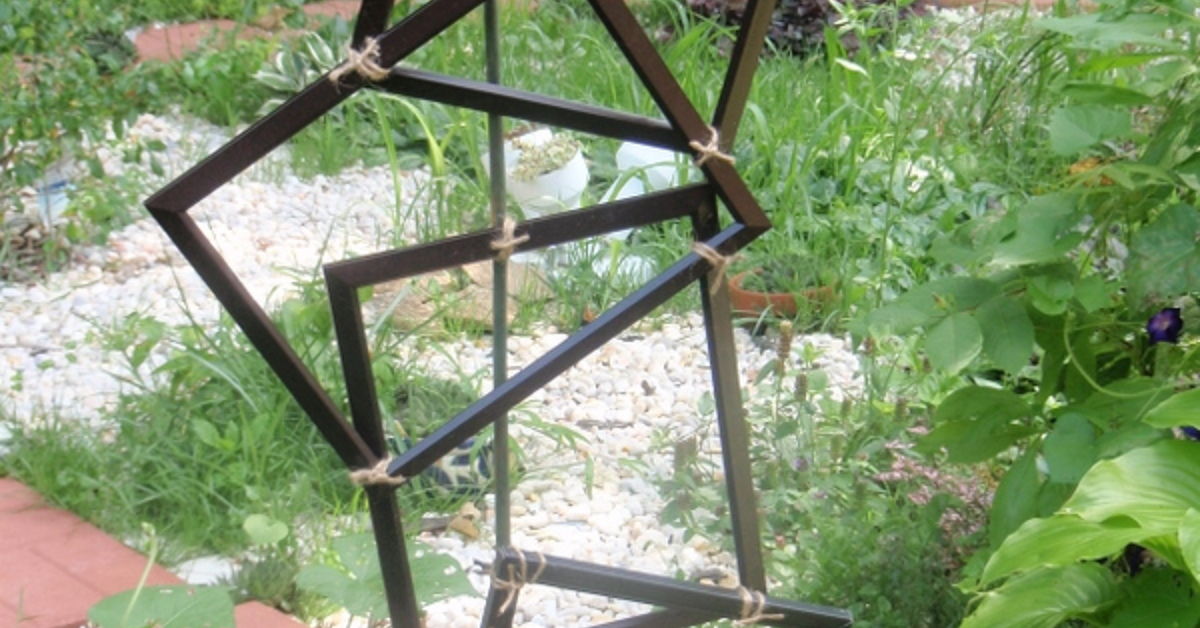
Obelisks are tall, narrow, pyramid-shaped supports that add vertical drama to a border. They are perfect for morning glories because the vines can spiral upward while remaining contained within a defined footprint. Place one in the middle of a flower bed, near a mailbox, or in a large pot on a sunny patio.
This style is especially useful in small gardens where horizontal space is limited. A single obelisk can create height without requiring a full fence or wall. Think of it as a skyscraper for flowers, except the tenants are leaves and nobody complains about rent.
Fences, Arbors, and Pergolas
Morning glories can quickly cover open fencing, arbors, and pergolas. These larger structures are ideal when you want shade, privacy, or a dramatic entrance. However, choose a support that is open enough for the vines to twine around. A solid privacy fence may need wires, trellis panels, or strings added to its surface.
When growing vines near a house wall, place the trellis several inches away from the building whenever possible. This creates airflow behind the foliage and helps reduce trapped moisture. It also makes maintenance easier, which is helpful when the vine is behaving like it has applied for ownership of the siding.
How to Set Up a Morning Glory Trellis
The best time to install a trellis is before planting seeds or seedlings. Pushing stakes into the soil after vines have started growing can damage roots, crush young stems, and turn a peaceful gardening afternoon into a small but memorable tragedy.
- Choose a sunny location. Morning glories bloom best in full sun. Aim for a site that receives several hours of direct sunlight each day.
- Check the soil. These vines prefer well-drained soil and do not need an overly rich planting area. Soil that is too fertile can encourage lots of leaves and fewer flowers.
- Anchor the support firmly. Push stakes deeply into the ground, secure wall-mounted panels with outdoor hardware, or use a heavy container for patio trellises.
- Give vines room to climb. Place seeds or young plants a few inches from the base of the trellis so they can reach the support without crowding one another.
- Add twine if needed. If your trellis has wide gaps, stretch natural jute, sisal, or garden twine across the structure to give young stems more places to wrap.
For containers, use a large pot with drainage holes and a built-in or securely anchored trellis. Morning glory vines in pots dry out faster than vines grown in garden beds, so container gardeners should check moisture regularly during hot weather.
Planting and Training Morning Glories on a Trellis
Morning glories are commonly grown from seed after the danger of frost has passed and the soil has warmed. Their seeds have a hard outer coating, so many gardeners lightly nick the seed coat or soak seeds overnight before planting. Follow the instructions on your seed packet, since varieties can vary.
Plant seeds near the trellis, cover lightly, and keep the soil evenly moist until seedlings emerge. Once plants begin growing, guide the first stems toward the support. You usually do not need to tie them tightly. Simply loop a young vine through an opening or around a string, and it will usually take the hint from there.
Check the plants every few days during their early growth. Morning glories are not especially needy, but they are opportunists. A vine that misses the trellis may begin climbing nearby shrubs, patio furniture, tomato cages, lawn chairs, or anything else that stands still long enough.
Water young plants consistently while they establish. Afterward, morning glories can tolerate moderate dry periods, although flowering and foliage look better with regular watering during prolonged heat. Water the soil rather than soaking the leaves late in the day, especially in humid weather.
Common Morning Glory Trellis Problems and Fixes
The Vine Is All Leaves and No Flowers
The most common reason for leafy, flower-light morning glories is too much fertilizer, especially nitrogen-heavy fertilizer. Avoid feeding aggressively. These plants are surprisingly happy in average soil, and a little restraint often produces better blooms than a gourmet buffet of plant food.
Insufficient sunlight can also reduce flowering. If your morning glory trellis sits in shade for much of the day, the plant may survive but produce fewer flowers. Move containers to a sunnier location when possible, or choose another climbing plant for darker sites.
The Vine Keeps Falling Off the Trellis
Morning glories need narrow supports to twine around. A broad post, smooth wall, or oversized railing may look climbable to humans, but the vine sees it as a vertical parking garage with no ramps. Add strings, wire, lattice, or netting to create more grip points.
The Trellis Is Leaning
Dense foliage can catch wind like a sail. If a trellis starts leaning, reinforce it before a summer storm makes the decision for you. Add deeper stakes, secure it to a fence, or use heavier posts. Decorative structures should be sturdy enough to support both the vine and the occasional curious squirrel.
Seedlings Are Appearing Everywhere Next Year
Morning glories can self-seed, particularly in warm regions or sheltered gardens. Remove spent flowers or immature seed pods if you want fewer volunteers next season. If you enjoy surprise seedlings, leave a few pods to mature, but understand that “a few” can become “why is there a morning glory in my gutter?” faster than expected.
Is It Morning Glory or Field Bindweed?
Field bindweed is a persistent perennial weed that belongs to the same plant family as morning glories and is often called wild morning glory. It tends to have smaller flowers and can spread aggressively through roots and seed. True ornamental morning glories usually have larger, showier flowers and are grown intentionally from purchased seed. When in doubt, identify the plant before letting it set up permanent residence.
Safety and Responsible Growing
Morning glory seeds and plant material should not be eaten. Keep seeds, seed pods, and young plants away from children, dogs, cats, horses, and other animals that may chew garden plants. If you garden around pets or livestock, consider placing the trellis in a protected area and clean up fallen seed pods promptly.
Also think about your local environment before planting. In some places, morning glories can reseed enthusiastically. A little deadheading and end-of-season cleanup can keep your floral display from becoming next year’s weeding workout.
Morning Glory Trellis Experiences: Lessons From the Garden
One of the first surprises gardeners experience with morning glories is how unimpressive they look at the beginning. You plant a few dark, hard seeds beside a trellis and spend several days staring at the soil as if enthusiasm alone can speed germination. Then tiny seedlings appear. A week later, the vines are politely exploring. By the following month, they are attempting to annex the patio umbrella.
A common lesson is that a trellis should be chosen for the plant’s future size, not its current size. A small plastic fan trellis may look perfectly reasonable when the seedlings are two inches tall. By midsummer, though, it can resemble a decorative comb trapped inside a green haystack. Gardeners who start with a sturdy six-foot structure usually save themselves a midseason rescue mission involving twine, gloves, and questionable language.
Many people also learn that morning glories reward regular attention, not constant fussing. A quick walk around the trellis every few days makes a huge difference. This is when you can tuck wayward stems back into the lattice, redirect a vine from your pepper plants, remove damaged leaves, and catch seed pods before they mature. The task takes five minutes when done regularly and an entire weekend when ignored until August.
Container-grown morning glories offer another useful experience. They can be stunning on balconies and patios, especially when trained up a narrow metal obelisk or bamboo teepee. The catch is water. A container that looks pleasantly moist at breakfast can feel like a desert by late afternoon in hot weather. Gardeners who use larger pots, good drainage, and regular watering usually get fuller foliage and better flowering. Small pots can work, but they require the kind of daily commitment normally associated with owning a needy houseplant and a small espresso machine.
Privacy screens are another area where morning glories shine. A wire panel covered in vines can soften an exposed deck, hide an unattractive utility area, or create a temporary summer boundary between neighboring yards. The key word is temporary. Morning glories are annuals in many climates, so the screen disappears after frost. That is actually a benefit for renters, seasonal gardeners, and people who enjoy changing their garden style each year without needing a demolition crew.
Perhaps the most satisfying experience is seeing the first flowers open in the early morning. After weeks of green growth, the trellis suddenly becomes dotted with blue, purple, pink, white, or striped blooms. The flowers may not last all day, but that brief morning display feels special precisely because it is fleeting. Morning glories do not ask you to preserve perfection forever. They simply remind you to step outside with your coffee, admire the show, and accept that the vine has now made your trellis the most interesting thing in the yard.
Final Thoughts: Let the Trellis Do the Heavy Lifting
A successful morning glory trellis starts with three things: sturdy support, full sun, and enough open space for twining stems to climb. From there, the plant does most of the work. Choose a structure that suits your garden style, install it before planting, guide young vines early, and keep an eye on self-seeding.
Whether you use a bamboo teepee, wire panel, rustic arbor, wall-mounted lattice, or balcony obelisk, morning glories can transform an ordinary vertical surface into a seasonal masterpiece. Just remember: give them a trellis, not a throne. They are beautiful, but they will absolutely try to rule the garden.