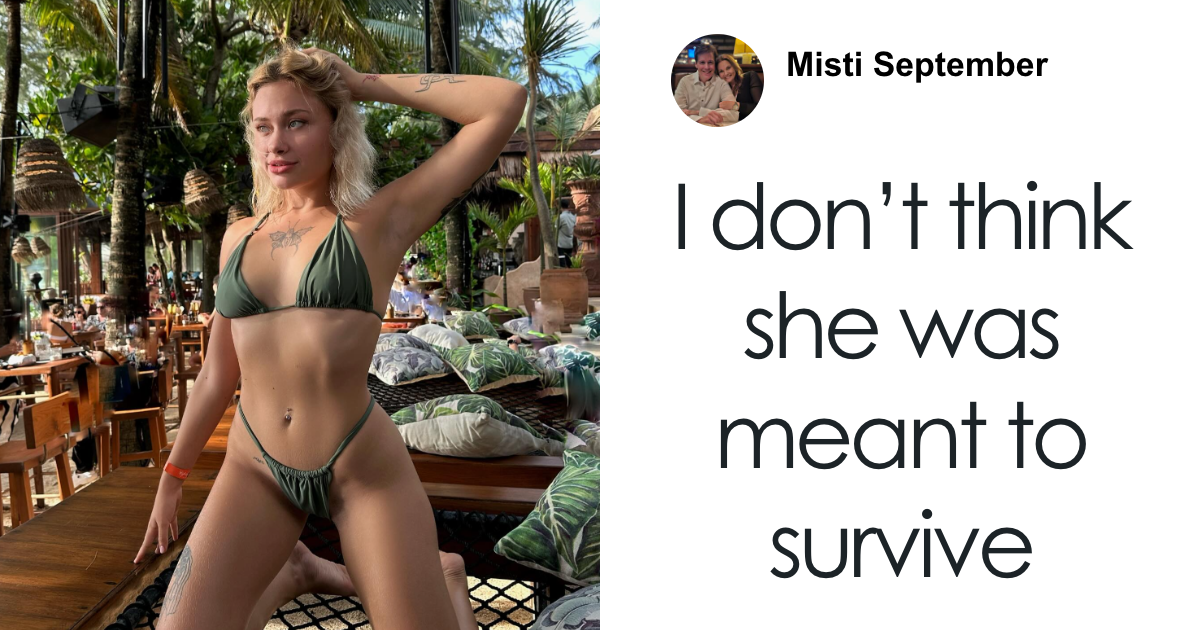
A frightening disappearance, catastrophic injuries, conflicting explanations, and a mother refusing to give up: the case of Ukrainian model Maria Kovalchuk has drawn worldwide attention. After initially being unable to speak, Maria later began communicating, although her family said she struggled with memory and recognition. Months of surgeries and rehabilitation followed, leading to a hopeful milestonewalking again. Here is what is known, what remains disputed, and what her long recovery teaches about trauma, family support, online speculation, and personal safety while traveling for work.
When Maria Kovalchuk vanished in Dubai in March 2025, her family was not dealing with an ordinary missed call or a traveler who had forgotten to charge her phone. The 20-year-old Ukrainian model had missed a planned flight to Thailand, stopped responding to loved ones, and disappeared for days. She was eventually found with life-threatening injuries and rushed to a hospital, beginning a medical ordeal that would involve multiple operations, prolonged rehabilitation, and countless unanswered questions.
The first updates were grim. Maria reportedly had fractures affecting her spine and limbs and was initially unable to speak. Her mother, Anna Kovalchuk, traveled from Norway to be with her and tried to reassure the public that her daughter was receiving treatment. Later, Anna shared a crucial development: Maria had started speaking. However, the encouraging news came with a painful complicationshe was reportedly experiencing serious memory problems and, at that stage, did not consistently recognize relatives.
That update transformed the story from a simple question of survival into a much longer question: What would recovery actually look like?
Who Is Maria Kovalchuk?
Maria Kovalchuk is a Ukrainian model and online content creator associated with Lviv. She was in Dubai before a scheduled trip to Thailand. Reports said she last contacted loved ones on March 9, 2025, after mentioning plans involving people she had met in the city.
When she missed her March 11 flight and remained unreachable, friends and family contacted authorities. Maria was found on March 19 in severe condition and taken for emergency treatment. Reporting described spinal and limb fractures and several surgeries. Whatever the precise sequence of events, her injuries were extensive and recovery would be measured in months rather than days.
The Health Update Her Mother Had Been Waiting to Share
Maria Began Speaking Again
One of the most important early signs of progress was that Maria regained the ability to speak. For a family that had spent days unsure whether she was alive, hearing her voice again was an enormous milestone. Yet the update was not a tidy Hollywood ending. Anna said her daughter had memory difficulties and did not reliably recognize family members.
Severe physical trauma can affect much more than bones and muscles. Confusion, impaired memory, difficulty recognizing familiar people, and gaps surrounding the traumatic event may occur after a significant brain injury. These symptoms can change over time, and recovery is highly individual. A person may regain speech before memory, mobility before stamina, or outward confidence before feeling emotionally safe.
In other words, the body does not follow a convenient progress bar. It can improve in one area, stall in another, and surprise everyone several weeks later.
Her Condition Required Long-Term Rehabilitation
After emergency care in Dubai, Maria continued recovering with family support and later underwent rehabilitation in Norway. Major-trauma rehabilitation can combine orthopedic care, neurological assessment, pain management, physical and occupational therapy, speech support, and psychological care.
The early goals are often practical: sitting safely, standing with assistance, taking a few steps, eating independently, or remembering a conversation. These achievements may look small online, but each can represent weeks of exhausting work.
What Happened to Maria in Dubai?
This remains the most disputed part of the case.
Dubai Police said their investigation concluded that Maria entered a restricted construction site alone and fell from a height. Her family publicly questioned that explanation and believed the circumstances required deeper investigation. Ukrainian authorities later opened a human-trafficking-related inquiry connected to her disappearance, according to reports, while no publicly confirmed criminal conviction established who caused her injuries.
Maria later gave her own account in interviews, alleging that she had been abused after accepting accommodation from people she had met. Those allegations were widely reported, but several details remain contested or have not been independently verified in court. Responsible coverage must therefore distinguish among three categories: established facts, official claims, and personal allegations.
- Established facts: Maria disappeared, missed a flight, was found critically injured, required major medical treatment, and underwent a lengthy recovery.
- Official account: Dubai authorities attributed her injuries to a fall at a restricted construction site.
- Family and survivor account: Maria and her relatives disputed the fall explanation and alleged that other people were involved.
That distinction matters. The internet has a talent for turning uncertainty into certainty before breakfast. In this case, viral posts attached sensational labels, named unverified suspects, and repeated graphic claims that were not always supported by public evidence. Attention can help keep a case visible, but speculation can also distort facts, interfere with legal processes, and deepen trauma for the survivor and family.
The Later Recovery Milestone: Maria Walked Again
By early 2026, the health story had changed dramatically. After months of operations and rehabilitation, Maria shared footage showing that she could walk again. The milestone was especially significant because earlier reports had described her using a wheelchair or crutches and facing a long path back to independent mobility.
Walking again does not necessarily mean that recovery is complete. People who survive major trauma may continue dealing with pain, weakness, limited range of motion, fatigue, scars, memory issues, anxiety, sleep disturbance, and fear triggered by reminders of the event. Still, independent steps can represent a major leap in autonomy and confidence.
Maria described her recovery in emotional terms, emphasizing the support of family and friends and the importance of rebuilding from within. Her progress offered the clearest answer to the question that haunted the earliest updates: yes, she survived, and she regained abilities that once seemed uncertain.
Why Memory Problems Can Persist After Severe Trauma
Memory problems after a serious injury do not automatically reveal what happened. A person may forget the event, struggle to form new memories, confuse timelines, or recall fragments without context. Medication, sedation, pain, disrupted sleep, stress, and possible brain injury can all affect recall.
Rehabilitation generally focuses on function rather than forcing memories to return. Structured routines, notebooks, visual cues, repetition, cognitive exercises, and family photographs may help. Families understandably want to know whether every memory will return, but recovery varies widely and may continue for months or years.
A Mother’s Role in a Recovery Nobody Can Schedule
Anna’s updates reflected a familiar experience for families of severely injured patients: hope and fear arriving in the same sentence. “She is speaking” is joyful. “She does not recognize us” is devastating. Both can be true at once.
Caregivers often become the bridge between doctors, relatives, journalists, and the patient. They track treatment, manage paperwork, repeat reassuring information, and protect privacy. In Maria’s case, her mother’s presence also provided continuity while memory and orientation were reportedly disrupted.
Lessons About Safety for Models and Creators Traveling Abroad
Maria’s case became a warning for young models, influencers, and freelancers who receive invitations promising luxury travel, private parties, brand work, or access to powerful people. Most legitimate opportunities are not dangerous, but glamorous packaging should never replace verification.
Verify the People, Job, and Location
Request full names, company details, a written contract, payment terms, references, and the exact venue. Verify the agency or brand independently. Legitimate work should survive basic questions without collapsing into “Just trust me.”
Keep Control of Transportation and Documents
Arrange independent lodging and transportation whenever possible. Keep identification, money, and a charged phone accessible. Share the itinerary, names of companions, and check-in times with someone at home.
Leave When Serious Red Flags Appear
Pressure to surrender a phone, demands for secrecy, sudden venue changes, blocked exits, threats, or intoxication pushed beyond consent are reasons to leave and contact help. Politeness is optional when safety is at stake.
Experiences Families and Survivors Often Face After a Case Like This
The public usually encounters traumatic stories in bursts: a missing-person alert, a shocking discovery, a hospital update, and eventually a recovery photo. Families live the long spaces between those moments. Their experience is less like a news cycle and more like being trapped in an airport where every departure board says “delayed” and nobody can explain why.
Small Improvements Become Major Events
During rehabilitation, ordinary actions can become landmarks. A patient squeezes a hand on command. She remembers a nurse’s name. She sits upright without becoming dizzy. She takes three supported steps. Families learn to celebrate progress without assuming that one good day guarantees an easy week.
This can be emotionally confusing. Relief may be followed by guilt, anger, or fear. A parent may feel thrilled that a daughter spoke and then quietly grieve because the daughter did not recognize her. Those reactions are not contradictory; they are part of loving someone through neurological uncertainty.
Caregivers Need Care Too
Relatives often neglect sleep, meals, work, and medical appointments while focusing on the injured person. Over time, that can lead to burnout. Sustainable caregiving requires rotating responsibilities, keeping written medical notes, accepting practical help, and setting boundaries with curious outsiders.
A useful offer is specific: “I will bring dinner Tuesday,” “I can handle insurance calls,” or “I will sit at the hospital for two hours.” The vague phrase “Let me know if you need anything” is kind, but it gives an exhausted caregiver one more decision to make.
Uncertainty Can Be Harder Than Bad News
When facts are disputed, families may feel unable to move forward. They want medical clarity, legal accountability, and a complete timeline. Yet investigations can take months, witnesses may disagree, and records may be incomplete. Learning to live with unresolved questions does not mean abandoning the search for truth. It means protecting enough emotional energy to continue functioning while the process unfolds.
Public Attention Is Both Helpful and Harmful
Media coverage can generate leads, financial support, and pressure for transparency. It can also produce harassment, victim-blaming, fabricated theories, and unauthorized use of personal images. Survivors may discover that strangers feel entitled to their medical records, private messages, or every detail of an alleged assault.
Trauma-informed coverage avoids treating suffering as entertainment. It does not imply that a person’s profession, clothing, online content, or decision to attend a party makes violence inevitable or deserved. Risky decisions can be discussed without transferring responsibility from a perpetrator to a victim.
Recovery Is More Than Returning to the Old Life
Survivors may not simply “go back to normal.” They may build a different normal around new physical limits, changed priorities, scars, mobility aids, therapy appointments, and a new relationship with public attention. Progress can include walking again, but it can also include sleeping without panic, setting boundaries, returning to creative work, or choosing not to explain the trauma to strangers.
Maria’s visible progress illustrates why recovery stories should not end at the first inspiring video. The milestone matters, but so does everything the camera cannot capture: pain management, memory work, trust, legal uncertainty, and the daily decision to continue.
Conclusion: A Hopeful Update, but Not the End of the Story
Maria Kovalchuk’s mother first offered hope when she said her daughter was receiving treatment and expected to survive. The later news that Maria had begun speaking was another major step, even as memory problems showed how serious her condition remained. Months later, Maria’s return to walking demonstrated extraordinary physical progress.
At the same time, the central questions surrounding her injuries have not been fully resolved in public. Dubai authorities described a fall at a restricted site; Maria and her family disputed that account and alleged abuse. Until legal findings establish responsibility, careful reporting should avoid presenting disputed claims as proven fact.
The most important update is not a sensational rumor or a viral theory. It is that a young woman who was once found critically injured survived, regained her voice, rebuilt her mobility, and continued moving forward with the support of her family. That is not a neat ending. It is a hard-earned beginning.
Editorial note: This article distinguishes confirmed events, official statements, and allegations. Medical discussion is general information and does not diagnose Maria Kovalchuk or replace professional care.