Editorial note: The title uses the widely shared “188 years old” phrasing that helped make Jonathan famous online. Today, record keepers estimate that Jonathan was born around 1832, which makes him roughly 193 to 194 years old in 2026. In other words, the headline is charmingly old newsrather like Jonathan himself, only less wrinkled.
Who Is Jonathan, the World’s Oldest Tortoise?
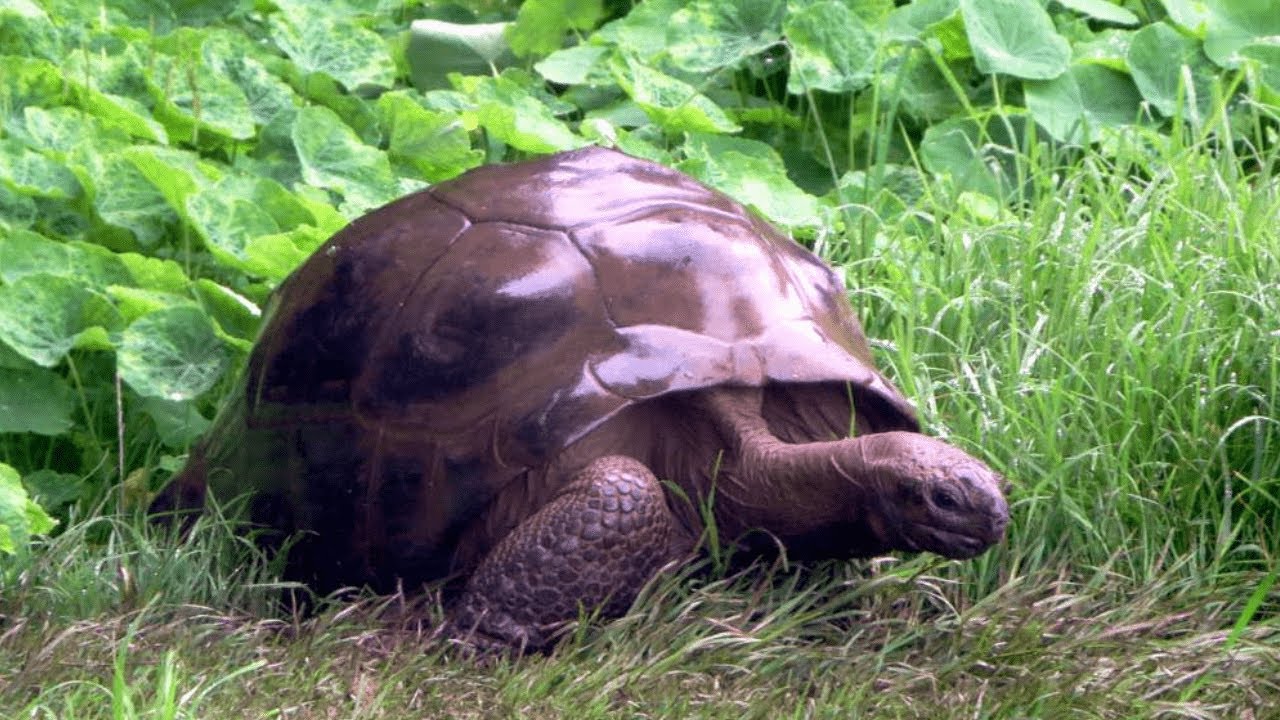
Jonathan is not your average tortoise. He is a Seychelles giant tortoise, a magnificent, slow-moving elder statesman of the reptile world who lives on the remote island of St. Helena in the South Atlantic Ocean. He is widely recognized as the world’s oldest known living land animal and the oldest recorded chelonian, the group that includes tortoises, turtles, and terrapins.
His story begins around 1832, long before smartphones, airplanes, electric light bulbs, or even the American Civil War. When people say Jonathan was born 29 years before the Civil War, they are doing the math from 1832 to 1861, when the first shots of the war were fired at Fort Sumter. That single comparison does more than sound dramatic. It helps us understand just how unbelievably long this tortoise has been quietly chewing grass while history threw furniture around the room.
Jonathan arrived on St. Helena in 1882, already fully grown. Because giant tortoises generally take many decades to reach maturity, experts estimate he was at least 50 years old when he got there. That makes his birth year around 1832, though his exact birthday was never recorded. St. Helena later gave him an official birthday of December 4, a practical solution for a celebrity whose baby photos were, understandably, unavailable.
Why the “188 Years Old” Headline Still Captures Attention
The phrase “188 years old” became popular in earlier stories about Jonathan, and it still has an irresistible headline sparkle. It is the kind of number that makes readers stop scrolling and say, “Wait, this tortoise is older than my country’s plumbing?” But Jonathan has continued living since that viral age reference, so the more current estimate places him closer to 194 in 2026.
That correction does not weaken the story. It makes it better. Jonathan is not just a historical curiosity frozen at 188. He is still part of the present. He has lived through the reigns of British monarchs, the rise and fall of empires, the invention of the telephone, the birth of cinema, two world wars, moon landings, the internet, and the strange modern tradition of arguing with strangers online before breakfast.
In SEO terms, “Jonathan the world’s oldest tortoise” is a strong keyword because it combines wonder, history, animals, and longevity. In human terms, it works because Jonathan feels like a living bridge between centuries. He is a reminder that life does not always move at the speed of breaking news. Sometimes it moves at the speed of a tortoise crossing a lawn, and somehow that can be even more powerful.
Jonathan’s Home: Plantation House on St. Helena
Jonathan lives on the grounds of Plantation House, the official residence of the governor of St. Helena. The setting is almost too perfect: green lawns, historic architecture, ocean air, and one very old tortoise who appears to have no interest in rushing for anyone’s camera schedule.
St. Helena itself is famous for isolation. Located in the South Atlantic between Africa and South America, the island is best known historically as the place where Napoleon Bonaparte spent his final exile. But for many animal lovers, Jonathan has become St. Helena’s most beloved resident. Napoleon may have changed Europe, but Jonathan has better staying power and probably fewer controversial opinions.
Tourists who visit Plantation House may see Jonathan and other giant tortoises roaming the grounds. He shares the space with companion tortoises, including Emma, David, and Frederik. While Jonathan is the celebrity of the group, his daily life is not glamorous in the Hollywood sense. There are no red carpets, no dramatic speeches, and no personal assistant holding a tiny reptile latte. His routine is wonderfully simple: graze, rest, bask in the sun, find shade, enjoy food, and repeat.
How Do Experts Know Jonathan Is So Old?
Jonathan’s age is an estimate, but it is a carefully reasoned one. The key fact is that he arrived on St. Helena in 1882 as a fully mature giant tortoise. Since Seychelles giant tortoises are believed to take around 50 years to reach full size, experts work backward from that date. That places his birth around 1832.
There is also historical photographic evidence. An old photograph taken sometime between 1882 and 1886 shows Jonathan already looking like a large adult tortoise on the Plantation House grounds. That image supports the idea that he was not a youngster when he arrived. In tortoise biography, a blurry old lawn photo can be the reptile equivalent of a birth certificate.
Of course, because Jonathan’s precise hatch date was not written down, there is room for uncertainty. He could even be older than the conservative estimate. That possibility is both fascinating and mildly unfair to the rest of us, who start complaining when our knees click after age 35.
Jonathan’s Health: Old, Blind, and Still Impressively Hungry
Jonathan is elderly, and his body shows it. He is reported to be blind from cataracts, and his sense of smell has faded. However, his hearing remains strong, and his appetite is still enthusiastic. That is a very Jonathan detail: he may not see the snack, he may not smell the snack, but he is absolutely willing to participate in snack-related activities.
His care team helps him by hand-feeding him a nutritious mix of fruits and vegetables. His diet can include items such as apples, pears, bananas, carrots, lettuce, cabbage, cucumber, and other produce. He also grazes naturally, like other giant tortoises. This supplemental feeding became especially important after his health declined years ago. With improved nutrition, he regained condition and energy, proving that even a nearly two-century-old tortoise can benefit from better meal planning.
Jonathan’s care is a lesson in animal welfare. Longevity is not just about genes. It is also about environment, diet, attention, and routine. A tortoise may live slowly, but caring for one well requires consistent human effort. His keepers monitor him, feed him, and protect his peaceful schedule. Basically, Jonathan has what many modern humans secretly want: a quiet home, fresh food, medical care, and permission to nap without guilt.
What Makes Giant Tortoises Live So Long?
Giant tortoises are among the longest-lived vertebrates on Earth. Scientists studying tortoise longevity have looked at genetics, metabolism, disease resistance, and environmental factors. Research on giant tortoise genomes suggests that these animals may carry genetic adaptations connected to DNA repair, immune function, and resistance to age-related disease.
That does not mean tortoises possess magical immortality genes. Jonathan is not hiding a superhero origin story under his shell. Instead, long life appears to come from a combination of biological traits. Giant tortoises grow slowly, conserve energy, have protective shells, and evolved in environments where adult tortoises often faced fewer natural predators. Their slow pace is not laziness; it is a survival strategy with excellent branding.
Aldabra and Seychelles giant tortoises are also important ecosystem engineers. In their native habitats, tortoises graze, browse, spread seeds, and shape vegetation. They may look like mobile boulders, but they influence the landscape in meaningful ways. Their feeding patterns can create open grassy areas and help cycle plant material through the ecosystem.
Jonathan and the American Civil War Comparison
The Civil War comparison is one of the most effective ways to explain Jonathan’s age to American readers. The American Civil War began in April 1861, when Confederate forces fired on Fort Sumter in South Carolina. Jonathan, estimated to have hatched around 1832, would already have been about 29 years old when that happened.
To put that in perspective, when Abraham Lincoln became president, Jonathan was already older than many soldiers who fought in the war. When the United States abolished slavery after the war, Jonathan was already several decades into life. When the first transcontinental railroad was completed in 1869, he was likely approaching 40. When the Statue of Liberty was dedicated in 1886, Jonathan was already living on St. Helena and had probably mastered the art of ignoring human drama.
These comparisons are not just trivia. They help readers feel the scale of deep time. Human lives are often measured in school years, careers, family generations, and decades. Jonathan’s life stretches across eras. He makes history feel less like a textbook and more like something that has been happening beside him while he slowly enjoyed the grass.
The Internet Hoax That Proved People Really Love Jonathan
In 2026, false online claims spread that Jonathan had died. The rumor was quickly corrected by officials, who confirmed that he was alive and well at Plantation House. The incident was strange, frustrating, and very modern: a nearly 200-year-old tortoise briefly became the center of a misinformation storm.
In a way, the hoax revealed how deeply people care about him. Messages of concern came from around the world. For many, Jonathan is not just an animal fact. He is a symbol of endurance. People who have never visited St. Helena still feel attached to him because his life seems to offer comfort in a noisy century. The world changes, algorithms panic, trends explode and vanish, but Jonathan continues to be Jonathan.
That is why accurate information matters. A beloved animal’s story should not be twisted for clicks or scams. Jonathan’s real life is already extraordinary enough. It does not need fake drama. It has 190-plus years of real drama quietly built in.
Why Jonathan’s Story Feels So Human
Jonathan’s appeal is not only his age. It is the emotional contrast between his slow, steady life and our fast, restless one. Most of us live surrounded by notifications, deadlines, updates, upgrades, and the constant suspicion that we forgot a password. Jonathan, by comparison, has been running the same operating system since the nineteenth century: eat, bask, rest, repeat.
There is humor in that, but also wisdom. Jonathan shows that survival is not always flashy. Sometimes resilience looks like maintaining a routine. Sometimes greatness is not sprinting ahead but continuing to exist, calmly and stubbornly, through one wave of history after another.
He also reminds us that animals are not just background characters in human stories. They have their own timelines, needs, habits, and forms of intelligence. Jonathan does not understand his Guinness World Records fame, but he has become part of human culture anyway. He appears on stamps, coins, travel stories, news reports, and countless social media posts. He is both a tortoise and a living landmark.
Experience Section: What Meeting Jonathan’s Story Teaches Us
There is a special kind of feeling that comes from learning about Jonathan. It starts as surprise: “A tortoise can be that old?” Then it becomes calculation: “Wait, born before the Civil War?” Then, somewhere between amazement and disbelief, it turns into reflection. Jonathan’s life invites people to measure time differently.
Imagine standing on the lawn at Plantation House and seeing him move. He would not rush toward you. He would not perform tricks. He would not care that your phone camera is ready. His presence would be the experience. The rough shell, the heavy legs, the ancient face, and the calm rhythm of his movement would say more than any dramatic wildlife encounter could. Some animals impress us with speed. Jonathan impresses us by making speed seem overrated.
For visitors, the experience is also strangely grounding. Modern travel often becomes a checklist: take the photo, post the story, find the next attraction. Jonathan resists that behavior without even trying. You cannot hurry a tortoise into becoming more convenient. You have to slow down, observe, and accept his pace. That is part of the gift. He teaches patience by simply refusing to be anything else.
His story also changes how we think about aging. In human culture, age is often treated like a problem to hide, fix, or soften with flattering lighting. Jonathan turns age into a crown. His wrinkles, cloudy eyes, and slow movement are not failures. They are evidence. They show survival, care, adaptation, and the strange beauty of continuing.
Parents can use Jonathan’s story to introduce children to history, biology, and conservation. A child may not immediately connect with dates like 1832 or 1861, but tell them a tortoise was alive before the Civil War, and suddenly history has legs. Very short legs, yes, but legs. Jonathan makes abstract time concrete. He helps young readers understand that the past was not just “a long time ago.” It was a living world full of creatures, people, change, and continuity.
Writers, teachers, travelers, and animal lovers can all find something useful in his example. Jonathan’s life suggests that endurance is built through ordinary days. There is no single spectacular moment that explains him. His greatness comes from accumulation: one day of grazing after another, one season after another, one caretaker after another, one century after another.
In that sense, Jonathan is more than a record holder. He is a quiet argument for long attention. He asks us, without words, to care about living things before they become rare, ancient, or famous. He reminds us that conservation is not just about saving dramatic species in dramatic landscapes. It is also about protecting the slow, the gentle, the overlooked, and the very old.
Conclusion: Jonathan Is More Than the World’s Oldest Tortoise
Jonathan’s story works because it is almost impossible to reduce to one fact. Yes, he is the world’s oldest known living land animal. Yes, he was born around 1832. Yes, he was already alive decades before the American Civil War began. Yes, he lives on St. Helena and continues to receive careful attention from his keepers. But the deeper reason people love him is simpler: Jonathan makes time visible.
He is a living reminder that the world is bigger than our schedules and older than our headlines. He has survived through centuries not by being loud, fast, or powerful, but by being steady. In a culture that often worships speed, Jonathan’s slow life feels almost rebellious. He is proof that sometimes the most remarkable creature in the room is the one taking the longest to cross it.
So meet Jonathan: ancient, gentle, hungry, stubbornly alive, and still moving through history one careful step at a time. The world may keep changing around him, but Jonathan remains wonderfully, gloriously, tortoisely himself.