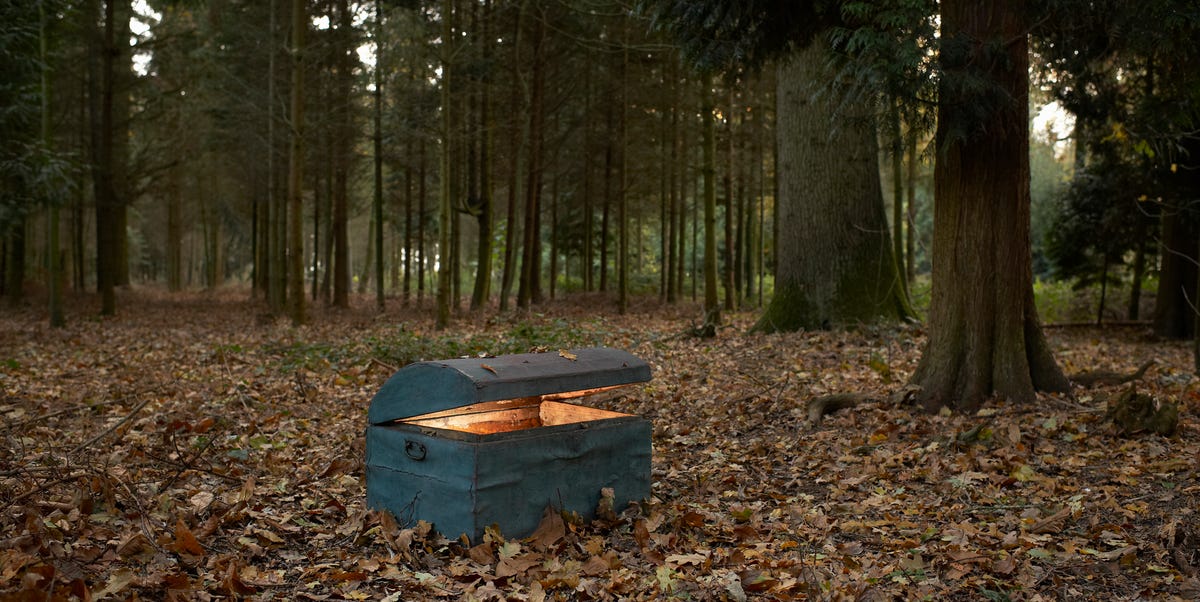
Some people go for a walk and come home with fresh air, a few photos, and maybe a suspicious amount of mud on their shoes. One woman in the Kutná Hora region of the Czech Republic came back connected to a 900-year-old mystery. While walking across a plowed field, she noticed silver coins in the soil. Not one coin. Not five. More than 2,150 medieval silver denarii were eventually recovered, turning an ordinary stroll into one of the most remarkable coin hoard discoveries in recent Czech archaeology.
The find has been described by experts as a kind of medieval “jackpot,” although the original owner probably would not have celebrated. The coins had likely been hidden in a ceramic vessel during a turbulent period in the early 12th century and then left behind forever. Whether they represented military wages, war loot, emergency savings, or the buried fortune of someone who never made it back, the hoard offers a glittering glimpse into medieval Bohemia, a world of dynastic conflict, silver trade, and nervous people hiding wealth in pots.
A Casual Walk, a Broken Pot, and a Field Full of History
The discovery happened near Kutná Hora, a place already famous for silver, mining, and medieval wealth. The woman was walking through a field when she came across coins that had been exposed by plowing and weather. Instead of pocketing them or treating the moment like a private treasure hunt, she reported the find. That decision mattered. Archaeologists were able to document the location, recover additional coins, and preserve the story around the objectsnot just the shiny objects themselves.
Archaeologists from the Institute of Archaeology of the Czech Academy of Sciences in Prague and specialists from the Czech Museum of Silver in Kutná Hora examined the site. The coins had originally been stored in a ceramic container, but centuries of agricultural activity had broken most of the vessel. Only the bottom survived. The denarii were found scattered both on the surface and below it, like a medieval piggy bank that had been through a very long and very rude washing machine.
Using metal detectors, researchers marked coin locations and carefully documented the findspot. This is where the discovery becomes more than a headline. In archaeology, context is king. A coin by itself can tell us about minting, rulers, and metal. A coin found with hundreds or thousands of companions, in a known place, inside the remains of a container, can tell us about fear, wealth, movement, conflict, and daily life.
What Are Medieval Denarii?
The word “denarius” originally refers to a Roman silver coin, but medieval Europe reused and adapted the term. In Bohemia, denarii were small silver coins used before later coinage systems became dominant. They were not just money; they were portable political messages. Medieval coins often carried marks, symbols, or designs tied to rulers and mints. Every coin was a little metal announcement that said, in effect, “This ruler has authority, this economy has rules, and yes, this should buy something.”
The Kutná Hora hoard consists of more than 2,150 silver denarii. Experts have connected the coins with three Přemyslid rulers: King Vratislav II, Prince Břetislav II, and Prince Bořivoj II. These rulers place the coins in the late 11th and early 12th centuries, roughly around the years 1085 to 1107. That timeline matters because it lines up with a period of political instability in Bohemia, when members of the Přemyslid dynasty competed for control of the Prague princely throne.
Why the Hoard Was a Medieval Jackpot
Calling the discovery a jackpot is not just dramatic headline seasoning. Archaeologist Filip Velímský has explained that while exact purchasing power from around 1100 is difficult to calculate, the amount would have been enormous and far beyond the reach of an average person. In modern terms, experts have compared it to winning a million-dollar lottery prize.
That does not mean the coins had the same market value as a million dollars today. The point is scale. For an ordinary farmer or laborer, a stash of more than 2,000 silver coins would have been unimaginable. This was not spare change dropped between wagon seats. It was serious wealth, the kind someone would hide only if they had a very good reasonand probably a very nervous stomach.
The mystery is why it was buried and why no one returned. One theory is that the hoard may have been connected to military activity. The region saw movements of troops during disputes among rival Přemyslid princes. The coins could have been intended as soldiers’ pay or taken as spoils of war. Another possibility is that a wealthy individual buried the money during a crisis and never survived, escaped, or managed to come back. Archaeology often answers questions by creating better questions, which is both exciting and mildly unfair.
The Přemyslid Power Struggle Behind the Treasure
To understand the denarii hoard, it helps to picture medieval Bohemia not as a quiet fairytale kingdom but as a political pressure cooker. The Přemyslid dynasty ruled Bohemia for centuries, but succession was not always smooth. Princes and rivals competed for power, and the throne in Prague was a prize worth fighting for.
The first quarter of the 12th century was especially unstable. Rival branches of the ruling family could draw support from nobles, warriors, and outside allies. Armies moved through the landscape. Loyalties shifted. If someone was carrying or storing a large quantity of silver coins, the safest bank may have been a ceramic pot buried in the ground. Unfortunately for the owner, medieval banking did not come with password recovery.
The hoard therefore fits a broader historical pattern: people hide wealth when life becomes unpredictable. Coin hoards across Europe are often associated with war, invasion, political instability, taxation, or personal danger. The Kutná Hora denarii may represent one such moment frozen in the soil. Someone made a decision in a crisis. Nine centuries later, a walker accidentally found the evidence.
Why Kutná Hora Makes the Story Even Better
Kutná Hora is not just a pretty backdrop. It later became one of the great silver centers of medieval Europe. Rich veins of silver ore helped the town grow dramatically from the late 13th century onward. By the 14th century, Kutná Hora had become a royal city, filled with buildings that reflected its prosperity. Bohemian coins were minted there, and the area became closely associated with mining, money, and royal power.
That later silver boom makes the denarii discovery especially interesting. The coins appear to date from before Kutná Hora’s greatest mining fame, and experts believe they were probably minted in Prague from silver imported into Bohemia. In other words, the hoard sits at a fascinating point in the region’s story: before Kutná Hora became a silver powerhouse, but already within a landscape that would later help shape Central European economic history.
What the Coins Are Made Ofand Why That Matters
The denarii are not pure silver. Early analysis shows that the coins were made from an alloy containing silver, copper, lead, and trace amounts of other metals. That may sound like a metallurgist’s grocery list, but it is extremely useful. The precise chemical composition can help researchers identify where the silver came from and how coin production was organized.
Specialists planned traditional documentation, photography, X-ray imaging, and spectral analysis. Each coin must be cleaned, conserved, identified, cataloged, and studied. That is slow work. Treasure in movies gets dumped onto a table with dramatic music. Treasure in real museums gets spreadsheets, gloves, conservation notes, and people saying, “Please do not breathe directly on the 900-year-old object.”
The scientific study of the hoard may reveal patterns in minting, circulation, and trade. If the metal composition points to a particular source of silver, researchers may better understand economic links between Bohemia and other regions. If the coins show variations in design or quality, they may reveal changes in political authority or minting practices during a chaotic period.
Why Reporting the Find Was the Real Hero Move
The woman who found the coins did something crucial: she contacted experts. That may sound obvious, but it is the difference between archaeology and souvenir collecting. When artifacts are removed without documentation, much of their meaning disappears. A coin can still be beautiful, but its relationship to the field, the pot, the scatter pattern, and the surrounding soil may be lost forever.
Because the find was reported promptly, archaeologists could recover the hoard professionally. They could map where the coins appeared, study how the ceramic vessel broke, and preserve the connection between the treasure and the landscape. The result is not only a collection of coins but a historical case file.
For everyday walkers, hikers, gardeners, and metal-detecting enthusiasts, the lesson is simple: if you stumble upon something that looks historically significant, stop digging and call local heritage authorities. The ground may be holding more information than the object in your hand. Also, it is generally wise not to begin your amateur archaeology career by accidentally destroying the evidence.
What This Medieval Coin Hoard Teaches Us
Money Is Never Just Money
The Kutná Hora denarii show that coins are compact historical documents. They reveal political authority, economic networks, metal supply, and the anxieties of people who lived through unstable times. A coin can be payment, propaganda, emergency savings, or battlefield logistics. In this case, more than 2,150 coins together create a rare snapshot of wealth under pressure.
Ordinary Landscapes Can Hide Extraordinary Stories
The field where the coins were found was not a palace vault or a royal tomb. It was a plowed landscape walked by a modern woman who happened to notice something unusual. That is part of the magic of archaeological discoveries. History is not always buried under monuments. Sometimes it is under farmland, forest paths, construction sites, or the exact place where someone is trying to get their daily steps in.
Preservation Depends on People Making Good Choices
The hoard survived for centuries, but its modern survival depended on responsible action. Reporting the discovery allowed experts to conserve the coins and study them properly. Without that step, the hoard might have been scattered, sold, damaged, or stripped of context. The finder’s decision transformed a lucky moment into a public contribution to history.
Experiences Inspired by the Medieval Denarii Jackpot
There is something wonderfully human about this story because nearly everyone understands the feeling of walking without expecting anything special. A stroll is usually modest. You watch the weather, avoid puddles, think about dinner, and perhaps negotiate with yourself over whether this counts as exercise. The idea that a person could look down and find a medieval fortune turns a simple walk into a doorway. It reminds us that history is not locked behind museum glass from the beginning. Sometimes it waits quietly in the soil until a sharp eye and a responsible choice bring it back into the world.
For travelers, the discovery adds a new layer to visiting historic places like Kutná Hora. Many people go for the famous architecture, the silver-mining heritage, or the atmospheric streets. But this hoard encourages a different kind of attention. Instead of treating history as something that exists only in churches, castles, and official exhibits, visitors can imagine the ordinary ground as part of the archive. A field outside town may hold clues just as powerful as a carved cathedral doorway. The past was lived everywhere, not only in the prettiest buildings.
For hikers and walkers, the story is also a reminder to stay curious without becoming careless. Not every shiny object is treasure, and not every old-looking thing is safe to move. But noticing detailsthe color of soil, a fragment of pottery, a patterned coin, an unusual metal edgecan matter. The best “treasure hunter” in this story was not someone with a movie hat and dramatic theme music. It was a person who paid attention and then did the right thing by alerting experts.
For writers, teachers, and history lovers, the denarii hoard is a perfect example of how one discovery can open many conversations. It can lead into medieval economics, coin design, dynastic politics, warfare, metallurgy, museum conservation, and heritage law. It can also lead into bigger emotional questions. Who buried the coins? Were they afraid? Were they planning to return the next morning? Did they tell anyone where the pot was hidden? The silence around those questions is part of the fascination. The coins speak, but they do not gossip enough.
Finally, the find offers a surprisingly modern lesson about uncertainty. People in the early 12th century worried about conflict, power, safety, and money. Their world was different, but their instincts were recognizable. When danger came near, someone protected what mattered by hiding it. Nine hundred years later, we are left with the evidence of that decision. The “jackpot” is not only the silver. It is the chance to feel, for a moment, how close the medieval past still is beneath our feet.
Conclusion
The medieval denarii jackpot unearthed by a woman on a stroll is more than a delightful “wrong turn leads to treasure” story. It is a major archaeological find that connects one modern walker with the political storms of medieval Bohemia. More than 2,150 silver coins, likely hidden during early 12th-century unrest, now offer researchers a rare opportunity to study wealth, warfare, minting, and trade in the Přemyslid era.
The story also proves that history has a flair for comedy. A ceramic pot buried in fear becomes a research treasure. A plowed field becomes a time capsule. A casual walk becomes an international headline. Somewhere, the original owner of those coins may have had a very bad day. For the rest of us, the find is a dazzling reminder that the past is not gone. It is just very good at hiding.