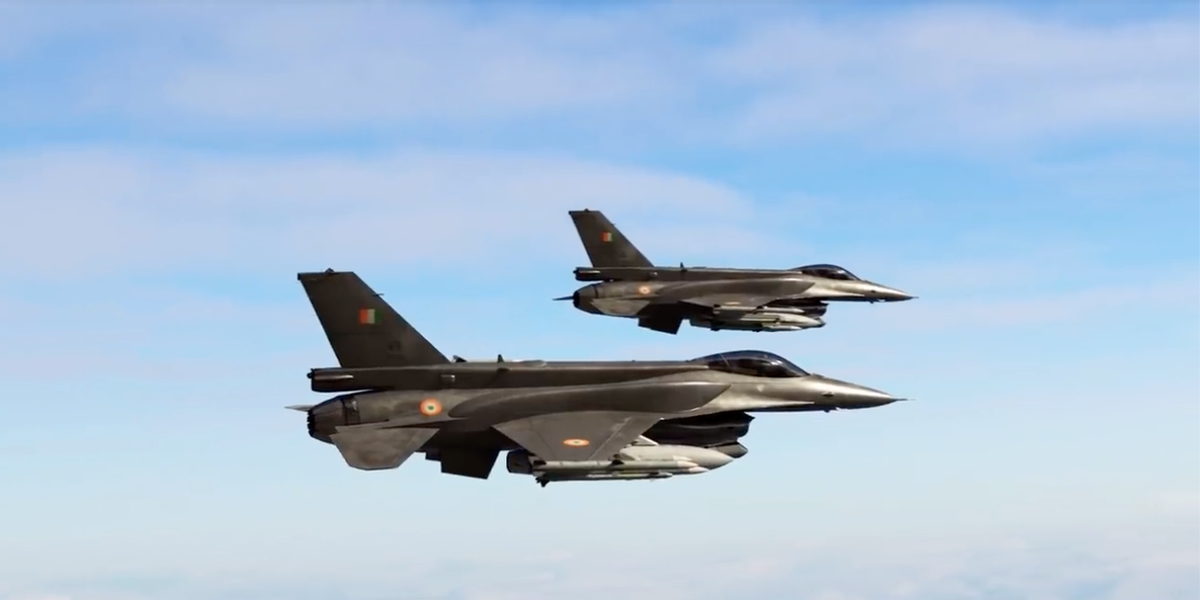
If the name F-21 sounds like Lockheed Martin raided a secret vault and rolled out a mysterious brand-new fighter, here is the calm, grown-up answer: not exactly. The F-21 is not a clean-sheet aircraft that appeared out of thin air wearing sunglasses and dramatic background music. It is, instead, a heavily customized, India-focused evolution of the famous F-16 Fighting Falcona jet that has been flying for decades, proving that in aerospace, “new” often means “very familiar, but with sharper teeth and better software.”
That distinction matters. The F-21 is best understood as Lockheed Martin’s attempt to take the global reputation of the F-16, bolt on a long list of modern upgrades, tailor the package to Indian Air Force requirements, and wrap the whole thing in a major “Make in India” industrial pitch. In plain English, the company is saying: this is not your uncle’s F-16. This is the export-minded, systems-loaded, competition-ready version designed to win one of the world’s most important fighter deals.
And that is why the F-21 is such a fascinating story. It sits at the crossroads of fighter technology, industrial strategy, defense politics, and plain old branding genius. Call it a reworked F-16 if you want. Lockheed Martin would probably prefer “India’s pathway to advanced airpower.” Either way, the aircraft tells us a lot about how modern arms makers sell not just airplanes, but ecosystems, supply chains, and long-term strategic relationships.
What Exactly Is the F-21?
The Lockheed Martin F-21 is a proposed fighter based on the latest F-16 Block 70/72 family. That means it comes from one of the most widely used multirole fighter platforms in the world, but with extensive upgrades intended to make it more attractive for a modern buyer that wants advanced sensors, longer service life, and room to grow.
Lockheed Martin unveiled the F-21 in 2019 as a version “specifically configured” for the Indian Air Force. That wording is important because it tells you the jet is not being sold as a generic export Falcon with a fresh coat of marketing paint. The company’s pitch is that the aircraft addresses India’s particular operating needs while connecting the country to the massive global F-16 support and supplier network.
In other words, the F-21 is both an aircraft and a sales strategy. The airplane matters, of course. But so does the promise of local production, manufacturing jobs, industrial participation, and the idea that India would not just buy fightersit would help build them.
So, Is the F-21 a “New Fighter” or Not?
Yes, but with an asterisk large enough to taxi a jet through. The F-21 is new in the sense that it combines a specific package of upgrades, configuration changes, and industrial promises that did not exist in exactly this form before. But it is not new in the sense of being an all-new airframe like the F-35, B-21, or some hypothetical stealthy beast lurking in a hangar labeled “do not touch.”
That is not necessarily a weakness. In military aviation, a mature platform can be a major advantage. Buyers often prefer an aircraft with a long combat record, a big support network, and known operating costs over a flashy newcomer that still behaves like a software beta with wings. The F-21 leans hard into that logic.
Why Lockheed Martin Created the F-21
The short answer is India. The longer answer is India, industrial policy, export competition, and the strategic future of the F-16 line.
For years, India has pursued plans to modernize its fighter fleet while also increasing domestic manufacturing. That creates a giant opportunity for global defense companies. Lockheed Martin recognized that simply offering another off-the-shelf F-16 would not be enough. India wanted advanced capability, local production, and the political value of technology partnership. So Lockheed Martin repackaged the offer into something more ambitious: the F-21.
The pitch was elegant. India could receive a fighter based on a proven platform, but with upgrades that make it more competitive in a modern air combat environment. At the same time, Lockheed Martin and Tata Advanced Systems could manufacture major portions of the program in India, supporting the country’s broader push for domestic aerospace capacity. That is why the F-21 story has always been as much about factories, tooling, and jobs as it is about speed, radar, and missiles.
There is another strategic layer here, too. The F-16 line remains globally relevant, especially in its latest Block 70/72 form. By creating country-specific offers like the F-21, Lockheed Martin can keep the platform alive, useful, and commercially attractive well into the future. It is basically the defense industry version of a classic rock band releasing a remastered album with bonus tracks, a stronger sound mix, and a giant arena tour.
How the F-21 Differs From a Standard F-16
This is where the story gets interesting, because the F-21 is not just an F-16 wearing a fake mustache.
1. Advanced Radar and Sensor Suite
The jet is built around modern avionics, including the AN/APG-83 AESA radar, a system designed to bring fifth-generation-style radar improvements to the F-16 family. AESA radars matter because they improve target detection, tracking, resistance to jamming, and overall situational awareness. In the modern air war, seeing first is often half the battle.
Lockheed Martin has also emphasized infrared search and track, or IRST, as part of the aircraft’s appeal. That matters because IRST gives pilots a passive way to detect airborne threats without shouting their location with active radar emissions. In a world where stealth, electronic warfare, and dense air defenses are all growing headaches, passive sensing is a very attractive headache remedy.
2. Refueling Flexibility
One of the F-21’s most talked-about changes is its aerial refueling setup. Lockheed Martin has highlighted the aircraft’s ability to support both probe-and-drogue and boom refueling concepts. That may sound like an obscure detail for people who alphabetize screwdrivers, but it is actually a major operational point. Refueling compatibility affects range, interoperability, and how easily a fighter fits into a country’s existing tanker fleet.
For India, that flexibility was part of the aircraft’s tailored appeal. It suggested the F-21 was being shaped around real-world operating requirements rather than dumped onto the market as a take-it-or-leave-it package.
3. Conformal Fuel Tanks and More Reach
The F-21 concept also features conformal fuel tanks, which add range without taking up the same external hardpoints as traditional drop tanks. That means more endurance and more flexibility in how the aircraft carries weapons and sensors. It is the aviation equivalent of discovering your backpack has secret pockets and suddenly your entire travel strategy changes.
Extra range is not a glamorous headline compared with stealth or hypersonics, but it is deeply practical. The farther a fighter can operate effectively, the more useful it becomes across large theaters and demanding patrol patterns.
4. Bigger Display, Newer Cockpit Logic
The F-21 marketing has also leaned on an upgraded cockpit with a large display area inspired by newer-generation design thinking. That matters because modern fighters are less about raw flying and more about information management. The pilot is not just steering a jet; the pilot is processing radar tracks, datalinks, targeting feeds, electronic warfare warnings, and mission updates while attempting not to become a cautionary tale in someone else’s after-action report.
A better cockpit does not sound as thrilling as a missile brochure, but it can make a real difference in combat effectiveness and pilot workload.
5. Higher Weapon Capacity and Longer Service Life
Lockheed Martin has promoted the F-21 as offering more air-to-air weapon carriage than earlier F-16 designs, along with a 12,000-hour service life. That service-life claim is one of the platform’s strongest selling points because it translates into decades of use before a buyer has to start panicking over replacement plans. For countries making big fighter purchases, longevity is not just a nice featureit is budgetary oxygen.
That longer life also supports the broader business case. An aircraft that can stay relevant for years is easier to justify politically, financially, and operationally. Nobody enjoys buying a fighter only to discover it has the shelf life of supermarket lettuce.
Why the F-21 Matters Beyond the Aircraft Itself
The F-21 is important not only because of what it can do, but because of what it represents. It shows how defense companies now compete on industrial partnership as much as on performance charts. Selling a fighter in the 2020s means selling training, software support, maintenance pipelines, supply chains, job creation, and long-term alignment with a broader defense ecosystem.
That is why Lockheed Martin’s partnership with Tata matters so much. The company has repeatedly framed the F-21 as part of a larger manufacturing future in India, not merely as an imported jet. Tata and Lockheed Martin have also tied the relationship to F-16 wing production, reinforcing the message that India could become a deeper player in the global aerospace supply base.
This industrial angle may be just as important as the airplane’s radar or weapons stations. Countries do not only buy combat power. They buy political leverage, local jobs, technical know-how, and a seat at the table in future aerospace programs.
Could the F-21 Be a Smart Buy?
From a capability standpoint, the answer is easy to understand: absolutely, for the right customer. A fighter based on the F-16 Block 70/72 baseline brings a proven design, large global user base, mature logistics system, and serious modernization headroom. Add an AESA radar, advanced mission systems, improved displays, IRST potential, better range options, and a long structural life, and you have a very credible 4.5-generation multirole fighter.
It is not stealthy in the true fifth-generation sense. It is not an F-35, and nobody should pretend otherwise. But not every buyer needs a stealth-first solution for every mission. Many air forces want a fighter that can handle air defense, strike missions, interception, and long-term service without swallowing the national treasury whole. That is exactly where the F-21 tries to live.
The bigger challenge is competition. India’s fighter market has never been simple, and it is certainly not getting simpler. Rafale remains a serious player. Other Western and non-Western options are always part of the discussion. Meanwhile, procurement timelines stretch, requirements evolve, and every major aerospace company shows up with polished graphics and very confident adjectives. In that environment, being good is not enough. You have to be strategically irresistible.
Where the F-21 Stands Now
As of now, the F-21 remains a proposal, not an operational fighter fielded by India or anyone else under that name. That is a crucial point for anyone writing about the program. The aircraft has been marketed aggressively and backed by real industrial planning, but it has not become a signed, in-service Indian fleet.
That does not make the program imaginary. Far from it. The F-21 exists as a serious export offering tied to a real production ecosystem, real F-16 upgrades, and real industrial partnerships. But it still lives in the space between proposal and procurement outcomea place defense projects know all too well, usually while surrounded by PowerPoint decks and strong coffee.
At the same time, the broader F-16 family remains very much alive. Lockheed Martin continues delivering Block 70 aircraft to international customers, which reinforces the message that the underlying platform is not fading into retirement. If anything, the F-21’s appeal depends heavily on the fact that the global F-16 ecosystem is still active, funded, and supported.
Experiences and Practical Realities Around the F-21
To understand why the F-21 matters, it helps to think less like a headline writer and more like the people who would actually live with the aircraft every day. A fighter is not only a machine that performs at an air show or looks dramatic in a defense expo video. It is a daily experience for pilots, maintainers, planners, logisticians, and the taxpayers who eventually fund the whole enterprise.
For a pilot, the experience of moving into an aircraft like the F-21 would likely be defined by information flow. Modern air combat is overloaded with data, and the pilot who can absorb, filter, and act on that information fastest usually has the advantage. That is why the F-21’s radar, cockpit display layout, and sensor fusion concepts matter so much. A pilot does not care whether a brochure says “next-generation” in dramatic font. A pilot cares whether the jet helps identify the threat first, sort friend from foe quickly, and make a weapons decision without cognitive overload.
For a maintainer, the experience would be more practical and less cinematic. Is the aircraft easy to service? Are spare parts available? Is the supply chain stable? Can faults be diagnosed quickly? Does the platform have a support base large enough to avoid turning every repair into a scavenger hunt? This is where the F-16 heritage becomes powerful. A mature ecosystem often means fewer unpleasant surprises and a better chance of keeping jets mission-ready rather than parked under a tarp while people argue over procurement paperwork.
For defense planners, the experience is about balancing ambition and affordability. The F-21 offers a familiar kind of comfort: proven platform, modern upgrades, global backing, and local production possibilities. That combination is attractive because it reduces some of the risk that comes with buying an entirely new aircraft. A planner may look at the F-21 and see a practical way to improve capability without jumping headfirst into the higher costs and complexity that often come with stealth fleets.
For industry workers and engineers, the experience could be even broader. If local manufacturing expands, the aircraft becomes more than a defense purchase. It becomes a training ground for aerospace labor, tooling, certification, quality control, and export-oriented industrial capability. That is one reason the “Make in India” language has always been central to the F-21 pitch. The promise is not just that the country gets fighters. The promise is that the country gets stronger at building part of the modern aerospace world.
And for the public, the experience is usually one step removed but still important. Citizens rarely obsess over conformal fuel tanks at breakfast, but they do care whether a military buy creates jobs, strengthens national security, and avoids becoming a decades-long budgetary soap opera. The F-21 has always been sold as a package that tries to satisfy all of those concerns at once: stronger airpower, deeper industrial participation, and access to a large global support network. Whether that pitch ultimately wins is a matter of policy and politics. But as an experienceon the factory floor, in the cockpit, and in the planning officeit is easy to see why the aircraft still gets attention.
Conclusion
So yes, Lockheed Martin is making a new version of the F-16 called the F-21but the real story is more interesting than the headline. The F-21 is not a brand-new fighter born from scratch. It is a carefully tailored, heavily upgraded, strategically marketed evolution of the F-16 designed to meet Indian requirements and compete in one of the most consequential fighter procurement efforts in the world.
Its appeal lies in the combination of old and new: a battle-tested airframe, modern radar and sensor options, improved range and cockpit design, long service life, and a manufacturing pitch built around local industry. In a defense market where countries want capability without unnecessary drama, that is a compelling formula.
Whether the F-21 ultimately wins the contract that inspired it remains an open question. But even as a proposal, it reveals something important about the future of military aviation: the most successful fighter sale is no longer just about the aircraft. It is about the ecosystem around it, the partnership behind it, and the story a nation wants to tell about its own industrial future.