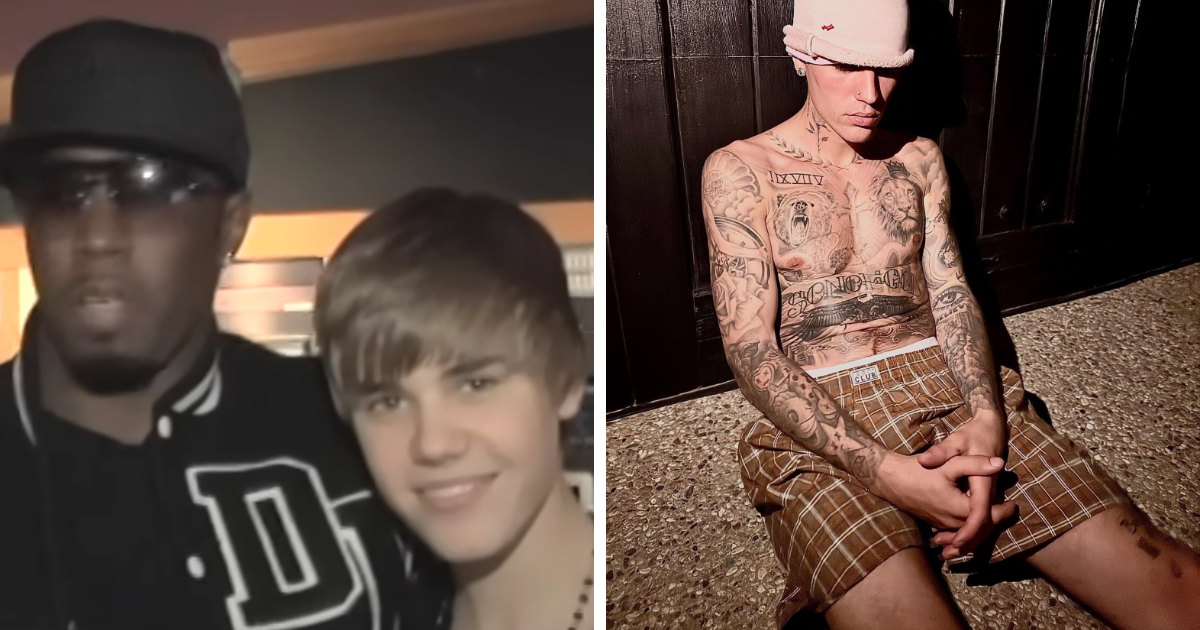
Few celebrity stories travel faster than a rumor with a famous name attached, a resurfaced video in the mix, and the internet doing what the internet does best: sprinting past the facts like it forgot its shoes. That is exactly what happened when old clips of Justin Bieber and Sean “Diddy” Combs resurfaced during the wave of legal scrutiny surrounding Combs. Suddenly, social media turned into a 24-hour guessing machine, with users asking whether Bieber had finally addressed speculation that he had been one of Diddy’s alleged victims.
The short, responsible version is this: Justin Bieber’s representative denied that Bieber was among Sean Combs’ victims. The statement also redirected attention toward people who have alleged real harm, making clear that turning the conversation into a celebrity guessing game can distract from serious legal issues and survivor-centered reporting. In other words, the statement was not a dramatic tell-all, not a confession, and definitely not the kind of “bombshell” that suspicious YouTube thumbnails like to shout about in all caps.
This article breaks down what Bieber’s team actually said, why the rumors gained traction, how old videos became new fuel for speculation, and why readers should separate verified reporting from viral noise. Because when celebrity culture meets a high-profile criminal case, facts need a seatbelt.
What Did Justin Bieber’s Team Actually Say?
The clearest public response came through Bieber’s representative, who stated that Justin was not among Sean Combs’ victims. The representative also emphasized that the focus should remain on individuals who were genuinely harmed and on their pursuit of justice. That detail matters. The statement was not designed to feed a gossip cycle; it was intended to shut down speculation while acknowledging the seriousness of the broader allegations against Combs.
For SEO readers searching “Justin Bieber breaks silence on Diddy,” it is important to understand the wording. Bieber himself did not appear in a public video, press conference, podcast interview, or teary-eyed documentary scene to discuss the rumors. The clarification came from his team. That may feel less cinematic, but it is how many celebrity responses work when the topic is legally sensitive and emotionally charged.
The statement also carried a subtle but important message: not every famous person who appears in old photos or videos with someone accused of wrongdoing should be turned into a character in an unverified theory. Public association is not proof of private harm. A resurfaced clip may raise questions, but it does not automatically answer them.
Why Did the Justin Bieber and Diddy Rumors Explode?
The speculation grew because several factors collided at once. First, Combs faced a major federal case that drew national attention. Second, old videos showing a teenage Bieber around Combs resurfaced online. Third, social platforms rewarded dramatic claims, emotional edits, and “look what we found” posts that often blurred the line between concern and clickbait.
One widely discussed clip came from the late 2000s, when Bieber was still a teenager and rapidly becoming one of the biggest young stars in the world. The video showed him spending time with Combs in a way that many modern viewers found uncomfortable in hindsight. Another resurfaced television appearance also drew attention because of comments that sounded strange to audiences watching years later, especially in the context of Combs’ legal troubles.
But uncomfortable viewing is not the same as evidence. That distinction may sound boring, but boring is sometimes where the truth keeps its clean towels. The internet often treats a raised eyebrow as a verdict, and that is not fair to the people involved, especially when the topic includes allegations of abuse or exploitation.
The Role of Fake Videos and AI-Style Misinformation
Another reason this story became messy is the rise of manipulated celebrity videos. Around the same period, fact-checkers identified fake videos that falsely appeared to show Bieber discussing the Combs trial or suggesting he would testify. These clips were not reliable. Some were edited from unrelated interviews, while others were packaged to look like breaking news.
This is where celebrity gossip becomes more than harmless scrolling. A fake video can convince millions of viewers that a star said something he never said. Then people repeat it, react to it, and build new theories on top of it. At that point, misinformation becomes a layer cake, except nobody asked for dessert and the frosting is legally risky.
For readers, the practical takeaway is simple: if a clip looks shocking, check where it came from. Was it posted by a reputable news outlet? Does the full interview exist? Are multiple reliable sources reporting the same thing? If the answer is no, the clip may be less “exclusive evidence” and more “internet confetti with a Wi-Fi signal.”
How Sean Combs’ Legal Case Changed the Context
Sean “Diddy” Combs’ legal situation is the reason many old celebrity connections came back under public review. Federal prosecutors charged Combs in 2024 with serious offenses, and his case became one of the most closely watched celebrity legal stories in recent years. In 2025, a jury acquitted Combs of the most serious federal charges, including racketeering conspiracy and sex trafficking, but convicted him on two prostitution-related counts. He was later sentenced to 50 months in federal prison and has pursued an appeal.
That legal background is essential because it explains the public interest, but it does not prove every rumor attached to the case. Bieber’s name became part of online conversation mainly because of past public interactions with Combs and the fact that Bieber entered fame at a very young age. People naturally looked back at old footage through a different lens. That is understandable. What is not responsible is turning speculation into a statement of fact.
When a case includes serious allegations, reporting should avoid turning pain into entertainment. Readers deserve clarity, not a carnival mirror. The Bieber statement offered one clear boundary: his team denied that he was one of Combs’ victims.
Justin Bieber’s Early Fame Makes the Story More Sensitive
Part of the reason the rumor resonated is that many fans have long viewed Bieber’s childhood fame as intense, chaotic, and unusually public. He was discovered young, became a global pop phenomenon almost overnight, and spent his teenage years under a microscope that would make most adults ask for a blanket and a quiet room.
From “Baby” to sold-out arenas, Bieber’s rise looked glamorous from the outside. But the public also watched him grow up in real time, making mistakes, facing criticism, and trying to mature while millions of strangers commented on his hair, relationships, faith, health, and behavior. That history makes fans protective. When old clips of adult industry figures around teenage stars resurface, people understandably ask whether young performers were properly protected.
Still, concern should not become invention. It is possible to have a serious conversation about young stars, boundaries, power dynamics, and entertainment industry culture without falsely assigning victimhood to someone who has denied it through a representative. In fact, responsible concern is stronger when it is accurate.
What the Statement Means for Bieber’s Public Image
Bieber’s response did two things at once. First, it closed the door on one specific rumor. Second, it avoided making the broader Combs case about him. That was a smart public relations move, but also a humane one. The statement acknowledged that real people have made serious claims and that public attention should not drift toward celebrity guessing games just because a more famous name gets clicks.
For Bieber, this also fits a larger pattern. In recent years, he has focused more heavily on family, health, faith, and selective creative work. He and Hailey Bieber welcomed their son, Jack Blues Bieber, in 2024, and the singer’s public life has often seemed more centered on privacy than constant explanation. So the fact that the response came through a representative is not surprising. Not every rumor deserves a personal monologue, especially when silence can be twisted and speech can be clipped into a misleading 12-second video.
Why This Story Became an SEO Magnet
The phrase “Justin Bieber Diddy rumors” became popular because it combines several search-friendly elements: a global pop star, a controversial music mogul, old videos, legal drama, and a mystery-shaped headline. Search engines love clarity, but users often search in fragments, especially when they are trying to understand a fast-moving celebrity story. That is why phrases like “Justin Bieber breaks silence,” “was Justin Bieber Diddy’s victim,” and “Justin Bieber Diddy video explained” began circulating.
For publishers, however, there is a responsibility to avoid exploiting vague search terms. A headline can attract readers without misleading them. The best approach is to answer the question directly: Bieber’s team denied the victim rumor, fake videos have circulated, and old footage should not be treated as proof of private events.
That kind of article may not scream like a neon tabloid headline, but it performs better in the long run because readers trust it. Google and Bing increasingly reward helpful, accurate, well-structured content. In plain English: don’t make the algorithm chase gossip in roller skates.
What Readers Should Take Away
The biggest lesson is that celebrity proximity is not evidence. Bieber and Combs were publicly seen together in the past, and some old clips have aged poorly in the eyes of many viewers. But Bieber’s team has denied that he was among Combs’ victims. That is the central verified point.
The second lesson is that misinformation moves quickly when emotions are high. A manipulated video, a cropped clip, or a vague headline can create an entire storyline that never happened. Readers should be careful with content that claims a celebrity “finally exposed everything” but offers no reliable source, no full context, and no confirmation from reputable reporting.
The third lesson is compassion. Serious allegations should not become a scavenger hunt for celebrity names. The people who bring claims forward deserve attention without having their stories overshadowed by speculation about unrelated stars. Bieber’s representative essentially made that point: the focus should stay where the harm was alleged and where justice is being pursued.
Experience-Based Reflection: What This Story Teaches About Fame, Rumors, and Growing Up Online
Watching the Justin Bieber and Diddy rumor cycle unfold feels like watching the internet hold a magnifying glass over a photograph and then argue with the pixels. Many readers have had a version of this experience in everyday life, just on a smaller scale. Maybe someone took an old photo out of context. Maybe a group chat decided what “really happened” before asking the person involved. Maybe a harmless association became a rumor because people love filling silence with their own script.
The celebrity version is louder, crueler, and much harder to escape. Bieber became famous as a teenager, which means millions of people feel as if they watched him grow up. That can create affection, but it can also create entitlement. Some fans believe they are protecting him by digging into old footage; others chase the thrill of being the first to “discover” something. The result is a strange online courtroom where everyone has opinions, few have evidence, and the comment section bangs the gavel every eight seconds.
There is also a broader lesson about how we discuss young stars. Many people look back at 2000s and early 2010s celebrity culture and feel uncomfortable with how casually adults, media outlets, and fans treated teenage performers. Young artists were often asked inappropriate questions, pushed into adult environments, and judged as if they were fully formed adults with corporate-level emotional training. Spoiler alert: teenagers are not tiny CEOs with better hair products.
That discomfort is valid. It can lead to useful conversations about child stars, guardianship, management, media pressure, and industry boundaries. But those conversations should be built on confirmed facts, not viral theories. When people assign a traumatic experience to someone without confirmation, they may believe they are being sympathetic, but they are also taking control of that person’s story. That is not protection; it is projection wearing a superhero cape.
For everyday readers, the healthiest approach is to pause before sharing. Ask whether the information is verified. Ask whether the headline is using emotional bait. Ask whether the content centers real victims or simply uses them as background music for celebrity drama. A responsible reader does not have to be humorless or boring. You can still follow pop culture, still analyze old interviews, and still say, “Wow, that clip feels weird now.” But you can also stop before turning discomfort into certainty.
In Bieber’s case, the confirmed update is narrow but meaningful: his representative denied that he was among Combs’ victims. Everything beyond that should be handled carefully. The internet may prefer fireworks, but sometimes the truth arrives as a short statement from a representative, wearing sensible shoes and asking everyone to calm down.
Conclusion
Justin Bieber’s response to the Diddy rumors did not deliver the dramatic reveal many viral posts promised. Instead, his representative made a direct clarification: Bieber was not among Sean Combs’ victims, and the public should avoid shifting attention away from people who have alleged real harm. That distinction matters for accuracy, fairness, and basic human decency.
The resurfaced videos may explain why fans became curious, but they do not prove the rumors. Fake clips and misleading edits made the situation even murkier, reminding readers to verify before sharing. In a celebrity news cycle built for speed, the most valuable thing is still truth. It may not trend as loudly, but it ages much better.