Saving money rarely begins with a dramatic violin soundtrack, a spreadsheet named “Operation Wealthy Squirrel,” or a heroic vow to never enjoy tacos again. More often, it starts with one tiny habit: bringing lunch, turning off lights, canceling a forgotten subscription, shopping the pantry, or refusing to buy another “life-changing” gadget at 1:17 a.m.
The best money-saving habits are not always glamorous. In fact, some are aggressively boring. But boring is underrated. Boring pays off credit cards. Boring builds emergency funds. Boring turns “Where did my paycheck go?” into “Oh look, I still have money.”
Inspired by everyday savers who have shared the habits that helped them keep more cash, this guide breaks down 30 practical ways people save a few buckssometimes a lot more than a few. One person estimated saving about $35,000 over a 12-year career simply by bringing lunch instead of buying it every workday. That is not a lunchbox. That is a tiny retirement plan with a sandwich inside.
Why Small Money Habits Matter More Than Big Money Moods
Most people do not fail at saving because they bought one coffee. They struggle because small, repeated spending decisions run quietly in the background like apps draining a phone battery. A takeout habit here, a streaming service there, a grocery cart full of “aspirational vegetables” that become fridge compost by Thursdayit adds up.
According to U.S. household spending data, housing and transportation are the biggest expenses for many Americans, but food, subscriptions, utilities, car costs, and impulse purchases can also create serious leaks. The goal is not to become joyless. The goal is to stop paying for things that do not actually improve your life.
30 Habits That Helped People Save A Few Bucks
1. Bring Lunch From Home
Packing lunch is the classic frugal habit because it works. A $12 lunch may not seem dramatic, but five times a week equals $60. Over a year, that is roughly $3,000 before tax, tip, delivery fees, and the emotional surcharge of sad desk fries. Leftovers, sandwiches, rice bowls, soups, and freezer meals can turn lunch into a savings machine.
2. Use The Library Like A Financial Superpower
Libraries are not just dusty book caves guarded by whispering wizards. Many offer free books, movies, audiobooks, internet access, educational programs, museum passes, job-search resources, and financial literacy tools. A library card can replace impulse book purchases, paid learning apps, and some entertainment subscriptions.
3. Wait Before Buying Online
The “leave it in the cart” trick is simple: add the item, walk away, and give yourself 24 hoursor a week for bigger purchases. Many wants expire faster than a banana on a sunny windowsill. If you still want it later and it fits your budget, buy it. If not, congratulations: you just got paid in money you did not spend.
4. Never Carry Credit Card Debt If You Can Avoid It
Credit cards can be useful tools when paid in full, but carrying a balance can turn small purchases into expensive little gremlins. Interest charges make yesterday’s pizza cost tomorrow’s savings. A strong habit is to treat a credit card like a debit card: if the cash is not available, the purchase waits.
5. Buy Quality Once Instead Of Cheap Three Times
Frugal does not always mean cheapest. Sometimes the cheaper item becomes expensive because it breaks, wears out, or makes you angry every time you use it. Shoes, tools, cookware, backpacks, tires, winter coats, and furniture are common examples. The trick is to buy quality where durability matters and skip “premium” where it is just a logo wearing sunglasses.
6. Drive A Car Longer
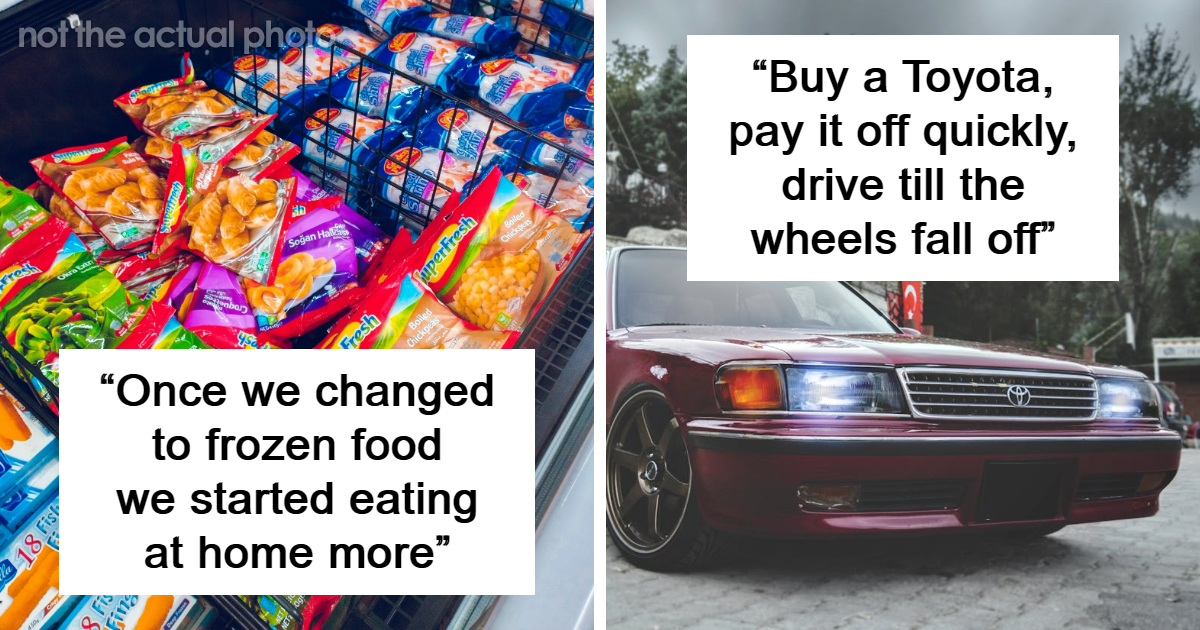
A paid-off, well-maintained car can be a major financial advantage. Car ownership includes insurance, maintenance, fuel, registration, repairs, and depreciationnot just the monthly payment. Keeping a reliable vehicle longer, doing regular maintenance, and avoiding unnecessary upgrades can save thousands over time.
7. Plan Grocery Shopping Around Sales
Instead of deciding meals first and paying whatever the store demands, reverse the process. Check weekly sales, then build meals around discounted proteins, seasonal produce, pantry staples, and freezer items. This habit also makes cooking more creative. Suddenly, cabbage is not boringit is “budget confetti.”
8. Reduce Food Waste
Food waste is one of the sneakiest budget killers. Meal planning, clear storage containers, “use first” bins, freezer portions, and leftovers nights help prevent groceries from becoming expensive science experiments. The USDA has estimated that the average American family of four loses about $1,500 each year to uneaten food, which is basically throwing grocery money into the trash and asking raccoons to manage your finances.
9. Keep Easy Meals At Home
Some people save money by accepting reality: they are tired. Frozen vegetables, ready-to-cook proteins, bagged salads, canned beans, frozen dumplings, rotisserie chicken, and simple pantry meals may cost more than cooking everything from scratch, but they can still be far cheaper than takeout. The best budget meal is the one you will actually eat.
10. Cut Soda And Bottled Drinks
Replacing soda, bottled tea, energy drinks, and daily specialty beverages with water, homemade coffee, or homemade iced tea can shrink grocery and restaurant spending. This does not require becoming a sparkling-water philosopher. Just reducing the habit can save money quickly.
11. Cook And Bake From ScratchStrategically
Cooking from scratch saves money when it fits your life. Bread, soups, beans, rice dishes, muffins, pasta sauces, and sheet-pan meals are beginner-friendly options. But there is no trophy for making everything from scratch while crying into homemade yogurt. Start with the meals you already enjoy.
12. Audit Subscriptions
Subscriptions love to hide in bank statements like raccoons in a garage. Streaming services, apps, cloud storage, newsletters, gaming memberships, gym plans, and free trials can quietly multiply. A monthly subscription audit helps you cancel what you do not use and rotate services instead of paying for all of them at once.
13. Track Spending Without Judging Yourself
Budget apps, spreadsheets, notebooks, or bank tools can all work. The point is awareness, not shame. Tracking reveals patterns: the snack runs, delivery fees, random online orders, and “quick stops” that somehow cost $47. Once you can see the leak, you can fix it.
14. Use A Simple Budget Rule
Many people like the 50/30/20 approach: 50% of after-tax income for needs, 30% for wants, and 20% for savings and debt repayment. It is not perfect for every income or city, but it gives your money a job. A budget should be a steering wheel, not a punishment helmet.
15. Automate Savings
Automatic transfers are powerful because they remove the need to feel motivated every payday. Move money into savings right after income arrives, even if it is a small amount. Ten dollars saved consistently is better than a dramatic plan to save $500 “starting next month,” which is where good intentions often go to wear pajamas forever.
16. Build An Emergency Fund
An emergency fund is money set aside for unexpected expenses like car repairs, medical bills, home repairs, or income interruptions. It keeps one bad day from becoming high-interest debt. Start with a small goal$250, $500, or $1,000then build toward several months of essential expenses.
17. Learn Basic Repairs
Knowing how to unclog a drain, patch a wall, sew a button, maintain a bike, replace filters, fix a running toilet, or troubleshoot small appliance issues can save service calls. The internet has made basic learning easier than ever. Just know your limits: saving money is great; accidentally flooding the kitchen is not a lifestyle brand.
18. Reduce Energy Use
Small energy habits add up: turning off lights, using LED bulbs, sealing drafts, adjusting thermostats, washing clothes in cold water, and unplugging energy-draining devices. The U.S. Department of Energy notes that lighting is a meaningful share of home electricity use, and LEDs can save households money over time.
19. Use Public Transportation When Practical
Transit, biking, walking, and carpooling can reduce fuel, parking, maintenance, and depreciation costs. This is not realistic for everyone, especially in car-dependent areas, but for people with access to good transit, the savings can be significant.
20. Pay With Cash For Social Spending
Cash creates a physical limit. If you bring $40 to a night out, you cannot accidentally spend $93 unless your wallet has learned dark magic. This works especially well for entertainment, snacks, flea markets, festivals, and casual shopping.
21. Remember Prices On Common Items
People who know the usual price of eggs, coffee, detergent, rice, chicken, paper towels, and gas can spot real deals. Not every sale is a sale. Sometimes the store puts a yellow tag on an item and hopes your brain says, “Ah yes, official bargain color.”
22. Shop Your Pantry First
Before grocery shopping, check the pantry, fridge, and freezer. Build meals from what you already own. A “pantry week” every month can clear older food, reduce waste, and delay the next large grocery run.
23. Choose Semi-Vegetarian Meals
Meat can be one of the more expensive grocery categories. Adding more beans, lentils, eggs, tofu, vegetables, grains, and smaller portions of higher-quality meat can lower costs without making meals feel empty. Think chili, stir-fries, burrito bowls, soups, curries, and pasta.
24. Buy Used When It Makes Sense
Thrift stores, consignment shops, used bookstores, refurbished electronics, marketplace listings, and community swaps can be excellent for furniture, kids’ items, tools, clothes, exercise equipment, and kitchen gear. Avoid used items when safety, hygiene, or warranties matter more than savings.
25. Practice The One-In, One-Out Rule
Before buying something new, decide what will leave your home. This habit fights clutter and impulse buying at the same time. If you are not willing to donate, sell, or toss something similar, maybe the new item is not needed.
26. Put Half Of Every Raise Toward Savings
Lifestyle creep is sneaky. You earn more, then suddenly your normal coffee has a hat and your gym has eucalyptus towels. A smart habit is to enjoy part of a raise while automatically sending part to retirement, savings, or debt payoff.
27. Brew Coffee At Home
Home coffee is not free, but it is usually much cheaper than buying it daily. A decent grinder, beans, a French press, drip machine, or pour-over setup can pay for itself quickly. Plus, no one has to misspell your name on a cup to make the experience complete.
28. Make Spending Friction Your Friend
Remove saved cards from shopping websites, unsubscribe from promotional emails, turn off one-click buying, and delete shopping apps that tempt you. The goal is to make impulse spending slightly annoying. If buying socks requires standing up to get your wallet, suddenly your current socks may receive a second chance.
29. Use Rewards Carefully
Cashback and points are only helpful if they do not encourage extra spending or debt. A 2% reward on a purchase you did not need is not savingsit is a coupon attached to a mistake. Use rewards for planned purchases and pay balances in full.
30. Brush Up On Your “Why”
Saving money is easier when it has a purpose. Emergency fund, debt freedom, travel, a home, career flexibility, school, retirement, or simply less stresspick a reason that matters. “Because I should” is weak motivation. “Because I want options” is stronger.
The Psychology Behind Frugal Habits
Good money habits work because they reduce decision fatigue. When lunch is already packed, you do not have to debate takeout. When savings are automatic, you do not have to negotiate with your future self. When subscriptions are reviewed monthly, you do not keep paying for a service you forgot existed during the previous presidential administration.
Another reason frugal habits work is that they create feedback. Once you track spending, cancel waste, and see savings grow, money becomes less mysterious. You stop feeling like your paycheck disappeared in a fog machine and start understanding where it went.
The best habits also respect real life. A person working long shifts may save more by keeping frozen meals at home than by planning elaborate recipes. A commuter may save more by driving a paid-off car than by chasing a new vehicle. A busy parent may save more by using grocery pickup to avoid impulse buys. Personal finance is personal because people are annoyingly different.
Common Mistakes That Make Saving Harder
Trying To Save Too Aggressively
If a budget removes every fun purchase, it usually collapses. A sustainable plan includes small pleasures. The goal is not to live like a cave-dwelling accountant. It is to spend intentionally.
Confusing Cheap With Smart
Cheap shoes that hurt, cheap tools that break, cheap furniture that wobbles, and cheap food that nobody eats are not wins. Smart saving looks at cost per use, quality, safety, and convenience.
Ignoring Big Expenses
Skipping coffee helps, but housing, transportation, insurance, debt, and food usually matter more. A strong savings plan combines small daily habits with occasional big decisions: refinancing when appropriate, comparing insurance, negotiating bills, choosing a reliable used car, or moving to a lower-cost setup when possible.
Extra Experiences: What Saving Money Feels Like In Real Life
People often imagine saving money as a clean, elegant process: open app, make budget, become wise, retire early, wear linen. In real life, it is messier. The first grocery budget may fail because you forgot toilet paper costs money. The first meal plan may include seven dinners and zero desire to cook any of them. The first subscription audit may reveal that you have been paying for a meditation app that now makes you angry.
One common experience is the “small shock” moment. Someone checks their bank statement and realizes they spent $280 last month on work lunches, $90 on delivery fees, $42 on unused apps, and $65 on random convenience-store stops. None of those purchases felt huge at the time. Together, they formed a tiny financial raccoon army.
Another experience is learning that convenience is not the enemy; unmanaged convenience is. Buying pre-chopped vegetables can be cheaper than throwing away whole vegetables you never prepare. Keeping frozen meals can be cheaper than ordering takeout. Paying for a good budgeting app can be worth it if it prevents hundreds in overspending. Frugality is not about doing everything the hardest way. It is about choosing the version of life that saves money and still works on a Wednesday night when everyone is tired.
Many savers also describe a shift from deprivation to pride. At first, bringing lunch may feel like missing out. Later, it feels like winning. Brewing coffee at home may seem small, then suddenly the savings help pay a bill early. Canceling subscriptions may feel annoying until the checking account stops leaking. The habit becomes rewarding because progress becomes visible.
There is also a social side. Saving money can feel awkward when friends spend freely. That is why clear boundaries help: “I’m eating at home first,” “I’m only doing one drink,” “I’m saving for something,” or “I’m skipping delivery this week.” Good friends adapt. Expensive friends may require a separate budget category called “financial weather event.”
The biggest lesson from real-life saving is that consistency beats intensity. You do not need 30 new habits by Monday. Pick three: pack lunch twice a week, audit subscriptions, and automate $25 per paycheck. Once those become normal, add another. Money habits are like muscles, except nobody asks you to post them on Instagram under suspicious lighting.
Saving a few bucks is not really about the few bucks. It is about control, breathing room, and choices. A small emergency fund can turn panic into inconvenience. Lower monthly bills can make work feel less suffocating. Less clutter can make home feel calmer. And yes, a homemade lunch can eventually become $35,000 worth of proof that ordinary decisions are not ordinary when repeated for years.
Conclusion: Tiny Habits, Big Savings
The people who save the most are not always the highest earners or the most extreme budgeters. Often, they are the ones who notice patterns and adjust. They pack lunch, use libraries, wait before buying, repair what they can, cancel what they do not use, drive cars longer, waste less food, and automate savings before temptation shows up wearing a sale sticker.
You do not have to copy all 30 habits. Start with the ones that match your life. A student, parent, office worker, freelancer, retiree, and new graduate will all save differently. The winning habit is the one you can repeat without turning into a cranky coupon goblin.
Saving money is not about being cheap. It is about being clear. Clear about what matters. Clear about what does not. Clear about the difference between a purchase that improves your life and one that merely waves at you from an online cart. A few bucks saved today can become thousands laterand maybe, one day, your own “I saved approximately $35k” story.