Note: This publication-ready article is based on verified production details, industry reporting, awards records, and critical analysis. Source links are intentionally omitted from the HTML body for clean web publishing.
The Question That Roared Louder Than Simba
When Disney released its 2019 version of The Lion King, audiences knew exactly what story they were getting: a royal cub, a doomed father, a suspiciously theatrical uncle, and one meerkat-warthog friendship powerful enough to improve almost any bad day. What they did not know, apparently, was what kind of movie they were watching.
Was The Lion King live-action? Was it animated? Was it a nature documentary that suddenly developed a Broadway habit? The confusion was understandable. Disney marketed the film alongside its live-action remakes, and on the surface it looked like a camera crew had somehow convinced lions, hyenas, hornbills, and warthogs to hit their marks, find their light, and belt Elton John songs without calling their agents.
But here is the central truth: the 2019 The Lion King is not live-action in the traditional sense. It is best described as photorealistic computer-generated animation made with virtual-production techniques that borrow from live-action filmmaking. In simpler terms, it looks filmed, behaves like animation, and lives in the awkward middle of the movie dictionary where labels go to sweat.
What “Live-Action” Usually Means
Traditionally, a live-action movie records real people, real objects, or real environments with a camera. Even when visual effects are added later, the foundation is photographed reality. Beauty and the Beast from 2017 is live-action because Emma Watson, Dan Stevens, Luke Evans, and other performers physically appeared on sets or in performance-capture spaces. Aladdin from 2019 is live-action because Will Smith, Mena Massoud, and Naomi Scott were filmed as human characters, even while magic carpets and blue-genie effects did plenty of digital heavy lifting.
The Lion King is different because there are no human characters walking through the Pride Lands. The animals are not trained lions with excellent diction. They are not real meerkats with SAG cards. They are digital characters created by artists, animators, visual effects teams, and filmmakers using advanced CGI. Voice actors such as Donald Glover, Beyoncé Knowles-Carter, James Earl Jones, Chiwetel Ejiofor, Seth Rogen, and Billy Eichner perform the characters vocally, but their bodies are not physically acting in the scenes.
That distinction matters. A movie can feel live-action without actually being live-action. The 2019 The Lion King is essentially a digital safari staged with the grammar of live-action cinema: realistic lighting, camera movement, naturalistic animal behavior, and environments modeled after real African landscapes. It does not look like traditional animation, but it is still built through animation.
Why Disney Called It Live-Action Anyway
Disney had a practical branding reason for placing The Lion King near its live-action remake lineup. By 2019, the studio had already turned animated classics into major theatrical events, including Cinderella, The Jungle Book, Beauty and the Beast, and Aladdin. Audiences understood the phrase “Disney live-action remake” as shorthand for “a familiar animated classic rebuilt with modern filmmaking technology.”
That marketing category was convenient, even if the technical reality was much fuzzier. The Jungle Book, also directed by Jon Favreau, had a real child actor at its center: Neel Sethi as Mowgli. Most of the animals and environments around him were digital, but the human presence gave viewers an anchor. The Lion King removed that anchor completely. No Mowgli. No Belle. No Aladdin. Just digital animals performing Shakespeare-with-fur under a very expensive virtual sun.
So Disney’s “live-action” label made sense as a consumer-facing category, but it was never a perfect technical description. It told audiences what shelf to place the movie on. It did not fully explain how the movie was made.
The Better Term: Photorealistic CGI Animation
The most accurate description of the 2019 film is photorealistic CGI animation. “Photorealistic” means the imagery is designed to resemble real photography. “CGI” means computer-generated imagery. “Animation” means the characters and scenes are created, shaped, and performed through digital artistry rather than photographed as live physical action.
The film’s animals were designed to move and look like real creatures. Their fur, muscles, eyes, breathing, and weight had to feel believable. The landscapes were inspired by real places, including Kenyan and Namibian terrain, but they were recreated as digital environments. Even the famous opening sequence, which looks like a premium nature documentary accidentally invaded by destiny, was built largely through digital work.
One famous production detail makes the debate even funnier: director Jon Favreau revealed that only one shot in the movie was actually photographed in Africa, while the rest consisted of rendered shots created by animators and CG artists. That means the film contains a tiny grain of live-action truth surrounded by a massive kingdom of digital illusion. It is like calling a chocolate cake a salad because a strawberry wandered onto the plate.
How Virtual Production Made It Feel “Filmed”
The reason The Lion King feels so close to live-action is not only its realistic rendering. It is also the way the filmmakers approached production. Instead of simply animating scenes in a conventional pipeline, the team used virtual-production tools that allowed filmmakers to enter digital sets, scout locations, frame shots, and move cameras as if they were working on a physical movie set.
Imagine a video game version of the Pride Lands built for filmmakers rather than players. Favreau and his team could use VR headsets and game-engine technology to explore Pride Rock, the watering hole, the elephant graveyard, and other environments. They could decide where to place the “camera,” how to compose a shot, and how the virtual light should fall. The result was a fully computer-generated movie directed with many instincts of live-action filmmaking.
That is why calling the film “animated” feels incomplete to some viewers. The process was not exactly the same as hand-drawn animation or even typical 3D animation. The crew borrowed tools and habits from cinematography, location scouting, and physical production. Still, borrowing the language of live-action does not automatically make the final image live-action. A lion may wear a crown, but that does not make him a tax accountant.
Why the Debate Matters to Animation Fans
For casual viewers, the label may seem like trivia. If the movie delivers singing lions and childhood nostalgia, why argue over the receipt? But for animation fans and industry observers, the terminology matters because animation has often been treated as a genre for children rather than a filmmaking medium with endless artistic possibilities.
When a fully computer-generated film is promoted as live-action, some animation supporters see it as a way of avoiding the word “animation” whenever the images become realistic enough to impress adults. That can feel unfair to the artists who built every whisker, leaf, dust cloud, and wildebeest. The movie did not magically photograph itself. Real humans made it, frame by frame, using computers instead of pencils, puppets, or painted cels.
There is also an awards angle. The Lion King received recognition in both animation-adjacent and visual-effects spaces. It was nominated for Best Motion Picture – Animated at the Golden Globes, while the Academy Awards nominated it for Best Visual Effects. That split reflects the movie’s identity crisis perfectly. Awards bodies looked at the same film and essentially said, “Yes, but also no.”
The Uncanny Valley Problem
The biggest artistic challenge for The Lion King was not whether the animals looked real. They often looked astonishingly real. The harder problem was whether realistic animals could express musical-theater emotions without becoming strange.
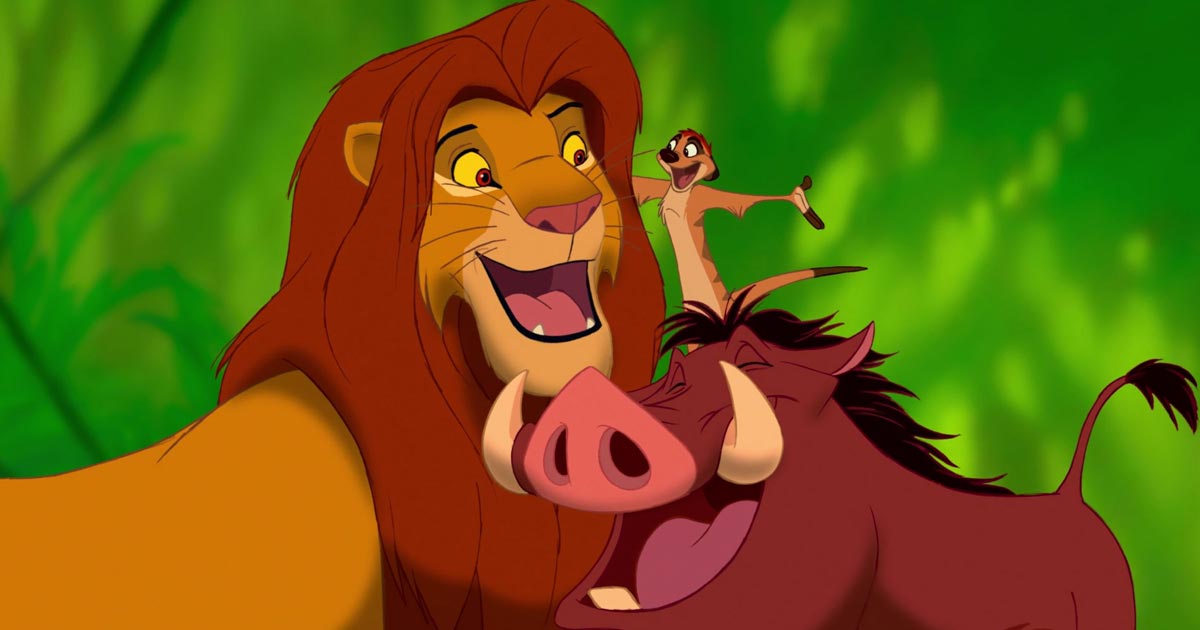
The 1994 animated classic could stretch faces, exaggerate eyebrows, squash bodies, and turn animal expressions into emotional fireworks. Young Simba could look cocky, devastated, silly, terrified, or hopeful with one broad animated gesture. Scar could drip sarcasm from a single eyelid. Zazu could panic with the full-body commitment of a feathered office manager who knows the meeting has gone badly.
The 2019 version chose realism, and realism has limits. Real lions do not smile like Broadway performers. They do not raise eyebrows like sarcastic uncles. They do not usually sing power ballads while gazing into the middle distance, although if they did, the National Geographic ratings would be incredible. Because the film’s faces stay close to natural animal anatomy, some emotional beats feel muted. The characters look alive, yet sometimes less expressive than their hand-drawn ancestors.
Is Realism Always an Upgrade?
One of the most interesting lessons from the 2019 The Lion King is that realism and emotion are not the same thing. A more realistic image is not automatically a more powerful image. Sometimes stylization communicates feeling better than accuracy.
The original 1994 film worked because it understood exaggeration. The colors were bold. The songs were theatrical. The hyenas were creepy in a way that belonged to animation, not biology class. The wildebeest stampede was frightening not because every hair was rendered with documentary precision, but because the scene had rhythm, scale, and emotional clarity.
The remake is visually impressive, but its commitment to naturalism creates a trade-off. Pride Rock looks tangible. The animals look touchable. The sunsets look ready for a travel brochure. Yet the emotional palette can feel narrower because the characters are trapped inside bodies designed to obey nature, even while the story asks them to perform myth, melodrama, and musical comedy.
So, Is It Live-Action?
The cleanest answer is: No, not traditionally. The Lion King is not live-action in the way most people use the term. It does not primarily photograph actors performing in physical spaces. It does not use real animals as the main characters. It is not a wildlife documentary with suspiciously good choreography.
However, it is also not “just animation” in the old-fashioned sense people may imagine. It is a hybrid production that uses animation, visual effects, virtual reality, game-engine tools, digital cinematography, and live-action directing techniques. The final product is animated, but its creative process borrows heavily from live-action filmmaking.
A fair label would be: a photorealistic animated remake created through virtual production. It is less catchy than “live-action,” admittedly. Nobody wants to say, “Let’s take the kids to the photorealistic animated remake created through virtual production!” By the time you finish the sentence, the cub has grown up, defeated Scar, and opened a LinkedIn profile.
Why the Confusion Is Actually Useful
The classification debate around The Lion King reveals how quickly filmmaking technology has outgrown old categories. For decades, viewers could separate movies into simple buckets: live-action, animation, documentary, visual effects spectacle. Today, those buckets leak all over the floor.
Modern blockbusters often contain enormous amounts of digital imagery. Superhero suits, alien planets, city skylines, creatures, vehicles, explosions, and even human doubles may be computer-generated. At the same time, animated films can now imitate lenses, handheld camera movement, natural lighting, and real-world textures. The border between animation and live-action is not a wall anymore. It is more like a zebra crossing, and Hollywood keeps sprinting across it.
The Lion King sits at the center of that transition. It proves that a movie can look photographic without being photographed. It also proves that audiences still care about how images are made, especially when a beloved classic is rebuilt using new tools.
Specific Examples That Show the Difference
Pride Rock
In a live-action film, Pride Rock would be a physical location, a constructed set, or a combination of real footage and digital enhancement. In the 2019 The Lion King, Pride Rock was a digital environment inspired by real African landscapes. It feels like a place a camera visited, but it was created for the film’s virtual world.
The Animals
The lions, meerkats, warthogs, hyenas, birds, insects, and herds were not filmed as speaking animal actors. They were designed and animated to look biologically plausible. Their realism is the result of digital craft, not animal training. Somewhere, a real warthog is probably relieved it did not have to record “Hakuna Matata” for twelve hours.
The Musical Numbers
Musical numbers expose the tension most clearly. Songs like “I Just Can’t Wait to Be King” and “Hakuna Matata” come from an animated tradition of exaggeration and play. In the remake, they are staged with more naturalistic bodies and environments, which changes the energy. The result is impressive, but less elastic than the 1994 version.
The Final Verdict
The Lion King from 2019 is not truly live-action if by live-action we mean real performers filmed in real spaces. It is a photorealistic animated film using revolutionary virtual-production techniques. The movie belongs to a new category of cinema where animation wears the clothing of live-action so convincingly that everyone starts arguing at the family barbecue.
That argument is part of the film’s legacy. Whether viewers loved it, disliked it, or spent the entire runtime whispering “but what is it?” into their popcorn, The Lion King forced mainstream audiences to think about animation as technology, craft, performance, and illusion. It may not have solved the label problem, but it gave us a fascinating one.
Conclusion: The Circle of Life, Now With Rendering Time
So, is The Lion King live-action if there are no people in it? Not really. It is animated, but not in the way many viewers grew up imagining animation. It is digital, but not coldly mechanical. It is built by artists, shaped by filmmakers, voiced by performers, and staged with tools that resemble both a film set and a high-end video game engine.
The best way to understand the movie is not to force it into one old category. Instead, see it as a milestone in hybrid filmmaking. It shows how far CGI has come, how blurry cinematic language has become, and how difficult it is to replace the expressive magic of traditional animation with realism alone.
In the end, The Lion King is less a live-action remake than a photorealistic animated experiment with blockbuster confidence. It roars like live-action, moves like animation, and sits proudly in the middle, daring us to invent better words.
Personal Viewing Experience: Watching a “Live-Action” Movie That Wasn’t Really Live
The first time I watched the 2019 The Lion King, I had the same reaction many people did: “Wow, this looks real.” Then, about five minutes later, I had the second reaction many people also had: “Wait, why does this realistic lion appear to be preparing for a musical theater entrance?” That tension became the entire viewing experience.
The opening sequence was genuinely impressive. The sunrise, the animals gathering, the sense of scale, and the return of “Circle of Life” created a rush of nostalgia. It felt like being invited back into a childhood memory, except this time the memory had upgraded to ultra-high definition and hired a team of digital fur specialists. For a few minutes, the realism worked beautifully because the scene was ceremonial. The animals did not need to do much except move majestically and remind everyone that baby Simba had arrived to ruin Scar’s morning.
The challenge became clearer once the characters started talking. In the 1994 film, Simba’s face could bounce between curiosity, arrogance, fear, and grief with lightning speed. In the 2019 film, young Simba looks more like an actual cub, which is technically amazing but emotionally restrictive. A real cub face is adorable, but it is not designed to carry Shakespearean guilt, royal destiny, and a duet schedule.
I found myself admiring the craft while missing the freedom of animation. That is a strange split-screen experience. One part of the brain says, “Look at the lighting on that fur!” Another part says, “Why do I feel less when Mufasa falls, even though everything looks more realistic?” It is a reminder that movies are not only about visual accuracy. They are about emphasis, rhythm, expression, and emotional permission. The original gave itself permission to be big. The remake often gives itself permission to be believable.
Timon and Pumbaa worked best for me because their humor survived the realism. Seth Rogen and Billy Eichner brought looseness to the film, and their scenes had more personality than many of the royal lion moments. Maybe comedy can sneak past photorealism more easily than tragedy. Or maybe warthogs and meerkats are simply nature’s perfect buddy-comedy format. Science should investigate immediately.
What stayed with me after watching was not just the movie itself, but the conversation around it. Calling it “live-action” felt both understandable and wrong. Understandable because the film uses the visual grammar of live-action: realistic camera angles, natural light, believable textures, and grounded movement. Wrong because nearly everything meaningful on screen was digitally created. The artists did not capture a performance from a lion; they constructed the illusion of one.
That experience made me appreciate animation more, not less. The remake’s technical achievement is huge, but it also highlights why stylized animation remains powerful. Sometimes a drawn lion can feel more alive than a realistic digital one because emotional truth is not the same as biological accuracy. A cartoon eyebrow can do what a million rendered hairs cannot.
In that sense, the 2019 The Lion King is worth discussing even for viewers who prefer the original. It is a fascinating case study in how technology can expand cinema while also revealing the value of older artistic choices. It asks a question bigger than one Disney remake: when movies can simulate reality almost perfectly, what do we still need imagination to do?