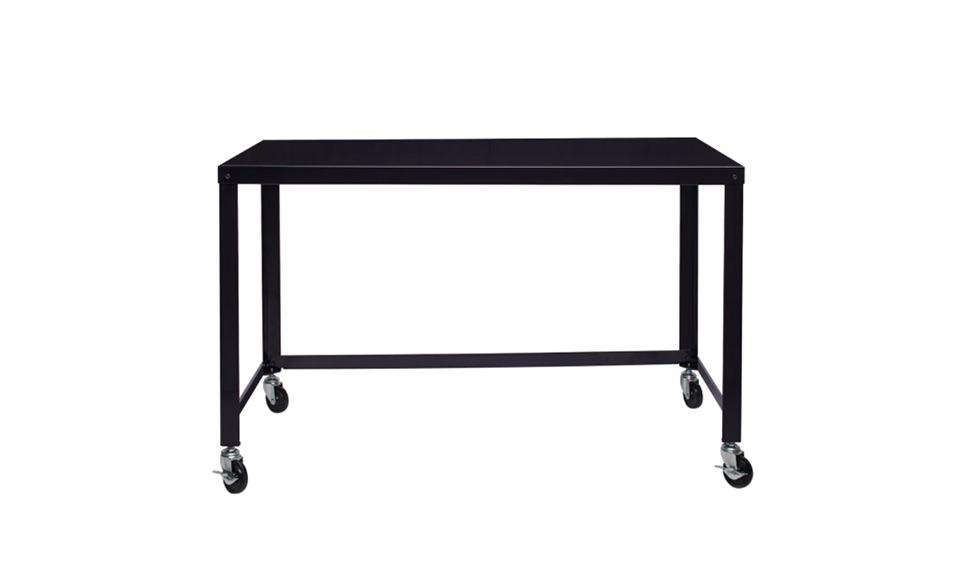
An industrial modern writing desk is what happens when a workshop gets a promotion and starts working from home. It blends the no-nonsense strength of steel, wood, and clean structural lines with the polish required for a modern office. The result can look rugged without feeling gloomy, stylish without becoming precious, and practical without resembling a corporate cubicle that has lost the will to live.
Whether you are creating a dedicated home office, upgrading a bedroom corner, or claiming a small slice of the dining room as your command center, the right industrial modern writing desk can anchor the space. The secret is not simply buying a tabletop with black legs. A great desk should fit your work habits, support comfortable posture, provide enough room for your technology, and make it easier to focus when your inbox begins acting like a needy toddler.
What Is an Industrial Modern Writing Desk?
An industrial modern writing desk combines factory-inspired details with streamlined contemporary design. Traditional industrial style draws from warehouses, workshops, converted lofts, and manufacturing spaces. Think exposed metal, dark finishes, visible bolts, reclaimed-looking wood, concrete tones, pipe-style elements, and materials that look as though they could survive a disagreement with a forklift.
The modern side keeps those raw materials from becoming too heavy or theatrical. Instead of filling a room with rusty machinery and enough pipes to confuse a plumber, modern industrial furniture uses cleaner silhouettes, thinner frames, simpler storage, and a more restrained color palette. A desk may feature a warm oak or walnut-look top paired with matte black steel legs, a slim drawer, open shelving, or a compact metal frame.
The appeal is easy to understand. An industrial modern writing desk looks substantial, but it can still fit into apartments, guest rooms, lofts, farmhouse interiors, minimalist homes, and even traditional spaces that need a little edge. It is furniture with backbone.
Industrial style characteristics informed by Architectural Digest and Better Homes & Gardens.
Why Industrial Modern Desks Work So Well in Home Offices
A desk is often the visual center of a home office. Even in a tiny workspace, it sets the mood. A flimsy desk can make the whole room feel temporary, while an industrial modern desk creates an immediate sense of purpose. It says, “Important work happens here,” even when that work is mostly switching between spreadsheets, snack breaks, and trying to remember why you opened a new browser tab.
They Balance Warmth and Structure
Wood adds warmth, texture, and personality. Metal provides contrast and a sense of durability. Together, they prevent a workspace from becoming either too cold and corporate or too rustic and cluttered. A weathered wood finish paired with a black steel frame can feel grounded, while a lighter wood top with slim metal legs can make a small room appear more open.
They Suit Many Decorating Styles
Industrial modern furniture is surprisingly flexible. Pair it with a leather office chair for a loft-inspired look, a light upholstered chair for a softer modern office, or a simple ergonomic chair for a practical work-from-home setup. Add floating shelves, a metal task lamp, framed art, a plant, and a neutral rug, and the room begins to feel intentional instead of accidental.
They Encourage Visual Simplicity
Most industrial modern writing desks rely on straightforward forms. That simplicity makes them easy to style and easier to keep visually calm. A desk with one or two drawers, an open lower shelf, or a clean writing surface offers enough function without turning into a storage unit wearing a disguise.
Key Features to Look for Before Buying
The prettiest desk in the world is still a bad purchase if your knees hit the underside, your monitor sits too close, or the surface wobbles every time you type an email with mild enthusiasm. Before choosing an industrial writing desk, look beyond the product photos.
Desk Size and Surface Depth
Start with the footprint. Measure the room, then mark the desk dimensions on the floor with painter’s tape. This low-tech trick can prevent a very modern problem: ordering a desk online that looks compact in a staged photo but arrives with the proportions of a small aircraft carrier.
A compact desk may work well for laptop use, journaling, bills, or light studying. For a desktop monitor, keyboard, mouse, lamp, notebooks, and the occasional coffee mug that somehow becomes part of the décor, choose a deeper and wider work surface. A desk should also allow enough space to position a monitor comfortably rather than forcing you to sit nose-to-screen like a detective studying grainy security footage.
Legroom and Under-Desk Clearance
Industrial desks often use crossbars, drawer units, shelves, or decorative metal braces. These can look fantastic, but they should not block your legs or keep your chair from sliding close enough to the work surface. Check the clearance between the floor and the underside of the desk, as well as the width available for your knees.
If you spend hours at the desk, prioritize an open base or a design with storage pushed to one side. Your desk should support your body, not challenge it to a game of ergonomic Twister.
Material Quality and Stability
Not all wood-look desktops and metal frames are created equal. Solid wood offers character and longevity but may cost more and require occasional care. Veneer and engineered wood can be attractive, stable, and budget-friendly when well made. Laminate surfaces are often easier to clean and can be a smart choice for busy households, students, or anyone who has ever spilled coffee during a deadline.
For the frame, look for sturdy steel construction, reinforced joints, leveling feet, and a stated weight capacity. Adjustable leveling feet are especially useful in older homes, apartments, or anywhere the floor has a little more personality than expected.
Storage That Matches Your Work Style
A writing desk does not need to hold every office supply you own. In fact, overcrowding a desk with drawers can make it bulky and reduce legroom. Choose storage based on what you actually use each day.
- Minimalist workers: A slim drawer for pens, chargers, and sticky notes may be enough.
- Students: An open shelf or nearby rolling cart can hold textbooks and supplies.
- Creative professionals: Consider a wider desk, filing drawer, side cabinet, or wall-mounted storage.
- Shared households: A desk with a drawer or basket for each person can prevent the classic mystery of disappearing chargers.
How to Choose the Right Industrial Modern Desk Shape
Classic Rectangular Writing Desk
A rectangular writing desk is the most versatile option. It works against a wall, under a window, in the center of a room, or as part of a larger office layout. This shape is ideal for people who need a straightforward work surface without a bulky executive-desk look.
Choose a rectangular desk with a slim black metal frame and a medium-tone wood top for a balanced industrial modern appearance. It can pair easily with shelves, filing cabinets, or a matching bookcase later.
L-Shaped Industrial Desk
An L-shaped desk gives you separate zones for computer work and paperwork. One side can hold a monitor and keyboard, while the other becomes a writing, planning, drawing, or video-call surface. It is useful for professionals who juggle multiple screens, students with large projects, or people who believe every desk needs a dedicated snack zone.
Before choosing an L-shaped desk, confirm which side the return is on and how it will fit your room. A beautiful desk that blocks a doorway is less “industrial chic” and more “furniture-based obstacle course.”
Compact Desk for Small Spaces
Small rooms can still support a functional workspace. A narrow industrial writing desk, wall-mounted desk, ladder desk, or slim console-style table can fit into a bedroom, hallway, alcove, or closet office. Use vertical space with floating shelves, pegboards, wall organizers, and task lighting rather than trying to force a giant desk into a compact room.
For a small workspace, choose open legs instead of bulky cabinets. The visual openness helps the room feel less crowded, while wall storage keeps supplies within reach.
Small-space, shelving, and home-office planning informed by HGTV, Better Homes & Gardens, and This Old House.
Ergonomics: Make the Desk Look Good and Feel Good
Industrial modern style should never come at the expense of comfort. A handsome desk is wonderful, but not if it leaves you rubbing your shoulders by lunchtime as though you spent the morning hauling bricks.
Set Your Desk and Chair Together
Your desk height, chair height, keyboard position, monitor placement, and foot support all work as a system. When seated, your shoulders should stay relaxed, your elbows should remain close to your body, and your wrists should stay in a neutral position while typing. Your feet should be supported by the floor or a footrest.
Because people are different heights, a fixed-height desk will not fit everyone perfectly. An adjustable chair, keyboard tray, monitor arm, laptop stand, or footrest can help customize the setup. If several people use the same desk, these accessories become even more valuable.
Position the Monitor Carefully
Place the monitor directly in front of you, not off to one side. The top of the screen should generally sit at or slightly below eye level, while the viewing distance should allow you to read comfortably without leaning forward. A monitor arm is especially helpful on a smaller desk because it can free up surface area and improve screen placement.
Use Lighting With Intention
Natural light can make a home office feel more inviting, but glare is the enemy of focused work. Position the desk near a window when possible, then add adjustable blinds, curtains, or shades to manage direct sunlight. Combine ambient room lighting with a focused desk lamp to reduce harsh shadows and make evening work easier on the eyes.
Ergonomic setup principles informed by OSHA, Cornell University, Ergotron, Steelcase, and Herman Miller.
Styling an Industrial Modern Writing Desk
The best industrial modern office setups feel collected, not crowded. The desk should look useful even when it is not actively being used. Start with a small number of materials and repeat them throughout the space.
Choose a Focused Color Palette
Black, charcoal, warm brown, tan, gray, cream, and muted green are easy partners for industrial modern furniture. A black metal desk frame looks sharp against white walls, warm beige paint, exposed brick, concrete tones, or dark navy. Add natural greenery for contrast; plants soften the hard edges of wood and metal without making the room look like a jungle that accidentally received Wi-Fi.
Add Texture Instead of Clutter
Use a leather desk pad, woven basket, canvas storage box, ceramic mug, linen pinboard, or textured rug to add warmth. These details make an industrial office feel lived-in while preserving its clean lines. The goal is visual depth, not a collection of random desk souvenirs.
Hide the Cable Chaos
Even the most beautiful industrial modern desk can lose its charm when cords spill across the floor like digital spaghetti. Use cable clips, sleeves, under-desk trays, cord boxes, and adhesive mounts to route wires neatly. If the desk has an open frame, cable management matters even more because everything is visible.
A power strip mounted beneath the desktop can keep chargers and adapters off the floor. Add a small cable sleeve in black or a neutral color so it blends into the desk frame instead of becoming the room’s most dramatic accessory.
Cable-management and desk organization ideas informed by The Spruce and Architectural Digest.
Should You Choose a Fixed or Height-Adjustable Industrial Desk?
A fixed-height industrial writing desk is often more affordable, visually simple, and easier to match with traditional furniture. It works well for people who primarily sit and have a chair that adjusts properly. Many fixed desks also offer the warmest wood-and-metal aesthetic because their designs are less dependent on motors, control panels, and moving parts.
A height-adjustable desk gives you more flexibility. It can support changing positions during long workdays and help different household members use the same workspace comfortably. Modern sit-stand desks are available in wood finishes, dark metal bases, and clean profiles that work with industrial modern interiors.
The best option depends on how you work. If your desk is used for an hour or two a day, a well-sized fixed desk may be all you need. If you spend most weekdays at your workstation, share the desk, or want more posture variety, an adjustable model may be worth the investment.
Height-adjustable desk considerations informed by Herman Miller, Steelcase, Architectural Digest, and Better Homes & Gardens.
Common Mistakes to Avoid
- Buying for looks alone: A desk can be beautiful and still be too shallow, too narrow, or too low for everyday work.
- Ignoring chair compatibility: Check that the chair fits under the desk and that armrests do not collide with drawers or braces.
- Overloading open shelves: Industrial shelving can look great, but too many bins, papers, and gadgets create visual noise.
- Skipping cable management: A tidy desk instantly looks more premium, even on a modest budget.
- Forgetting lighting: Dark metal and wood need balanced lighting so the office feels cozy rather than cave-like.
- Choosing the wrong scale: A large desk can overwhelm a small room, while a tiny desk can make serious work feel cramped.
Real-World Experiences With an Industrial Modern Writing Desk
Using an industrial modern writing desk often changes more than the appearance of a room. It changes how the room is used. A corner that once collected unopened mail, abandoned bags, and the occasional mystery cable can become a place that signals, “This is where I get things done.” That psychological shift matters. A dedicated workspace does not magically erase distractions, but it gives your brain a clearer starting line.
For many remote workers, the biggest surprise is how much a sturdy desk affects daily rhythm. A solid wood-look top and steel frame feel stable when typing, taking notes, joining video calls, or moving a monitor around. There is less wobble, less annoyance, and fewer moments of wondering whether the desk will survive an enthusiastic spreadsheet session. Stability sounds boring until you have worked on a desk that shakes every time you breathe near it. Then it becomes thrilling. Very thrilling. Almost action-movie thrilling.
Writers often appreciate the visual calm of an industrial modern desk. The style has enough character to feel inspiring, yet it does not demand attention every second. A simple black metal frame, a warm wood surface, one lamp, a notebook, and a favorite mug can create a focused scene without turning the desk into a photo shoot. The material contrast also helps separate work objects visually: dark electronics, pale paper, brass accessories, and green plants all stand out in a pleasing way.
Students tend to notice a different benefit: organization. A desk with a lower shelf, side drawer, or nearby wall storage makes it easier to keep textbooks, chargers, headphones, and notebooks from spreading across the bed or dining table. The desk becomes a reliable place to begin assignments and a clear place to stop when the day is over. That separation is especially useful in small apartments, where work and rest otherwise tend to become roommates who never stop talking.
Creative users often enjoy the desk’s mix of durability and personality. A broad industrial desktop can support sketchbooks, a laptop, cutting tools, a keyboard, camera gear, or a second monitor without looking overwhelmed. The slightly rugged look also makes minor wear less stressful. A small scratch or coffee-ring near-miss can feel like part of the desk’s story instead of a reason to enter a spiral of furniture-related regret.
In shared households, the desk can become a flexible station for bills, homework, online appointments, crafts, and occasional late-night planning. The most successful setups usually keep the main surface relatively clear and rely on nearby shelves, baskets, or a filing cabinet for overflow. When the desk stays usable, people are more likely to return items to their place instead of creating a paper mountain with its own weather system.
The most satisfying industrial modern writing desks are not necessarily the biggest or the most expensive. They are the ones that match the room, support the user’s body, accommodate the daily workload, and make work feel a little more deliberate. When a desk looks good, feels stable, and has room for the essentials, it stops being just another piece of furniture. It becomes a dependable work partnerquiet, sturdy, and thankfully incapable of scheduling another meeting.
Final Thoughts
An industrial modern writing desk is a smart choice for anyone who wants a workspace with both character and function. Focus on proportion, stability, surface depth, storage needs, lighting, and ergonomic setup before falling in love with a finish. The ideal desk should look like it belongs in your home while working hard enough to support your real daily routine.
Note: Product dimensions, weight limits, materials, assembly requirements, and ergonomic comfort vary by model. Always confirm specifications and adjust your chair, monitor, keyboard, and lighting to suit your body and work habits.