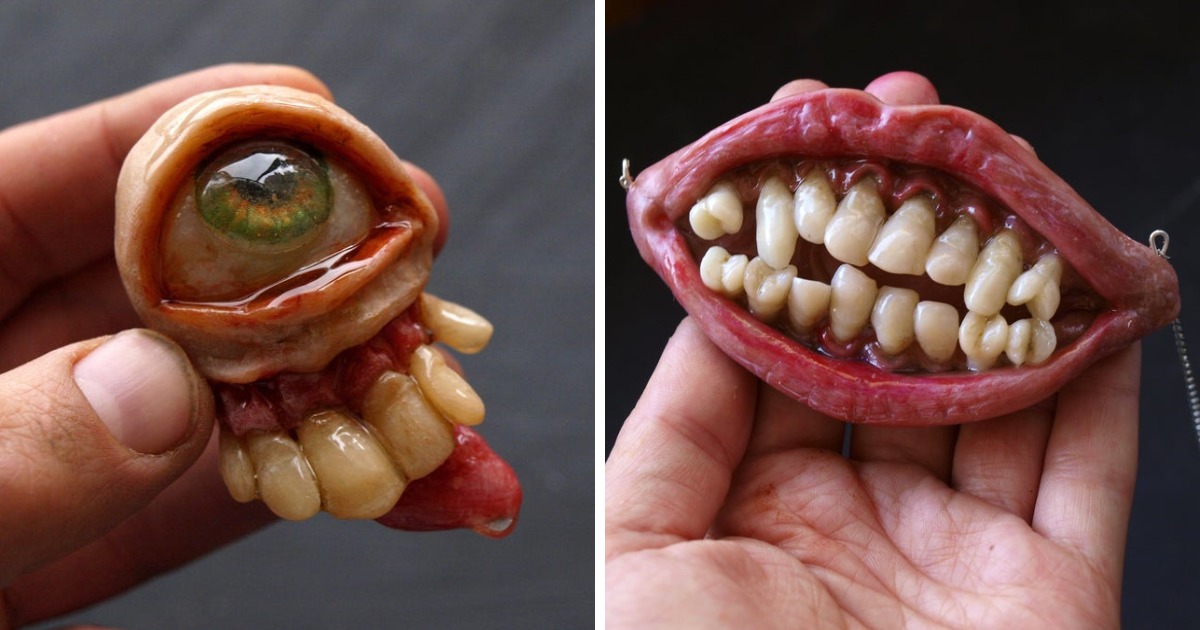
Some jewelry sparkles. Some jewelry whispers. And some jewelry looks like it might blink when you are not paying attention.
That last category is my favorite.
I make monster jewelry, but not the rubber-mask, fake-blood, party-store kind. I mean tiny wearable creatures that seem to have wandered out of a dream, climbed onto a collarbone, and decided to stay. A ring may curl around a finger like a suspicious little beast. A brooch may look like it has opinions. A pendant may seem less like an accessory and more like a houseguest from a very elegant swamp. The goal is not shock for shock’s sake. The goal is presence.
That is what makes this kind of jewelry so magnetic. The best creature-inspired pieces do not just decorate the body; they behave on it. They perch, cling, curl, hover, watch, and lurk. They feel animated, almost companionable. A good monster jewel is not simply “pretty” or “edgy.” It feels alive enough to start conversations and strange enough to earn a second glance from strangers, friends, and at least one barista who suddenly becomes very invested in your necklace.
Wearable art has long pushed jewelry beyond the job description of “small shiny thing.” Contemporary makers treat adornment as sculpture, storytelling, identity, and performance. That creative tradition makes room for jewelry that is eerie, funny, theatrical, intimate, and surprisingly emotional. Monster jewelry fits beautifully into that space because monsters are never just monsters. They are symbols, moods, alter egos, private jokes, and little portable myths.
Why Monster Jewelry Feels Weirdly Alive
The secret is that monster jewelry works on two levels at once. First, it is an object. Second, it is a character. The minute a piece suggests eyes, posture, movement, or intention, the brain stops reading it as decoration and starts reading it as company. That is when the magic happens.
Creature motifs have deep roots in adornment. Jewelry has long borrowed from snakes, birds, insects, masks, and mythic hybrids because humans have always liked wearing symbols that carry power, danger, mystery, or transformation. Modern art jewelry expands that tradition by treating the body as a site for narrative. Put those two impulses together and you get the perfect habitat for tiny monsters with excellent taste.
There is also something deliciously funny about a piece that feels slightly too alive. Fine jewelry often aims for polish and perfection. Monster jewelry gets to be expressive. It can be lopsided in a deliberate way. It can be textured, toothy, winged, clawed, or tenderly grotesque. It can look as if it hatched in a velvet box and immediately began paying rent in charisma.
It borrows from ancient instincts
People respond to creature forms almost automatically. Serpents suggest danger and seduction. Wings suggest escape. Teeth suggest appetite. Eyes suggest awareness. Even when a design is playful, those cues feel ancient. A pendant shaped like a tiny beast does not need to be realistic to trigger a response. It only needs to hint at life.
It turns adornment into storytelling
Narrative jewelry has a special power because it asks the wearer to become part of the piece. The monster is not trapped in a display case. It lives on a sleeve, a lapel, a wrist. Suddenly the body becomes stage, landscape, and co-author. A brooch is no longer “just a brooch.” It is a scene in progress.
How I Design a Piece That Looks Like a Tiny Resident, Not a Random Decoration
When I begin a monster jewelry design, I do not start with anatomy. I start with personality. Is this creature clingy? Nosy? Regal? Sleepy? Slightly judgmental? Delightfully feral? A lot of jewelry designers begin with silhouette, gemstone layout, or metal geometry. Those matter, but character comes first for me. If the piece has attitude, the rest can be built around it.
First, I decide what kind of monster it is
Not every wearable creature needs horns and ten eyes. Some of the strongest designs are almost plausible. A pendant with a shell-like spine, a ring with tiny gripping legs, or earrings that resemble translucent wings can feel more unsettling than a full-on fantasy beast. Suggestion is powerful. A monster that looks half-discovered is often more compelling than one that explains itself too clearly.
Then I choose materials that help the illusion
Materials do a shocking amount of acting. Oxidized silver can create shadow and age. Brass can feel warm, antique, or slightly occult in the best way. Resin can mimic wetness, translucency, or biological texture. Enamel adds juicy color. Carved stone can create surprising softness. Iridescent materials such as labradorite or opal-like surfaces are especially useful because they shift in the light and make a piece seem mobile even when it is standing still.
Texture matters just as much as color. A polished surface says elegance. A ridged or pitted surface says this thing may have crawled out from under a moonlit mushroom. Both are useful. The trick is knowing when to lean into refinement and when to leave enough visual irregularity to keep the creature believable.
Finally, I think about how it sits on the body
A monster ring should feel as though it chose the finger. A shoulder brooch should seem to perch there naturally. A neckpiece should rest like a companion animal with mild trust issues. Placement changes meaning. A creature near the throat feels intimate. One on a jacket lapel feels social and theatrical. One climbing an ear becomes pure mischief.
What Makes Monster Jewelry Different From Regular Statement Jewelry
Statement jewelry is usually designed to be noticed. Monster jewelry is designed to be noticed and interpreted. That difference is huge. A bold necklace may communicate glamour, confidence, or drama. A monster necklace says, “I have taste, imagination, and possibly a favorite cryptid.” It invites curiosity.
This is also where craftsmanship becomes non-negotiable. When a design is unusual, the execution has to be even stronger. A fantastical piece fails fast if it is uncomfortable, flimsy, or visually chaotic. The wearer should feel delighted, not attacked by their own accessories. Good bench work, thoughtful engineering, secure settings, balanced weight, and clean finishing are what allow weird ideas to become wearable art instead of wearable regret.
That is why the best monster jewelry never feels like a gimmick. It may be whimsical, but it is not careless. It understands proportion. It respects the body. It uses fantasy to heighten design, not to hide weak construction. In other words, the tiny beast needs manners.
The Most Effective Monster Motifs in Wearable Art
Watching eyes
Eyes create instant psychological charge. Even one tiny eye in a ring or pendant can make a piece feel sentient. The effect is stronger when the eye is partly hidden, glinting through texture, folds, or metal framing. Full eyeball chaos is an option, of course, but subtle surveillance is often more elegant.
Serpentine forms
Snakes are jewelry overachievers. They wrap, coil, frame, and flow naturally with the body, which is why serpent jewelry has stayed compelling for centuries. In monster jewelry, serpentine lines can become tails, tendrils, hair, or protective loops that make the piece feel alive without becoming cartoonish.
Wings, fins, and frills
These details create movement. Earrings shaped like folded wings flutter as the wearer moves. A brooch with layered fins or translucent frills catches light and feels biologically plausible in a wonderfully impossible way. Movement is half the illusion of life.
Teeth and claws
Used carefully, these details create tension. Used badly, they create a fashion emergency. I like to keep them stylized, almost decorative, so they read as part of the creature’s design language rather than a sincere threat to cashmere.
Hybrid bodies
The most memorable monsters often combine familiar traits in unfamiliar ways: insect wings with mammal eyes, fish scales with floral spines, shell backs with tiny human-like hands. Hybridization keeps the design strange, which is exactly where the fun lives.
Why People Love Jewelry That Feels Slightly Cursed
Because “slightly cursed” is often just another way of saying memorable.
People are hungry for accessories that feel personal, not mass-produced. They want jewelry with mood, humor, and point of view. Monster jewelry answers that desire beautifully because it sits at the intersection of adornment and identity. It can be glamorous, creepy, adorable, surreal, goth, maximalist, literary, campy, or unexpectedly tender.
It is also a wonderful antidote to sameness. Minimal jewelry has its place, but a tiny beast clinging to a pearl earring definitely has a different energy than “quiet luxury.” Monster jewelry says the wearer values imagination. It says beauty does not have to be polite to be beautiful. It says accessories can be emotionally charged and funny at the same time.
Collectors love it for another reason: these pieces often feel like miniature sculptures. They are tactile, display-worthy, and inherently shareable. Even when they are not being worn, they still perform. They sit in a dish or a box looking like they are waiting for nightfall and a tiny opportunity.
How to Keep Monster Jewelry Wearable
Comfort comes first
A ring can be strange, but it should not be punishing. Sharp edges, unstable weight, or awkward projections will send a piece straight into the drawer of noble intentions. The best creature jewelry feels surprising to look at and easy to live with.
Movement should be intentional
Dangles, articulated parts, fringes, and hinged segments can make a piece feel wonderfully alive. But every moving part needs purpose. A slight tremble in a wing or tail can be enchanting. Uncontrolled flopping is less “fantasy masterpiece” and more “possessed keychain.”
Color should imply biology
I love colors that suggest the natural world without copying it literally: bruised purples, mossy greens, shell pinks, oily blues, fungus creams, volcanic blacks, amber browns. Monster jewelry becomes richer when the palette feels discovered instead of chosen from a generic rainbow.
Each piece needs a tiny backstory
This may be the most important design rule of all. The wearer does not need a whole novel, but the piece should imply one. Is the creature protective? Mischievous? Solitary? A collector of moonlight? The moment a jewel suggests a story, it becomes emotionally sticky. People remember it. More importantly, they remember how it made them feel.
How to Style Monster Jewelry Without Looking Like Halloween Exploded
The easiest styling trick is contrast. Let one dramatic creature piece take center stage while the rest of the look stays clean. A tailored blazer with a bizarre brooch works beautifully. A black silk slip dress with monster earrings feels chic, not costume-y. A crisp white shirt with a clawed collar pin says, “Yes, I am professional, but I contain multitudes.”
Monster jewelry also thrives when mixed with classic materials. Pearls, polished chains, vintage rings, and simple knits give the weirdness something elegant to push against. That tension makes the piece feel intentional. Too much competing drama can flatten the effect. One tiny resident monster is often stronger than twelve screaming accessories fighting for the same patch of attention.
Extra Reflections: What It Is Like to Live With the Monsters I Make
Making monster jewelry has changed the way I look at ordinary life. I cannot see a cracked seed pod, a beetle wing, a wet stone, an onion root, or a burnt piece of toast without wondering whether it secretly wants to become a brooch. My sketchbooks are full of little notes that would sound alarming out of context: “More elegant teeth,” “sadder eyes,” “friendly parasite energy,” “make the clasp look like it bites.” This is, apparently, my calling.
The experience of wearing these pieces is even stranger and more delightful than making them. People do not react the way they react to traditional jewelry. They lean in. They squint. They laugh. They ask questions. They make up stories. Someone once told me a pendant I made looked like “a very polite demon librarian,” which remains one of the highest compliments of my creative life. Another person tried on a ring and immediately named it Gerald. I had not planned for Gerald, but Gerald clearly had plans for us.
There is also an intimacy to monster jewelry that surprises me every time. A necklace that looks like a tiny creature sleeping at the base of the throat can feel protective. A ring with curled legs can feel like a companion. A brooch on a coat can feel like a guardian riding along through winter. The pieces may begin as odd little sculptures, but once they are worn, they become part of daily ritual. People touch them when they are thinking. They straighten them absentmindedly. They develop affection for them. It is difficult to stay emotionally neutral about something that looks like it might have a tiny pulse and a deeply held opinion.
I have learned that the best monster jewelry is never only about fear or darkness. It is about recognition. Monsters are useful because they let us exaggerate what already lives in us: protectiveness, awkwardness, hunger, glamour, loneliness, humor, desire, weirdness, and resilience. A creature on a ring can be a joke, a shield, a self-portrait, or a tiny declaration that beauty does not have to behave. That is probably why people connect with these pieces so quickly. They are not just wearing a design. They are wearing a mood with teeth.
And yes, sometimes the monsters keep me company. Late in the studio, when the tools are scattered and the metal dust is everywhere and the coffee has become spiritually important rather than chemically effective, a half-finished piece can genuinely seem to stare back at me. That is usually when I know it is working. The design has crossed the line from object to presence. It has become the kind of jewelry that does not sit quietly in a box. It waits. It watches. It wants to be chosen. Honestly, same.
Conclusion
Monster jewelry is not a novelty trend. At its best, it is a powerful form of wearable art that combines craftsmanship, symbolism, humor, and narrative into something unforgettable. It draws on old visual languages, modern materials, and contemporary appetite for individuality. Most of all, it reminds us that adornment can do more than flatter. It can surprise us, haunt us a little, make us laugh, and help us carry a private mythology into public life.
So yes, I make jewelry that looks like real monsters living with you. The funny part is that once people wear it, they rarely want the monsters to leave.