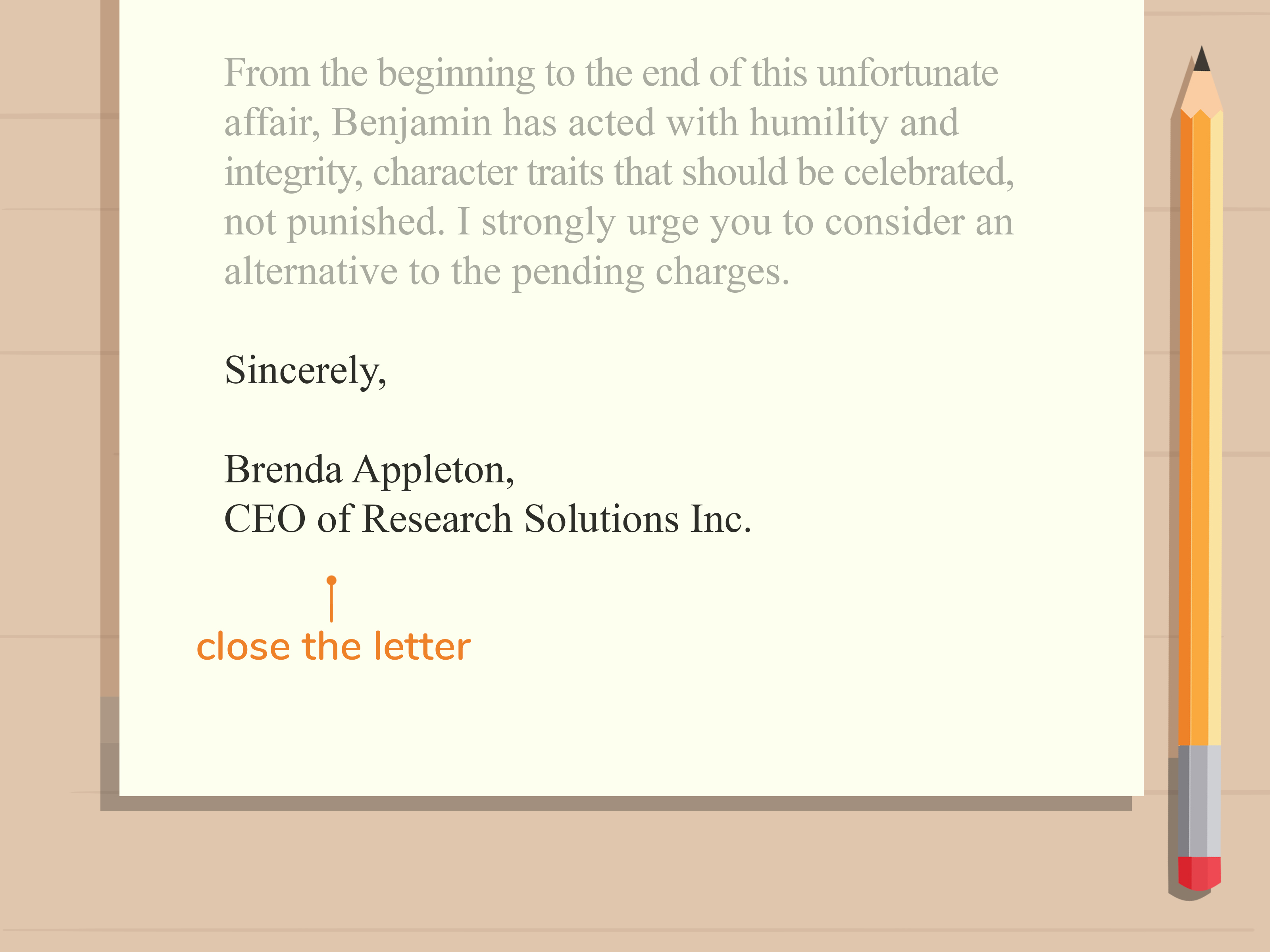
Writing a letter to a judge can feel like trying to have a polite conversation with the entire legal system. You want to sound respectful, explain your point clearly, and avoid accidentally doing something the court considers improper. That is a lot of pressure for one envelope.
The most important rule is also the one people most often overlook: not every communication should be sent directly to a judge. Private communication about a pending case may be considered an unauthorized ex parte communication because the other parties have not been notified or given an opportunity to respond.
Depending on the case, an appropriate letter might be a character reference submitted through an attorney, a victim impact statement sent to a victim-witness coordinator, or a procedural request that local court rules specifically allow. In other situations, you may need to file a formal motion instead of writing an ordinary letter.
This guide explains how to write a letter to a judge in 11 practical steps while respecting courtroom procedure, legal boundaries, and the judge’s limited supply of reading time.
When Is It Appropriate to Write a Letter to a Judge?
A letter may be appropriate when the court, an attorney, a probation officer, a victim-witness coordinator, or an official court instruction specifically permits it. Common examples include:
- A character reference submitted before sentencing
- A victim impact statement
- A letter supporting someone in an immigration or administrative proceeding
- A request that a particular court expressly allows to be made by letter
- A response to a judge’s request for additional information
A letter is usually not the correct method for arguing evidence, asking the judge to change an order, reporting misconduct by the opposing party, requesting custody, or seeking dismissal of a case. Those requests commonly require a motion, petition, affidavit, declaration, or another formal document.
Think of the letter as a specialized court submission, not a backstage pass to the judge’s chambers.
How to Write a Letter to a Judge in 11 Steps
Step 1: Confirm That the Letter Is Permitted
Before writing a single sentence, determine whether the court allows the proposed communication. This step is more important than selecting elegant stationery or deciding whether “Your Honor” needs a comma.
Check the court’s local rules, standing orders, self-help website, and instructions for the type of case involved. You may also contact the clerk’s office with procedural questions. Court clerks generally cannot provide legal advice, but they may tell you whether a document must be filed, where it should be delivered, and whether an official form exists.
If you are represented by an attorney, speak with that attorney first. Your lawyer may want to review the letter, submit it as an exhibit, provide it to the probation office, or advise you not to send it at all.
Never assume that mailing something directly to chambers makes it more persuasive. It may simply make it improper.
Step 2: Identify the Exact Purpose of the Letter
A strong judicial letter has one clear purpose. Decide what the letter is supposed to accomplish before drafting it.
For example, a character reference may describe the defendant’s honesty, employment history, family responsibilities, rehabilitation, or community service. A victim impact letter may explain the crime’s emotional, physical, practical, and financial consequences. A permitted procedural letter might request a scheduling change and explain the specific reason.
Avoid combining several unrelated requests. A character letter should not suddenly transform halfway through into a legal brief, a biography, and a review of everything the prosecutor has ever done wrong.
Write a one-sentence purpose statement for yourself, such as: “This letter describes the defendant’s rehabilitation and the responsibilities the defendant has assumed since the offense.” Use that sentence as your drafting compass.
Step 3: Learn the Court’s Submission Procedure
Find out where the letter must go. Depending on the court and the type of proceeding, it may need to be:
- Filed with the clerk of court
- Submitted electronically through an approved filing system
- Sent to the writer’s or defendant’s attorney
- Delivered to a probation officer
- Provided to a victim-witness coordinator
- Copied to the opposing party or opposing counsel
Do not send the only copy directly to the judge unless official instructions specifically tell you to do so. Courts commonly require case-related submissions to become part of the record and to be shared with all parties.
Pay attention to deadlines. A moving letter that arrives two days after sentencing may be emotionally powerful but procedurally about as useful as an umbrella discovered after the storm.
Step 4: Gather the Correct Court and Case Information
Use accurate identifying information so court staff can connect the letter with the correct proceeding. Obtain the following details:
- The judge’s full name and official title
- The court’s full name
- The courthouse or clerk’s mailing address
- The complete case name
- The docket or case number
- The scheduled hearing or sentencing date, when relevant
You can often find this information on a court notice, summons, scheduling order, online docket, or document previously filed in the case.
Double-check the judge’s name. Sending a heartfelt letter to the wrong judge is not a crime, but it is an avoidable detour.
Step 5: Use a Professional Business-Letter Format
A letter to a judge should look organized, readable, and serious. Use a standard font, such as Arial, Calibri, or Times New Roman, in an 11- or 12-point size. Keep the margins approximately one inch wide and use ordinary black text on white paper.
A traditional format includes:
- Your name and contact information
- The date
- The judge’s name and title
- The court’s name and address
- A subject or reference line containing the case name and number
- A formal salutation
- The body of the letter
- A respectful closing and signature
Keep the letter reasonably brief. One or two pages is often sufficient for a character reference, although court instructions may permit or require something different. Judges read extensive case materials, so clarity is a kindness.
Step 6: Address the Judge Respectfully
The envelope or inside address may use the judge’s formal title, such as:
The Honorable Maria L. Johnson
Judge of the Superior Court
[Court address]
The usual salutation is:
Dear Judge Johnson:
“Dear Your Honor” is also used in some settings, but “Dear Judge [Last Name]” is clear and professional. In the body of the letter, refer to the judge as “Your Honor.”
Do not use the judge’s first name, even if you once stood behind the judge at a coffee shop. A courtroom is not improved by surprise familiarity.
Step 7: Introduce Yourself and Explain Your Connection
Begin by stating your full name, occupation or relevant background, and reason for writing. If the letter concerns another person, explain how you know that individual and for how long.
For example:
My name is Daniel Brooks, and I have supervised Michael Torres at Greenfield Manufacturing for the past six years. I am writing with the knowledge of his attorney to provide information about his work history, character, and conduct since his arrest.
This introduction gives the judge a way to evaluate your perspective. A statement from a long-term employer, teacher, counselor, neighbor, or community leader may carry more context when the relationship is clearly described.
Be honest about the relationship. Do not present yourself as a neutral observer when you are the person’s parent, business partner, or lifelong friend. Judges understand that relatives like their relatives. Concealing the connection only damages credibility.
Step 8: Provide Specific, Truthful Examples
Specific facts are more persuasive than broad praise. Saying that someone is “a wonderful person” is pleasant but vague. Explain what the person has actually done.
Useful examples might include:
- Maintaining stable employment
- Caring for children or an elderly relative
- Completing treatment or counseling
- Participating in community service
- Taking responsibility for harmful conduct
- Making restitution or repairing damage
- Following release, probation, or court requirements
For a victim impact statement, describe the consequences of the offense in concrete terms. You might discuss medical treatment, lost wages, relocation expenses, damaged relationships, anxiety, sleep problems, or changes to everyday routines.
Do not exaggerate or invent details. A judicial letter is not the place to add dramatic lighting to the facts. Write only what you personally know or clearly identify information learned from another source.
Step 9: State Your Request Carefully
When a request is permitted, make it respectful and limited. A character-reference writer might ask the court to consider the information when imposing a sentence. A victim may express an opinion about restitution, safety conditions, or the effect of the crime, subject to applicable law and court instructions.
A useful sentence might read:
I respectfully ask the Court to consider Sarah’s documented treatment, consistent employment, and responsibilities to her children when determining an appropriate sentence.
Avoid demanding a particular outcome unless you have been instructed to address it. Do not threaten, insult, flatter excessively, or suggest that the judge owes someone a favor. “Your Honor is clearly the wisest judge in the country” is not persuasive advocacy. It is a compliment wearing a fake mustache.
Also avoid offering legal conclusions unless you are qualified and authorized to do so. The letter should usually provide relevant facts and personal observations rather than attempt to lecture the court on the law.
Step 10: Review the Letter for Accuracy and Risk
Before submitting the letter, review every sentence. Confirm names, dates, addresses, case numbers, and factual claims. Remove gossip, speculation, confidential information, and attacks on other participants.
Ask these questions:
- Is every important statement truthful?
- Am I revealing protected medical, financial, or personal information unnecessarily?
- Does the letter contradict anything the person has said in court?
- Could the letter harm an appeal, plea agreement, defense strategy, or ongoing investigation?
- Have I discussed the letter with the attorney when appropriate?
Character letters should not minimize proven conduct with phrases such as “It was no big deal” or accuse witnesses of lying without evidence. Those comments may make the writer appear uninformed and may undermine the person the letter was intended to support.
Proofread for grammar and readability, but do not polish away your natural voice. A sincere letter is usually stronger than one that sounds as though it was drafted by a committee of nervous robots.
Step 11: Sign, Submit, Serve, and Keep a Copy
Sign the letter by hand when submitting a paper copy. Include your printed name and current contact information unless the court or an attorney instructs you otherwise.
Submit the letter through the authorized channel before the deadline. If the court requires service, provide a copy to every required party or attorney and include a certificate of service when necessary.
Keep a complete copy of the signed letter, attachments, proof of mailing, electronic confirmation, or file-stamped version. Never assume that ordinary mail was received simply because you placed it in a mailbox with confidence.
After submission, do not repeatedly call chambers to ask whether the judge read the letter. Monitor the docket, communicate through the attorney, or contact the clerk’s office for permitted procedural information.
Sample Structure for a Letter to a Judge
The following outline can help organize an authorized character or sentencing letter:
[Your full name]
[Your address]
[City, State ZIP Code]
[Telephone number or email][Date]
The Honorable [Judge’s full name]
[Name of court]
[Court address]Re: [Case name and case number]
Dear Judge [Last Name]:
My name is [name], and I am [occupation or relevant background]. I have known [person’s name] for [length of time] as [description of relationship]. I understand that this letter concerns [brief description of proceeding].
[Provide two or three specific, truthful examples relevant to the purpose of the letter.]
[Acknowledge the seriousness of the case when appropriate and describe accountability, rehabilitation, impact, or other relevant circumstances.]
I respectfully ask the Court to consider this information when [making the relevant decision]. Thank you for your time and consideration.
Respectfully,
[Signature]
[Printed name]
This is an organizational example, not a universal court form. Local procedures and attorney instructions should always take priority.
Common Mistakes to Avoid
- Contacting the judge privately: An unauthorized letter can create an ex parte communication problem.
- Ignoring the attorney: A well-intended letter may interfere with a carefully planned legal strategy.
- Omitting the case number: Court staff should not have to conduct a treasure hunt.
- Using emotional attacks: Anger may be understandable, but insults rarely strengthen a court submission.
- Making unsupported claims: Credibility matters more than dramatic language.
- Requesting secret treatment: Court communications may become part of the public record or be shared with the parties.
- Submitting too late: Confirm the deadline and allow time for delivery and processing.
Practical Experiences and Lessons From Judicial Letters
People writing to judges often begin with the same misconception: the most emotional letter will be the most effective. In practice, the strongest letters tend to be calm, specific, honest, and properly submitted. A letter does not become more credible because it contains five exclamation points or describes someone as “literally the kindest human who has ever lived.”
The Employer Who Used Measurable Examples
Consider two hypothetical letters from employers. The first says the employee is hardworking, generous, and irreplaceable. The second explains that the employee arrived on time for 118 consecutive shifts, trained four new workers, accepted additional weekend responsibilities, and kept the job while attending treatment.
The second letter gives the court information it can evaluate. It does not ask the judge to ignore the offense. Instead, it helps show how the individual behaves in a structured environment and what progress has occurred.
The Relative Who Accidentally Minimized the Case
Family members understandably want to protect someone they love. However, a letter may backfire when it claims the accused person “did nothing wrong,” describes the case as “ridiculous,” or attacks the victim. If the person has already entered a guilty plea, these statements may conflict with the legal position taken in court.
A better approach is to acknowledge the seriousness of the situation without pretending to know every disputed fact. The writer can focus on personal observations, changes in behavior, treatment participation, family responsibilities, and willingness to accept consequences.
The Victim Who Organized the Impact Chronologically
Victim impact letters can be difficult to write because the harm may affect nearly every part of life. One useful method is to organize the experience into three periods: the immediate aftermath, the following months, and the current situation.
This structure may help explain emergency expenses, medical care, lost work, emotional effects, security concerns, and long-term financial losses without producing a scattered narrative. Supporting records may be submitted through the approved process when requested, but the letter should still explain what those numbers mean in daily life.
The Writer Who Submitted the Letter to the Wrong Place
Even excellent writing cannot overcome an incorrect submission method. A character letter sent directly to chambers may be returned, disclosed to the parties, rejected, or placed on the docket. Meanwhile, the court may have instructed writers to send letters to defense counsel or the probation office.
The practical lesson is simple: procedure is part of persuasion. Confirm the recipient, deadline, number of copies, confidentiality rules, and whether the document must be served. Following instructions demonstrates care and prevents administrative problems.
The Letter That Was Too Long
Some writers begin with childhood, continue through middle school, describe every holiday gathering, and eventually reach the relevant event somewhere around page seven. The affection may be sincere, but the central point becomes difficult to find.
A focused one- or two-page letter can be more effective than a lengthy autobiography. Introduce yourself, establish your relationship, provide several concrete examples, acknowledge the proceeding appropriately, and make a respectful closing request. Additional length should add useful information, not merely prove that your keyboard works.
The Most Valuable Lesson: Credibility Comes First
Judges regularly encounter conflicting claims. A letter becomes useful when it provides reliable information rather than exaggerated praise or unsupported accusations. Writers should be candid about what they know, what they do not know, and why their observations are relevant.
A well-written letter will not control the outcome of a case. Judges must consider the law, evidence, arguments, sentencing rules, public safety, victim rights, and many other factors. The letter’s role is narrower: to provide accurate context through the proper legal channel.
Conclusion
Learning how to write a letter to a judge begins with understanding that courtroom communication is governed by procedure. Confirm that the letter is permitted, identify its exact purpose, follow the court’s submission rules, and avoid unauthorized private contact.
Use a professional format, explain your relationship to the case, and support your message with truthful, specific examples. Keep the tone respectful, make only an appropriate request, and ask an attorney to review the letter when a criminal charge, custody dispute, appeal, immigration matter, or other significant legal interest is involved.
The goal is not to produce the most dramatic letter in the courthouse. It is to provide relevant information clearly, credibly, and in a manner the judge is legally allowed to consider.