Using an infant nebulizer for the first time can feel like assembling a tiny spaceship while your baby is doing interpretive dance. There is tubing, a mask, a medicine cup, a compressor, and one very small human who did not sign up for any of this. The good news? Once you understand the routine, a nebulizer treatment is usually straightforward, calm, and manageable.
An infant nebulizer is a device that turns liquid medication into a fine mist your baby can breathe in through a soft face mask. Pediatricians may prescribe nebulizer treatments for certain breathing problems, including wheezing, asthma-like symptoms, reactive airway disease, or other respiratory conditions. However, the key word is prescribe. A nebulizer is not a “just in case” gadget for every sniffle. Babies have delicate airways, and breathing symptoms can change quickly, so medication should always be used exactly as your child’s healthcare provider instructs.
This guide explains how to use an infant nebulizer in six clear steps, how to help your baby tolerate the treatment, what mistakes to avoid, how to clean the equipment, and when to call the doctor. Think of it as your parent-friendly manualminus the panic, plus a few practical tricks from the real world.
What Is an Infant Nebulizer?
An infant nebulizer is a small breathing-treatment system that changes liquid medicine into an inhalable mist. The machine, often called a compressor, pushes air through tubing into a medicine cup. The medicine cup creates the mist, and the mist travels through a face mask that covers your baby’s nose and mouth.
Unlike older children or adults, infants cannot reliably use a mouthpiece or coordinate a deep breath with an inhaler. That is why babies and very young children often need a mask. The mask lets them breathe normally while the medication reaches the airways. No fancy breathing technique is required. Your baby’s main job is simply to breathe, which, thankfully, is already on their daily to-do list.
When Might a Baby Need a Nebulizer?
A pediatrician may recommend a nebulizer if a baby is too young to use an inhaler with a spacer, has trouble breathing through other delivery devices, or needs medicine delivered directly into the lungs. Depending on the condition, the prescribed medication may be a quick-relief medicine, a controller medicine, or another inhaled treatment.
Common reasons a healthcare provider may discuss nebulizer use include wheezing, asthma symptoms, bronchospasm, or respiratory illnesses that affect the lower airways. Still, not every cough, cold, or stuffy nose needs a nebulizer. In fact, some infant breathing problems require observation, suctioning, hydration, or urgent care instead of home nebulizer treatment. Always follow the plan given by your baby’s doctor.
Before You Start: What You Need
Before beginning the treatment, gather everything in one place. This makes the process smoother and prevents the classic parent sprint: one hand holding the baby, the other hand searching for the missing mask under a burp cloth.
Basic nebulizer supplies
- Nebulizer compressor machine
- Clean tubing
- Nebulizer medicine cup
- Infant-size face mask
- Prescribed medication vial or solution
- Clean towel or paper towel for drying parts afterward
- A quiet distraction, such as a board book, soft toy, song, or video if approved by your parenting philosophy and current level of exhaustion
Check that the medication name, dose, and schedule match your doctor’s instructions. If the label looks different than expected, the medicine is expired, or you are unsure whether two medicines can be mixed, pause and call your pharmacist or pediatrician. Guessing is great for baby shower games, not medication.
How to Use an Infant Nebulizer: 6 Steps
Step 1: Wash your hands and prepare a clean space
Start by washing your hands with soap and water. Choose a flat, stable surface for the nebulizer compressor, such as a table or counter, and keep it away from the edge. The machine may vibrate during use, and nobody wants a nebulizer taking a dramatic dive mid-treatment.
Make sure the area is clean, dry, and free from smoke, dust, pet hair, and open windows. Babies breathe in whatever is around them, so a clean treatment space helps reduce irritation and contamination. Place the compressor where the tubing can comfortably reach your baby without pulling.
Step 2: Assemble the nebulizer correctly
Connect one end of the tubing to the compressor and the other end to the medicine cup. Attach the infant face mask to the top of the nebulizer cup. Different brands may connect slightly differently, so use the manufacturer’s instructions and ask your healthcare team to demonstrate if you are new to the device.
Check that all pieces fit snugly. Loose tubing can reduce mist output, and a poorly attached mask can make the treatment less effective. Also make sure the medicine cup stays upright. If it tilts too much, the medicine may not nebulize properly.
Step 3: Add only the prescribed medicine
Open the prescribed medication vial as instructed and pour the correct amount into the nebulizer cup. Use only the medicine ordered for your baby. Do not add essential oils, saline, leftover medicine from a sibling, herbal drops, or anything from a cabinet labeled “probably fine.” Infant lungs are not the place for experiments.
Some nebulized medications come in single-dose vials. Others may need measuring. If measuring is required, use the tool provided by your pharmacist or doctor. Do not use a kitchen spoon, because “a little splash” is not a medical unit.
If your baby uses more than one nebulized medication, ask the doctor or pharmacist whether they should be given separately, in a specific order, or at different times. Some medicines should not be mixed in the nebulizer cup unless a clinician specifically says it is safe.
Step 4: Position your baby upright and calm
Hold your baby in an upright or slightly reclined upright position. Upright positioning helps your baby breathe more comfortably and helps the mist move into the lungs. For younger infants, this may mean holding them against your chest with their head supported. For older babies, sitting on your lap may work well.
Try to choose a calm moment when possible. A baby who is screaming hard may not inhale the mist as effectively because the breathing pattern becomes uneven. That said, babies cry. It is their customer-service department. If your baby fusses, stay calm, keep the mask in place gently, and use soothing tools such as rocking, singing, white noise, or a favorite toy.
Step 5: Place the mask snugly over the nose and mouth
Place the infant mask over your baby’s nose and mouth so it forms a gentle seal against the face. The mask should be snug, but not tight enough to leave deep marks or cause distress. A good seal matters because medication can escape into the air if the mask is held too far away.
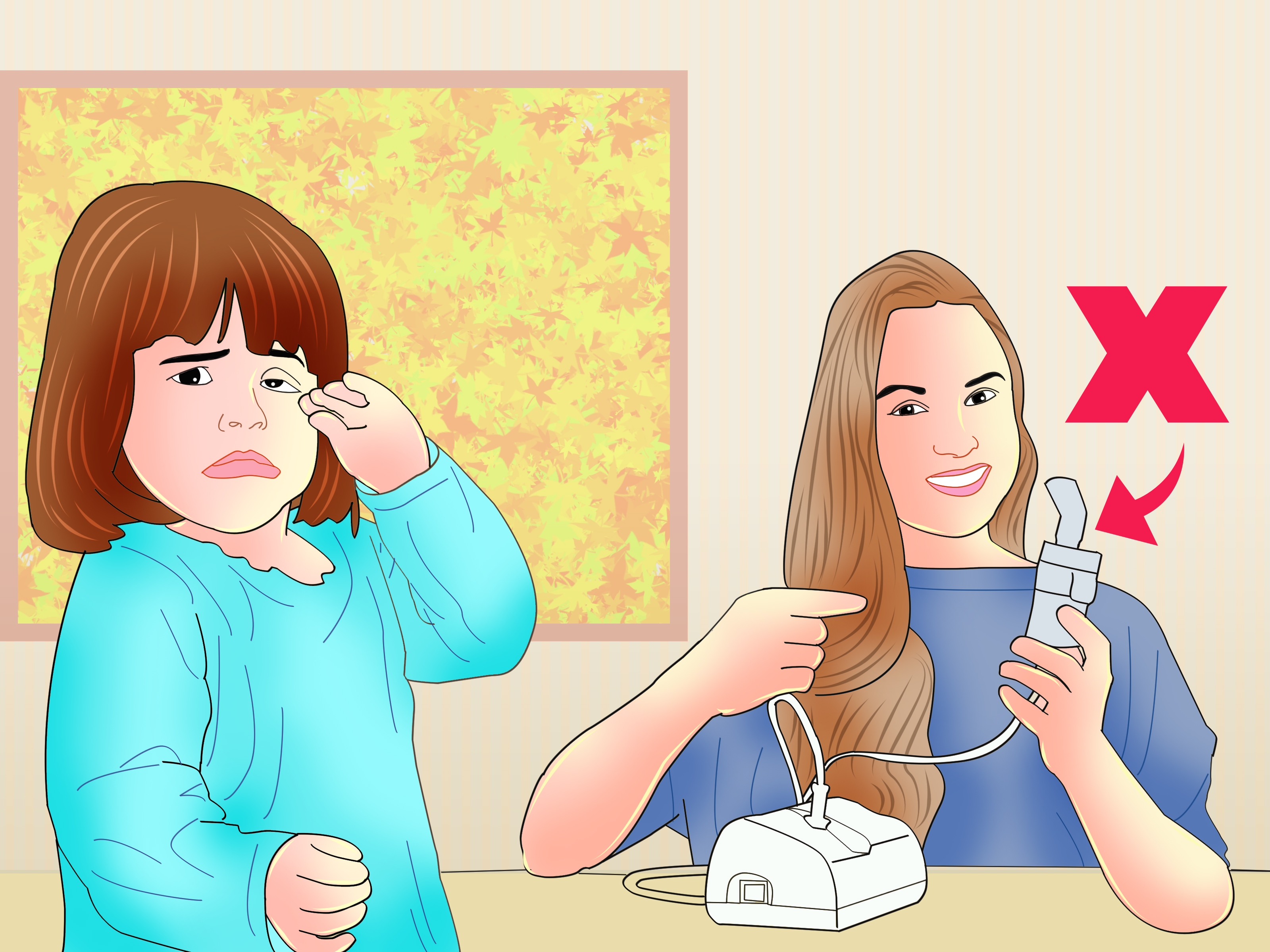
Avoid the “blow-by” method, where mist is aimed toward the baby’s face without the mask touching the skin. It may seem easier, especially when your baby is wiggling like a tiny gym sock full of springs, but it usually delivers much less medicine to the lungs. For the best chance of an effective treatment, keep the mask properly positioned.
Turn on the machine. You should see a steady mist. Let your baby breathe normally through the mask. Most treatments take about 5 to 15 minutes, depending on the medication, dose, and device. If the nebulizer starts sputtering near the end, that usually means the medicine cup is almost empty. Follow your device instructions and your doctor’s guidance on when to stop.
Step 6: Finish, comfort your baby, and clean the equipment
When the mist stops or the medicine is gone, turn off the compressor. Remove the mask and comfort your baby. Some infants cough during or after treatment as mucus loosens. Others may seem slightly jittery or more awake after certain quick-relief medicines. Ask your pediatrician what side effects are expected with your baby’s specific medication and which ones require a call.
After the treatment, take apart the nebulizer cup and mask. Wash the washable parts according to your device instructions. In general, the medicine cup and mask are cleaned after each use, rinsed well, and allowed to air dry completely on a clean towel or paper towel. Do not wash the compressor or tubing unless the manufacturer specifically instructs you to do so. Tubing usually should stay dry and be replaced if it becomes wet, cloudy, cracked, or dirty.
How to Help Your Baby Cooperate During Nebulizer Treatment
Infants are not famous for respecting medical schedules. A baby may pull at the mask, turn away, cry, or suddenly become fascinated by the tubing. The goal is not perfection; the goal is a safe, effective routine that gets easier with repetition.
Use comfort and distraction
Try singing the same song during each treatment, reading a short book, using a soft toy, or offering gentle rocking. Some parents make nebulizer time part of a predictable routine: sit in the same chair, use the same blanket, and speak in the same calm voice. Babies love patterns, even if they also love throwing spoons.
Let the mask become familiar
When the machine is off, let your baby look at the mask or touch it while supervised. Older infants may tolerate the mask better if it does not appear only during treatment time. Never let your baby chew on the mask or tubing, and do not leave parts within reach when you are not watching.
Stay calm even if the baby cries
Your baby takes emotional cues from you. If you look terrified, they may decide the mask is a villain. Use a calm voice, slow movements, and a confident routine. If your baby becomes extremely upset or cannot complete treatments, contact the healthcare provider. The doctor may check the mask fit, treatment timing, medication plan, or whether another delivery method is appropriate.
Common Mistakes to Avoid
One of the most common mistakes is holding the mask near the face instead of sealing it over the nose and mouth. Another is stopping too early because the baby fusses. If your child’s doctor prescribed a full treatment, the medicine needs time to turn into mist and be inhaled.
Other avoidable mistakes include using expired medication, mixing medicines without approval, skipping cleaning, using damaged tubing, placing the compressor on a soft surface that blocks airflow, or giving treatments more often than prescribed. More is not automatically better. With breathing medication, more can sometimes mean more side effects or a sign that your baby’s condition is worsening.
How Often Should an Infant Nebulizer Be Used?
The correct schedule depends entirely on the medication and your baby’s diagnosis. Some nebulizer treatments are used only when symptoms appear. Others may be prescribed on a regular schedule. Some are used for a short illness; others may be part of a longer respiratory care plan.
Follow the written instructions from your pediatrician. If your baby needs quick-relief medicine more often than the plan allows, or symptoms return quickly after a treatment, call the doctor promptly. Increased need for breathing treatments can be a warning sign that your baby needs medical evaluation.
When to Call the Doctor or Seek Emergency Help
Call your baby’s doctor if you are unsure how to use the nebulizer, if the medicine does not seem to help, if treatments are needed more often than prescribed, or if your baby has side effects that concern you.
Seek urgent medical care right away if your baby has severe trouble breathing, bluish lips or face, pauses in breathing, ribs pulling in with each breath, grunting, extreme sleepiness, poor feeding due to breathing difficulty, dehydration signs, or worsening symptoms despite prescribed treatment. For infants, breathing problems can become serious quickly. When in doubt, it is better to be the parent who called early than the parent who waited too long.
Cleaning and Storing the Infant Nebulizer
Cleaning is not the glamorous part of nebulizer care, but it is one of the most important. Medication residue and moisture can allow germs to grow, and clogged parts may reduce mist output. After each treatment, clean the mask and medicine cup as directed by the manufacturer or healthcare team.
Most home routines include disassembling the washable parts, washing them with warm water and mild dish soap when recommended, rinsing well, and letting them air dry completely. Some devices require periodic disinfecting, such as daily or weekly, depending on the device and the child’s condition. Always follow your specific machine’s instructions because not all nebulizer parts can be boiled, placed in a dishwasher, or disinfected the same way.
Store dry parts in a clean, covered container or bag. Keep the compressor dust-free and check the filter as instructed by the manufacturer. Replace masks, cups, tubing, and filters when they are worn, cracked, cloudy, sticky, or no longer working well.
Parent and Caregiver Experience Tips: What Makes Nebulizer Time Easier
Many parents say the hardest part of using an infant nebulizer is not the machineit is the negotiation with a baby who has strong opinions and no calendar availability. A treatment may be medically simple, but emotionally messy. That is normal.
One helpful experience-based strategy is to build a “nebulizer station.” Keep the machine, medication, clean mask, medicine cup, tissues, written instructions, and a small distraction item in one safe place. When a baby is coughing or wheezing, you do not want to search three drawers and a diaper bag for the tubing. A simple basket on a high shelf can save time and reduce stress.
Another practical tip is to practice the setup when your baby is not sick. Assemble the tubing, open and close the medicine cup, attach the mask, and turn the machine on briefly with no medication if your clinician or device instructions allow. The sound of the compressor can surprise babies. Letting them hear it during a calm moment may make real treatment less dramatic later.
Some caregivers find that timing matters. A hungry baby may scream through the whole treatment. A baby who just finished a large feeding may spit up if handled too much. Ask your pediatrician whether treatments should be spaced around feedings, especially if your infant has reflux or coughs easily. In everyday life, many parents aim for a calm window: after a diaper change, before a nap, or while the baby is relaxed but not deeply asleep.
Mask fit is another real-world lesson. If the mask is too large, mist leaks everywhere. If it is too stiff, the baby may fight it. Ask the clinic whether you have the correct infant-size mask. A soft, properly sized mask can make a surprising difference. If your baby has sensitive skin, gently wipe the face after treatment and mention any rash or irritation to the doctor.
Parents also learn to watch the mist. A steady mist usually means the machine is working. Weak mist may mean loose tubing, an improperly assembled cup, a clogged part, or a compressor issue. If the treatment suddenly takes much longer than usual, check the parts and call the equipment supplier or healthcare team if the problem continues.
Finally, write down what happens. Keep a simple log with the date, time, medication, symptoms before treatment, and how your baby responded. Did breathing improve? Did coughing increase briefly? Was there jitteriness, vomiting, rash, or no change at all? This information helps your pediatrician adjust the care plan. It also helps tired parents remember details, because sleep deprivation can turn yesterday into a foggy historical era.
The biggest experience lesson is this: confidence comes from repetition. The first nebulizer treatment may feel awkward. By the fifth or sixth, you may find yourself assembling the device with one hand while humming a lullaby and locating a pacifier with your foot. That does not mean the situation is fun, but it does mean you are learning. And when your baby’s breathing is involved, calm, prepared care is a powerful thing.
Conclusion
Using an infant nebulizer is a step-by-step process: wash your hands, assemble the machine, add the prescribed medication, position your baby upright, keep the mask snug over the nose and mouth, run the treatment until complete, and clean the parts afterward. The routine may feel intimidating at first, but it becomes much easier with preparation and practice.
The most important rules are simple: use only prescribed medicine, follow the exact dose and schedule, avoid blow-by mist, clean the equipment carefully, and call your baby’s healthcare provider if symptoms worsen or the medicine is not helping. A nebulizer can be a helpful tool, but it works best when paired with good medical guidance and a calm caregiver.
Note: This article is for educational purposes only and does not replace medical advice. Always follow your pediatrician’s instructions for your baby’s diagnosis, medication, dose, device, and emergency care plan.