Figuring out whether a cow or heifer has been bred can feel a little like detective work, except your suspect weighs 1,200 pounds, chews cud, and refuses to answer direct questions. Still, cattle producers do not have to rely on barn gossip or wishful thinking. With good records, careful heat detection, professional pregnancy diagnosis, and a practical understanding of bovine behavior, you can make a solid decision about whether that female is likely bred, open, late-bred, or simply keeping you humble.
In cattle language, “bred” usually means a cow or heifer has been successfully mated by natural service or artificial insemination and is presumed pregnant. The key word is presumed. A cow can be serviced and still not conceive. She can conceive and later lose the pregnancy. She can also avoid obvious heat signs and make everyone on the farm argue over whether she is pregnant or just dramatic. That is why the best approach combines observation with real pregnancy checking.
This guide walks through six practical steps for telling if a cow or heifer has been bred, including what signs to watch for, when to test, and why a veterinarian or trained technician is often the smartest investment in the chute.
Step 1: Start With Breeding Records, Not Guesswork
The first clue is not the cow’s belly, udder, or attitude. It is your record book. If you know when she was exposed to a bull or inseminated, you already have the timeline that makes every other clue more useful.
Write down the cow or heifer ID, breeding date, bull ID or semen used, breeding method, and any observed heat dates. For natural service herds, record the date the bull was turned in and removed. For artificial insemination, record the exact service date and whether the animal was bred after standing heat or through a timed AI protocol.
Why does this matter? Because cattle pregnancy diagnosis depends heavily on timing. Blood tests and ultrasound can detect pregnancy earlier than traditional palpation, but even the best method has a “too soon” window. Testing too early may give you confusing results, and confusing results are how perfectly sane cattle owners end up staring at calendars like they are solving ancient riddles.
What a good breeding record should include
A useful record does not need to be fancy. A notebook, spreadsheet, herd management app, or barn card can work. What matters is consistency. Track each female individually, especially replacement heifers, because heifers that breed early are often more valuable than heifers that barely make the deadline.
For example, if a heifer was inseminated on May 10, you can plan a pregnancy check around late June or early July depending on the testing method. If a bull was with the group from May 1 to July 15, a veterinarian may be able to estimate whether she conceived early, middle, or late in the breeding season. That estimate helps predict calving dates and sort management groups.
Step 2: Watch for Return to Heat
One of the simplest clues that a cow or heifer may not be bred is a return to estrus, commonly called “coming back in heat.” The normal estrous cycle in cattle averages about 21 days, although there can be some variation. If a female was bred and then shows standing heat around three weeks later, there is a good chance she did not settle.
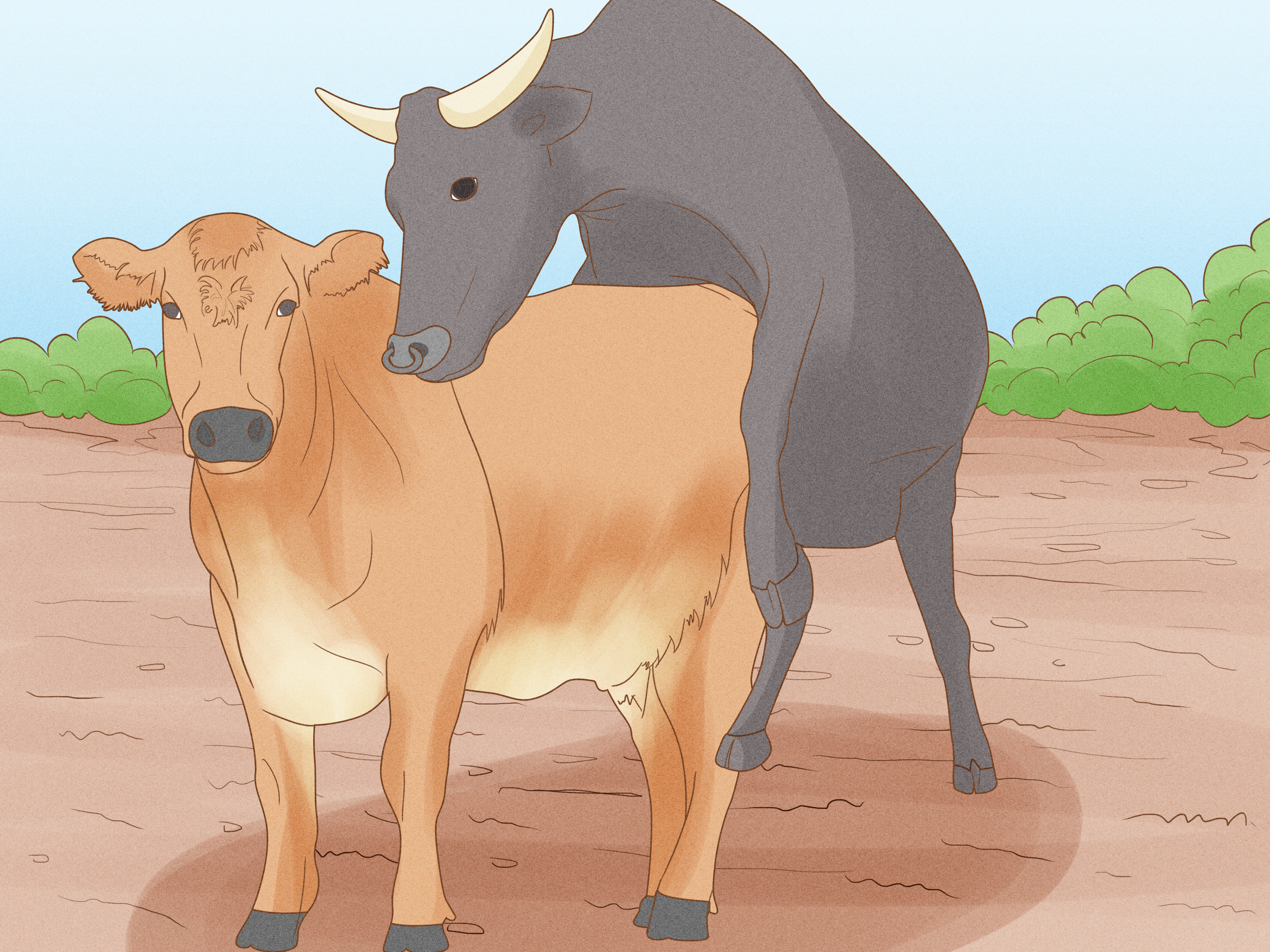
The most reliable visible sign of standing heat is exactly what it sounds like: she stands to be mounted by another animal. Secondary signs can include restlessness, bawling, clear mucus discharge, a swollen vulva, ruffled hair over the tail head, muddy flanks, mounting other cattle, and increased activity. These signs are useful, but standing to be mounted is the gold star of heat detection.
That said, absence of heat is not a guaranteed pregnancy diagnosis. Some animals show weak or silent heats. Others may be missed because nobody was watching at the right time. Heat can be brief, and cows have a rude habit of showing it when people are eating dinner, fixing fence, or pretending they will finally get a full night’s sleep.
How often should you observe?
For best results, observe cattle at least twice daily, ideally early morning and late evening, when heat behavior is often easier to spot. Spend enough time watching quietly. If you roar up in a truck, slam a gate, and expect romance to unfold on schedule, the cows may choose privacy.
Heat detection aids can help. Tail paint, chalk, pressure-sensitive patches, activity monitors, and teaser animals can improve accuracy. These tools are especially helpful in larger herds or when labor is limited. Still, they should support observation, not replace common sense.
Step 3: Look for Physical and Behavioral Clues, But Be Careful
After breeding, some cows and heifers may appear calmer, eat steadily, and stop showing heat. Later in pregnancy, the abdomen may enlarge, the udder may begin to develop, and the animal may look heavier through the flank. Near calving, the udder can fill, the vulva may relax, pelvic ligaments may soften, and the cow may separate from the herd.
These signs are real, but they are not early proof. A cow can look round because she is pregnant, fat, full of forage, bloated, or built like a barrel with legs. A heifer may develop an udder late in pregnancy, but waiting for udder development is not a good pregnancy-checking strategy unless your management plan is “surprise calf behind the hay ring.”
Behavior can also mislead you. Some pregnant cows remain active and bossy. Some open cows look peaceful and content. Some heifers act strange because they are heifers, and that is basically part of the job description.
Useful signs versus unreliable signs
Useful clues include no return to heat after breeding, a known exposure date, steady body condition, and later-stage changes such as abdominal enlargement and udder development. Unreliable clues include “she looks pregnant,” “she is eating more,” “she is moody,” or “my neighbor says he can tell by looking.” Your neighbor may be wonderful. Your veterinarian is still better.
Step 4: Choose a Real Pregnancy Diagnosis Method
If you truly need to know whether a cow or heifer has been bred, use a pregnancy diagnosis method. The three most common options are rectal palpation, transrectal ultrasound, and blood testing for pregnancy-associated proteins. Each has advantages, limitations, and timing considerations.
Rectal palpation
Rectal palpation is the traditional method. A veterinarian or trained professional evaluates the reproductive tract through the rectal wall and feels for pregnancy-related structures. In experienced hands, palpation can be practical, fast, and cost-effective. It can also help estimate stage of pregnancy, especially during certain windows.
This is not a casual do-it-yourself project. Pregnancy diagnosis by manual or mechanical methods may be regulated as veterinary practice depending on state law, and improper technique can injure the animal or the person. Cows are not impressed by amateur enthusiasm.
Ultrasound
Ultrasound is highly useful because it can detect pregnancy early, assess fetal viability, estimate fetal age, and sometimes identify twins or fetal sex during the appropriate window. It gives immediate results when performed chute-side by a skilled operator. For producers managing tight calving seasons, ultrasound can be especially valuable because it helps separate early-bred, late-bred, and open females.
Blood testing
Blood tests look for pregnancy-associated glycoproteins, often shortened to PAGs. These proteins are produced by the placenta and can indicate pregnancy after the proper number of days post-breeding. Blood testing is useful because it does not require palpation or ultrasound equipment. Samples can be sent to a lab, and some on-farm tests can produce results quickly.
The limitation is timing. Testing too soon after calving can create false positives because pregnancy-associated proteins from the previous pregnancy may still be present. Blood tests also usually cannot tell you fetal age, fetal sex, or whether the pregnancy is viable at the exact moment the sample is interpreted.
Step 5: Time the Pregnancy Check Correctly
Timing can make the difference between a confident answer and a headache. In many beef herds, pregnancy checking is done shortly after the breeding season ends, often around 45 to 60 days after bull removal or after the main breeding window. This allows producers to identify open cows before winter feed costs pile up.
Early diagnosis can be useful, especially after artificial insemination or in high-value heifers. Ultrasound and blood testing can often detect pregnancy around 25 to 30 days after breeding when performed correctly. Palpation is generally used a little later, commonly around 35 to 50 days or more, depending on the skill of the practitioner and the situation.
If the goal is simply to know whether a female is pregnant, earlier testing can help. If the goal is to estimate calving date, sort groups, evaluate bull performance, and make culling decisions, checking after a defined breeding season may be more useful.
What if the result is uncertain?
Sometimes the answer is not clean. A cow may be too early to call confidently. A blood test may need confirmation. A veterinarian may classify an animal as “short-bred,” “late-bred,” “questionable,” or “recheck.” That does not mean the system failed. It means biology is not a vending machine.
When in doubt, recheck. A second exam two to four weeks later can often clarify whether the animal is pregnant, open, or experienced early pregnancy loss.
Step 6: Use the Result to Make a Management Decision
Knowing whether a cow or heifer has been bred is only useful if you do something with the information. Pregnant females may need to be grouped by expected calving date, nutritional needs, age, and body condition. Open females may be culled, rebred, sold, or evaluated for reproductive problems depending on your operation’s goals.
For replacement heifers, pregnancy status is especially important. A heifer that conceives early in the breeding season is often more likely to stay productive because she has more time to recover after calving and rebreed for the next calf crop. A heifer that breeds very late may always be playing catch-up, and cattle are not known for sending apology notes about missed profit.
For mature cows, an open result may point to several possibilities: poor body condition, bull infertility, disease, mineral imbalance, heat stress, calving difficulty, age, or simple bad luck. One open cow is a disappointment. A high percentage of open cows is a flashing neon sign that the breeding program needs investigation.
Do not forget biosecurity and handling
Pregnancy checking usually means gathering, sorting, and running cattle through a chute. Good handling matters. Use calm movement, solid footing, safe facilities, and experienced help. Stress can reduce performance and increase risk to both cattle and people. A pregnancy check should answer questions, not create a rodeo highlight reel.
Common Mistakes When Trying to Tell if a Cow or Heifer Has Been Bred
The first mistake is relying only on belly size. Rumen fill, breed type, body condition, and stage of gestation can all affect appearance. A deep-bodied cow can fool even experienced eyes from across the pasture.
The second mistake is assuming that one missed heat means pregnancy. Missed heats happen. Silent heats happen. Bad timing happens. If the animal matters financially, confirm with a test.
The third mistake is testing too early. Early testing can be powerful, but only when the method matches the timeline. If you test before the biology is ready, the result may be wrong or inconclusive.
The fourth mistake is ignoring open cows. An open cow eats like a pregnant cow but does not deliver a calf. That is a tough business model. Identifying open females early gives you options before feed, pasture, and time disappear.
Quick Checklist: Is She Likely Bred?
- She was exposed to a fertile bull or bred by AI on a known date.
- She did not return to standing heat around 18 to 24 days later.
- Her records match a realistic pregnancy timeline.
- A veterinarian, trained technician, ultrasound exam, or blood test confirms pregnancy.
- Her expected calving date fits the breeding season.
- She is managed according to stage of pregnancy, body condition, and herd goals.
Field Experiences: Practical Lessons From Real Herd Situations
Experience teaches cattle producers that pregnancy detection is part science, part timing, and part accepting that cows enjoy making humans second-guess themselves. One common real-world situation is the heifer that never shows obvious heat after AI. Everyone gets excited. She must be bred, right? Maybe. Then the pregnancy check comes back open, and suddenly the whole crew remembers that nobody actually watched her during the late evening heat window. The lesson is simple: no observed heat is useful information, but it is not a pregnancy test.
Another familiar case is the pasture group with a bull that looked healthy, active, and confident. The cows seemed settled, no major heat activity was noticed, and the producer expected a strong calf crop. At preg check, too many cows were open or late-bred. The bull may have had poor semen quality, an injury, heat stress, or simply failed to cover cows efficiently. This is why breeding soundness exams before turnout and pregnancy checks after the season are so valuable. A bull can look like a champion and still leave your calving season looking like spilled marbles.
In replacement heifers, timing is everything. A group of heifers may all be pregnant, but the early-bred heifers are often the ones that fit best into a productive long-term program. They calve earlier, raise older calves at weaning, and have more time to resume cycling before the next breeding season. Late-bred heifers may still have value, but they need to be managed honestly. Keeping every pregnant heifer just because she is pregnant can create future problems if your goal is a tight calving window.
Blood testing can be handy for smaller herds, remote farms, or producers who do not have quick access to ultrasound. However, timing after calving matters. A cow tested too soon postpartum may still carry leftover pregnancy proteins from the previous calf, which can muddy the results. In practice, many producers use blood tests as a screening tool and confirm questionable cases later.
Ultrasound shines when management decisions depend on more than a yes-or-no answer. For example, a producer may want to sort cows into early, middle, and late calving groups. That makes feeding, vaccination planning, calving supervision, and marketing easier. When fetal aging is accurate, the calving barn becomes less of a surprise party and more of a schedule.
Older cows deserve special attention. A mature cow that is open after years of steady production may have had a temporary problem, such as poor condition or a difficult previous calving. But if she is thin, unsound, late-calving, or repeatedly open, sentimentality can become expensive. Good records help separate a valuable cow that had one bad year from a cow that is quietly eating the profit margin.
The biggest practical lesson is this: combine clues, but confirm the answer. Watch heat behavior. Keep breeding dates. Check bulls. Use professional pregnancy diagnosis. Recheck uncertain animals. Then make decisions while there is still time to improve the outcome. In cattle reproduction, guessing is free at first, but it sends an invoice later.
Conclusion
Telling if a cow or heifer has been bred is not about one magic sign. It is about stacking reliable evidence. Start with accurate breeding records, watch for return to heat, understand which physical signs matter, and use a real pregnancy diagnosis method at the right time. Rectal palpation, ultrasound, and blood testing can all be useful when matched to your herd, timeline, budget, and management goals.
The best cattle producers do not just ask, “Is she bred?” They ask, “When did she breed, how confident is the diagnosis, what does it mean for calving, and what should I do next?” That mindset turns pregnancy detection from a guessing game into a management tool. And in a business where every open cow has an appetite, good information is worth more than a lucky hunch.
Note: This article is based on practical cattle reproduction principles commonly taught by U.S. Extension services, veterinary references, and beef and dairy herd management resources. Pregnancy diagnosis should be performed or supervised according to local veterinary regulations and animal welfare standards.