Note: This guide is for educational training content. Practice new Taekwondo techniques under a qualified instructor whenever possible, especially if you are new, returning after an injury, or training with contact targets.
The Taekwondo front kick, known in Korean as Ap Chagi, is one of those “basic” moves that quietly runs the whole show. It is usually one of the first kicks beginners learn, but do not let that fool you. A clean front kick teaches balance, chambering, hip direction, foot control, retraction, distance, timing, and that mysterious martial arts skill known as “not falling over while trying to look powerful.”
Whether you are preparing for your first belt test, polishing your forms, improving sparring fundamentals, or simply trying to kick a pad without making your toes regret their life choices, the Taekwondo front kick is a must-master technique. It is fast, direct, and surprisingly versatile. Used correctly, it can snap upward, drive forward, interrupt an opponent’s motion, build power for board breaking, or help develop the foundation for more advanced Taekwondo kicks.
This in-depth guide breaks down how to perform a Taekwondo front kick in 12 practical steps, with beginner-friendly explanations, safety tips, common mistakes, and real training experience to help you improve faster.
What Is a Taekwondo Front Kick?
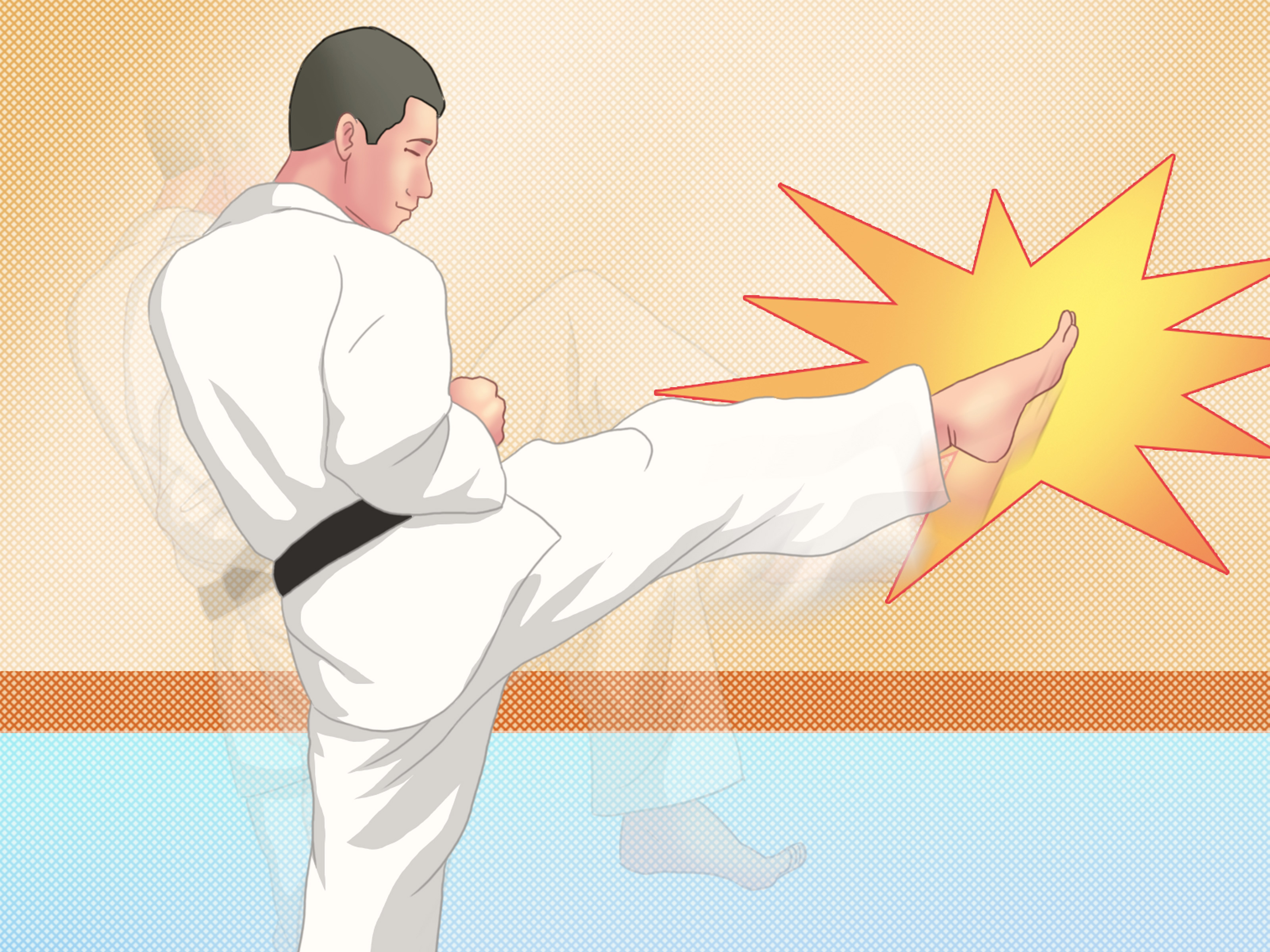
A Taekwondo front kick is a linear kick that travels straight toward the target. In many schools, it is taught as a snapping kick: the knee lifts first, the lower leg extends quickly, the striking surface makes contact, and the leg recoils back to the chamber before returning to the floor. The kick may strike with the ball of the foot, the instep, or, in some variations, the heel. For beginners, the ball of the foot is often emphasized for power and safety when used correctly, while the instep may appear more often in light-contact drills or flexible sport-style applications.
The key idea is simple: lift, snap, hit, retract, recover. The actual execution, however, is where the art begins. A good front kick is not a lazy leg swing. It is a coordinated movement involving stance, posture, core engagement, hip drive, foot shape, breath, balance, and control.
Why the Front Kick Matters in Taekwondo
The front kick matters because it teaches the language of kicking. Before you can throw flashy spinning kicks or flying techniques, you need to understand how to chamber the knee, aim with the hips, stabilize the standing leg, and recover quickly. Ap Chagi is the training ground for all of that.
In forms, the front kick helps build rhythm and precision. In sparring, it can create distance, stop forward pressure, or surprise an opponent with a fast line of attack. In self-defense training, it teaches direct motion toward a target without unnecessary wind-up. In conditioning, repeated front kicks strengthen hip flexors, quadriceps, glutes, calves, and core muscles. In short, the front kick is the quiet overachiever of Taekwondo.
Before You Kick: Warm Up the Smart Way
Do not start by launching your leg toward the ceiling like your hamstrings owe you money. A proper warm-up prepares your joints, muscles, and nervous system for kicking. Begin with 5 to 10 minutes of light movement such as jogging in place, jump rope, marching steps, or easy footwork. Then add dynamic mobility: leg swings, hip circles, knee lifts, ankle rolls, gentle front kick chambers, and slow controlled kicks.
Dynamic stretching is especially useful before Taekwondo because it rehearses the movements you are about to perform. Save long static stretches for after training or for separate flexibility sessions. Your goal before kicking is to become warm, loose, alert, and coordinatednot sleepy and over-stretched.
How to Perform a Taekwondo Front Kick: 12 Steps
Step 1: Start in a Balanced Fighting Stance
Stand with one foot forward and one foot back, roughly shoulder-width apart. Your knees should be slightly bent, your weight centered, and your hands up to protect your face and body. Keep your chin tucked naturally and your eyes on the target. Imagine someone gently pulling the top of your head upward while your feet stay rooted to the floor. That posture gives you balance without stiffness.
Step 2: Choose Your Kicking Leg
You can perform a front kick with either the front leg or the rear leg. The front-leg front kick is usually faster and works well for quick interruptions or distance control. The rear-leg front kick has more travel time but can generate stronger forward power because the hip has more room to drive. Beginners should practice both sides, even if one leg feels like a graceful crane and the other feels like a shopping cart with a bad wheel.
Step 3: Set Your Guard and Focus on the Target
Before lifting your leg, keep your hands up. Many beginners drop their arms as soon as they kick, as if the hands are shocked by what the feet are doing. Do not let that happen. Your guard should stay active, relaxed, and ready. Look directly at the targetmiddle section, pad, shield, or imaginary line. Your body tends to follow your eyes, so focused vision improves aim.
Step 4: Shift Weight Onto the Standing Leg
Transfer enough weight onto your support leg so the kicking leg can lift smoothly. Do not lean backward dramatically. A small natural lean may happen, especially for higher kicks, but excessive leaning weakens the kick and makes recovery slower. Keep the standing knee slightly bent. A locked knee is unstable and uncomfortable, and it makes you look like you are trying to kick while standing on a broomstick.
Step 5: Chamber the Knee High
The chamber is the engine room of the Taekwondo front kick. Lift your knee toward the target before extending the lower leg. The knee should point in the direction you want the kick to go. Keep the heel close to your body and avoid swinging the leg from the floor. A strong chamber hides the kick, improves speed, and helps you aim. Think “knee first, foot second.”
Step 6: Shape the Foot Correctly
If you are striking with the ball of the foot, pull your toes back firmly so they do not hit first. The contact point should be the padded area under the toes, not the toes themselves. Toe-first impact is a very quick way to learn new vocabulary, most of it unsuitable for a family dojang. If your instructor teaches an instep front kick for a specific drill, point the toes and strike with the top of the foot. Always follow your school’s method and the purpose of the drill.
Step 7: Extend the Leg Straight Toward the Target
Snap the lower leg out from the chamber. The motion should travel directly forward or slightly upward depending on the target. Avoid a wide swinging path. The Taekwondo front kick is not a soccer kick. It should feel clean, compact, and direct. Your hip may drive slightly forward at the moment of extension, adding body weight behind the kick without throwing you off balance.
Step 8: Strike With Control and Proper Timing
Contact should happen near the end of the extension, not after the leg has gone limp. For pad work, aim through the center of the target while maintaining control. For air practice, imagine stopping the kick at a precise point. Do not hyperextend the knee. A front kick should be fast and sharp, but never reckless. Power comes from timing, structure, and accelerationnot from trying to punish the atmosphere.
Step 9: Breathe Out on the Kick
Exhale as you extend and strike. In many Taekwondo classes, students use a short yell or kihap to sharpen focus and release tension. Even without a loud kihap, breathing out prevents you from holding your breath and stiffening your body. A relaxed body moves faster; a tense body moves like furniture.
Step 10: Re-Chamber Immediately
After impact, pull the foot back along the same path to the chamber position. This step is just as important as the kick itself. Retraction protects your leg from being grabbed, helps you recover balance, and prepares you for another kick or movement. Many beginners kick out and then let the leg drop like a wet towel. Instead, think: kick out, snap back, then land.
Step 11: Return to Your Fighting Stance
Place the kicking foot down with control. You may land in the original stance or step forward, depending on the drill. Keep your hands up, posture tall, and eyes forward. A good front kick does not end at impact; it ends when you are balanced and ready for the next action. In Taekwondo, recovery is part of the technique.
Step 12: Practice Slowly, Then Add Speed
Speed should come after structure. Practice the front kick in slow motion first: stance, chamber, foot shape, extension, retraction, landing. Once the path feels clean, gradually increase speed. Then add pad work, partner timing, combinations, and movement. A slow correct kick will become fast. A fast messy kick usually becomes a faster mess. Choose wisely.
Common Mistakes Beginners Make
Dropping the Hands
This is the classic beginner habit. The leg goes up, the hands go down, and suddenly the student is wide open. Keep your guard in place. Your arms help balance, but they should not flail or disappear from defense.
Kicking With the Toes
If using the ball of the foot, pull the toes back. This protects the toes and creates a stronger striking surface. Practice foot position slowly before hitting a pad.
Skipping the Chamber
A front kick without a chamber becomes a swing. The chamber gives the kick speed, accuracy, and control. Drill knee lifts until chambering feels automatic.
Leaning Too Far Back
Some lean is normal, especially for height, but too much lean steals power and makes recovery harder. Keep the body tall and the core engaged.
Letting the Leg Drop After Impact
Always re-chamber. The return path teaches control and keeps you ready. In sparring, a lazy recovery can cost you balance or position.
Training Drills to Improve Your Taekwondo Front Kick
Wall Chamber Holds
Stand beside a wall for light balance support. Lift your knee into the front kick chamber and hold for 5 to 10 seconds. Keep your standing knee slightly bent and your posture upright. This builds hip strength and teaches control.
Slow Motion Front Kicks
Perform the entire kick slowly without dropping the leg. Chamber, extend, pause, re-chamber, and land. This drill exposes balance problems immediately. It is humbling, useful, and occasionally rude to your ego.
Pad Accuracy Drill
Have a partner hold a kicking paddle at stomach height. Kick lightly at first, focusing on the center of the pad. Gradually increase speed while keeping the same clean path. Accuracy before power is the rule.
Front Kick-Rechamber Repeats
Lift the knee, kick, re-chamber, kick again, and re-chamber without setting the foot down. Start with two repetitions, then build to three or five. This improves hip endurance and helps prevent the common “kick and collapse” problem.
Step-In Front Kick
From fighting stance, step forward slightly with the rear foot and fire the front kick. This teaches distance management and helps connect footwork with kicking. Move lightly, not like you are stomping grapes for a dramatic old movie.
How to Use the Front Kick in Sparring and Forms
In forms, the front kick should look crisp, controlled, and intentional. The chamber must be clear, the target line should match the form’s direction, and the landing should flow into the next stance or hand technique. Forms reward precision, not wild power.
In sparring, the front kick can be used to interrupt, create space, or set up another attack. A quick front-leg kick can check an opponent’s advance. A rear-leg front kick can push into a pad or body protector with more drive. The kick also pairs well with hand feints, roundhouse kicks, cut kicks, and footwork angles. The secret is not throwing it randomly. Use it when the opponent steps in, drops their guard, or stands square enough for the line to open.
Safety Tips for Better Training
Train on a safe surface, wear appropriate gear, and avoid full-power kicking before you are warm. If you are working with pads, make sure the holder is stable and positioned correctly. Start low before going high. High kicks look impressive, but a clean middle-section front kick is more valuable than a wobbly head kick that nearly files a complaint against your hip.
Listen to your body. Sharp pain in the knee, hip, ankle, or lower back is not a training badge; it is information. Rest, adjust, and ask an instructor to check your form. Progress gradually. Taekwondo rewards consistency more than one heroic day of overtraining.
Experience-Based Tips: What Practicing the Front Kick Really Teaches You
The first experience many students have with the Taekwondo front kick is surprise. It looks simple when an instructor demonstrates it. The knee floats up, the foot snaps out, the pad cracks, and everything returns neatly to stance. Then the beginner tries it and discovers that their balance has apparently gone on vacation. This is normal. The front kick is simple in concept, but it reveals every tiny weakness in posture, mobility, confidence, and coordination.
One of the best lessons from practicing Ap Chagi is that power does not come from anger. Beginners often try to kick harder by tensing the whole body. The shoulders rise, the jaw clenches, the arms drop, and the kick becomes stiff. Experienced practitioners usually do the opposite. They stay relaxed during the lift, accelerate through the extension, tighten briefly at impact, and relax again during retraction. The result is faster, cleaner, and much less exhausting. It is the martial arts version of working smarter, not just noisier.
Another practical experience is learning that the chamber controls the kick. When the chamber points at the target, the kick usually follows. When the knee points off to the side, the foot wanders like it is sightseeing. Many students improve quickly by spending entire sessions on knee lifts rather than full kicks. It may feel boring, but it works. A sharp chamber is like setting the address before sending a package. Without it, your kick may arrive somewhere, but probably not where you intended.
Pad training also teaches humility. A front kick that feels powerful in the air may land weakly on a paddle if the foot shape is wrong or the hip is not involved. The sound of the pad gives honest feedback. A clean snap makes a crisp pop. A sloppy kick makes a dull thud, or worse, a toe-first tap that sends the student hopping around with the facial expression of someone who just stepped on a Lego. This is why light contact practice is valuable before power training. It lets you correct the weapon before you load it.
Students also learn that height is not everything. Social media loves high kicks, but the front kick becomes truly useful when it is accurate, fast, and recoverable. A middle-section kick to a pad can teach more than a high kick that forces the body out of alignment. Over time, flexibility improves, but forcing height too early can create bad habits. A strong waist-level front kick with balance beats a dramatic head-height kick followed by a dramatic meeting with the floor.
Finally, the front kick teaches patience. Improvement often arrives in small pieces: one day your toes pull back better, another day your standing leg feels steadier, another day your re-chamber finally stops looking like a delayed software update. These tiny improvements add up. Practicing the Taekwondo front kick is not only about learning one technique; it is about learning how to train. You pay attention, repeat with purpose, accept correction, and gradually turn awkward movement into skill. That is the real magic hidden inside this beginner kick.
Conclusion
The Taekwondo front kick may be one of the first techniques you learn, but it deserves long-term respect. It builds the foundation for balance, chambering, speed, timing, accuracy, and recovery. When performed correctly, Ap Chagi is direct, practical, and powerful. When practiced patiently, it becomes more than a kickit becomes a training tool that improves nearly every other kicking technique in Taekwondo.
Start with a solid stance, chamber the knee, shape the foot, extend with control, re-chamber immediately, and land ready. Keep your guard up, breathe naturally, warm up properly, and practice on both sides. Most importantly, focus on quality before speed. A clean front kick is not born from rushing; it is built through smart repetition, good coaching, and a little willingness to laugh when your “dominant leg” suddenly acts like it has never met you before.